


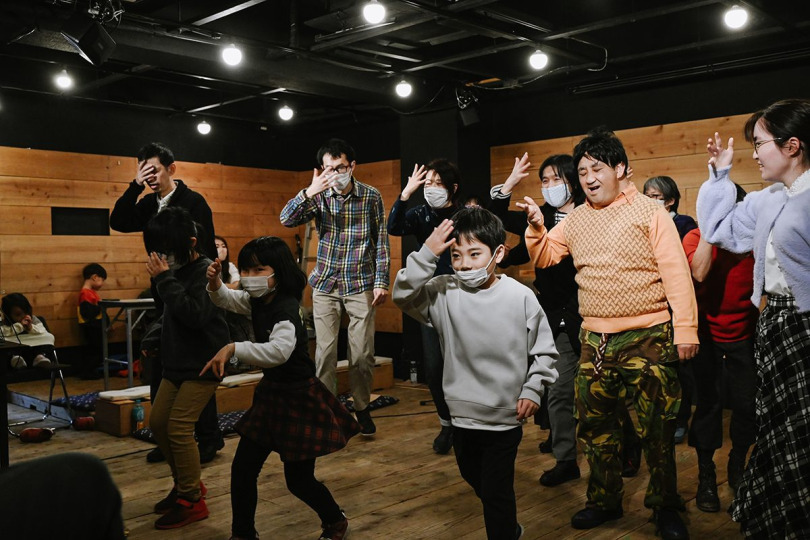
On February 9, 2024, an activity debriefing session was held to share the results and challenges of the projects selected for the "Social Grant" with the participants. The theme of the fifth session was "Songs, Words, and Bodies: The Possibility of Creating a Place for Diverse People to Meet." In the first part, we introduced the activities of the "Expression Club Yagaya," which has been creating a place where people with intellectual disabilities and various other people can enjoy music and dance workshops for nearly 20 years in Hikarigaoka, Nerima Ward. In the second part, we will deliver the activities of "Monten", which operates "Ryogoku Monten Hall" as a regional hall/art space open to everyone in Sumida Ward and has developed a variety of projects. In the second part, we will also tell you about the roundtable.
- Date & Time
- Friday, February 9, 2024 18:30 ~ 21:00
- Venue
- Arts Council Tokyo 5th floor conference room
- Reporting organizations and speakers
- EXPRESSION CLUB GAYAGAYA Miri Kojima, Tamami Yamada
MONTEN Yaeko Kurosaki, Miki Akaba - facilitator
- Tomoki Ogawa
- graphic facilitator
- Mihoko Seki
- sign language interpreter
- Yuko Kato, Yuko Setoguchi
What is Community Music?
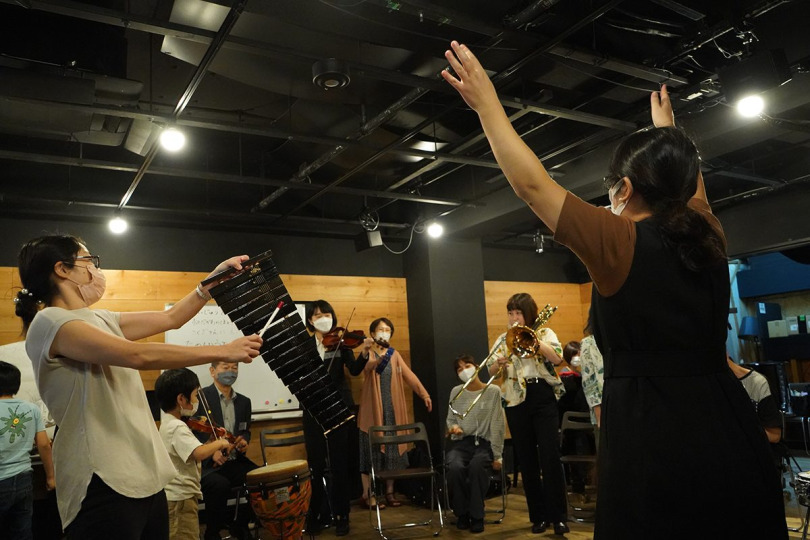
Photo by yamasin (g)
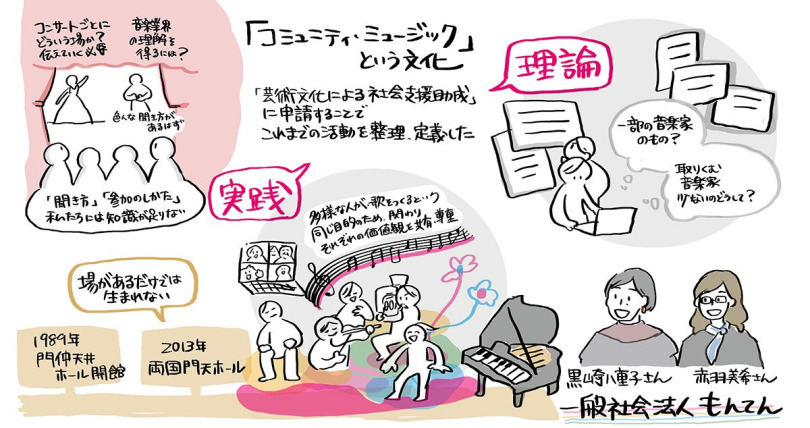
(Image enlargement: JPEG version)
In the second part, Yaeko Kurosaki, the representative producer of the general incorporated association Monten, and Miki Akaba, a musician, spoke on stage and reported on their activities under the title of "The Present and Future of Community Music: Fiscal Years 2021 to 2023."
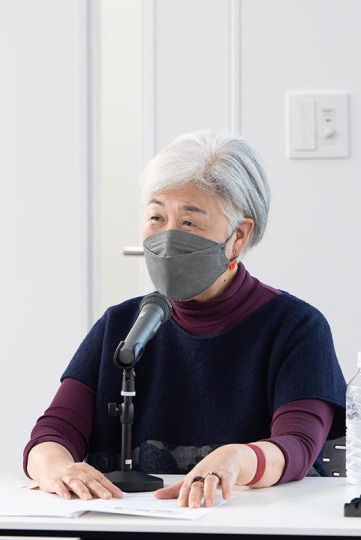
Photo by Kazuyuki Matsumoto
Monten is the organization that runs Ryogoku Menten Hall. Ryogoku Monten Hall was established in Ryogoku in 2013, based on the Monnaka Teien Hall opened in 1989 in Monzennaka-cho. Even after moving to the two countries, they continue to hold high quality music and performances, ranging from classical to pioneering contemporary music, under the theme of “tradition and modernity, ” attracting audiences of all ages. Monten's activities have a history of 35 years, counting from the days of Monzen-nakamachi, and the fact that it has a Steinway piano that was purchased as part of a fund-raising campaign for Monnaka Teiken Hall is one of its distinguishing features. Taking advantage of the space of Ryogoku Mon-ten Hall and the piano, they held an experimental concert of piano music called “Ryogoku Art Festival ”, and as a participation project of“ Sumidagawa Shinra-bansho Sumini-yume ” (aka: Sumiyume), they held “Street Piano Sumidagawa ” where anyone can participate by placing a piano along the Sumida River. It aims to be a place where musical activities can be developed while contributing to the local community.
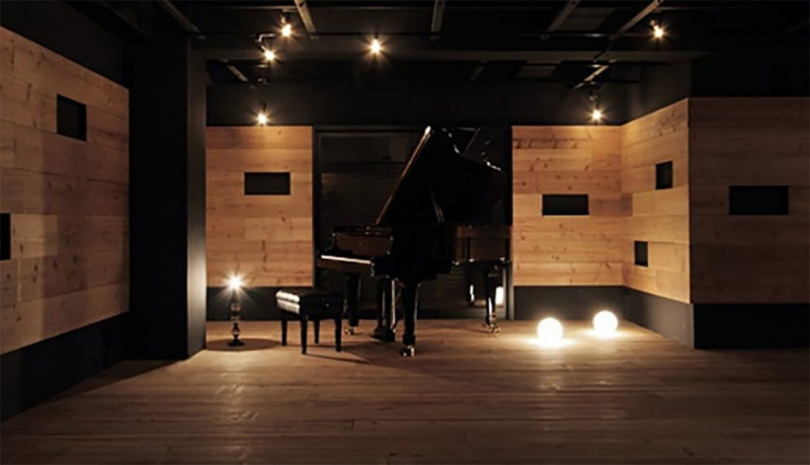
There are also many at-home workshops that citizens can easily participate in. "Monten Talk" for preschool children, and as a place where children who have graduated from "Monten Talk" can participate next, children from infants to lower grades of elementary school, children with disabilities and their families can participate. They hold "Kids Holiday Concert," "Chibikko Yose" where you can experience classical performing arts, tuning workshop, and "House of Uta" where anyone can participate in uta-making workshop.
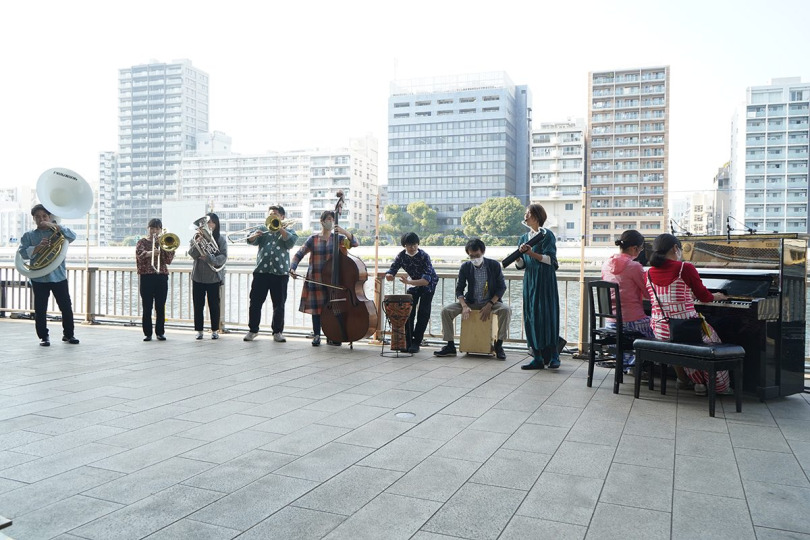
Photo by yamasin (g)
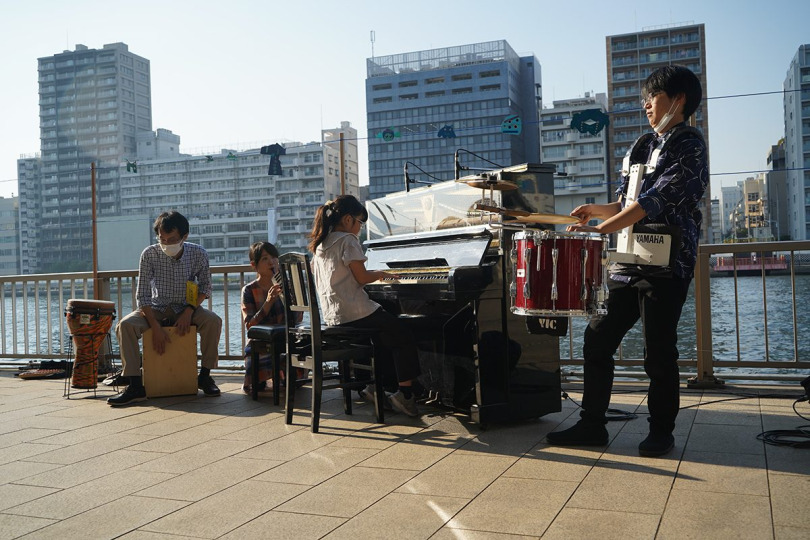
Photo by yamasin (g)
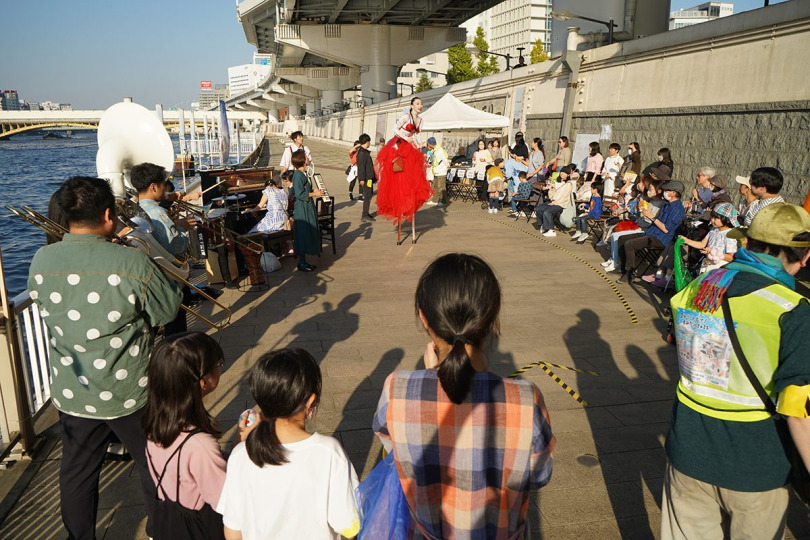
Photo by yamasin (g)
In recent years, events in which artists and citizens have collaboratively created art have been held all over Japan, and the term "community music" has become more common in the world of music. However, Kurosaki became concerned that there was no international definition of "community music" that originated in the United Kingdom, and that there was no common understanding in Japan. Therefore, he planned an online course to organize everything from world trends to the current situation in Japan, and to conduct a project where people can learn from each other while promoting community music in Japan and creating an environment. Thus begins "Community Music Now and in the Future". Furthermore, "I would like to share it with people involved in government art management and community projects," and applied for "Social Grant" from the second half of FY2021. Through applying to "Social Grant", which expects artistic activities to contribute to the social participation of diverse people, he wanted to deepen the significance of the implementation of this course. In the first semester, students learn theory through online "courses", and in the second semester, they try to "practice" through workshops and mini-concerts. The project has been carried out for three years in a cycle of "sharing issues" with the participants while verbalizing what happened at the workshop site and providing opportunities for dialogue at the symposium.
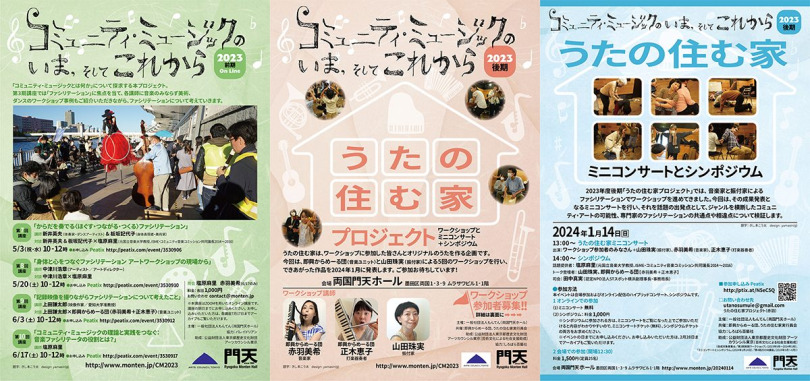
The first year of the 2021 fiscal year project was implemented without receiving Arts Council Tokyo subsidies. In the first lecture (May 15, 2021), we asked Mari Shiobara, who served as the co-chair of the Community Music Committee of the World Music Education Association (ISME) (2016~2018), about "Thoughts on Community Music and Global Trends". The following is a part of the materials from the 10th lecture (June 17, 2023) of "Community Music Now and Coming to 2023, First Term" by Mr. Shiobara, which is basically the same as the 2021 course, although the translation is different in some parts. Mr. Kurosaki said, "I still remember the first time I came across this sentence, my heart was hot."
What is community music?
- To encourage all people to play, create and enjoy their own music.
- Active and participatory music activities for people of all ages and social strata, regardless of disability.
- Provide individuals and communities with opportunities for artistic, political and cultural expression through music.
- The aim is not only to pursue musical excellence and novelty, but also to improve the quality of life in the community through musical activities.
- Encouraging people to be agents of music dissemination and development in their communities.
- We aim to rehabilitate and revitalize society and communities.
- We encourage a diverse range of people to contribute to society as artists and music culture.
Community music is not only a music activity, but also a music activity with the intention of realizing the above as a process, a result, or a by-product of the activity.
(2023年6月17日 「コミュニティ・ミュージックのいま、そしてこれから2023・前期」 塩原麻里 第10回講座資料から)
[出典:ISME・CMA, Homepage, https://www.isme.org/our-work/commissions/community-music-activity-commission-cma. 2021年4月1日参照。]
※上記文章の引用は著者・塩原麻里氏の許諾を得ています。
The workshop practice of this project was conducted entirely online in the first Reiwa of the 3rd (2021) fiscal year Grant Programs "Community Music Now and Future" due to the coronavirus pandemic. Reiwa 4 (2022) The first term "Community Music Now and Future 2022" will only be held once, and all other workshops will be held online. Reiwa 5 (2023) The first term "Community Music Now and in the Future 2023" was held as a face-to-face workshop. The mini-concert and symposium were face-to-face only in Reiwa 5, and all the rest were held online.
Next, Akabane talked about the "Uta no Sumiie" project, which was a case study of this project. The Uta no Sumu Ie Project is a project to co-produce songs with people of all ages, genders, nationalities, and disabilities in a place called home. With percussionist Keiko Masaki, the group formed a musical unit called "Sokku Karameru-dan," which was based at "Mita no Ie" in Minato-ku, Tokyo for 6 years from 2007. After "Mita no Ie" closed, Kurosaki invited them to perform at Ryogoku Monten Hall from 2016.
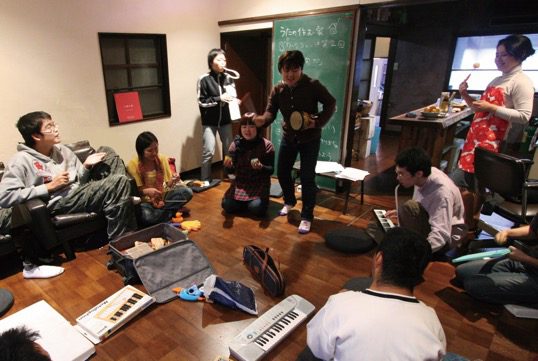
- Akabane
-
"It is not just a song with lyrics and melodies, but also an attempt to explore the possibilities of creating songs with the participants, assuming various forms such as the overlapping of poems, voices, and body movements. At the same time, it aims to create a place through music creation. The facilitators who lead this project are artists from various genres, including "Improvising Karameru-dan," and they present their songs at concerts with various participants."
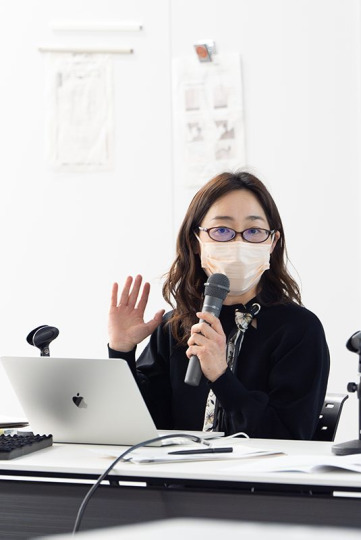
Musician Miki Akaba
Photo by Kazuyuki Matsumoto - Akabane
-
"The program lasted for 3 years from 2021 to 24, and participants ranged in age from 0 to 102 years old, including people with intellectual and physical disabilities. The online workshop was attended not only by participants from all over Japan but also by participants from overseas. The facilitators were mainly us, "Improvising Karameru-dan," music therapist Setsu Inoue and music magician Rii Numata in 2022 and choreographer Tamami Yamada in 2023."
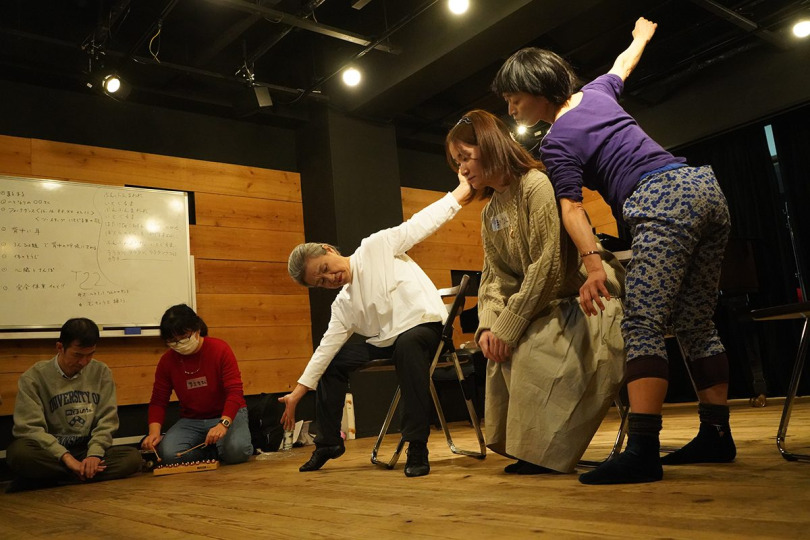
134 workshops. 2023. Right is Tamami Yamada
Photo by yamasin (g)
Next, he introduced songs created online as a measure against the COVID-19 pandemic. The characteristics of in-person and online creations are different.
- Akabane
- "I would like to introduce two songs with so-called lyrics and melodies that were facilitated by "Sokkyo Karameru-dan". Words that come up in conversation with the participants are connected to create lyrics, and the melodies are hummed by the participants, which are connected to create a song."
First of all, we listened to the music created in the first session of 2021.
- Akabane
-
"♪ It was cold yesterday, but it's nice and warm today ♪
♪ I'm somehow happy to see everyone who has a baby and grandma ♪
The song is also a document that includes the weather of the day and what happened. This was the first time we met online in a long time during the coronavirus pandemic. The workshop proceeded with conversations such as, "There is a baby today," and "You have become the oldest person to participate in the Uta no Sumiri-house when there is a 102 year-old elderly person." The 102 year-old did not speak a word by himself, but his daughter said, "It seems that she is somehow happy to meet everyone," and that conversation became the lyrics.The phrase "Thank you for Wi-Fi" in the middle of the workshop is based on a story in which a disabled person who could not participate online because he could not connect to Wi-Fi started by connecting Wi-Fi after I called him frequently for about four months, and finally he was able to connect and participate in the online workshop. Also, we didn't have the goal of creating a song with the theme of human connection, but we all came up with a title after looking at the songs created through conversation, and as a result, we decided to "How about the title "Connection"?"
Next, I looked at "melon & gallon" created in the workshop in 2021. Participants from Bulgaria and the United States also participated, and the workshop was edited in the middle of the video so that you can see how the songs were created from the conversations the participants had.
- Akabane
- "The song is about the differences in perspectives of various people, but I didn't set out to write such a song from the beginning. We started talking about "It's cold today, isn't it? How about Bulgaria? How about America?," "In Japan, it's Celsius, but in America, it's Fahrenheit," and then we started talking about units, and we ended up saying, "What is a gallon? I want to write a song called". After that, the unit of water in America is gallon and it is sold in a big container, Bulgaria also has very big bread. Are all foreign things big? When a six-year-old boy heard the adults say, "For me, both the bus and the piano are really big." As a result, I came up with the following words: "Things that are normal in my country but not in other countries," "My measurement and your measurement are different for everyone. I want to know everyone's measurement." I feel that the songs are recorded as a result of the interaction in which participants freely exchange conversations, recognize that various people have their own values, and share and respect them."
- Akabane
- "When I facilitate the workshop, my interest and mission as a musician is to make music better. This will affect the satisfaction of the participants, so I want to value the quality of the music.
On the other hand, the workshop participants include people with intellectual and physical disabilities, different nationalities, and various other backgrounds, and even though they live in the same society, they are in a situation where they do not usually meet people. "Uta no Sumiie" is an activity that allows such diverse people to share the same purpose of creating songs and live in the same place through relationships through music. Our position as musicians is that we pursue music while valuing the creation of a place where diverse people can interact with each other to be as comfortable as possible. The song as a finished product is a document of the process of creating a musical place where various people can recognize each other and work together." - Kurosaki
- "To continue singing songs as a product, and to continue creating songs as a process. I think this is also a movement that continues to convey the possibilities of engaging diverse people through music. This is why we have treated this as an example of community music. Our engagement with participants in the Uta no Sumiie Project is not limited to the workshop hours. Since the project began, we have been receiving consultations and inquiries from participants outside the workshops, and we have been responding to them. The workshop itself is not the only part of the project, but I also think that involvement outside the workshop is very important."
Creating a place for engagement and maintaining that process
Kurosaki then mentioned three things about the success of the project: "There were many participants from all over the world," "It was a place to learn and experience theory in practice," and "It was a place to exchange opinions with various people."
- Kurosaki
-
"The course was attended by musicians, music therapists, workshop leaders and facilitators, managers, administrators in charge of cultural projects, music workshop researchers, and supporters of leisure activities for persons with disabilities. In addition to the general public, including children, the disabled, and the elderly, who had previously participated in the Uta no Sumiie, the workshop was attended by professionals involved in the field of community music. Because it was online, it became a place where many people gathered not only from Tokyo but also from all over the country. In addition, by scheduling the workshop after the theory course, I think I was able to create an opportunity to learn and learn about community music that is difficult to understand through theory alone or workshops alone. After the lectures, mini-concerts, and symposiums, participants, lecturers, and project members were able to share their questions and difficulties in their daily activities and exchange opinions. I was able to exchange opinions with the managers involved in the development of community music, and I feel the expansion and potential of Monten's activities in the future."
"Uta no Sumiie" Mini Concert and Symposium
Photo by Aiho Kaneko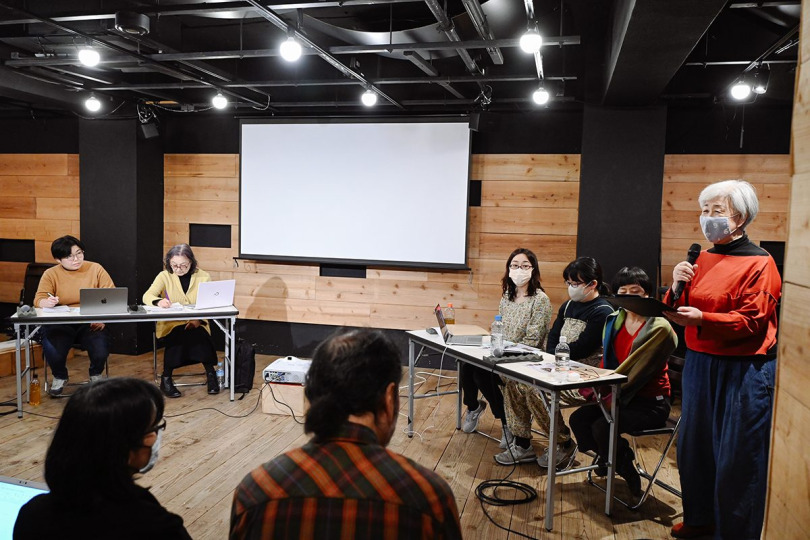
"Uta no Sumiie" Mini Concert and Symposium
Photo by Aiho Kaneko
He wants to focus on two things. One is to continue activities and create an archive, and the other is to create a network of community music organizations. Some people have joined from the beginning, while others have started to join in the middle, so he plans to create a three-year archive to accumulate and publish information.
- Kurosaki
- "In order to exchange opinions with the activity groups that participated in the project and the organizations that conduct community music, share information on how to continue their activities, and deliver such voices so that social support subsidies can be obtained continuously, Eventually, I would like to become a member of a network that can lead to policy recommendations.
By being selected for the social support subsidy this time, we were able to pay the lecturers and staff according to the project budget. The realization of the project provided an opportunity to think again about what social support is, and the issues were highlighted.
It is the need to secure ongoing funding for activities, networks with various organizations, and hubs to bring it together. There must be a network to obtain information and a hub that connects beneficiaries, providers, and organizations to obtain information. We can't afford a private operator to be a hub, and we want Arts Council Tokyo to be that hub. I want them to play a role in obtaining funds, matching beneficiaries with providers, and educating practitioners."
With such expectations, four questions were asked to Arts Council Tokyo.
- Kurosaki
- "Arts Council Tokyo asked questions such as "How did you think about sharing these initiatives as subsidized projects?", "What do you think about Social Grant?", "About continuous support", and "Can Arts Council Tokyo itself be a hub?" We also believe that this activity is a movement to continue to convey the voice of how cultural and artistic activities should be worked on so that they can be enjoyed by a wide range of people. I applied for the purpose of sharing with the government that it is a project that should continue to be supported. I believe that social support is to firmly understand and continue to support continuous support that cannot be measured on a profitable basis. I would like you to continue to provide financial support to continue our activities."
最後に、これから実施する第4期のオンライン講座を案内。特に2024年5月25・26日に開催される講座では、イギリスのコミュニティ・ミュージックの実践者・教育者であり、コミュニティ・ミュージックハブの代表も歴任しているジェス・アブラムスさんを迎えて、イギリスにおけるコミュニティ・ミュージックの実態を伺い、日本のコミュニティ・ミュージックの課題と展望を明らかにしていきたいという。講座に備えて、YouTubeチャンネル「うたの住む家実行委員会」でこれまでに創作された楽曲なども楽しんでみてはいかがだろうか。
Mr. Ogawa asked some questions here.
- Ogawa
- "Mr. Kurosaki continued to pursue the role of "place" and found a possibility in community music. Akabane, why do you want to say that we are community music instead of using the term "music workshop"?"
- Akabane
- "Workshops are a way of working together to create something that doesn't have an answer, and I think community music is a larger concept that includes ideological participation by diverse people from all walks of life."
- Kurosaki
- "I think we have been particular about making workshops where the participants take the lead."
- Akabane
- "Workshops in Japan are often viewed as events conducted by artists, but the workshops that we value are places where participants take the initiative in expressing themselves. That is "the main role of the participants," and I would like to call it community music. What we want to do is to create works and places where the strengths of each participant can be utilized and coexist. Based on this idea, we have been thinking about what is being done overseas, and we have been talking about it in the course and symposium of this project."
- Ogawa
- "As a musician, I would like to ask Akabane, but I heard that there were cases where people with disabilities were forced to leave an expensive concert when they shouted "Oh!" because rustling sounds were not enough."
- Akabane
- "Right. I heard that one time a student of mine was at a concert and the person conducting the concert was so cool that he started conducting himself, but even though he wasn't speaking, he was taken out and he couldn't watch the concert until the end."
- Ogawa
- "Is it bad if someone complains? In other words, for example, there are some halls where people pay 30,000 ~ 50,000 yen for a ticket to listen to a performance, but is that OK?"
- Kurosaki
- "I think it's good. I think the organizers have various ideas, such as the purpose of the concert, the environment, and the people they want to listen to. It is important to inform customers about it in advance. I think they send messages like "Please refrain from entering preschool children" recently. Then, if I say, "You can use your voice and move your body in this concert." I think people can listen to it freely."
- Akabane
- "I think so. However, even if they advertise that anyone can come to the concert, I have heard that some parents of children with disabilities are reluctant to come because they are afraid of causing trouble."
- Ogawa
- "If it is only the logic of the supplier, there will be cases where the audience who wants to listen cannot listen."
- Kurosaki
- "Right. That's why I think it's important for us, who normally provide events, to raise our voices about how we would like to listen to them, for example, about the program, the venue, and the time. It is also important for the event providers to respond to such voices and devise ways. If you don't, you'll only be able to go to a limited number of concerts."
- Ogawa
- "In such a situation, community music wants to create a culture where everyone is welcome."
- Kurosaki Akabane
-
"Right. I think it's culture."
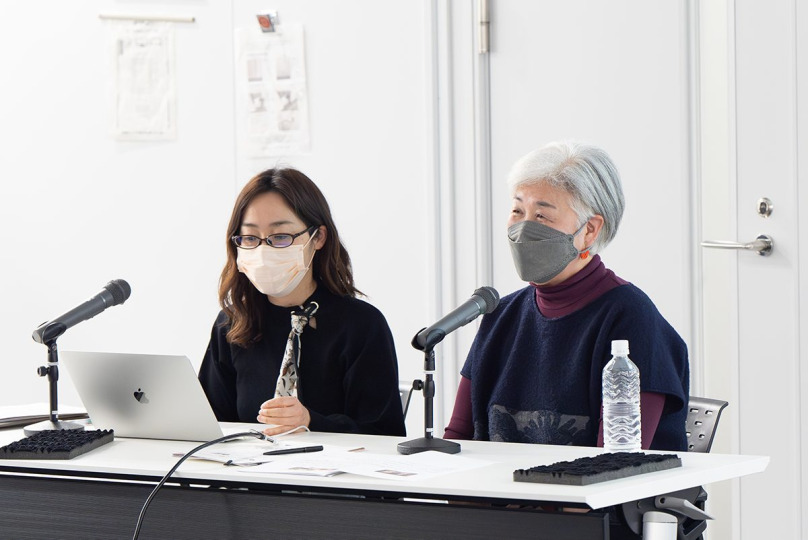
Presentation by Monten Miki Akaba, Yaeko Kurosaki
Photo by Kazuyuki Matsumoto - Ogawa
- "So what are the obstacles to spreading that culture?"
- Akabane
- "There seems to be a vague stereotype in our society that this is how we listen to music. Also, when you go to a concert, you may not go to the concert because you think there might be someone in the audience with a disability, for example. Some people may not even know that there are many different people in the same society. In that case, I don't think we can get to the idea of what other ways to enjoy music are there, or how minorities can enjoy culture freely. This is where activities like community music become important. By coming to the workshop, you may be able to meet diverse people, get to know each other through trial and error, and feel that you are all living in the same society. At the same time, by creating music together, various concepts of sound and ways of enjoying music may be born. There are various ways to enjoy music, how to relate to music, and at the same time, there are various people, and how to relate to each other. I think the lack of such knowledge in society as a whole is an obstacle. I believe that accumulating such experiences in community music will lead to a variety of ways to enjoy music and to a sense of the existence of diverse people, which in turn will lead to more options for people's participation in culture."
- Ogawa
- "Do people in the music industry understand community music?"
- Kurosaki
- If it is selected for Social Grant, the number of people who come to see it will increase, and it will be an opportunity for people who have never been in contact with government affairs before to learn about it. I think that's how it will spread."
As graphic facilitator Mihoko Seki pointed out, Gayayaya and Monten have one thing in common: "Rather than working for the purpose of changing something, we will change as a result of working for everyone to enjoy." So with four questions, how does the roundtable unfold?
(Reporting and writing by Yuri Shirasaka)
General Incorporated Association Monten
Since its opening in 1989, Monnaka Ceiling Hall has actively performed a wide variety of music and performances with the aim of providing a high-quality art experience and fostering a wide audience. In 2013, it moved to Ryogoku and was renamed "Ryogoku Menten Hall" as a new art space. It is operated in partnership with various artists and local communities. It creates a new culture through experimental events.
Social Grant Grant results
- FY 2021 1st Term "Community music now and in the future"
- FY 2022 1st Term "The Present and Future of Community Music 2022"
- FY 2023 1st Term "The Present and Future of Community Music 2023"
Social Grant
A program to support "Activities that allow people who have limited opportunities to experience and participate in art due to their social environment to engage in art experiences, such as appreciation and creation, and to exercise their creativity and enrich their imagination." and "An artistic activity that sets social issues based on one's own awareness of problems and works to solve them through cooperation and collaboration with various people and organizations" for organizations working in Tokyo. It was started in fiscal year 27 (2015), and since fiscal year 28 (2016), public applications have been held twice a year. It has supported about 150 projects so far. It is not just "art for art's sake" or "art that is useful to society," but it is trying to support activities that propose and materialize a new way of art in which society and creative activities are inseparable in a way that has never been done before, so to speak, "the third art."