
This website uses cookies to improve your experience. You can also change the cookie function by setting your browser. You must agree to the use of cookies when browsing the site.

  • x
  • Instagram
  • facebook
  • Line
  • Youtube

Report on "Social Support through Arts and Culture"

Since fiscal year 27 (2015), Arts Council Tokyo has been implementing the "Social Support through Arts and Culture" program to support artistic activities in which people from various social environments can participate together and demonstrate their creativity while respecting each other's individuality, as well as activities that address various social issues by utilizing the characteristics of arts and culture and the abilities of artists.
Here you will find videos and reports of debriefing sessions by organizations that have completed their subsidized activities.

Part 1: Continuing Online Activities in the COVID-19 Pandemic (Part 1): Everyone's Dance Field

On February 21, 2022, an online meeting was held for the first time to review the significance and effectiveness of the "Social Support through Arts and Culture" program and to share the results and future issues. In the first part, two of the past subsidized organizations, "NPO Everyone's Dance Field" and "NPO Tokyo Soteria," which implemented online projects during the COVID-19 pandemic, reported their activities. In the second part, a roundtable was held with the audience. The report is divided into the first, middle and second parts.


Time of the event
Monday, February 21, 2022 18:30~21:00
Venue
Online (Zoom)
Name of reporting organization
NPO Everyone's Dance Field and NPO Tokyo Soteria
facilitator
Tomoki Ogawa
graphic facilitator
Junko Shimizu
sign language interpreter
Yuko Setoguchi, Yuko Kato

Courtesy: NPO Minna no Dancefield
NPO Everyone's Dance Field
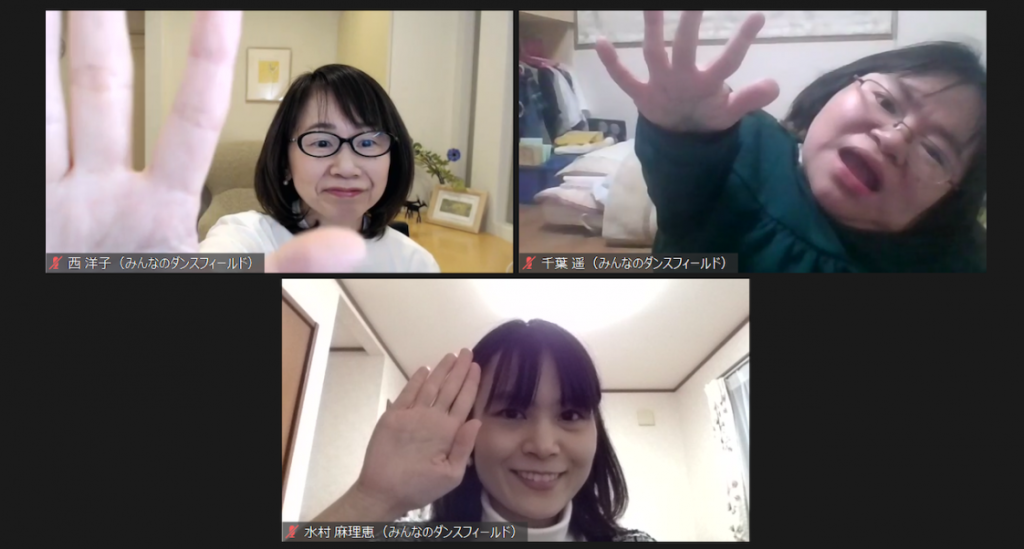
Speakers: Yoko Nishi, Haruka Chiba, Marie Mizumura
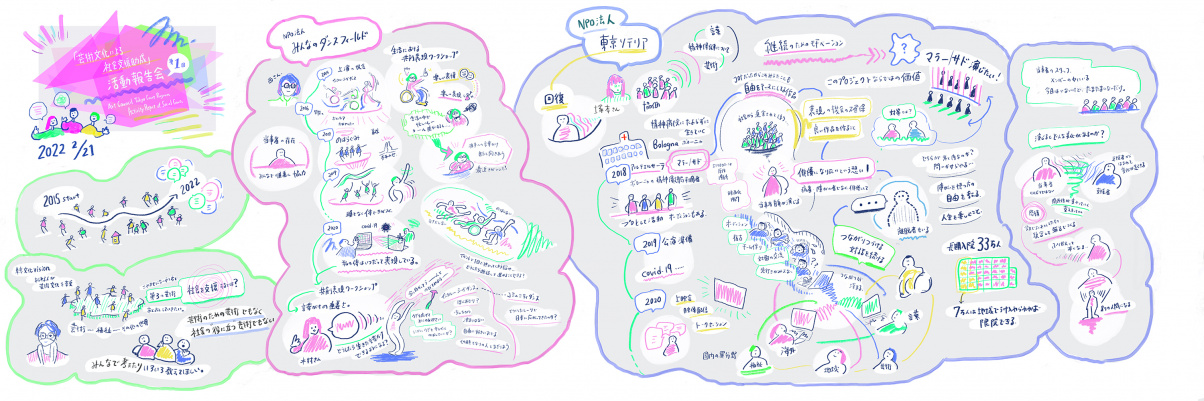
Graphic Recording (Production: Junko Shimizu)
(Image enlargement: JPEG version)

"Co-creation" in society that brings out the mind and body that want to express through dance

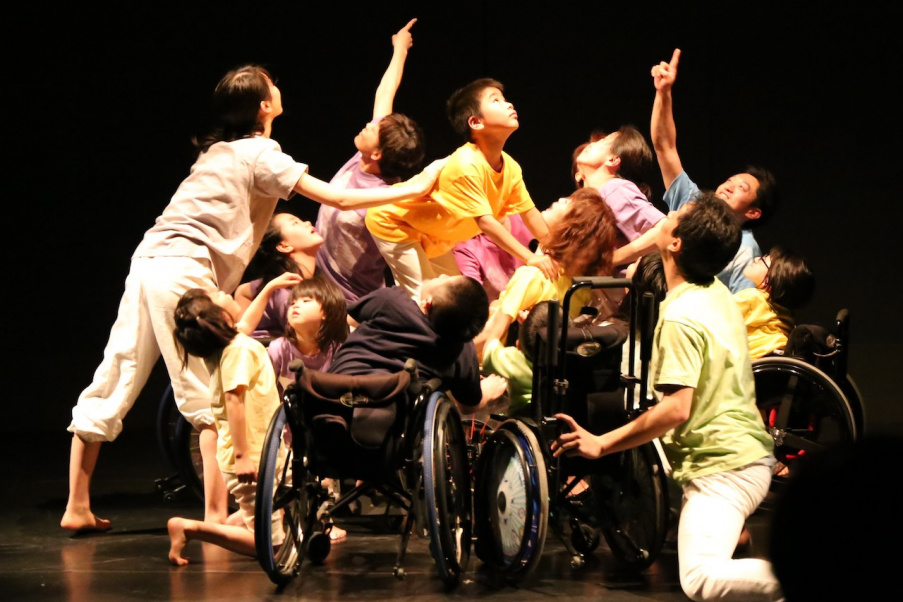
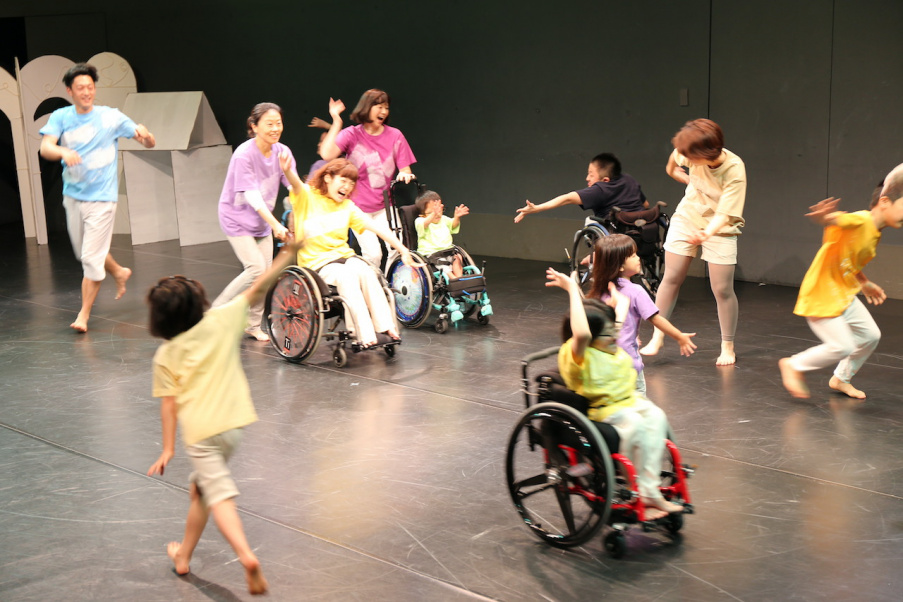
In the Dance Field for Everyone, diverse people come together regardless of whether they have disabilities, age, gender, etc., and express themselves freely and try to connect with each other through "inclusive dance." Attracted by the freedom of expression of children, Yoko Nishi was experimenting with physical expression with children with disabilities. She decided to "IF BOTH DISABLED AND NON-DISABLED CHILDREN DO IT TOGETHER, NEW EXPRESSIONS MAY COME OUT ......" and started to carve out a place for her activities in 1998, a time that had yet to be seen in Japanese society. Using the field of "nohara" as a metaphor, where "individuals" can exist together in various ways, they are developing an experimental trial in which each dancer expresses themselves and creates a dance together without choreography from the beginning. First, Mr. Nishi, the representative, looked back on how he has expanded his activities since Heisei 27 (2015), when he received the "Social Support through Arts and Culture Subsidy."

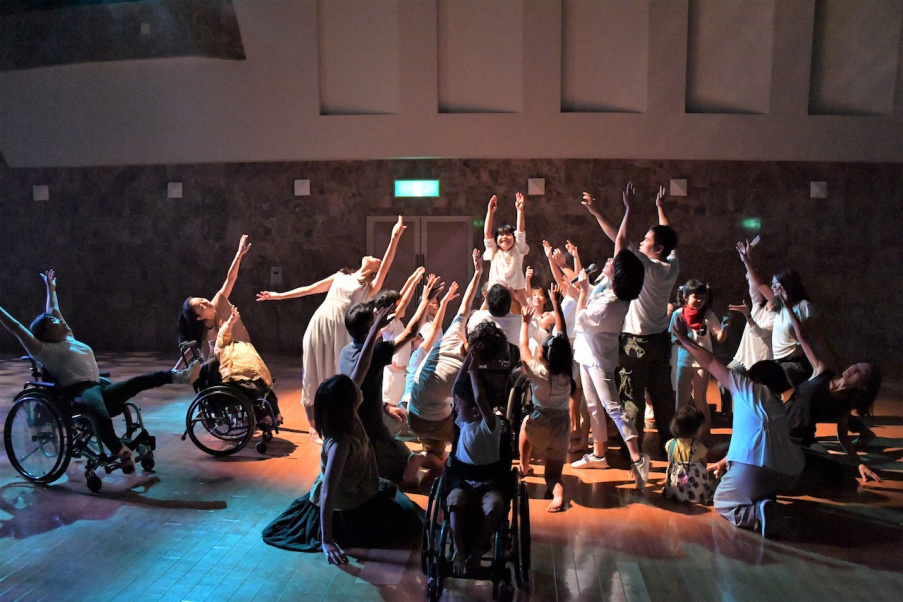
In fiscal year 27 (Heisei 2015), "Teawase Bar, Odoru, Dorurudoru" was held in search of a place to perform inclusive dance in the outside world and was selected as a "Social Support Grant through Arts and Culture."

"Teawase Bar ・ Odoru ・ Dorurudoru" Asahi Art Square 2015

From the following year, she decided to go to places she had never heard of before, and started educational workshops at elementary schools and special needs schools, as well as workshops to train volunteer "tagayashi-tai" (cultivators). From this, he felt a strong desire to spread to society the “scene of co-creation expression ” created in the process of creating inclusive dance. In 2017, they formed another unit called Noharagumi with members who had been active since they were children and have grown up, and are now active in society. In addition, we intend to cultivate "co-creation expression facilitators" who can promote "co-creation" and the creation of an environment for such "co-creation". Therefore, with the aim of fostering a co-creation society and human resources, the "Work in Progress: "Challenging Co-creation and Expression Facilitation" - Circulation of Research, Creation and Social Practice -" was planned to hold study meetings, creative works, and presentations throughout the year at various places in Tokyo, and was selected as the 1st "Social Support Subsidy through Arts and Culture" in FY 2020.

"Gaze for the Future" Dance & Archive – Children Dialogue through Inclusive Dance (2019)
Courtesy: NPO Everyone's Dance Field

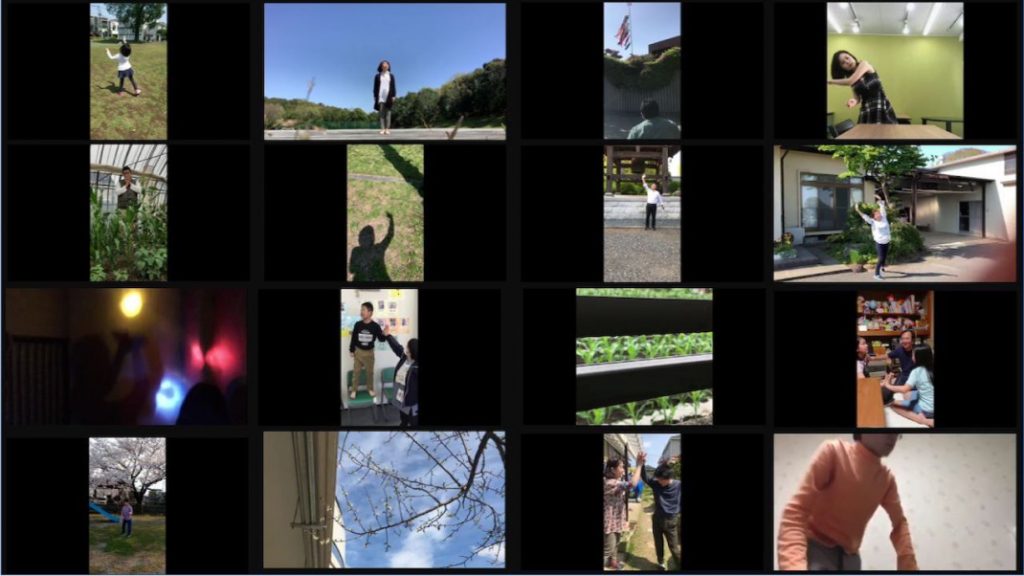
But then the pandemic hit, making in-person workshops impossible. "So, I started sending short videos and photos online with people in Ishinomaki who I had been interacting with for a long time." says Nishi. "It was the early days of the COVID-19 pandemic when we were still worried, but we found connections in nature and everyday life, created expressions, and sent them to each other as videos and photos, and edited them into video works. It was an opportunity for each person to awaken their natural sensibilities and create new expressions, and to confirm that our bodies are always expressing themselves."

Ishinomaki and Tokyo "Teawase Letter" (April-May 2020)
Courtesy: NPO Everyone's Dance Field

As a result of considering what could be done during the COVID-19 pandemic with the initial aim of fostering co-creation expression facilitators, symposiums and performances were cancelled and public workshops on co-creation expression facilitation were held online a total of 4 times between July 2020 and April 2021. Looking ahead, Nishi says, "We will theorize the method of co-creation expression that we have gained from more than 20 years of practice so that it can be utilized in creative works for various scenes and performances, and we will focus on human resource development."

Language and life are important. Implementation of "Co-creation Expression Facilitation"

Next, they reported examples of their own facilitation research and practice. Through workshops, including study groups and online workshops, young members who used to be facilitators became facilitators, giving them an opportunity to reflect on themselves.

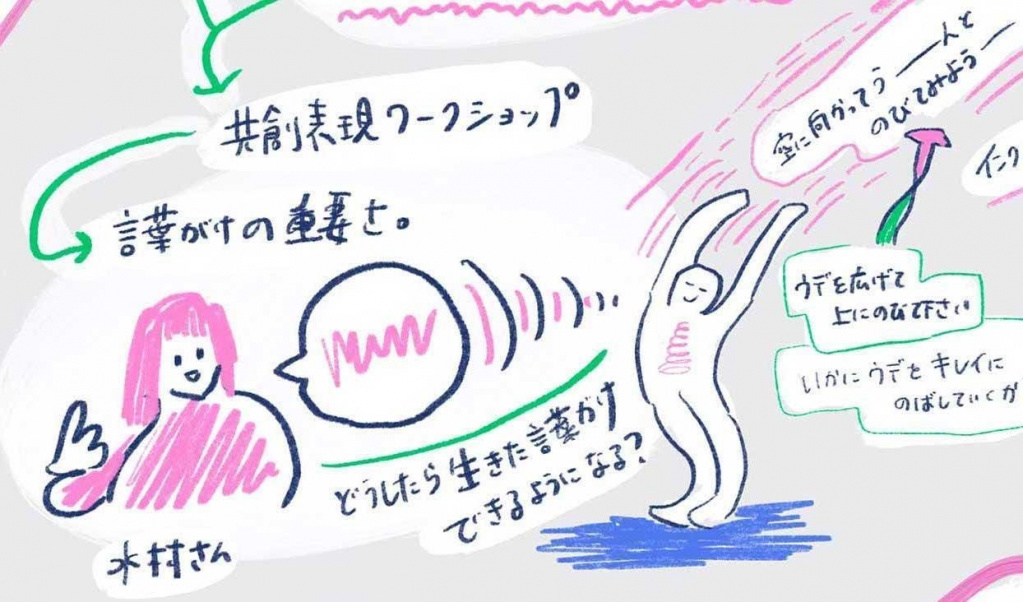
Marie Mizumura, who came across inclusive dance while studying in England and became a member of "Everyone's Dance Field" in 2020, presented her presentation under the theme "Challenging to create words that create a free world." Mr. Mizumura said that he focused on "When I first attended Professor Nishi's workshop, I was surprised by the breadth of his language and the freedom of expression that came from it." because it was the language. For example, in a typical lesson, to stretch one's arms neatly, one would say, "Spread your arms wide and stretch upward," but in Nishi's workshop, one would say, "Let's stretch toward the sky." "Then, the world expands from the real space of the ceiling and walls, and those who cannot stretch upward due to their physical characteristics can stretch anywhere in the sky."

Graphic Recording (Production: Junko Shimizu)
(Image enlargement: JPEG version)

However, in the workshops that Mizumura himself facilitated, he tended to use words like "jump," "bounce," and "clap" to directly describe movements or to specify parts of the body. However, it can be difficult to prepare too much, because the participants will follow the plan, or to improvise, because the words may not flow from within. "The workshop site is a living thing, and everyone is different, moves, and continues to express themselves, so I want to continue to challenge myself to convey what I feel in my heart." he said.

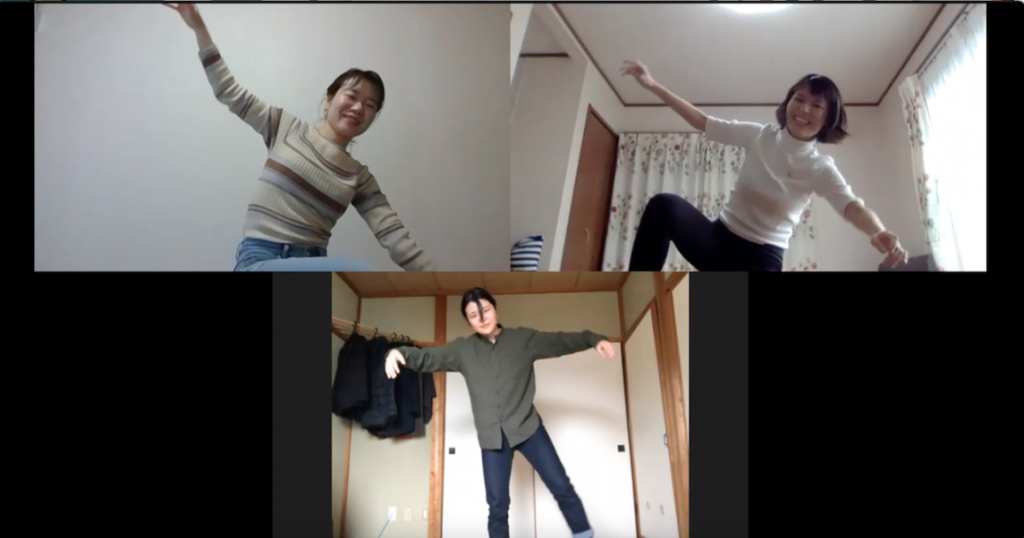
Online personal workshop
Credit: NPO Minna no Dansefield

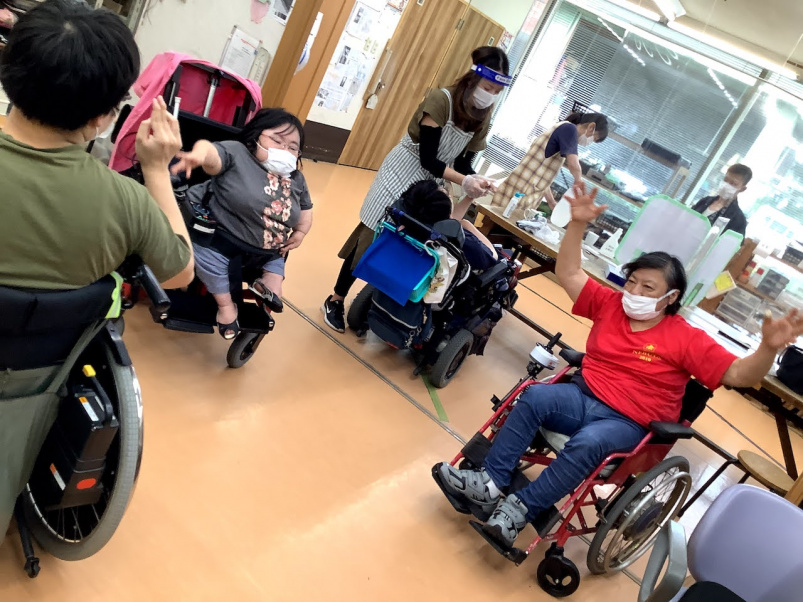
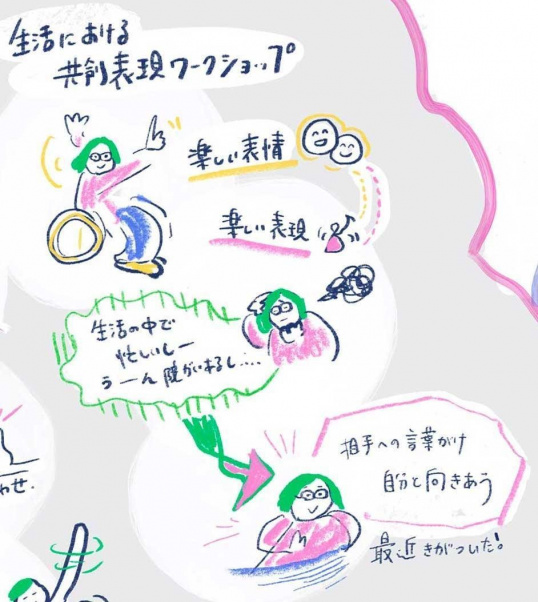
Chiba Haruka, who has participated in the dance field since she was a child, gave a presentation titled "Taking on the Challenge of Co-creation Expression Facilitation in People's Lives: Through Past Relationships with People". Chiba was born with osteogenesis imperfecta and was confined to a wheelchair. Last year, as a facilitator, she conducted an expression workshop at her outpatient facility, the Doroko Workshop and Doroko Workshop Tezukuriyama.

Individual workshop at the Doroko workshop
Credit: NPO Everyone's Dance Field

"It was good that not only the staff who have difficulty going out but also the staff members participated, and they were happy that it was a rare experience. But what I was able to do was not to create fun expressions, but to create fun expressions, and I didn't think I was able to create the lively expressions that are created on the dance field." says Chiba.

Graphic Recording (Production: Junko Shimizu)
(Image enlargement: JPEG version)

The concept of co-creation facilitation leads to a way of life. "I found myself giving up a lot of things in my daily life, making excuses for my disability or lack of time." he said. "From now on, I would like to bring about true co-creation by practicing in my daily life, such as paying attention to the attitude and words I use when I act with someone, and making a habit of looking back at what I say and do at that time." he said. In response, Tomonori Ogawa, the facilitator of the meeting, offered words of encouragement, saying, "I noticed a lot in the process of preparing for the presentation. I think that was good enough."

Ogawa and other viewers asked, "Facilitator difficult?."
"Co-creation is easy but difficult because there is no right answer. But that's why it's so interesting to challenge, and anyone can be a facilitator." says Nishi.

Free expression is born from play.
Credit: NPO Everyone's Dance Field

"The freedom you feel in your body doesn't matter whether you move or not, or whether you're good or not. It feels like the world is expanding, or conversely, it feels like it's coming back to you. That's when you're there, and for the first time, my world expands or comes back inside of me or something changes happens, and it's always something that everybody does. I think that's the important point of art." Nishi concluded.

(Reporting and writing by Yuri Shirasaka)


NPO Minna no Dansefield

1998年、身体表現論や舞踊学を専門とする代表の西洋子と6名の子どもたちにより設立。性別や年齢・障害の有無を超えて、互いの個性を尊重し、共に楽しむことのできる身体表現活動を通じ、包容力のあるインクルーシブな社会の実現を目指して活動している。設立20周年の2020年より、表現を共に創り合う「共創表現ファシリテータ」の人材育成に力を注いでいる。
https://www.inclusive-dance.org/
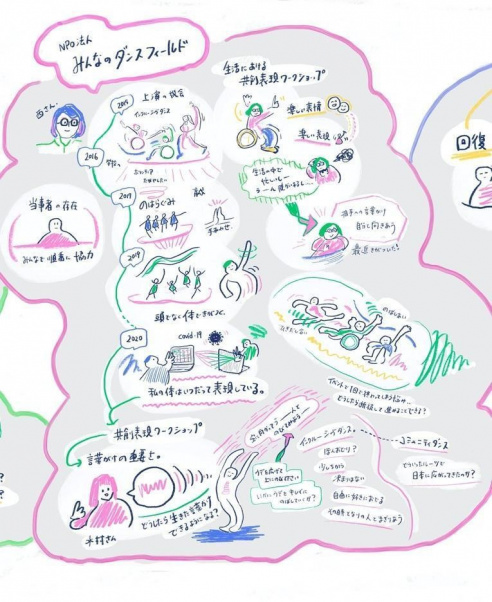
Graphic Recording (Production: Junko Shimizu)
(Image enlargement: JPEG version)

Social Support through Arts and Culture

  • Heisei 27 (2015) 'Teawase Bar, Odoru, Dorurudoru'
  • FY 28 (2016) 2nd Term "Development of a continuous "co-creation" art program centered on the performance of inclusive dance"
  • FY 29 (2017) 2nd Term "A New Inclusive Dance: Aiming for "Co-creation" through open art exchange"
  • FY 30 (2018) 2nd Term ""Looking to the Future" Dance & Archive: Children Dialogue through Inclusive Dance"
  • FY 2020 (FY) 1 "Work in Progress' Challenging Co-creation and Expression Facilitation'

Social support through arts and culture

A program to support "Activities that allow people who have limited opportunities to experience and participate in art due to their social environment to engage in art experiences, such as appreciation and creation, and to exercise their creativity and enrich their imagination." and "An artistic activity that sets social issues based on one's own awareness of issues and works to solve them with a long-term perspective while collaborating with various people and organizations" for organizations working in Tokyo.
The system was launched in FY 27 (2015), and since FY 28 (2016), applications have been made twice a year. It has supported more than 100 projects. It is not just "art for art's sake" or "art that is useful to society," but it is trying to support activities that propose and materialize a new way of art in which society and creative activities are inseparable in a way that has never been done before, so to speak, "the third art."

> Part 1: "Continuing Online Activities in the COVID-19 Pandemic" (Part 2): Continued from Tokyo Soteria