
- Date
- Friday, December 15, 2023 19:00~21:00
- Venue
- Arts Council Tokyo
- reporting body
- quinada Ltd.
- Speaker [Rapporteur]
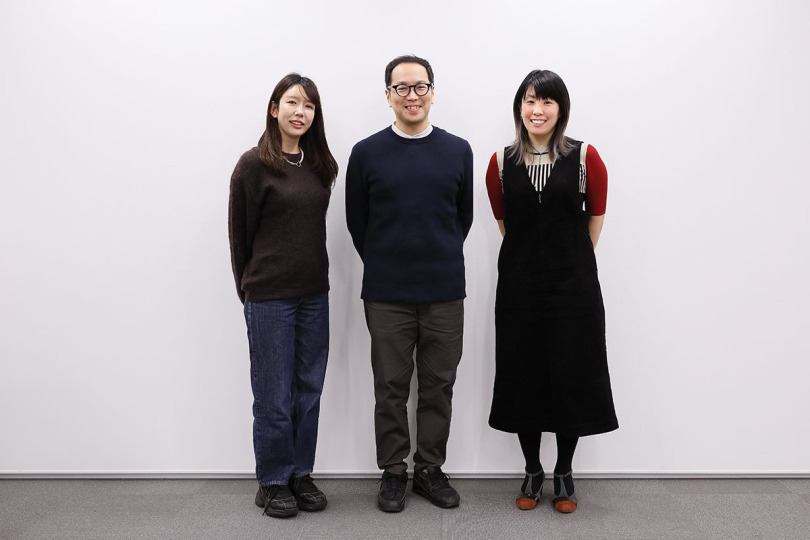
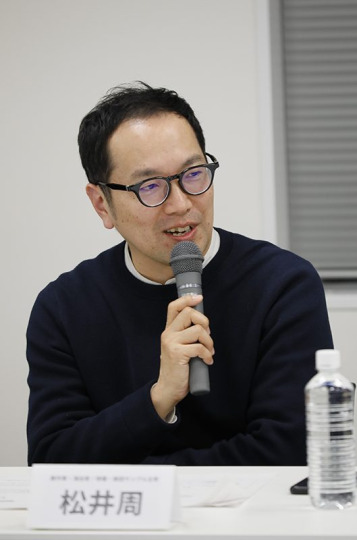
- Matsui Shu (Playwright, Director, Actor, Managing Director of Theater Company Sample)
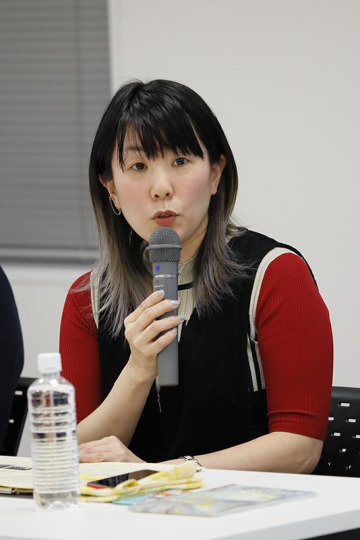
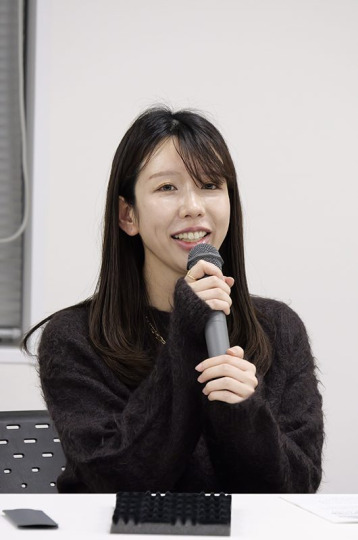
Miyoshi Sachiko (Representative Director, quinada Co., Ltd.)
Watanuki Miki (Representative Director, Aprecia Co., Ltd.) - moderator
- Toru Sakai (Arts Council Tokyo Senior Program Officer)

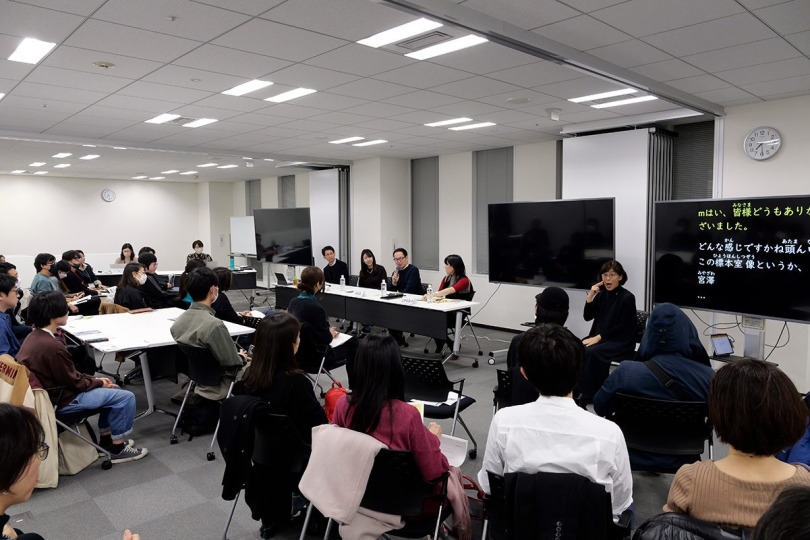
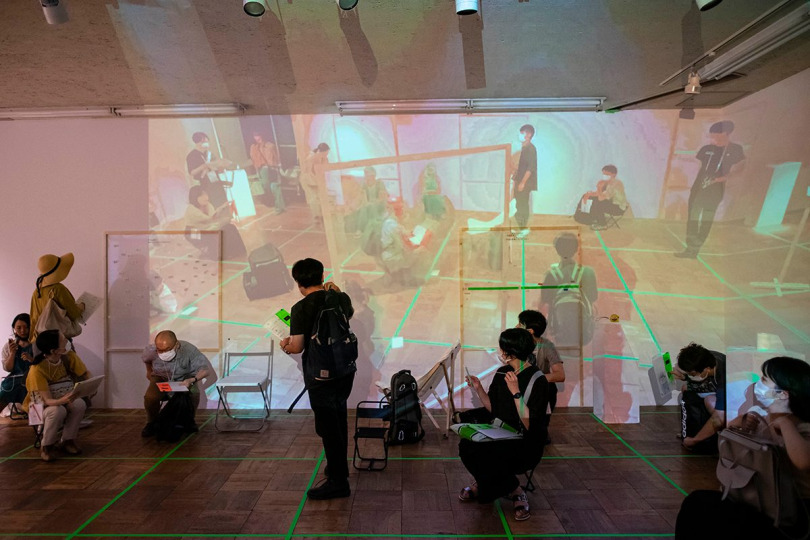
Matsui Shu's Sample Room is a study group established by playwright and director Matsui Shu to think about the world through theater. How did you achieve a place where participants' interests and concerns were fostered and output through dialogue, distancing themselves from economic effects and artistic evaluations? What kind of veins were there? We will report on the activities, including the screening of recorded images and the demonstration of workshops (games) that were born from the activities.

"Place" arrived at through trial and error
How to create a place to warm, ferment, and nurture ideas and interests that arise suddenly. It may be said that this is an essential issue for many people who are busy with their daily work and life, as well as those involved in art and culture, to enrich their activities and lives. Shu Matsui, a playwright, director, and actor, and quinada Co., Ltd., which handles management and performance production operations, received a Arts Council Tokyo grant and worked for three years from April 2020 to create a place for performances that require certain results, and "venue creation" that does not have enough time and budget in production activities, involving other artists, audiences, and other people other than themselves.


In 2019, Matsui and Sachiko Miyoshi, the representative of quinada, held a meeting that served as the impetus.
"In the same year, I performed the work called inseparable "Kakarimi," and although I did what I wanted to do, it was hard for the box office, and the next big production I had planned was cancelled. At that time, I had a meeting with Mr. Matsui about what we wanted to do in the future. This led to the idea of creating a community. For the past 10 years, events such as the Great East Japan Earthquake and the establishment of the Trump administration have been happening in which reality has overtaken fiction. I myself felt that the frame of "theater" was too small for Mr. Matsui. Mr. Matsui himself has long been interested in "human beings as living things," and he has said that he wants to immerse himself in other people's interests. So, I thought that we should gather various people and build a community." (Miyoshi)
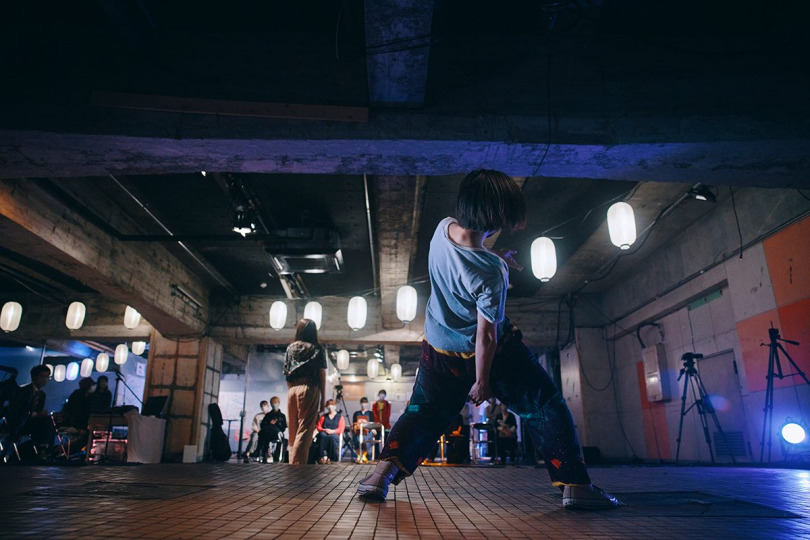
The Matsui Shu Sample Room was launched in April 2020 with 40 participants from various backgrounds, ranging from teenagers to those in their 70s. Based on online "exchange," "inspection," "participation in offline events, etc.," workshops, "which Matsui's sample theater company has continued since 2009, and" recitals, "which are a place for each member's output, were continued until the end of fiscal 2022, with half of the members changing every 1 year (1 term) (fiscal 2023 was suspended).
"I received a grant for three years, but to be honest, I didn't do very well in the first year." Matsui says of his activities. Working as a community with people of different ages, occupations, interests and interests was very different from leading a troupe or performance group.
"At first, I felt that professionals like us would support the general public when we created something. Now that I think about it, I was worried about the quality of the presentation. But that was just trying to fit your mold. Reflecting on this, in the second year, we prepared a space, so we created a booth for each person and asked them to do anything. There were novels, exhibits, music and video installations, and I found it interesting. However, this time there were many customers who questioned the quality. Finally, in the third year, we came up with a dialogue or an interactive project, using an app and playing together. That's actually probably the biggest thing I've realized in three years." Matsui said.
He had set out three guidelines for his activities: (1) to regard himself as a (It is a place where you can demonstrate your unconscious "personality" in addition to your social "role") and act freely, (2) to ignore economic rationality and efficiency (No concern for profit or perfection in any action), and (3) to get together and express himself without barriers between professional and amateur groups (to communicate and interact with each other while combining his or her role and personality). To realize these guidelines, it must have taken a considerable amount of ingenuity, change of consciousness, and time.

Watanuki Miki, head of consulting firm Apprecia, was in charge of the operation.
"Usually, I work on the business strategy of a company, or I tend to draw conclusions from my side, which is more like "I'll do it for you. Give it to me." However, the 'sample room' is the exact opposite, and I have to make everyone understand that we should never rush to conclusions, and that this is a place where communication like judging something is not conducted. On the other hand, I had a hard time in the situation that I had to manage money and schedule well because I had a recital." (Watanuki)
"It is important not only to communicate safely and securely among members, but also how to give members autonomy. We also paid attention to reducing ghost club members. How to select attractive people and place the workshop so that they can catch up by recording even if they cannot participate in the chat in real time. In March 2023, we held a presentation called "Specimen no Yu," in which we asked each person to submit a proposal, listened to their stories, decided on the amount of funding, and discussed with the supervisors whether they were able to achieve what they wanted to do through interviews and feedback." (Miyoshi)
"Over the three years, 60% of the sample room members were from Tokyo, and the rest lived outside of Tokyo. So it's based on online communication. In order not to give the impression that we were being left alone, we made sure to take a reaction when someone posted something. As I continued to do this, my friends would gradually react, and heat would be exchanged without me doing it. I would also ask guests for their preferences for the next talk, ask them to write a report on the workshop, and try to get involved." (Watanuki)


Imagination and possibilities that expand beyond the "self" frame
Part of a 60 minute video of the laboratory's activities was shown at the briefing. In the video, which begins with Matsui's comment, "People don't come together to do something. I think it's natural for people to get together because they want to, and then decide whether to play or dance after getting together." and "By getting together and continuing to output something, I think we can overcome barriers [regarding expression]." the participants, who had various interests such as theater, dance, writing personal histories, communication between themselves and others as FtM transgender people, and slime mold, look back on their time spent sharing their ideas and talking.
Their expressions of "just putting it out there" and "a place for dialogue rather than conversation" were certainly accompanied by the feeling of verbalizing and sharing (sometimes in the form of works or performances) their daily feelings and interests. Furthermore, some members have developed and continued their activities after three years in the laboratory.
At the end of the short film, Matsui says that he hopes to increase the number of people who express themselves by creating such a place. At the same time, he also talks about the possibility that he himself can be transformed by experiencing someone's speech and expression. "It's not like diving into an unknown place, but it's like VR. You're going to be in the person's story, you're going to be in the image."
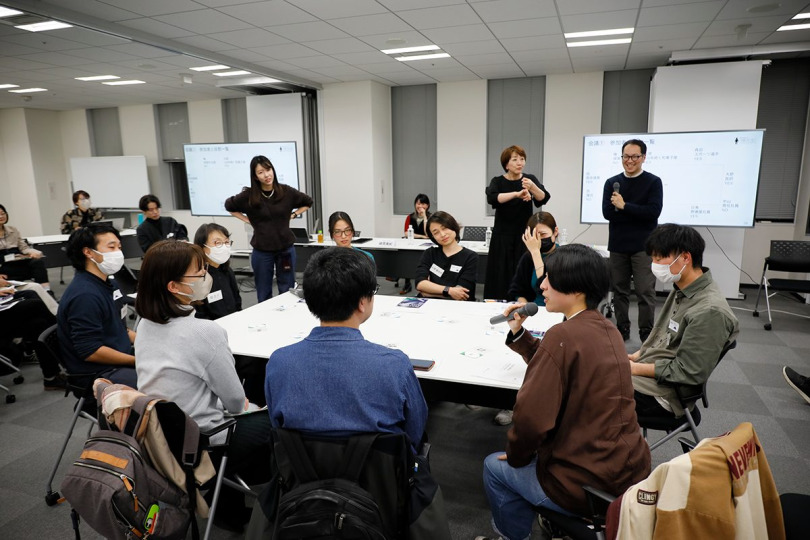
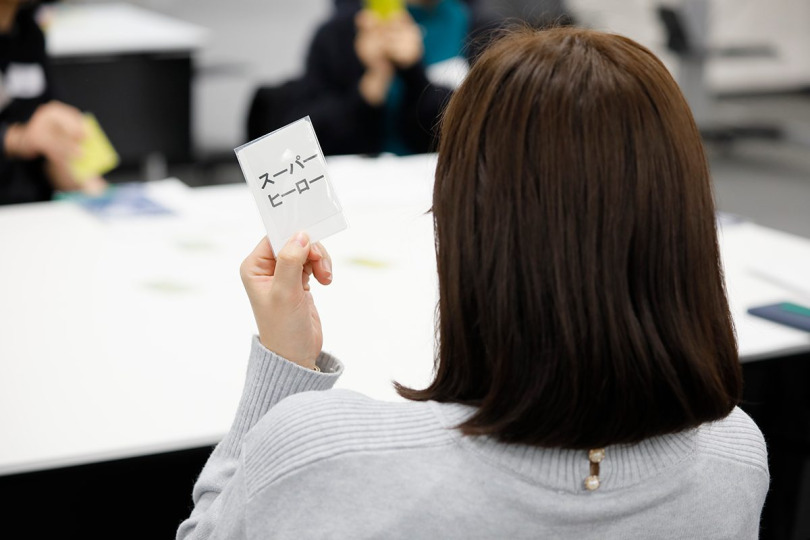
On this day, in addition to the videos introducing their activities, this feeling was strongly reflected in the workshop “Sample Conference ” by Shu Matsui and the Sample Room, which was demonstrated as a work created together with the members. Billed as "Anyone can be an actor! Live the future! Possession card game!" participants take on the role of someone else and exchange opinions on issues and topics that are rarely discussed in daily life.
The theme of the day was "Will AI Tell Us When to Recommend Euthanasia?". The game started after Matsui and Watanuki explained additional information, such as that 3 million yen would be paid to the bereaved family if they were euthanized that day, and the rules, such as respecting others ’ opinions without denying them. You pull out a role card with your occupation written on it, and after a short chat, you first express your yes/no opinion. After that, each person gives their reasons according to their character: a member of parliament, a superhero, an undertaker, or a monk. Perhaps because some of the demonstrators were members of the sample room, the exchange of opinions went more smoothly than expected, with comments such as, "When you know you're dying, you don't buy things. create a sales problem," and "They have the advantage of being able to prepare for their own death well and being able to provide a proper ceremony."
After a short break, the discussion got a little more complicated, with each character drawing action cards that reveal their past actions (including crimes and troubles). What was interesting was that the play of playing a character almost different from one's own stimulated the imagination and led to various thought experiments, and that playing a different role also led to the discovery of one's own thoughts and ways of thinking. "The basis of the sample meeting is to be tolerant by imagining others. That's why it's very important to have time to reflect after you've done everything. I think that the experience of feeling a distance from your true self, the feeling of being changed by what someone says, and the experience that you might say and do the same things in a different setting from reality lead to understanding others. Also, try it casually like karaoke. It is based on the premise of fiction, but if you enjoy it like a game, you can simulate various things." Matsui said of the workshop's potential.
How can we make theater live in society beyond the traditional relationship between showing and being shown? As the number of projects that collaborate with schools and local communities increases, the question is how to open up and enrich these projects. Matsui Shu and the Sample Room once again tackled this possibility head-on.


Miyoshi summarized the past three years by saying, "What can be produced by mixing various people and materials with Matsui's yeast? The way of the sample room was to enjoy the difference in taste of what was fermented there. In a society that has changed due to the COVID-19 pandemic, the sample room was a third place with respect for each other and a place where we could output with peace of mind. I think that this provided emotional care for the participants and Mr. Matsui." Although Matsui stopped his activities in fiscal 2023 as a period for producing his own output, he intends to continue to make use of the "Sample Room" and the discoveries and responses obtained there, and to spread them around.
"The germs Miyoshi mentions exist in everyone, and they are fermented through various social experiences. I think the expression of the sample room is to bring out that well. "Specimen" is a difficult expression to understand, but I think it is connected to "acting." Everyone plays a role in society, but if we can output the "personality" that ferments and emerges in such shackles as a work, it will surely become a more interesting expression than what professional artists create." Matsui said.
"Although the herbarium started in Tokyo with a Arts Council Tokyo grant, it can be transplanted to anyone and anywhere, so I think that through this activity, everyone can create art and help them live tomorrow with a rich heart."

The "Matsui Shu Sample Room" was selected as a subsidy program for "projects that contribute to the improvement of the environment for artistic creation," but what was provided was not only the funding of 4.8 million yen for 3 years. Miyoshi says that continuous feedback from Arts Council Tokyo through annual reports and the setting of targets helped him to better understand his activities. At a time when performance activities were restricted due to the COVID-19 pandemic, we were able to engage in such dialogue, work on building a new community, and cultivate it. This will be a strength not only for the Sample Room but also for the future activities of the members involved. In a question-and-answer session at the end of the briefing session, one of the participants, who said he was the leader of a theater group, asked a number of enthusiastic questions about management methods, such as sharing information and visions among members, as well as the future of the sample room.
(Reporting and text by Rieko Suzuki)
Profile
"Matsui Shu's Sample Room"
A study group established in 2020 by playwright and director Shu Matsui.
* What is a specimen? It refers to a person who lives in a state of fluctuation between his or her "social role," which may not be his or her intention, and "his or her personality."
Shu Matsui
Playwright/Director/Actor/Manager of theatrical troupe Sample
In 2007, he started the theatrical troupe Sample, and in 2011 won the 55 Kishida Kunio Drama Prize for his play "Boastful Son." His recent works include the Kitakyushu Art Theater Creation Series' Ie-kei '(script and direction in 2023). He has been planning and supervising 'Shu MATSUI's Sample Room' since 2020, which was the predecessor of 'Sample Club.'.
Sachiko Miyoshi
Representative Director of quinada Co., Ltd.
After producing the theater troupes of Throwrider, Sample and Hibi, he is currently managing Shu Matsui and producing the theater troupe Tagumi. Since 2023, he has been on the board of directors of EPAD. He planned and hosted 'Shu MATSUI's Sample Room' from 2020 to 2022.
Miki Watanuki
President of Aprecia Co., Ltd.
After graduating from Waseda University, he worked for a consulting company and an AI startup. In addition to supporting business development projects for various companies, he has served as the community manager of Shu Matsui's Sample Room since its inception in 2020.