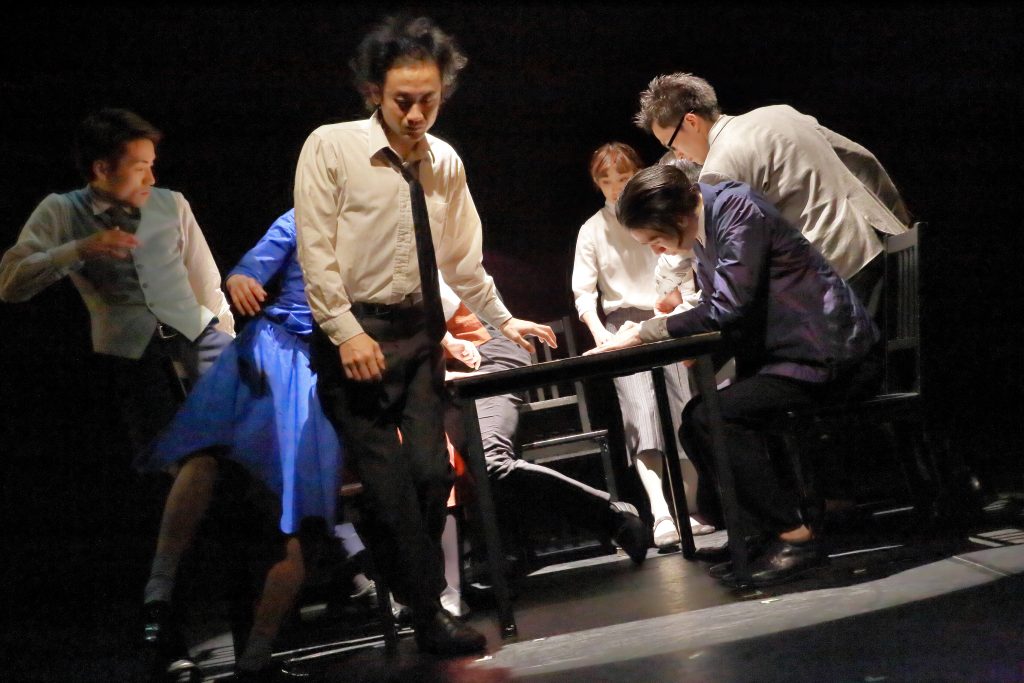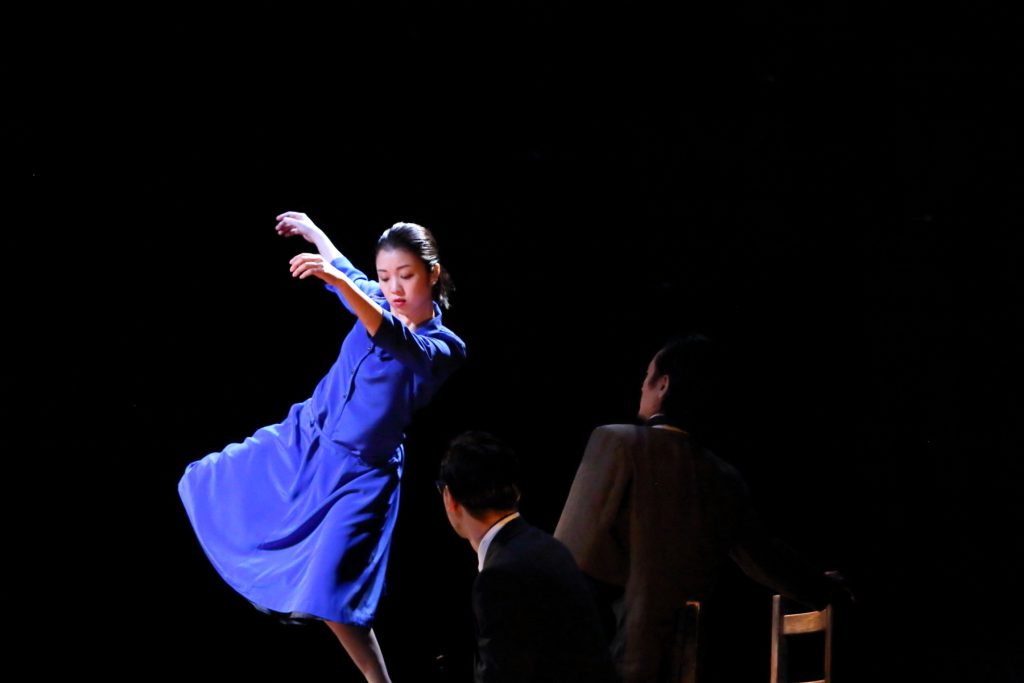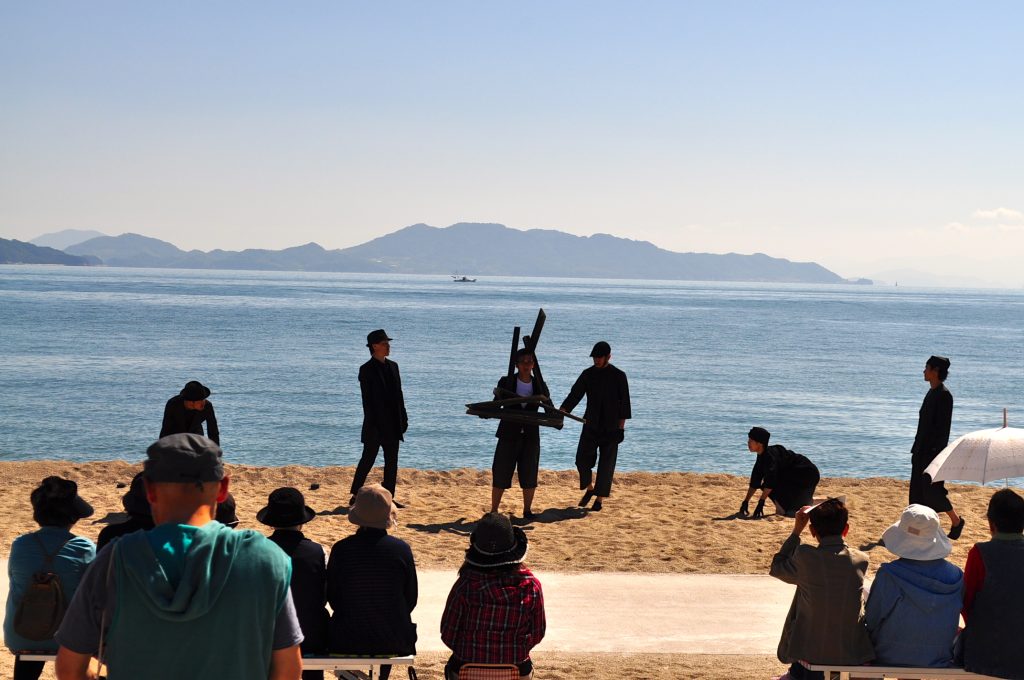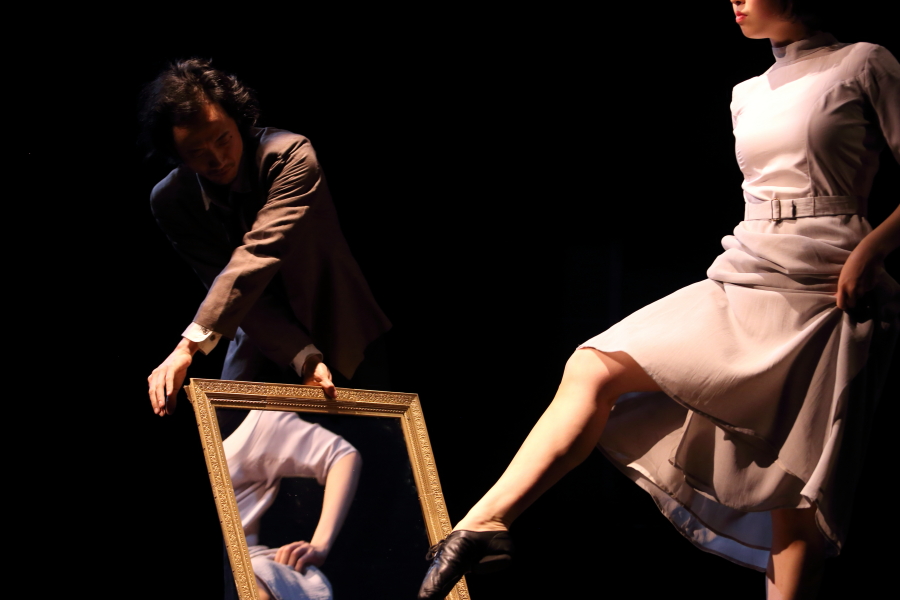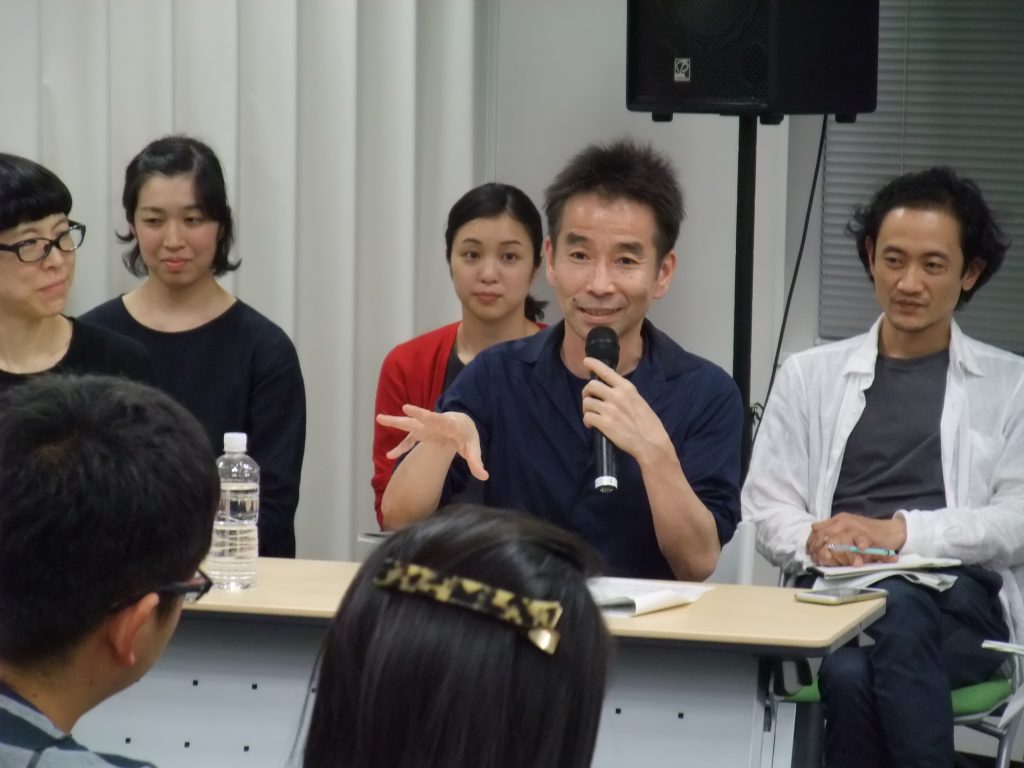

- target activity
- Company Delacinella "Shiroi Gekijo" Series (selected in FY 2014: 3 years)
- attendee
- Shuji Onodera, Momoko Fujita (Company Delacinella), Yusuke Oba, Rina Sakiyama, Yuko Nishina (members of "Shiroi Gekijo" series)
Outline of subsidized activities
"Shiroi Gekijo Series" in which Company Delacinella aims to develop a new form of creative group with continuity and develop human resources through collaboration with young members.
- In the first year, after auditions and workshops, she performed her new work "Bunshin" in Tokyo.
- In the second year, when Onodera was appointed as a Cultural Exchange envoy of the Agency for Cultural Affairs, he performed "Another Story" in Vietnam and Thailand and a new performance "La Traviata" in Tokyo.
- In the third year, as the culmination of the 'Shiroi Gekijo Series,' three small performances titled "Shohinshu" were performed as the opening project of a new small theater 'Asakusa Kyugeki' in Tokyo.
Company Delacinella has been developing the "Shiroi Gekijo" series with young members since it was selected for the Tokyo Art and Culture Creation Promotion Subsidy Program (long-term subsidy) in 2014. On July 10, the debriefing was held at the Arts Council Tokyo, and in addition to Shuji Onodera, the chair, and Momoko Fujita, the core member, three of the project's participants, Yusuke Oba, Rina Sakiyama, and Yuko Nishina, attended. The content of the activities over the past three years, their results, challenges, and future prospects were discussed.
Part 1: Self-introduction and self-analysis "Why I decided to do" The White Theater ""
(Composition and text: Rieko Suzuki)
Onodera and Fujita set up Company Delacinella after 10 years in the pantomime company Performance Theater Water and Oil. It was about seven years after they started their activities that they learned about the application for this long-term grant, when they began to explore new ways of working. "It's very interesting to be able to think about things in three-year units, and I think it's necessary for us today. Over the past seven years, I have met a variety of people, including people from different industries, on various sites, but rather than just sharing those experiences with the members gathered for each work, I think it is more luxurious than anything to keep them and build on them. If that's the case, I'd like to find a young person I can work with, even if it takes time, and work in a new company. I shared this passion in my interview." Fujita said. "I felt that it is getting harder to work as a group. It may be easier to work as a freelancer, for example, in television or movies, than to work as a group. But I also had the experience of working hard as an organization, and I wanted to create a culture of going to see companies with one color even in today's world. In order to do that, we have to accumulate a common language of the body over a long period of time. It might be difficult to even meet someone who shares that idea, but I wanted to take on the challenge, including that determination." (Onodera)

Following the selection decision in July 2014, auditions were held in October. In March of the following year, “Theater X ” launched the“ White Theater ” series with 13 members on board. It took eight hours a day for about two months, an unprecedented amount of training time, for actors and dancers, all of whom had different axes of activity, to become a single company and stand in front of audiences. "The actors have never had much physical training and the dancers have never spoken a line. First of all, we practiced Onodera's physical training method together. However, once it started, I was able to grow in a good way, with the dancers being aware of the actors and the actors being aware of the dancers, and now, after three years, I don't even know which is which. I think this is what it means to have the same tone." Fujita said.
In a simple stage space, different bodies weave together in an ensemble. The swell brings rich shades to the story. Since then, the series has grown into the core of Company Delacinella's activities. In January 2016, she gave an overseas performance of in Vietnam and Thailand, and in March she performed and won the grand prize in the (CoRich performing arts! The 9 festival (2016)) project by "CoRich performing arts!" a site for word-of-mouth reviews of performing arts.

"I don't think even Delacinera had paid much attention to Asia before that. However, as a result of the performance and workshop held in Hanoi, I was able to present my work "WITHOUT SIGNAL! There's no signal!" at the KAAT Kanagawa Arts Theater in September of this year. Little by little, my scope and place of activity have broadened." Fujita said. "Not only Fujita and I, but all the members decided to go together, which is why we are now. It's also very nice to see something that didn't exist for me, or even if it did, it was just a vague interest, grow into something that has form and continues." (Onodera)
Since auditions are held for each performance, there are no fixed members. Even so, the reason why "The White Theater" is not simply the name of the series, but rather the name of "Company," which is used by both the public and the public, seems to be because it has become a place where independent artists work together, or a place with functions that make such ideals possible. The 5 actors and dancers performed consecutively at Roppongi Art Night 2015 not long after their first work, Alter Self, which was the subject of a long-term grant. Since then, members of 'Shiroi Gekijo' have participated in the creation of "URA-SHIMA" (October 2015) at the Setouchi International Art Festival and "Don Quixote" (March 2017) at the Kochi Prefectural Museum of Art.

There are also many opportunities to appear as an ensemble in stage productions for which Onodera is in charge of choreography and to participate as an assistant choreographer, which helps young people become independent. In addition, in the third year, he has participated in the traveling performance program of the Agency for Cultural Affairs (a project to foster children through culture and art), and his activities have expanded beyond the activities subsidized by the Arts Council Tokyo. The casting process for Alice in Wonderland at the New National Theater this June was triggered by the interest of young members of the "Shiroi Gekijo" (The White Theater Series), and she is scheduled to appear in the movie (directed by Takita Yojiro) to be released next year. "When we first had two months of intensive training, when we started, everyone was working part-time at night. Since then, how the members of the company can make a living has become a big issue." Fujita said. "But we're still trying to figure out how to sustain and develop these activities. For the next three years, what kind of stance will you take in your expression, taking into account your daily life? It was also a time to try to create more places to experience." (Onodera)
With the release of "Shohinshu" (a collection of short works) (Asakusa Kyugeki) in March 2017, "Shiroi Gekijo" completed all of its activities under the long-term subsidy program and came to a temporary end. But the work will continue. Looking back, this report was not only an introduction of the activities of the three years, but also a valuable presentation that showed the discovery of issues and attempts to solve them in the environment surrounding the performing arts, such as the ideal form of group creation and the problems in the lives of young artists. How will they continue to develop in the future? As one of the role models who discovered the significance of subsidies and developed their activities, I would like to pay close attention to their future.

Part 2: In-depth interview “What changes have occurred?”
In the second half of the debriefing session, an interview was held with the program officer in charge of the grant work of the Arts Council Tokyo as the moderator to hear more details about the activities and results of the three years. What kind of joys and worries did the group have during the three years they began in search of new encounters? Uncover the real voice of the artist.
――― I heard that the origin of the activities of the "Shiroi Gekijo" series with this long-term grant was to create a new company with young people, increase the number of performances, and enhance experience. I think it was also a desire to increase viewing opportunities and make his work, and by extension the performing arts, accessible to more people. In this series, you tried to cultivate new audiences while making ticket prices cheaper.
- Onodera
- I ’ m not sure how much or how much of a change the price has made, but I think we've at least reduced the load and lowered the barrier a little bit. Cheap doesn't mean people come, but some people don't come if it's expensive. The members of the company were also pleased that it was easy to introduce them to us at this price (3,000 ~ 3,500 yen in general advance).

- Fujita
- In year 1, we set aside one "preview" day and priced it at 2,000 yen. But I think it was too cheap. I felt that the sales situation does not change greatly even if the price is lowered. After working with almost the same members for three years and seeing the reactions of customers, I came to realize that the cheaper the price, the better.
――― Delacinella has been working on workshops and performances with people with hearing impairments for a long time, and I heard that many of those people attended "La Traviata" in its second year. We received reports that people enjoyed the show, including reading a text explaining the story before the performance started. I think you have also made efforts to broaden your customer base, such as setting up tickets for junior high and high school students. Did you feel that you have an increase in new customers or repeat customers?
- Fujita
- To be honest, we haven't really gotten to the point where we've seen results in a lot of things. In particular, I want junior high and high school students to watch more, but I haven't developed enough, so I want to keep trying.
- Onodera
- Of course, I think the first condition is that we do our best (on the creative side). But I want people to have more expectations, and I think we need to advertise for that. In particular, I am always thinking about how I can convey the joy of watching live shows, not only with this project but also with other projects.
Creating a Company to Enhance the Value of Artists
――― We only subsidized the performance of "Shiroi Gekijo" in Tokyo and overseas, but as an outgrowth, we started a school tour program of the Agency for Cultural Affairs with the members of the project.
- Onodera
- We held workshops at 14 elementary and junior high schools last year and 21 schools this year until recently. Mr. Oba played a central role in this year's workshop. How was it?
- Oba
- It is a program where you can experience mime while introducing our creative activities, and it is a very good experience for us to get in touch with the honest sense that is unique to elementary and junior high school students. If it is interesting, they will eat it, and if it is boring, they will leave at once. School teachers often say, "It's so nice to meet people who can give real performances in places like this." At the same time, I realized that there are many people who can't see the performance unless we go. After all, it's not just saying, "Please come because it's going to be at the theater," but we have to go. As a person on stage, I feel like I have to go out more.

――― In addition to performances at elementary and junior high schools, you also have an outdoor performance at Inujima in the Seto Inland Sea ("URA-SHIMA"). Is there anything that you have come to see by actually going to places other than the theater?
- Onodera
- Like the pricing I mentioned earlier, there are a lot of things that we take for granted without realizing it. For example, at the seaside of Inujima, the sound of waves and wind make it impossible to hear my speech at all. And I use a microphone, but the wind gets in there too. Also, in the case of elementary school programs, the gymnasium is the venue, but even there, they don't have good lighting or sound, so they just do it on the spot. I think the important thing here is that the actor's body and mind are exposed. In the first place, it is the stage and the actors who are able to stand up suddenly, but when various effects are added in the theater, they can stand up somehow. However, when I was made to perform in front of elementary school students without any decoration, and they said, "Oh, I'm boring," I, myself included, realized anew. On the stage of the theater, I usually say things like, "Why don't customers come?" or "This lighting costs money, too," but when I think about it, those things are just selfish things and have nothing to do with the customers. Over the past three years, I have come to realize that we have been performing without noticing such things.
――― That's a very valuable experience. When you started the "White Theater" series, you said that you wanted to minimize the stage setting and effects as much as possible. It's about how much physical training you're going to have instead of using some technology to provide visual impact and surprise. In fact, in the first year, they have intensive training for two months. I also think that this kind of intensive training and creative time leads to the discoveries made in the outdoor and school tours you just mentioned. In addition, I felt that the trial and error of how to deliver the work, as well as the creative work, such as the talk about ticket prices and school performances, may have played an important role in exploring the role of Shiroi Gekijo as a company.
- Onodera
- Under the name "Shiroi Gekijo," we tried various things and created new possibilities for actors and dancers. For example, in contemporary dance, there is a problem of attracting customers, so even if it takes a month to create it, the number of performances is often 4 or 5. Then, after a while, I made it again for another month, and 4 or 5 times ....... In other words, if they perform 2 times a year, they have only been on stage 8 ~ 10 times. I have always felt that getting paid to say that I am a professional is like "Isn't it missing?". So I thought it would be good to appear in front of people, or perhaps to become stronger by appearing in front of people, so I asked the members of the White Theater to participate in ensembles and choreography work for outside stages. So, Sakiyama, who is here today, and Oge (Takashi), who is not here today, were on stage every 3 days for 100 stages a year last year. After all, I think there are things you can't understand or notice unless you experience such things.
This is almost paranoia, but anyone can play on stage, and most workshops these days are like "let's do it together." That's why I don't feel admired. But after all, just like when I myself thought, "I want to!" I would like to do activities such as an organization where people think, "Wow, wow, I'd love to try something like this". That's not something anyone can do, and that's why it's an activity we want to continue. If you do that, maybe someone will be excited and admire you. When I first came to the Arts Council Tokyo and talked about the project, I think I spoke passionately about that.
*The second part is here