
This website uses cookies to improve your experience. You can also change the cookie function by setting your browser. You must agree to the use of cookies when browsing the site.

  • x
  • Instagram
  • facebook
  • Line
  • Youtube

Tokyo Arts and Culture Promotion Subsidy (Long-term Subsidy) Activity Report Meeting

Since fiscal 2013, the Arts Council Tokyo has been providing grants for long-term activities for up to 3 years under the "Tokyo Arts and Culture Creation Subsidy" program. The following is a report on the activity report meeting held by the organizations that have completed the subsidized activities.

The 10 "Live Performance as Cinematic Expression"

Reflections on Project and the Series of Lectures "Within the movie, after the movie, and in the movie frontier"

Target Business
Charm Point "Development, completion and release of a movie made from sound" (Project selected in FY 2015: 3 years)
Speaker (Reporter)
Kei Shichiri (Director of Charm Point)
Tetsuya Takahashi (Deputy Head of Charm Point, movie cameraman)
Tsutomu Tanazawa (Charm Point Accounting, Video Director/Producer)
moderator
KONNO Mariko and USUI Chizuru (Senior Program Officers in charge of Art and Video, Planning and Support Division, Arts Council Tokyo)

Outline of subsidized activities

By reversing the normal process of film production and starting with sound (sound track), it unpacks various elements of other genres that are incorporated into the expression form of film. The film was made by reconstructing them while comparing and verifying them with the film. Accordingly, collaborations with artists from various genres such as electronic music, voice performance, dance, theater and art were announced as Work in Progress. Over the course of three years, the project has produced four new productions, five feature films, and two short films, as well as participating in international festivals. At the same time, a series of lectures on related themes called "Within the movie, after the movie, and in the movie frontier" was held 11 times with various commentators invited, and the discussions were fed back into the production. In the final year, a symposium was held over two nights with a total of 8 guest panelists.

Reports

The project "Within the movie, after the movie, and in the movie frontier" and its series of lectures were launched in 2013 by film director Kei Shichiri and Charm Point, a group made up of freelance filmmakers, musicians, and artists, in search of the possibilities of expression beyond film as a package. This is a project in which lectures are held to reconsider "film" from various perspectives, such as history, technological transitions, and the relationship with the audience, and the viewpoints found there are applied to live performances and actual film production. The report, which overlooks a total of five years of activities, vividly conveys the organic relationship between the two projects that run side by side, and the intertwining of creativity and thinking that leads to further creativity.

From left: Tsutomu Tanazawa, Kei Shichiri, Tetsuya Takahashi

Film Work in Progress (FY 2013 and FY 14/single year grant)

Are digitally filmed, edited, released or distributed movies the same? The project and the series of lectures "Within the movie, after the movie, and in the movie frontier" started with Kei Shichiri's vague sense of discomfort with digitalization. The long-term subsidy is for 3 years from 2015. However, the project itself started 2 years ago with a single year grant, and as of April 2015, 9 courses had been held, and live performances and films had been produced to serve as the starting point for the project. During the course, various issues emerged, such as the transition from traces of light and shadow on film to digital signals, the relationship with sound after the advent of talkie films, and changes in viewing environments such as online streaming and live screenings. On the other hand, in the practical part of the project, among the themes presented in the course, "sound," which is usually added at the end of film production, was used as a clue to unravel "what film is."

At the live concert "Music as a Film" held in April 2014, 12 performers sang Oscar Wilde's "Salome" (translated by Gennosuke Hinatsu) in a variety of ways, including singing, speaking, and shouting, in time with the projected image. It's a soundtrack demonstration (the timing of which is strictly dictated by signs embedded in the video), but on the screen are subtitles of other stories that personify the encounter between film and music. It created a space different from the “movie ” experience, in which the visual and auditory senses overlap and are unified. In addition, the film "Music as a Film" (released in April 2015), which was based on the sound source of this live performance, was also a work in which various voices and words were mixed, and only subtitles and scenery were used as images. Shichiri looks back on the Music as a Film series as an announcement of work in progress. "Work in Progress is a common practice in art and theater, but I wanted to see what would happen if I incorporated it into filmmaking."

Excerpt from "Document: A movie made from sound"

Creating a Movie by Taking Off the Movie (FY 2015)

Experiments in progress, which do not assume that completion equals completion, will continue to develop. "Salome's Daughter," which was screened in February 2015 using the method of "acousmonium," in which electronic music is played using multiple speakers to create a three-dimensional sound space, was conceived and named with the aim of "Salome," which is different from the existing film. Based on the original text written by Misei Shinsaku, Tomoya Higaki created a music concrete, which was then used as the basis for the film. "To unpack an existing movie by making it from the reverse. In the digital age, we've taken all the different elements that have been built into film," said Shichiri. In August 2015, the first year of the long-term grant, "Salome's Daughter" was screened at the FUTURA International Electronic Music Festival in France. In the following month, the "Movies from Sound" series and "Documents: Movies from Sound" were released. He went on to work on Another Side: Salome's Daughter (in progress). Combining his previous soundtracks with contemporary dancers Ikuyo Kuroda and Megumi Kamimura, the music combines electronic sounds, stringed instruments, and multiple female voices to create a complex and rich swell of imagery, with images of vague and fragmented memories, nature, horses, and dancing bodies.

“Salome's Daughter: Another Side (in progress) ” trailer

Where is the movie? Expanding experiments (FY 2016 and FY 17)

"In the film era, there was basically only one movie: "Salome" for "Salome" and "Salome's Daughter" for "Salome's Daughter." But digital is a collection of data. Isn't it unnatural that it fits in one package?" said Shichiri. After completing the first year of the long-term grant program, it seemed that the direction of the program was not to converge thinking toward a single answer, but rather to expand the questions and initiatives. In fiscal 2016, the project focused on physical expression and collaboration between live performances and screenings. After a trial performance at Tama Art University, he held the 'Performance of movies made from sound' at VACANT in Harajuku (February 2017). In addition to the performance and acousmonium versions of "Salome's Daughter," the international version of "Music as Film" was screened for three consecutive days, with different seating and stage settings. The event was a chance to gather together and verify previous attempts, and also served as a filming location for "Another Side: Salome's Daughter remix," which was released the following month.

1st "Salome's Daughter/Performance"
2nd "Daughter of Salome/Acusmonium"
3rd "Music as film"

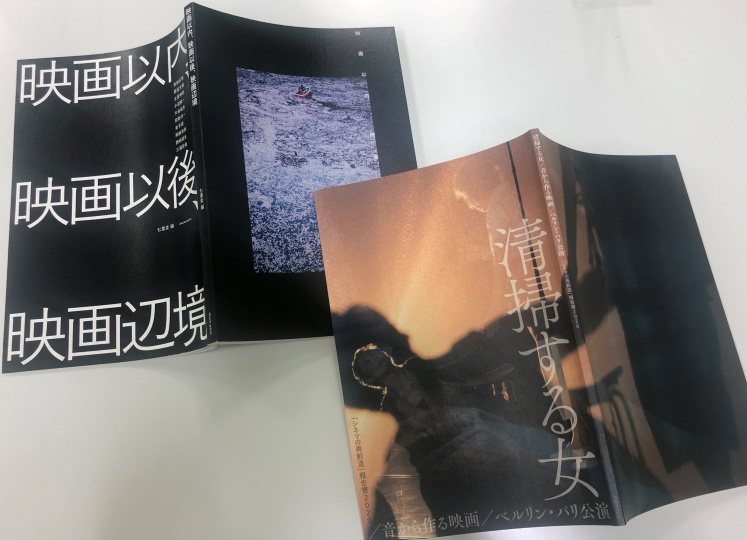
One attempt calls for another, sometimes merging, running side by side, calling for another — that's the essence of Charm Point's work. In the following fiscal year of 2017, following the performance of "Salome's Daughter" with a live reading and video installation, he released a new film "You are not me, Salome's Daughter Deconstruction" using the same text and soundtrack. On the other hand, the series of lectures continued without interruption in parallel with live performances, screenings, and film productions. In February 2018, a booklet entitled "Film Within Film and Beyond Film Margins" was published, summarizing the contents of the 22 lectures and the flow of the project "Films Made from Sound," and a commemorative symposium was held to conclude the 3 years of activities.

"Movement" that intertwines thought and practice opens up

With 4 new productions, 5 theatrical films, 2 short films, 14 lectures and their archive booklets, and a symposium, the results of this 2-part project are remarkable. None of these would have been possible without the charms that keep thinking, moving, and expanding. "I think they are doing something quite labor-intensive and primitive using the latest technology called digital. SCARY THAT MOVIES USED TO HAVE. Shichiri is trying to win it again. I really appreciate your support for that." says Tanazawa Tsutomu, a member, looking back on the past three years.

Their themes, such as the possibility of film expression and the rediscovery of fear, seem rather abstract and elusive than clear indicators such as attendance or overseas performances. In fact, many of the lectures and talks presented at the debriefing session were difficult and difficult to understand. Nevertheless, the strength and attraction of this effort, which is not ambiguous at all, is probably due to the fact that the discussions and thoughts there are greedily linked to the creation of new expressions. In addition, the fact that the subsidy was given to the movement itself, in which the creative relationship between such thinking and criticism and the production of films is formed, may lead to the support of "films" that do not fit within the framework of a single organization. The booklet contains not only the lectures, but also the videos of screenings, performances, and talks, as well as the works created based on these videos, which should serve as a valuable archive open to anyone who is exploring the possibilities of film expression.

2 booklets produced "Within the movie, after the movie, and in the movie frontier," "Women Cleaning/Films Made from Sound/Report 2020 on the Berlin Paris Performance" Recreating Cinema "

(Composition and text: Rieko Suzuki)

charm point

Centered on film director Kei Shichiri, free-lance filmmakers, musicians, artists, photographers, poets, etc., formed a loose alliance to produce and present works that go beyond existing genres of expression. While continuing his creative activities to expand cinematic expression, he is also making efforts to create a forum for collaboration among artists, researchers, and audiences who share this orientation. His films include Hottentot Apron Sketch (2006), Sleeping Princess (2007), DUBHOUSE (2012), and To the light (2014~).

Speaker Profile

Kei Shichiri

映画監督。1967年生まれ。早稲田大学卒。在学中から映画の現場で働き始め、約10年間の助監督経験の後、『のんきな姉さん』(2004)で劇場デビュー。その後、『マリッジリング』(2007)のような商業映画を監督する一方で、声と気配で物語をつづる異色の作品『眠り姫』(2007)を自主制作・配給。上映10年のロングランを機にサラウンドリマスター版(2016)も制作・公開。建築家と共作した『DUBHOUSE』(2012)が国際的な評価を受ける。近年は、「音から作る映画」プロジェクト(2014~)など実験的な映画作り、映像パフォーマンスにも取り組んでいる。2017山形国際ドキュメンタリー映画祭インターナショナル・コンペティション審査員。2018年よりWhenever Wherever Festivalのキュレーションも務める。多摩美術大学非常勤講師。
http://keishichiri.com/jp/

Tetsuya Shibashi

Born in 1966. After graduating from Waseda University's First Faculty of Letters, he worked for a video production company and a documentary film production company, and gained experience working as a freelance assistant photographer for films, commercials and music videos. At the same time as his assistant, he was employed as a cameraman for a V-cinema film directed by Kei Shichiri in 1998, and later became in charge of shooting independent films. His major films with Shichiri are Dream de Aitara (2004), Sleeping Princess (2007), Marriage Ring (2007), and Salome no Musume Another Side (in progress) (2016). Other films include "Lockout (2008)" directed by Yasushin TAKAHASHI and "Charlotte/Susabi (2017)" directed by Masaki IWANA. In recent years, he has often been in charge of recording images of dark dance performances, and he has gradually become more involved in stage expression, not limited to his activities as a cameraman.

Tsutomu Tanazawa

Born in 1968. After graduating from the Department of Sociology, Faculty of Sociology, Rikkyo University and the Japan Film School, he worked for the film company Cinecanon and the film production company Dub before becoming a freelance director and producer in 2006. Since then, he has been involved in various video productions, and in recent years, he has been actively directing movie trailers (Apichatpong "The Tomb of Light," "The Light of the Century," Wang Binh "The Three Sisters," "The Detention Ward," Phu Bo "The Elephant Sits Silently" and many others.). They worked together for many years as producers on Kei Shichiri's "Sleeping Princess."