
This website uses cookies to improve your experience. You can also change the cookie function by setting your browser. You must agree to the use of cookies when browsing the site.

  • x
  • Instagram
  • facebook
  • Line
  • Youtube

Creation Grant: Creative Aactivities [Long Term] grant Activity report

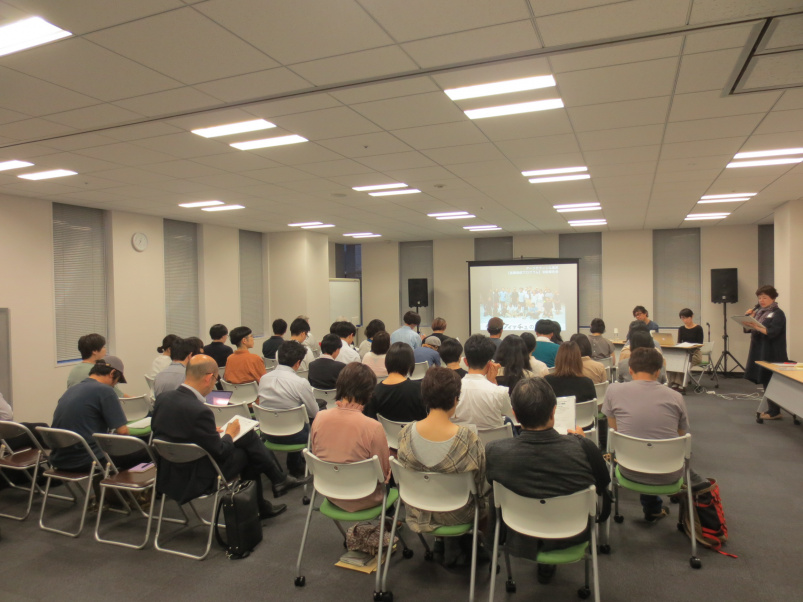
Arts Council Tokyo has been implementing a program called "Creation Grant [long-term subsidy]" that subsidizes long-term activities for up to 3 years since FY25. Here, we will report on the activity report meeting by organizations that have completed subsidized activities.

The 7th Chelfitsch Development in Asia

target business
"International Co-production Project in Asia" (adopted in FY 2016: 3 years)
Speaker (Reporter)
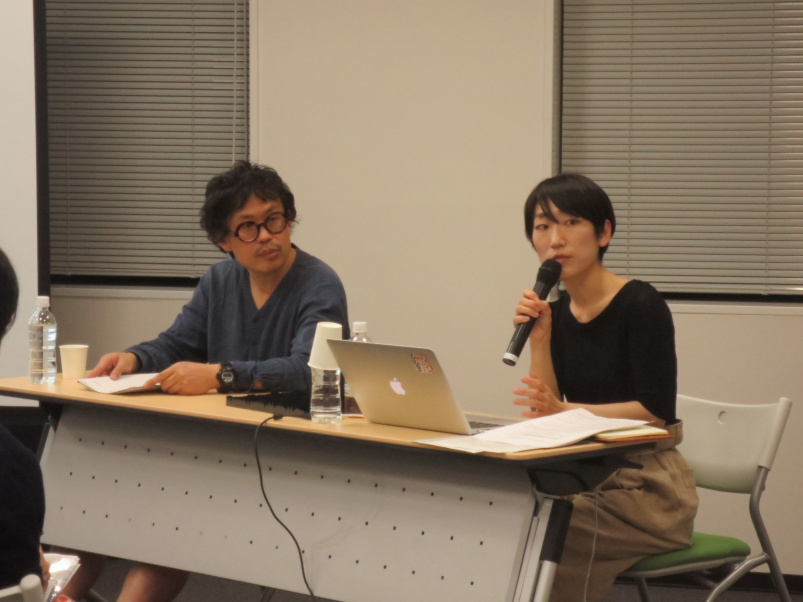
OKADA Toshinori (Director, novelist, and director of Cherfitsch), YOKI Tamiko (Producer, Cherfitsch)
moderator
Satoko Ishitoya (Arts Council Tokyo Senior Program Officer)

Outline of subsidized activities

Until then, Chelfitsch, which had established overseas activities in Europe and the United States, has been working for three years from 2016 to 30 (2018) to Creation Grant We supported it with a long-term grant. We started by looking for all kinds of resources to find artists and counterparts to collaborate with, and to expand the countries where we could work. In addition to touring the repertoire, including the recreation of the performance "Five Days in March" in China, the co-production "Pratana: Portrait of Possession" in Thailand was a major success.

Part One: Report
From International to Intercontext. New developments in international co-production

Starting with the performance of "Five Days in March" at the Kunsten Festival des Arts in 2007, Chelfitsch continues to perform in Europe. Why are they now trying to explore a new way of creating on the Asian stage? At this debriefing session, the three-year history of the "Asian Co-Production Project", which was selected as a long-term Grant Programs in 2016, was introduced, focusing on the creation of "Pratana: Portrait of Possession" created with Thai artists and actors.

In addition to performing at European festivals, the director Toshinori Okada is responsible for writing and directing the repertoire of the Munich Kammerspiele in Germany, and Cherfitsch is probably the most internationally active company in Japan's contemporary theater since 2000. They are looking at Asia, exploring new ways of international collaboration, and building a network of creative and performing arts in this long-term Grant Programs "International Co-production Project in Asia".
Why are you heading to Asia now and creating a platform for creativity? In addition to his sense of mission to leave a creative model that can be passed on to the next generation, he also had a vague anxiety about the state of European co-production, which is the foundation of his success.
"Co-production is a European-style fundraising system in which multiple organizations, theatres and festivals finance a single work and support their creation. Since 2008, Chelfitsch has also benefited from this and has continued to create, but in such international collaborations, the goal is to complete a single work, so it may end in a one-off event. As a company, I felt that it would be a waste. Also, the system itself is based on the European economy and existing networks, so I don't know if it will continue in 10 or 20 years." is Tamiko Kiki, who serves as a producer of Cherfitsch. Okada also said that he had a sense of crisis when he learned about the background of curating public theaters and festivals in Europe. "Nowadays, the co-production system is also applied to art from non-Western countries, but the premise is European multiculturalism, and I don't know how long that tolerance will last."

Three years of concurrent and intersecting research, performance and creation

The three-year International Collaborative Project in Asia combined performances, recreations, and workshops of existing works in China, Thailand, and Indonesia with the creation of a new work, Pratana: Portrait of Possession, based on the novel by Thai author Utit Haemamoon.
In FY 2016, Year 1, he visited Thailand, Indonesia, Malaysia, the Philippines, Cambodia, Vietnam and other countries. While interacting with local producers and artists, I deepened my research on the relationship between local society and art and the creative environment (The initiative ran for 3 years and met more than 100 people in 15 cities.). It was during this year's research in Thailand that he decided to work on the stage adaptation of Utit Haemamoon's novel. "When Uthit showed me around a Thai art university called Silapakorn University, he told me that the main character of his novel, which he will soon write, wanted to become an artist and entered this university. They also talked about the content and decided that they wanted to make it into a stage play. However, I met Utit at a space called Genron in Gotanda the year before. It was an event about censorship in Thai literature, and I was just there as an audience. I was not interested in Thailand, but in artists who live in a situation where censorship exists. It's not someone else's problem." (Okada)
In March 2017, he performed Super Premium Soft: Vanilla Rich in Bangkok. After informing local audiences, actors, and creators of the style and philosophy of Cherfitsch and Okada, auditions for "Pratana" were held at the beginning of 2017, and preparations for the production began in earnest. It took a lot of time and effort to translate the novel, which was written in Thai, and write the script. In January 2018, staff including Wataru Fukutomi, who translated the novel into Japanese, and Matthana Chaturasenpilot, who translated Okada's novel into Thai, gathered for a training camp to brush up on draft 1, which was 6 hours long. "It was three days of looking at a text that was not at all theatrical, and examining not just the language, but the social context, the historical events, and the implications of the metaphors in the novel." Okada said. Immediately after that, Cherfitsch performed "Five Days in March" in Beijing for the first time. At the same time as creating new works, they continued to recreate existing works and find partners for various forms of collaboration.
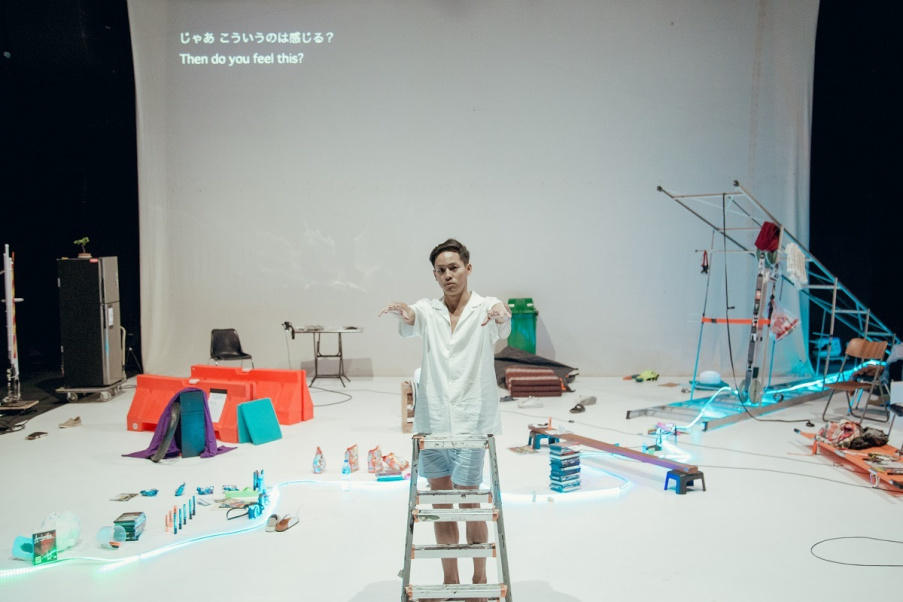
The third year of the project. After planning stage art and lighting in Japan and Thailand, and two months of rehearsals starting in June, the stage version of Pratana finally made its appearance. After opening in Bangkok in August, they performed in Paris in December and Tokyo in June this year to great acclaim. "I have been involved in international productions, but I am beginning to feel that the context is more important than the relationship between countries. What was new to me about Pratana was that the content it dealt with was not in the context I was in. Of course I did research, but that doesn't mean I know much about Thai society. However, I thought about how a work like "Pratana" would work for people outside the Thai context, and I think I did that. Also, I was able to do this because I had enough "international" experience placing Cherfitsch's works in a context other than Japan. I was ready in that sense. Looking back, when I was making a play for children, I was thinking about it in the frame of context, and I think that it is possible to make something that goes beyond the context of this side and this side of the same town, not just large-scale things like countries and cultures, and that we should make more of them. It's interesting to think about that now." Okada said.
“Pratana ” is a work that intertwines the sexual history of the main character, a painter who projects Haemamoon himself, with the modern history of Thailand. The tension between society and the body that appeared in the performance was painful and at the same time left a strong impression. It also seemed to be the culmination of Okada and Cherfitsch's long-time efforts to explore the interrelationships among society, space, the body, and storytelling. There were many things that were planned but not realized, such as independent funding for local creation and mutual exchange of technical staff. Both Okada and Koki frankly admit that, while they made important encounters with many people, they fell short of their project goal of "building a new form of Asian co-production." However, it seems that the seeds for the next stage have already been born in the many attempts made in the performance space of Pratana.

Part 2: Fukahori Interview
In Europe and Asia, while being perplexed, exploring and continuously creating

In the second half of the debriefing session, Satoko Ishitoya, Program Officer of Arts Council Tokyo, was the interviewer and gave a more detailed interview about the co-production with European public theaters and festivals, which was the background of this grant application, and the results and challenges of the collaboration in Asia based on this.

-First of all, I would like to ask you once again what Chelfitsch has been trying to achieve through long-term grants and international co-productions utilizing them. We use the term "international co-production" by connecting three words: what does "international" mean in the first place, who does "co-production" mean, and what does "co-production" mean? Therefore, it has various meanings, and I think the mainstream way of thinking and meaning of international co-production has changed in the history of it. Based on that premise, could you tell us a little more about the international co-production that Cherfitsch has pioneered? For example, how can companies and producers take advantage of a European-style system that is funded by theaters and festivals?

yellow wood
Of course, the basic premise is that they will be performed at the theater or festival where the money is provided, but the European-style co-production system is that the money is provided and the money is used for the creation. So, it has a big meaning that theaters and festivals commit to the work based on trust and expectation to the artist. This can be said to be because the system has been established, but I still feel the importance of receiving funding for a work that has not yet been completed.
Okada
I'm always desperate for a chance to perform.

-During the creation process, you have discussions with the funding providers. What kind of people do you talk with?

Okada
Most of the people you talk to are artistic directors of theaters and festivals. I think they are interested in more than just paying for new works that have yet to be made. So I'm going to talk and share what I'm thinking about at the moment, what kind of theme, what kind of aesthetic I'm going to create a work with.

-How long does it take from the first request for a co-production to the realization of the performance?

yellow wood
From the time we decided to make a new work and decided to use the co-production system to raise funds to the premiere, it takes about three years at most and two years at most. The year system in Japan is from April to March, but the season in Europe is from September to June. That will change the way you plan your budget, so you may find a partner at the last minute.

-Going back to the long-term grant, the grant application I have with me from Mr. Cherfitsch says, "With an awareness of the question of what "Asian co-production" is different from European-style international co-production, I would like to explore its possibilities over the next three years." After three years of actual activities, have you found a form unique to Asia? I would also like you to tell me how things you envisioned have come to fruition or not.

yellow wood
When implementing a major international exchange project, if Japanese funding becomes the main source, there tends to be a difference in energy or hierarchy between Japan and the collaborators. Instead, we will build an equal relationship.
Okada
We operate with the benefit of the system that is being built in Europe, and I'm really grateful for that. But on the other hand, there is a sense of shame in being piggybacked by this system, and we naturally feel that we need to create something of our own. However, there is an overwhelming reality, including the economic situation, so it is not that easy. For example, I do not think that we have been able to establish a form of international co-production unique to Asia through "Pratana."
yellow wood
At first, I had a plan to raise some kind of funds in Thailand, and I tried to raise funds with people I met in Thailand, but it didn't come true. Therefore, Pratana was created without any funding from Thailand.

-You just mentioned Thailand. During your activities in Asia over the past three years, have you felt any barriers that you could not imagine in Europe or North America?

yellow wood
One of the barriers that we had not encountered in our work with Europe was the issue of censorship, self-censorship.
Okada
Censorship was a bit of a problem. But for this work, I've never really worried about it. The reason was simple: the original novel had already been published, and it was OK. I didn't add anything to it, I just trimmed it. So I was like, There's no way that's gonna make it work. However, that's just my point of view, and it's true that some of the members involved in the production, especially those in Thailand, were worried. Some people stopped participating in the production because of that.

-Do you mean that you knew what kind of work you were going to take up, but you quit during the creative process?

Okada
Right. It's not that I didn't know what kind of work it was. I don't know if there was a specific trigger, but I think there was something in that person.
yellow wood
I was more deeply involved in the performance of "Five Days in March" in China, but I think it's a bit crude to say, "It was hard because it was in China." Even in Europe, it's hard. It's common for technical teams to struggle once they're there because things haven't arrived or local staff aren't working as planned. The reason why we decided to perform in Beijing in the first place was that when we first visited in 2015, we felt the overwhelming energy of the city and the audience. A local director and actors gave a reading of "Five Days in March," and the audience was so enthusiastic. I think it was shocking for Mr. Okada. At any rate, I felt the intensity of energy and enthusiasm for something I had never seen before. So I said, "I would like to do our work in Beijing.".
Okada It was that night in Beijing that inspired me to remake "Five Days in March."

Attempts to go beyond "locality"

-Pratana: Portrait of Possession performed in Paris last December. How was your reaction?

Okada
It was important for me to think about how I could make a work that would tell people outside the context of a specific place, Thailand, "It's something that's relevant to you." I couldn't verify that in Bangkok, where it premiered, but it was important to think about how it would be in Paris. As for how it was, there was nothing like a tremendous enthusiasm. I have had the experience of performing a work by Cherfitsch in Paris that deals with Japan, so I can compare it with that, but what I felt was that while there is a certain level of curiosity and image about Japan, there is little awareness and interest in Thailand, and little experience in what kind of works I have seen so far. I feel that this experience will be connected to my future activities. I think there are many problems that can be considered from that, and for now, we have stopped thinking there, but I think we have made a very important comparison. I wanted to tell audiences in France and elsewhere that you are the main character of this performance, and there was no barrier to it.
yellow wood
If I may add a few words, although Europe is far away from Southeast Asia, it wasn't that people didn't understand the performance in Paris at all. There were people who spoke excitedly about "seeing something new" while touching on the context of Paris, and after the performance we received requests from theaters in Berlin to perform it.

-At the stage of application, you said that you would like to think about leaving it to the next generation, rather than setting the performance as a goal. Please tell us if there is anything that has changed or been an asset for Cherfitsch during the three years of this long-term grant.

yellow wood
Of course, I was able to produce the work "Pratana," but at the same time, I think there were achievements that were not visible from the outside. That is, the young production staff has been able to grow very much in the last three years. We had received grants from several organizations, including the Japan Foundation Asia Center, so the work involved in running the production and the paperwork involved were diverse and complicated. If we can share the knowledge of Precog that we have gained through proceeding with the project while responding to each of these, I believe that we have gained something that will lead to the next generation.

-Thank you. Are there any more projects you would like to work on in the future?

yellow wood
Last year, there was a proposal to perform a video play ("Beach, Eyelids and Curtains" by the Kumamoto Museum of Contemporary Art in Cherfitsch) in Shanghai, and at one point we included it in the scope of the grant, but it ultimately fell through. In our dealings with China, when we think things are going slowly, they suddenly move forward. Immediately after the Beijing performance, the director of a festival asked me if I could perform it, but the schedule was three months away, and I thought it would be impossible. However, I would like to train myself to be tolerant and flexible to accept such a sense of speed and scale that I have never felt before.

-Indeed, I have heard from various organizations that projects in Asia often need to be implemented within a span of about three months, and I strongly feel that our aid system has not been able to keep up with the speed. Lastly, I would like to ask you if there were any occasions when you used this long-term grant that you wished you could use the grant in this way.

yellow wood
I feel that there are still few subsidies available during the creative period. For example, there are still only a few grant programs to ensure that actors have enough time to rehearse, and there are certain conditions to apply for them, which I think is a bit of a hurdle for young troupes.

-Our long-term subsidy is based on the idea that within the three years of our activities, it would be good if there was something that could be disclosed to the general public at some point. For example, it would be good if there was a year that ended with just research. How conscious were you when you applied for it? I know it was difficult to plan for three years without knowing where you would end up.

yellow wood
Of course, we had to come up with a plan for what we couldn't achieve in one year, but it was also very meaningful to have a strategic perspective on how to position each performance, such as Super Premium Soft W Vanilla Rich and Five Days in March, within the three-year activity plan in Asia.

Q & A

Questioner 1
In the first half of your presentation, you mentioned that while you have been creating works from the perspective of "outside a certain context," there were some examples where it didn't work well. What kind of case is it, and what kind of judgment and standard is it?
Okada
I don't really know what criteria I use to determine whether it worked or not. I can't talk about it in an abstract way, so to be specific, "Free Time" is an example that didn't work for me. However, I have been thinking recently about how the judgment itself is. Sure, I judge films that fail to transcend context as bad, but I wonder if that standard is accurate. If it works in a domestic context, why not? But I can't get into that way of thinking anymore, and I don't think I'll go that way at the moment.
Questioner 1
I would also like to ask you about the production side. Can you tell us, as far as you can tell, why you were scrambling to raise funds in Thailand and it didn't go well or you couldn't reach an agreement?
yellow wood
We applied for a national subsidy program, but it was actually difficult to receive the subsidy unless you are a production company with close connections to the national government. However, we were able to receive cooperation that was not money, such as giving priority to the rehearsal studios of Chulalongkorn University and Democrazy.
Okada
When we talked about co-production in Europe, we talked about sharing what we are thinking now and what theme we want to do with the director and artistic director. Even in the case of Asia, we have connections with people who correspond to artistic directors in Europe. For example, we have connections with key people who interpret our language, but I don't think we have. However, because there is a desire to create a co-production system in Asia similar to that of Europe, people may think that "we haven't met them yet." There may be no need to say that "we haven't met them yet." For example, the 11 actors in "Pratana" are amazing. In other words, I have met artists, and I think that is also a great asset.
Ishidoya
You mentioned that you met more than 100 people in 15 cities in 3 years. Are there any specific projects going forward?
yellow wood
This is not about me or Cherfitsch, but Nakamura (Akane), a producer and president of Precog, which produces Cherfitsch, is planning a festival called "Jejak - Travel Exchange." This is also a three-year tour of Asian cities and a joint project with Indonesia and Malaysia.
Questioner 2
I was surprised that you were touring in Europe along with creating in Thailand. Did the work for the new work affect the development of the other work? In addition, you mentioned that you have had great encounters with Thai actors. I would like to ask Mr. Okada what you thought about the growth of actors as artists as you experienced Japanese actors going to China and Thai actors going to Paris and Japan.
Okada
I'm going to forcibly connect to the topic of "context." It's very personal, but there is a context in which I am placed. It's about what you're working on and what you're most focused on. For example, when I am preparing for "Pratana" and go on a tour for a different program, my own context is updated, so I sometimes see the work in a different context, and I also have the context of the place where it is performed ...... This is a factor for me to think about the next thing. In addition, just by repeating a performance of a certain program, not only the performance itself but also the performance of the actors in the performance will grow. I think the experience of being in different places and in different contexts will further promote that. It means that even if you do the same 100 times, it is different if you do 100 times in the same place or in various places.
Also, regarding the autonomy of actors, first of all, speaking without distinction between Thailand and Japan, I think it is a natural condition for actors to have autonomy. Otherwise, we can't work together. I myself have become less and less specific about "moving this way" in directing. The actors do it themselves. By doing so, I think what we are making is getting better. I think I water the flowers, but it's like actors grow on their own. If you pull it, it will come off. On top of that, I think Thai actors have their own autonomy. They don't belong to a theater like, say, German actors. I think it is fair to say that we are in a situation similar to small theaters in Japan, which are more independent in their way of activities. However, the social context in which they are placed is different, and the tension between the state and the people living there is stronger than in Japan. I think that being an artist in such a situation naturally makes it so, but they clarify their position on how they think, and they have a sense of against. This encourages people to think and create by themselves.I think there is such a difference.
Questioner 2
Is there a possibility that Mr. Okada's experience can be used to develop such human resources in Japan in the future?
Okada
I'm not the next generation. That's the problem. What should I do? I don't have anything I should do right now.
Questioner 3
How do you know when your plays are performed by other companies or directors? And what advice would you give to a young, student-like performer?
Okada
Applications for performances come to Precog, which manages my works, so I can keep track. I don't give advice and I've never been asked for it, so I don't know. They sent me videos and I have watched them, and I have some thoughts about them, but I don't care if the writers are dead. I'm not going to say anything from the perspective of directing a play I wrote. It's a different story if you ask for it.
Questioner 4
I think there was a sense of crisis behind the use of this long-term grant. There was a sense of uncertainty about how long the European style of securing diversity through the arts would continue. There was also a concern that even if we look to Asia, if we continue with the traditional way of doing things, it will end up being a one-off event where a work by a famous Japanese director is performed. What kind of outlook is different from the current European and Asian models? Can you tell us about any future prospects for the relationship between Chelfitsch and Pricog and the world?
yellow wood
I'm afraid we don't have any specific examples right now. However, what I think may open up new possibilities is the visual theater project that I mentioned earlier. Since this is performed in the form of an exhibition, it is technically easy to move around. In China and Southeast Asia, it is assumed that the field of contemporary art is overwhelmingly more mature than that of theater, and that money is flowing. Therefore, we may be able to find a different way of working from this visual theater.
Okada
Through Pratana, I became interested in the possibility of transforming the novel into another form of performance, and I would like to do more of that. However, even so, I don't think it's a new thing to make a stage version of a Thai novel with a Thai person and then do a version in another country. I don't think it's exciting.
Questioner 4
You've been participating in European-style festivals and benefiting from them, but you've also talked about the shame of being piggybacked. However, you can continue your activities in Europe in the future.
Okada
The most important thing is to be able to make a work and perform it, so I will do it if I can.
yellow wood
I don't want to reject the European system, but I just want to say that we have to find new ways of doing things because we don't know how long we can do that. As long as the way we work in Europe continues, as long as we are given the opportunity to perform.
Okada
By the way, the protagonist of the novel Pratana is a Thai artist, who also has a conflict like "You do art in Thailand, in Asia, what is it?" or "Art is European, isn't it?". This is just a coincidence, but it overlaps with this story. That's right.

Cherfitsch

It was established in 1997 as a theater company in which Toshinori Okada wrote and directed all works. His unique method of using language and physical relationships has been highly praised, and he has attracted attention both at home and abroad as a leading contemporary theater company. Their lazy and noisy physicality, which seemed to exaggerate or not exaggerate their daily behavior, was sometimes evaluated as dance-like. In 2007, "5 Days in March" made its first appearance overseas at Kunsten Festival des Arts 2007 (Brussels/Belgium), which is considered one of the most important performing arts festivals in Europe. Since then, it has been performed in 70 cities across Asia, Europe and North America. In recent years, in international co-productions with the world's leading festival theaters, he has released The Present Location (12), The Ground and the Floor (13), Super Premium Soft W Vanilla Rich (14), The Journey of Time in a Room (16), and The Recreation of 5 Days in March (17). In 18, he created and presented an exhibition/performance that creates a theatrical space through images, "The Beach, the Eyelids, and the Curtain: Cerfitsch's (Video Theater)" (Kumamoto City Museum of Contemporary Art).