
This website uses cookies to improve your experience. You can also change the cookie function by setting your browser. You must agree to the use of cookies when browsing the site.

  • x
  • Instagram
  • facebook
  • Line
  • Youtube

Creation Grant: Creative Aactivities [Long Term] grant Activity report

Arts Council Tokyo has been implementing a program called "Creation Grant [long-term subsidy]" that subsidizes long-term activities for up to 3 years since FY25. Here, we will report on the activity report meeting by organizations that have completed subsidized activities.

Part 2 "What You Can See Through Your Body - Dance New Air International Dance Festival Continues to Renew"

*Part 2, "What You Can See Through Your Body - Dance New Air International Dance Festival Continues to Renew" here

Part 2: In-depth Interview

In the second part, with the three producers (Kumi Hiraoka, Shinji Ono, and Hiroyuki Kobayashi) who have been leading "Dance New Air" with Chief Producer Miyakubo, we will talk about what goals they set and how they achieved the activities introduced in the first part, and the program officer of Arts Council Tokyo (Mariko Konno) who is in charge of Grant Programs. An interview was conducted to further unravel this initiative.

Festivals developed in the region

-- "Dance New Air" is a festival that has continued since "Dance Biennale Tokyo" started in 2002. Could you tell us again how you started this festival and what kind of thoughts led you to create this international festival of contemporary dance?

Ono
At first, it was partly because the Aoyama Theater and the Aoyama Amphitheater had empty schedules (laughs). As some of you may know, Aoyama Theater and Aoyama Amphitheater were theaters whose occupancy rate was over 90%. The first "Dance Biennale Tokyo" was held for 2 weeks in August 2002. Mr. Seiji Takatani, who was the director of the operations department of the theater at the time, and Mr. Hiraoka (Kumi) and I came up with the plan and invited performances by the Batsheva Dance Company. Listening to Mr. Miyakubo's report earlier, I think it was a really big achievement that what started with the three of us has spread to this extent as a dance circle.

2002 was also the year when the 1st Toyota Choreography Awards were held, and I think it was the year when several new developments began from the era when the Japanese choreographers, who are the driving force of today's dance and ballet, became very active, stemming from the boom of small theaters in the 90s. Ms. Takatani is a pioneer of contemporary dance, and the Dance Biennale started with her leadership, but the keyword at the beginning of the festival was "road from Bagnole, road to Bagnole". At that time, Ms. Takatani was the artistic councilor of the Bagnolais International Choreography Prize, which started in the 1960s. Bagnolet has been instrumental in spreading new dance styles through platforms around the world. The first edition of the Japan Platform of the Bagnolais International Choreography Competition was held at the Aoyama Amphitheater (1991), followed by the Sogetsu Hall (1994), and then moved to Yokohama (1996) as the centerpiece of the Yokohama Dance Collection launch.
I think the reason why Takatani chose the keyword "road from Bagnole, road to Bagnole" is because he wanted to start by reexamining the influence of Bagnolais, which has created the contemporary dance movement around the world.

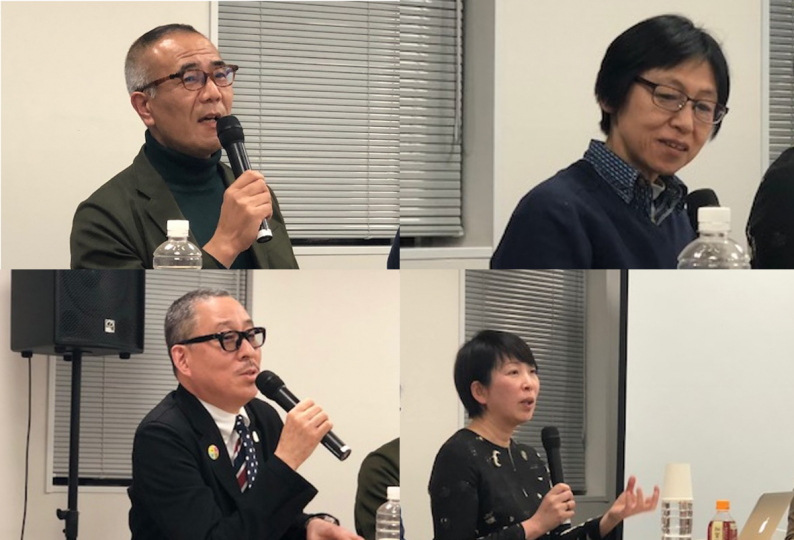
Ono Shinji (upper left), Hiraoka Kumi (upper right), Kobayashi Hiroyuki (lower left), Miyakubo Maki (lower right)

--Dance Biennale Tokyo, which began in 2002, joined Spiral Hall in 2004 and has expanded its ties with the local community. Please tell us about the goals at that time, the process leading up to the establishment of the general incorporated association Dance Nippon Associates (DNA) in 2015 as the organization to manage the festival, and how it has operated since then.

Ono
The theater festival we had held earlier was very successful and well received, so the Aoyama Theater had the intention to spread contemporary dance and increase the audience. After the first dance biennial was held in 2002, I consulted with Ms. Junko Hanamitsu of Kaibunsha about the future. At that time, I was introduced to Kobayashi-san and Miyakubo-san of Spiral, and we were able to have a regional expansion while having the same goal. One of Spiral's strengths is that they are disseminating information in various fields of art, and each of them has a solid customer base. I thought that with Spiral, the way contemporary dance is transmitted and seen would be different.
Kobayashi
I'm Kobayashi from Spiral. Mr. Ono jokingly said earlier that the theater was just vacant, but actually Spiral Hall was also just vacant (laughs). Spiral is actually the same age as Aoyama Theater and opened on October 19 in 1985. Aoyama Theater opens on November 1. So, there was a connection that the space was created in the same year in the same area and the same cultural transmission was done. Spiral has been performing on stage and dancing since its establishment. When it opened in 1985, more than 30 years ago, it was one of the first to adopt an artistic director system. It asked Shin Sato, Yukio Ninagawa, Saburo Teshigawara, Gyudai Amanoki and others to be artistic directors, and it performed many independent performances. However, it is said that there were signs from around 92, but from around 94 and 95, it became difficult for companies to provide money for arts and culture. Patrons and mecenas also disappeared with the collapse of the bubble economy. Spiral, a for-profit organization, had been involved in art activities for quite a few years, so they continued to perform in cooperation with artists and dancers who wanted to use the venue, but naturally the budget for independent performances was cut. In such a situation, it may have been a very good timing to hear from Aoyama Theater about the festival. Spiral was also a hall that maintained 80% and 90% occupancy rates from the time it opened, but after the collapse of the bubble economy, the occupancy rate dropped. Therefore, we decided to work together in 2004. It was around the same time that the times were changing to the trend of "if you don't have money, use your wisdom," and there were actually new initiatives. Therefore, we wanted to continue our artistic activities not by dots or lines, but by planes, so we expanded our activities to the streets and collaborated with various venues. I think this was connected to the historical background and developed to this point.
Unfortunately, just as Spiral was celebrating its 30 year anniversary, Aoyama Theater closed because its role was "over." However, cultural activities and cultural support never end.As for the Aoyama Theater, there was nothing I could do about it and it ended up being closed, but cultural activities can only continue, so I would like to continue this festival.
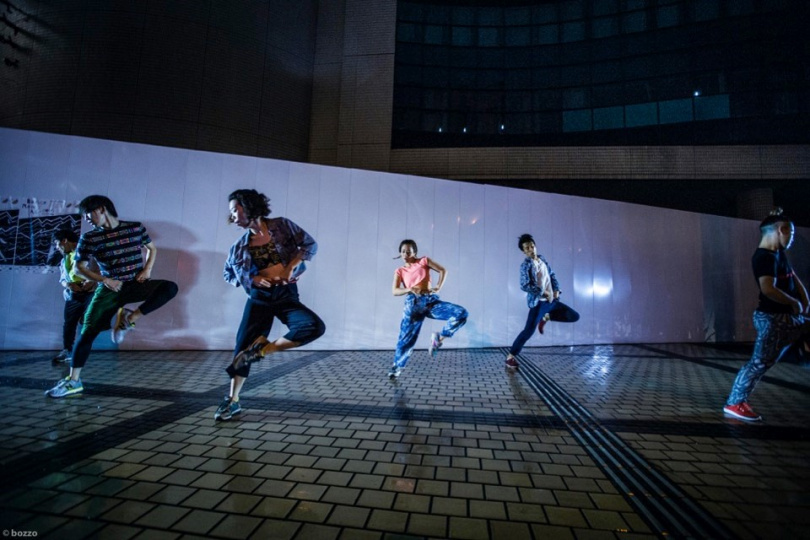
DNA2016 Pre-Event Outdoor Performance (Baobab) Venue: In front of the former Children's Castlephoto by bozzo

New Developments Caused by the Will to Continue

What themes and concepts do you have in mind when programming the festival?

Miyakubo
In reality, the ideal style would be to first set a theme and then collect items based on that theme, but if we continue to hold festivals like this, we receive requests from various artists and theaters both in Japan and overseas. When there is a good idea, even if the specific time and place of the festival in two years have not been decided, we will move to do it. That's why every time I select what I want to show in the current era, including works that have already been decided, I pick out keywords and flesh them out.
In 2016, it was words and music. The Agency for Cultural Affairs, which had been subsidizing the International Festival since 2002, was rejected, and the budget of tens of millions of dollars was reduced suddenly. Therefore, we had no choice but to review the entire program and reduce its size to about 1/3. In fact, we had to turn down several companies and artists that were scheduled. So in the end, when I looked at the pieces that I left behind, I had a lineup that had words and music, and I put that out there as a keyword.
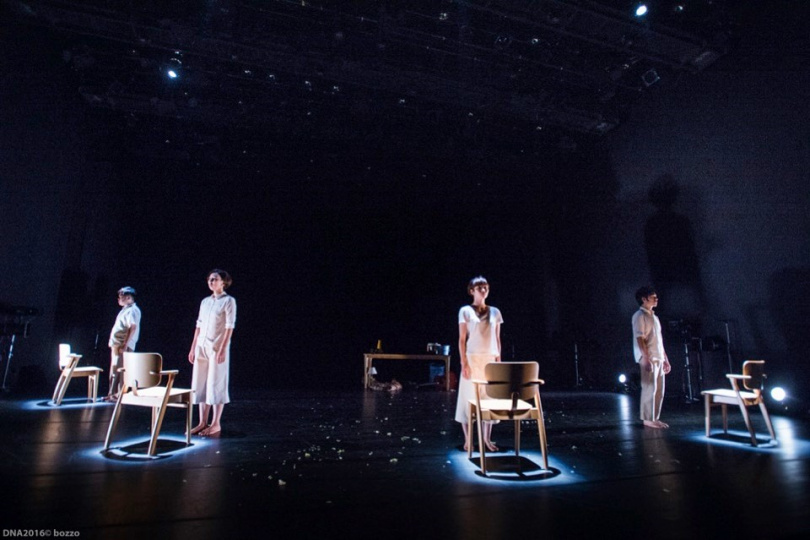
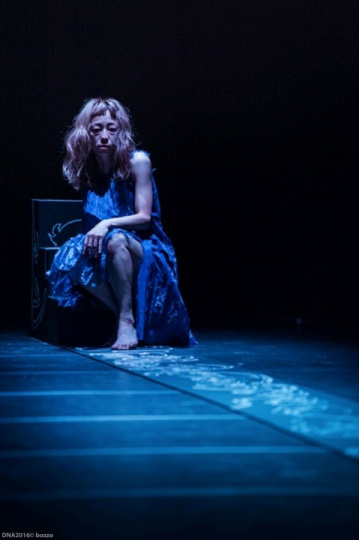
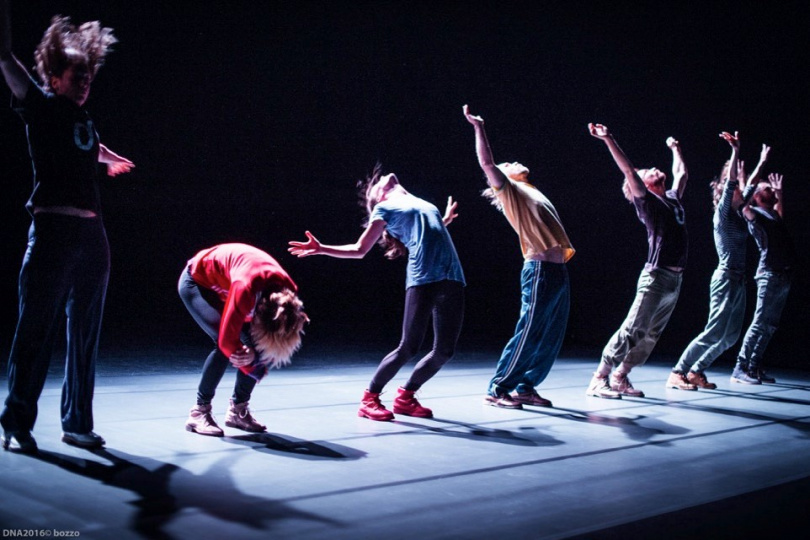
Opening Dance Enjoyment Program: Ito Kim/Physical Theatre Company GERO (Japan) "A Game Named Family" photo by bozzo
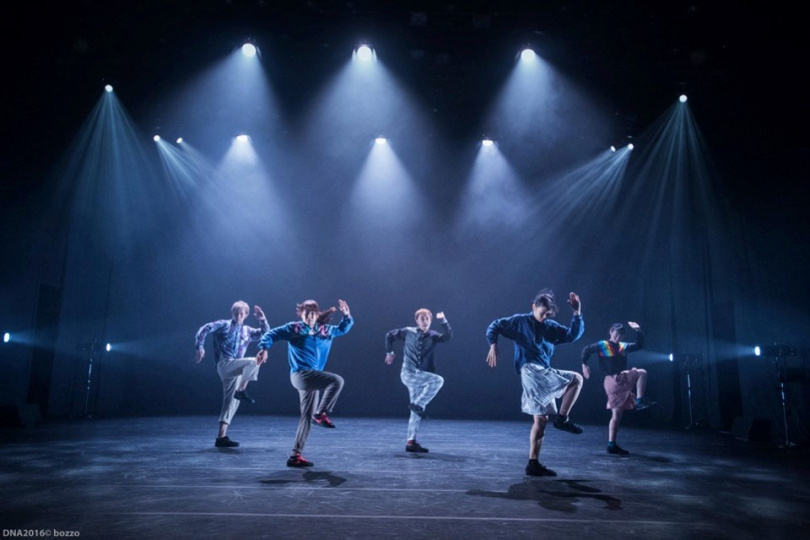
Opening Dance Enjoyment Program: KENTARO!!/Tokyo ELECTROCK STAIRS (Japan) "Front, Back and Someone and En" photo by bozzo

--I think it was a very big deal that the large-scale subsidy from the Agency for Cultural Affairs was postponed. On the other hand, it was a very happy encounter for us to apply for our long-term subsidy. The first grant we received was for Creation Grant 's one-year program "Dance New Air 2014". After that, please tell us how you considered applying for a long-term grant and your goals at that time.

Miyakubo
It's a big festival, so you need to prepare beforehand. In the case of a single year grant, most applications are due in autumn, and the reply is received in the latter half of March of the following year. If we have to prepare for implementation in the new fiscal year, the schedule is quite short. People in the same industry often talk about why there are so many performances in autumn and winter. So even if it's a two year long grant, it's nice to be able to prepare a year in advance. At the time of the application, we had not decided whether or not to establish a general incorporated association, so we applied under the name "Dance New Air Executive Committee." However, even though the Aoyama Theater is closing, I wrote that I intend to establish a new organization and continue the festival, and I also mentioned this in the interview for the second screening.

To give you an idea of the process for selecting long-term grants, we first receive applications, and then interview organizations that pass the document screening in the form of a second screening. During the interview, I was very impressed by how he spoke passionately about how to continue and develop the festival in the transitional period when the Aoyama Theater is closing. As we consider the promotion of dance arts, we have decided to support DNA because we would like it to play a central role in Tokyo-based dance festivals.
Let me review the goals that you set at that time.
"Japan's Largest Contemporary Dance Festival"
"Contribute to the development of contemporary dance in Japan, including international exchange through dance"
"We will hold programs to develop audiences and critics."
"We will make a series of site-specific projects from the year before the festival to appeal to people who are interested in architecture, space and cityscape."
"The introduction of compulsory dance in junior high school education will enrich the ground for new ideas and expressions as the next generation's awareness of dance changes."
"We will explore how the power of dance can connect with society and what kind of message it can give to the future."
"Deepen relationships with children that will lead to the development of future artists and audiences, and enhance programs that can be enjoyed by child-rearing generations"
How do you look back on these goals?

Miyakubo
There are things that we have been able to achieve, things that we want to continue to advocate, and things that we have not been able to achieve for various reasons. The Site-Specific Series is held every other year, and the second time will be at the end of next month (February 2018), but it is being held as a series. As for other things, it is not the end of the original place, and there are many things that have expanded the frontage due to the 2016 event, so I think it will be a goal for the future.
Also, I had a very strong desire to do it, but what I haven't been able to work on yet is a program to train critics. Nowadays, there are no places to review newspapers and magazines, and there are websites, but they are highly anonymous, and there are good and bad sides. Some of the festival members here thought that they could nurture new people with the perspective of making proper reviews, but when it came to how to actually do it, they did not hold the event because they did not have enough manpower and were not properly prepared. Regarding this, I consulted with Mr. Arts Council Tokyo in the first year, including the reason, and he agreed to change the activity plan.

When you first applied, your business plan included a critic's course, and I evaluated it with that expectation in mind. However, there are times when people's thoughts and situations change over the course of a two-year subsidy, and we are trying to make sure that we can take advantage of such changes. Practically speaking, when such changes occur, we have a process of receiving applications for changes and approving them. Through this kind of communication, we help to clarify the management of the festival.

Miyakubo
It can take two months, three months or even nearly half a year to actually apply for a grant and get a decision. The situation on the side of the artists we were considering inviting also changes, so there is always a need for changes and adjustments. So I consult with you every time.
Opening Dance-Zanmai Program: Yamada Yun (Japan) "Dicte" (2011) photo by bozzo

Yomiuri Shimbun: What is the biggest response to the 2016 conference among the goals you set out earlier?

Miyakubo
As I mentioned earlier, when the grant from the Agency for Cultural Affairs was rejected and the initial budget was no longer feasible, we of course considered how to organize the event. However, we received a long-term subsidy from the previous fiscal year, which was a big boost. Having said that, we had to scale down the program. As Mr. Kobayashi said earlier, "Wisdom when you don't have money," this is exactly the case. I thought it was very important not only to have wisdom, but also to have many colleagues with whom you can consult on such matters. As a result, we have expanded our business partnerships as new initiatives, and I really feel that the feeling of the festival has strengthened.
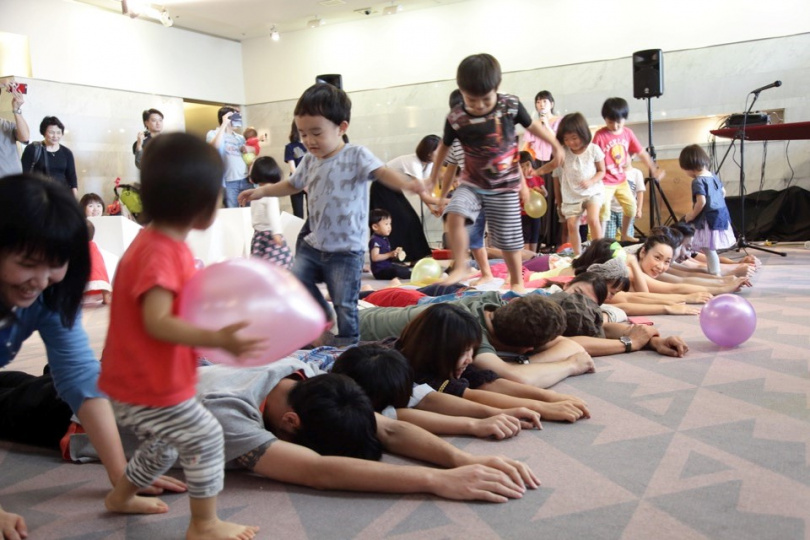
For example, at the end of July, when we started printing and distributing flyers, we happened to have a conversation after a performance and one of them suggested, "I'm thinking of doing something like this. Can we do it together?". This project is called "DANCE NURSERY!!". We wanted to do something that wasn't just a daycare service or a workshop for kids, for kids who could be future audiences. However, since we were a small operation unit, it was difficult to carry out this project as a single project, but at the right time, such a project was launched from outside. By adding these events little by little, I feel that the trunk of the festival, which seemed to fall down at first, has grown considerably.
DNA2016 alliance "DANCE NURSERY! !" photo by Yota Kataoka
Hiraoka
The long-term grant from Arts Council Tokyo was decided even before the Agency for Cultural Affairs subsidy was rejected. It may sound negative, but it can be said that we couldn't stop because of that, and how to do it was our goal that year, and I think it was very important that we were able to implement it.
More than a year has passed since the 2016 event, and the current state of dance is now changing again. The video of the dance club of Tomioka High School, which is a hot topic, is exploding around the world. As dance is incorporated into the field of education, and the rhythm is easy to teach, and the goal is to "align", dance education in the sense of "expression" has been left behind. Also, will contemporary dance continue to develop? I think it's more important to support than to develop now. As Mr. Kobayashi said earlier, it is easy to quit. However, I feel that it was a great achievement that I was able to continue with the problem I just mentioned as a problem.

Yomiuri Shimbun: So the framework of the partnership program started with the 2016 festival?

Miyakubo
Until now, we have not cooperated with public relations of stage performances held at the same time. In 2016, the Aichi Triennale was held, and the Saitama Triennale also started. Dancers who participated in both festivals were also involved in this festival, so we began to cooperate with each other by distributing flyers and sending out social media. From where we can, but it was the first time that we worked on a collaboration program in that way.
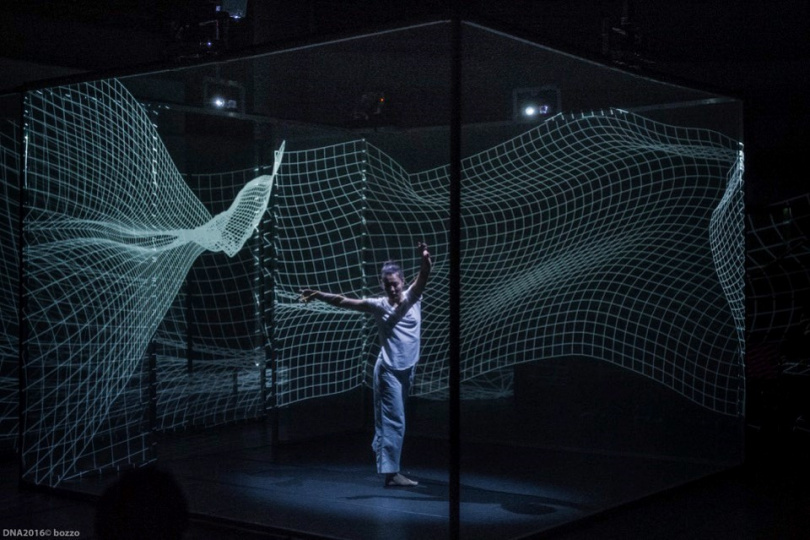
Company Adrien M/Clair B (France) "HAKANAŞ" (2013) photo by bozzo
Vertedance, Jiří Havelka, Clarinet Factory (Czech Republic) "CORRECTION" (2014) photo by bozzo

Yomiuri Shimbun: What are your thoughts on future challenges and goals after the 2016 conference?

Miyakubo
The most important task and goal is to continue. Without financial resources, we cannot continue, so we are constantly challenging ourselves to apply for grants and are working on corporate sponsorships. There are some worries that inevitably become the main issue, but how to continue is still an issue.

Also, I often hear that the audience doesn't seem to be increasing. I try to think with an expectation that if there are fewer people, there will be more people, and that the pie itself will not get smaller, but will increase little by little. But how do we approach people who have not yet been exposed to dance? Because it is a festival like this, I think it is our mission to increase multifaceted programs and add ideas that will bring people closer to it.

* Continued in Part II "spread in terms of and open up to society"