


- Date & Time
- 2026年4月23日(木)~5月6日(水・振休)
※4月27日、28日は閉室
木・金 13:00~20:00、土・日・祝 11:00~18:00
開室カレンダー - Venue
- Studio 04
(Oshima 4-1-1 Koto-ku, Tokyo 136 0072, 1st Floor 106, Oshima 4-chome Danchi Building 1)
2022年より毎年夏に開催しているワークショップ「記録から表現をつくる」では、参加者が自身の関心に基づいて、残された記録を集めたり、自ら記録したりすることからはじめ、たがいにプロセスを共有し、対話しながら、記録やリサーチをひらいていくための表現を実践しています。
In this exhibition, nine of the past workshop participants will present their current forms of expression while composing works and records based on their research on themes they have been dealing with since the time of the workshop or current interests. There are a wide variety of themes that reflect the reality of life, but if you put them next to each other, you will find similar issues, or conversely, similar themes with very different details.
Each of them will (or may) face the project over the long term as their life's work. I have a feeling that stopping at each juncture to make a presentation and sharing it with various people will lead to richer activities. Please come and enjoy the "present" form of the project with its rich individuality.
NOOK (General Incorporated Association)
*The program is subject to change.
About the theme of the exhibition
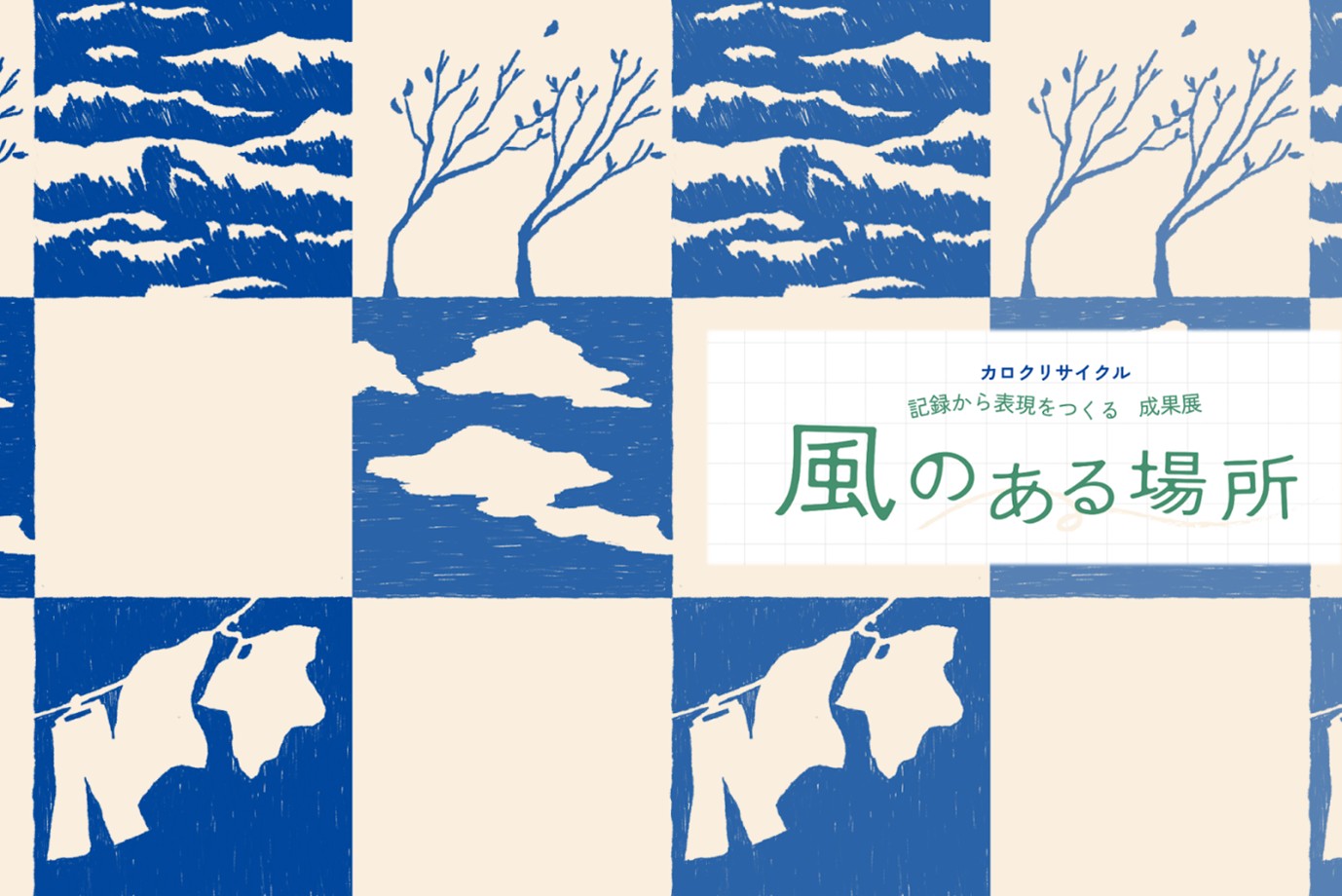
Where there is wind -- where the grass sways and the waves roll. Sometimes you hear a small sound in the distance, and you know it by chance.
In this exhibition, nine artists engaged in recording and expressing their works, listening closely to the wind blowing in their own places, places they have visited, daily lives, and accumulated history.
And the works lined up here also take on a new look. A small sound or voice reaches an unexpected person. I hope this exhibition will serve as such a place with wind.
admission fee
Free
Exhibit Participants (in alphabetical order)
Shun Ariga, Hiri Ushio, Ryoya Oki, Mutsumi Suzuki, Hitomo Hayata, Haruka Takenami, Azusa Numata, Megumi Miyata, Yurika Yabe
Comments from Exhibit Participants
Ariga Shun
Toyoshima Island in the Seto Inland Sea has many places to listen to stories about the island from various perspectives. The narratives are loosely connected to the scenery and scenes of each story: the beautiful nature of Toshima, the dismantled mountains and coastlines, the heavy machinery abandoned and rusted by the roadsides, and the fenced off prefectural lands.
In the summer of 2022, I listened to a story about a mountain in Teshima that had been cut down, and I started going to Teshima last summer. In this exhibition, in addition to the stories we have heard so far, we will create works based on materials from a study group for a lecture held among the residents of Toshima with the aim of spreading understanding about the Toshima Incident, which are stored in the museum of the pollution incident that occurred in Toshima.
Hiri Ushio
Ask how to fold paper cranes.
The paper crane is widely known as a representative form of origami and a symbol of peace. The act of folding a crane is often perceived as something connected to culture and peace, and I feel that little attention is paid to the individual connection.
What can we hear when we listen to the way the paper crane is folded as the narration of the person?
Ryoya Ogi
While researching his birthplace in Nagano Prefecture, he became interested in Manmoku Kaitakudan and has continued his research.
While visiting the places where the repatriates settled, I met a person whose parents were Korean repatriates in the Hyakkadai district of Unzen City, Nagasaki Prefecture. She will listen to what her parents tell her about her life after repatriation and her own life history, and create works based on them.
Mutsumi Suzuki
There will be a performance and exhibition based on my grandmother's narration about what is said in the dialect. We view the act of narration as a record of the body, and try to retell the narration of others through our own body. As I think about recording disappearing words, I will also explore the relationship between physicality, breathing, vocalization, pronunciation, inflection, rhythm, and thought in a dialect.
Hitochi Hayada
I think it's enough to say that the COVID-19 pandemic was a disaster for rock. In those days, people avoided singing about their feelings, and rock music was confined to the technology of recording.
When I was a member of the light music club in high school, there was a culture in which the advisor would record our original music and make it into an album. Relying on the sound source, I just cover the songs made by my music friends back then.
When I write a song, I don't have a clear reason to write it. At first, there is only an initial urge to make it for myself. It's not until you shout the song with your body that you begin to realize what it is to you. Maybe covering someone else's song is a way to slowly realize what that song meant to you — or maybe not.
Haruka Takenami
It has been 14 years this year that I have been attending a community called Takadajima in Kawauchi Village, Futaba District, Fukushima Prefecture. Recently, I have been studying and playing with a play called "baka mekuri," which has been handed down only in Takadajima, so I will make a story based on it and display it. I heard that before World War II, life was all within walking distance, and that even within Takadajima, the rules for hanafuda were different depending on the area (within walking distance).
Azusa Numata
In 2022, she moved from Yokohama to Agano City, Niigata Prefecture. While working at a nursing home, she listened to stories about Agano River and Niigata Minamata Disease.
In this exhibition, we will display a supplementary version of the "Virtual Agano River Basin Tour," which was originally exhibited in 2024. We will also exhibit a booklet that traces the production process of "On the Shore of Aga," a collection of anecdotes compiled in 1981.
Megumi Miyata
One year has passed since I moved to Sado Island, a remote island in the Sea of Japan. The island is also called the "epitome of Japan," and is home to a diverse natural environment and culture that create beautiful landscapes. This exhibition will feature works related to the disappearing landscape and the words that were created in the midst of the declining birthrate and aging population, depopulation of peripheral areas, and tourism development.
Yurika Yabe
I, a "Japanese," will exhibit audio works reciting folktales I encountered in various parts of the former Greater East Asia Co-prosperity Sphere in local languages.
The people who were robbed of speech by the Empire of Japan still handed down the stories of the land.
While I live with Japanese as my first language, I am learning a language that was once suppressed. In this film, I, a Japanese speaker whose language was "stolen," retells the story in the "stolen" language.
To take away a word, to be taken away, and to take it back. To retell, to inherit, and still to spill over. May the voice that embraces these things reach you.
Related Events
The following events will be held during the exhibition period.
The venue will be Studio 04 (Oshima 4-1, Koto-ku, Tokyo, 106, 1st floor, Oshima 4-chome, Danchi Building 1). Please participate in the exhibition.
Event (1) Gallery Tour
Participants in this exhibition will show you around the venue while introducing the theme and production process of their works. It will be held twice during the exhibition.
- Date and Time
- Saturday, April 25, 2026 13:00 ~ 15:00
Exhibition: Shun Ariga, Mutsumi Suzuki, Haruka Takenami, Azusa Numata, Yurika Yabe
May 5, 2026 (Tue, Holiday) 14:00 ~ 16:00
Exhibition: Hiri Ushio, Ryoya Oki, Hitomo Hayata, Megumi Miyata - Admission Fee
- Free
* No reservation required. Please come directly to the venue.
Event (2) Talk Session "Retelling others' narratives in one's own voice"
Suzuki recounts stories in his hometown dialect, and Yabe recounts folktales he encountered on his travels in the local language.
Performances and crosstalk by two writers who tried to "retelling someone else's story through one's own body". The distance between yourself and others, the difference in language, leaving behind what is disappearing, what is inherited and what is overflowing .... Although the subjects are different, the two, who have worked together on the physical retelling of the words of others, discuss their similarities and differences based on what they have thought and felt through their work.
- speaker
- Mutsumi SUZUKI, Yurika YABE (participants in this exhibition)
- progress
- Ryoya Oki (Participant)
- Date and Time
- Saturday, April 25 16:00~17:30
- admission fee
- Free
- capacity
- 20 (first-come-first-served basis)
- How to apply
- こちらのフォームからお申込みください。
- application deadline
- Monday, April 20 23:59
Event (3) Workshop "create a script from the record and read it together"
This is a program by writers Takenami and Suzuki, who tried to convey/share the accumulated records and memories as scripts and stories.
In the first half, we will read a script based on research and records in the Takatajima district in Kawauchi Village, Futaba County, Fukushima Prefecture. As you read the book, I'm sure you'll come up with questions like, "How do you say this line?""What kind of movement is this?" and "What kind of place?" so in the second half, we'll think about and talk about each of those questions as we continue to rewrite the script. Finally, we would like to read the completed draft together again.
If you are not good at reading, you can participate just to see or rewrite. Children are also welcome.
I would be happy if I could compose a story by reading it from different perspectives and using different words. We look forward to your participation.
- facilitator
- Haruka Takenami (Participant)
- cooperation
- Mutsumi SUZUKI (Participant)
- Date and Time
- April 29 (Wed/Holiday) 13:00~15:00
- admission fee
- Free
- capacity
- 10 (first-come-first-served basis)
- How to apply
- こちらのフォームからお申込みください。
- application deadline
- Friday, April 24 23:59
Event ④ Reading of "On the Shore of Agano" & Behind-the-Scenes Stories
On the Coast of Agano River is a collection of oral accounts of life along the river of people living on the coast of Egypt. The old people's narratives, which are steeped in the Aga dialect, depict the scenery of Aga, which has been lost. They were also unrecognized patients of Niigata Minamata disease.
The connection between the river and people as told by the people of Aga in the language of Aga. There lies Minamata disease.
During the recitation, Numata will act as the facilitator and recite some selected passages from Agano Kishibe among the participants. It has an accent that makes it difficult to understand, but the dynamic depiction of river fishing is rhythmic and full of realism.
After that, we would like to talk about our impressions after reading the book, and for a short time we would like to enjoy the land and language of Aga. He also explains the scenery in the text and touches on cultural movements in Aga.
Through the readings, I hope that you will come across the story of Minamata Disease as a story of Agano River spilling over from the unified modern Japanese language system such as trials and media reports.
- Date and Time
- May 6 (Wed.) 16:00~17:30
- progress
- Azusa Numata (Participant)
- admission fee
- Free
- capacity
- None * Advance application required
- How to apply
- こちらのフォームからお申込みください。
- application deadline
- May 5 (Tue ・ Holiday) 23:59
Credit
- Sponsor
- Tokyo, Tokyo Metropolitan Foundation for History and Culture Arts Council Tokyo, NOOK
- cooperation
- Urban Renaissance Agency
Contact Us
NOOK
E-mail:karoku.nook*gmail.com (replace * with @)