



Listening to Japanese songs vol.1
*Information at the time of adoption.
- Name of the organization or individual
- Daiaki Fujikawa
- subsidy category
- Startup Grant
- Grant Type
- single year individual
FY2024 1st Startup Grant


Business Overview
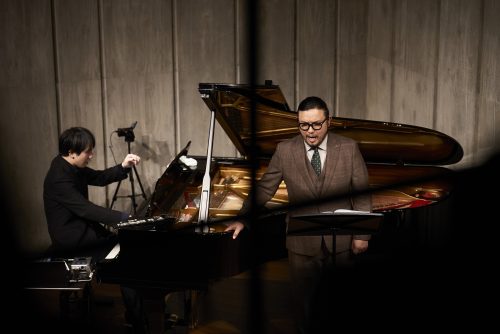
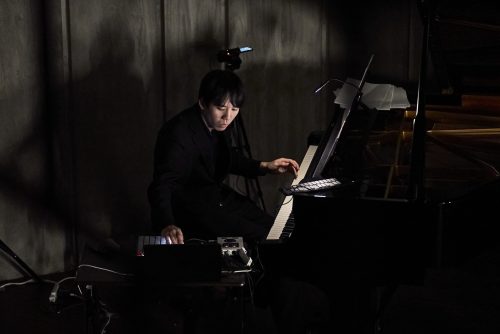
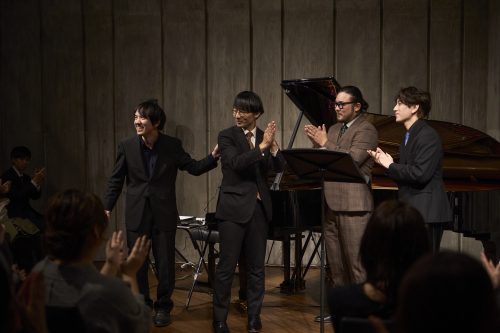
A series of concerts exploring a new space for the production, performance, and appreciation of Japanese songs, titled “Listen to Japanese Uta, ” was started in 2023 by composer and musician FUJIKAWA Daiaki. In this project, which began in earnest, the poet Zhang Wen-jing was invited and the poet and composer worked together from the design stage in order to review the characteristics of Japanese songs in terms of both poetry and music and pursue new possibilities. The performance presented a new form of music concert in which multiple speakers surround the auditorium, making use of the spatial acoustics, and experience the explosion of words and music in an appreciation space surrounded by environmental sounds and electronic acoustics.
[Performance]
Song: Hamano Moriki Toki Hamano
Narrator: Masato Takeuchi
Poem: Zhang Wenjing Bunkei Cho
Music composition, piano, electronic sound: Daiko Fujikawa
- Period of Activity / Project
- Thursday, November 28, 2024
- Venues
- Marie Konzerto (Itabashi Ward, Tokyo)
*Information such as project outlines is provided by organizations and individuals providing subsidies.
Profile
[Daiaki Fujikawa]
Born in Kyoto City. He graduated from and completed the Department of Composition, Faculty of Music, Tokyo University of the Arts and the Master's Program in Composition, Graduate School of Music, Tokyo University of the Arts. He won the first prize in the general composition section of the 23 Gagakudo Japanese Song Contest. He studies traditional Japanese music, especially Noh, theoretically and practically, and applies the time inherent in them and the musical structure of the Japanese language to his own works. He pursues the relationship between Japanese sounds, words, and culture, and explores the universality that this leads to.
Currently a part-time lecturer at the Faculty of Music, Tokyo University of the Arts.