



The First Kyoko Fukuda Sokyoku Classic Concert
*Information at the time of adoption.
- Name of the organization or individual
- Kyoko Fukuda
- subsidy category
- Creation Grant
- Grant Type
- single year individual
FY2024 1st Term Creation Grant Category I Single-Year Grant


Business Overview
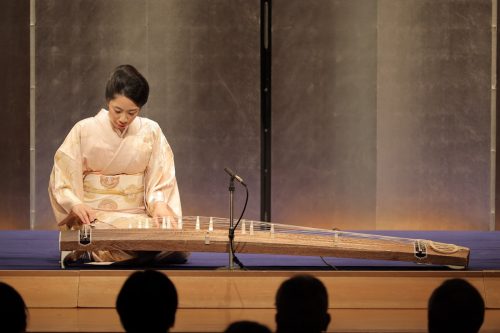
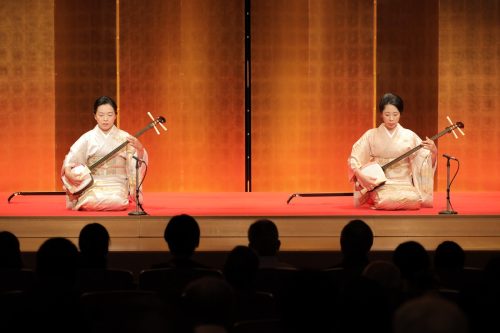
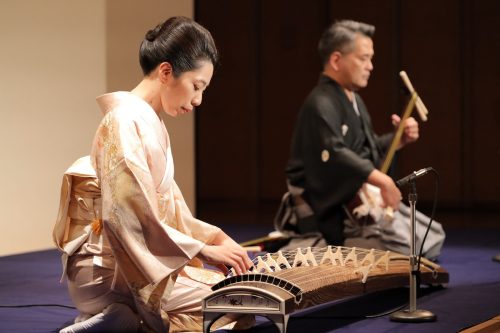
The applicant will present his or her first classical recital based on his or her research at the Graduate School of the Tokyo University of the Arts (master's and doctoral programs). The program featured contemporary composers and included experimental performances based on research. Yuko HIRANO played a supporting role as koto and sangen, and Shintaro OKAMURA played a supporting role as sangen. This project took up composers who had not been studied before, and challenged them to pieces that were little known in the koto music world and new ensemble forms, and it was a concert by combining research results and performances. Program "Akikaze no Kyoku" (Composed by Mitsuzaki Kengyo) Soh: Kyoko FUKUDA, "Koto no Sakae" (Composed by Iwao YAMAGUCHI), "Saifuki Rokudan no Cho" (Composed by Yatsuhashi Kengyo) Concert Soh: Kyoko FUKUDA, Yuko HIRANO, "Midare" (Composed by Iwao YAMAGUCHI) Sangen kaede: Kyoko FUKUDA Sangen honte: Yuko HIRANO, "Hagi no Dew" (Composed by Ikuyama Kengyo) Soh: Kyoko FUKUDA Sangen: Shintaro OKAMURA
- Period of Activity / Project
- Saturday, September 14, 2024
- Venues
- Kioi Small Hall (Chiyoda Ward, Tokyo)
*Information such as project outlines is provided by organizations and individuals providing subsidies.
Profile
Kyoko Fukuda
After completing undergraduate and master's courses in the Ikuta School of Sokyoku, Department of Japanese Music, Tokyo University of the Arts, she completed her doctoral course in 2016. Ph.D. in music. He has experienced overseas performances in China, England, and Russia, and is working to convey the appeal of sokyoku, which is traditional Japanese culture, from both the perspective of historical research and performance. He plans collaborations with other traditional Japanese cultures, and aims to create music that broadens his horizons and attracts new audiences through multicultural exchanges while incorporating various ideas and philosophies.
Besides his own activities, he also runs a visiting performance service for young musicians who graduated from Tokyo University of the Arts, and supports and sends performances to younger musicians.