



My First Wagakki Workshop Second Semester Program
*Information at the time of adoption.
- Name of the organization or individual
- Association of Traditional Japanese Culture
- subsidy category
- Traditional Arts Practice Grant
- Grant Type
- single year
FY2024 Traditional Arts Practice Grant


Business Overview
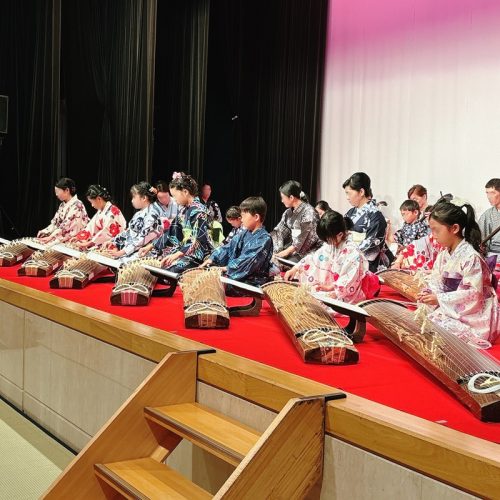
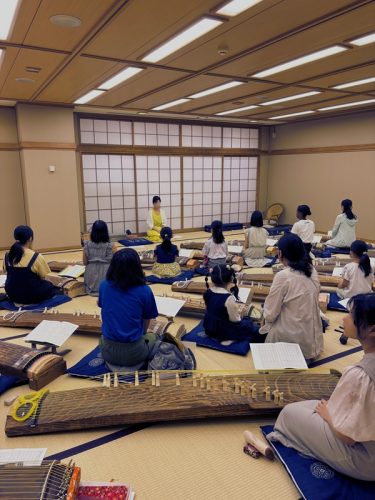
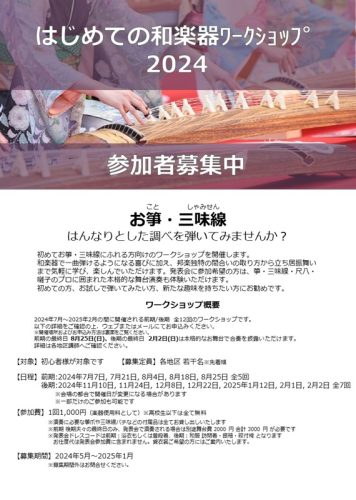
●Practical experience 2024. 11/10, 24, 12/8, 22 Free selection from 17 classrooms in Tokyo Practical experience (joint practice) 2025. 1/12 Takinogawa Kaikan (Kita-ku, Tokyo) Rehearsal 2025. 2/1 Akasaka Community Center Hall (Minato-ku, Tokyo) Recital 2025. 2/2 Akasaka Community Center Hall (Minato-ku, Tokyo)
[Events to be experienced] Soh and shamisen [Number of times a participant experiences the practical skills (including recitals and rehearsals)] 7 times [Principal Instructors] Mayumi Ono, 13 others [Project Features] A workshop for beginners who have never touched a Japanese musical instrument before. You can experience playing koto and shamisen which are easy to play among Japanese instruments. In order to make it easier to participate, the 1~4 concerts were held at 17 venues in Tokyo. The 5~7 th ensemble practice, rehearsal, and recital are divided into 3~4 groups according to the level of proficiency, so children and adults can have fun and experience at their own pace. At the recital, she will perform a piece called "Cherry Blossoms in full bloom" on stage with a professional performer. Through the performance of traditional Japanese musical instruments, students will not only feel the joy of completing a piece of music and the fulfillment of performing on stage, but will also be taught how to sit on their knees and how to behave in a Japanese-style room. [Efforts to publicize when recruiting participants (cooperation, cooperation, network, etc.)] As for recruiting participants, we plan to create flyers, post and distribute them in the community and concert halls, and publicize them using SNS. With the cooperation of elementary schools in the vicinity of the venue, a flyer for the Children's Yume Fund Program, which is held in parallel, is distributed every time to all students of the school concerned. In the flyer, parents and children are encouraged to participate in the program. This time, with the support of Minato, Bunkyo, Koto, Shinagawa, Meguro, Ota, Setagaya, Shibuya and Machida (planned), which are the host cities, flyers will be distributed to public facilities such as libraries and community centers. [Efforts to enable participants to continue practical experience (other than the project subject to this grant) after the completion of the project] In order to encourage participants to regularly attend classes after the completion of this project, the following specific themes will be presented while explaining the attractiveness of the technical aspects that could not be mastered during the workshop time. The “Cherry Blossoms in full bloom ” is a part of the same song that can be played step by step depending on the player's progress.In addition, by participating in the workshop section of the "Hanamizuki Hogaku Homai Nationwide Junior Contest," an event hosted by our association, and by continuously introducing events hosted by our association in various genres, we are working to deepen understanding and interest in various genres of Japanese traditional performing arts, not just the koto and shamisen, so that they can become good viewers and supporters.
- Period of Activity / Project
- Sunday, November 10, 2024 - Sunday, February 2, 2025
*Information such as project outlines is provided by organizations and individuals providing subsidies. - Venues
Profile
[Association for Traditional Japanese Culture]
The Association for Traditional Japanese Culture was established on August 25, 2020 with the mission of preserving and developing traditional Japanese culture while properly passing it on to future generations.
Since then, it has been developing various projects to create an environment for sustainable cultural and artistic activities, such as (1) conducting workshops and performances on a continuous basis with the aim of helping children, who will be the leaders of the future, develop an appreciation for traditional Japanese culture and cultivate a rich feeling; (2) providing opportunities for the world to appreciate and experience traditional Japanese culture through performances and workshops in Japan and abroad; and (3) broadcasting lesson videos and performance videos to the world using YouTube.