



Gebald: The Transition of Resistance to Institutional Violence
*Information at the time of adoption.
- Name of the organization or individual
- Aleksandr Talba
- subsidy category
- Creation Grant
- Grant Type
- single year
FY Reiwa 5(2023) 2nd Term Creation Grant Category I Single-Year Grant



Business Overview
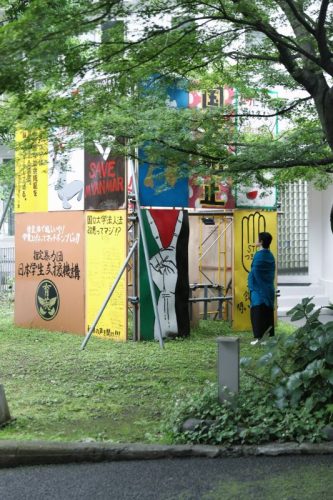
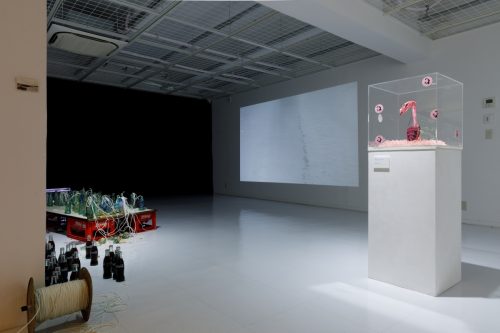
The exhibition seeks to show how certain art forms develop in the context of institutional violence. It questions, at the same time, the role of art in social activism, rebellion and contemporary revolutionary struggles. "Gebald" means "violence" in German. In the 1960s, the New Left seized upon the term "Gebald" in the face of state and police violence in Japan. According to their usage, "violence" meant violence by the regime, in other words, violence in the service of state objectives. Conversely, "gebald" meant the reaction, or "anti-violence." As a by-product of all resistance to law-sustaining violence, counter-violence cannot be separated from considerations of the means and legitimacy of insurgency. This is in line with Walter Benjamin's criticism of violence, and reminds us of the words of Jericho Malatesta, who appeared in Le Réveil anarchiste (The Anarchist Awakening) on May 1, 1928. He explained that slaves were always in self-defense and that "rebellion against a master or oppressor is always morally justified". The works in the Gebald exhibition are based on metaphors of rebellion and active participation practices. Faced with state violence, the institutional repression of capitalism, or institutional authoritarianism (Propaganda, censorship and surveillance), these works reflect a variety of anti-violence responses and aesthetic styles. The exhibition takes a look at these various forms of resistance to institutional violence. Political questions about the performativity of art to be found and the potential for direct action to effect social change are based on a historical approach. In addition, the confrontation between the art forms attached to the guerrilla experience and the activities that function as catalysts of resistance examines different modes of combative artistic expression, in concert with modes of political action, at the interface of anti-violence and non-violence.
- Period of Activity / Project
- May 18 (Sat) – Sunday, June 16, 2024
- Venues
- Tokyo Franco-Japanese Gakuin (Shinjuku-ku, Tokyo) CAVE-AYUMI GALLERY (Shinjuku-ku, Tokyo) Session House 2F Gallery (Shinjuku-ku, Tokyo)
*Information such as project outlines is provided by organizations and individuals providing subsidies.
Profile
Gebald Organization
Gebald Organization is an artistic and political organization founded in Tokyo in May 2023.
The name of the organization comes from a Japanese interpretation of the German word "Gewalt" in the 1960s. In this context, "gebald" is a word that implies a reaction to the system called "violence," that is, "anti-violence". Conceived as a curating collective, the Gebald Institute is also a platform for the study of the art practices of active participation, the history of revolutionary movements, and contemporary modes of insurgency, including actions, actions, and acts, guerrillas, rituals, riots, demonstrations, civil disobedience, and communities.
The Gebald organization continues the proletarian tradition, stands in solidarity with the oppressed throughout the world, and defends an anti-capitalist vision of contemporary art against market logic.
And we demand aesthetics as direct action, art as a symbolic weapon.