



Japanese Music Quartet concert vol. 12
*Information at the time of adoption.
- Name of the organization or individual
- Japanese music quartet
- subsidy category
- Creation Grant
- Grant Type
- single year
Reiwa 3(2021) 1st Term Creation Grant Category I Single-Year Grant


Business Overview
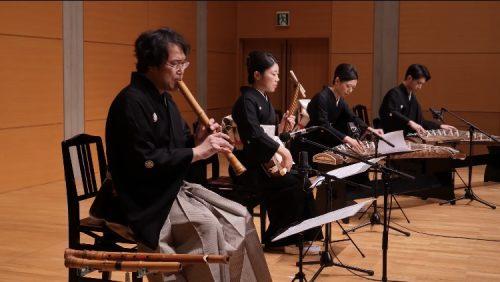
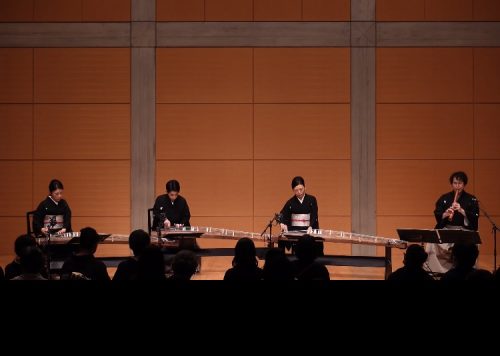
Based on the concept of "creating music of the present and future with traditional Japanese instruments," this is the 12 regular performance of the Japanese music quartet, which develops activities from three perspectives: "commissioning new works to composers = joint activities with composers to explore Japanese music of the present and future," "revisiting masterpieces of contemporary Japanese music composed since the 1960s," and "traditional sankyoku ensemble (classical ensemble of sangen, koto, and shakuhachi)," which is the basis of these activities. < Program > 1. Satoshi HITOTSUYANAGI (1984) Soh I: Yuko TERAI, Soh II: Hiroyasu NAKAJIMA, Sangen: Noriko HIRATA, Shakuhachi: Suzuson KURODA 2. "A quartet for Makimuku Nimen no Soh, 17 stringed music, and Shakuhachi" Ryohei HIROSE (1971) Soh I: Hiroyasu NAKAJIMA, Soh II: Noriko HIRATA, Sangen 17: Yuko TERAI, Shakuhachi: Suzuson KURODA 3. Mitsuzaki Kengyo (Classical), Sangen: Noriko HIRATA, Yuko TERAI, Shakuhachi: Suzuson KURODA 4. Shoichi ASHAI (2021 commissioned, world premiere) Soh I: Noriko HIRATA, Soh II: Hiroyasu NAKAJIMA, Soh III: Yuko TERAI, Shakuhachi: Suzuson KURODA
- Period of Activity / Project
- Japanese Music Quartet concert vol. 12
- Venues
- Tokyo Opera City Recital Hall (Shinjuku-ku, Tokyo)
*Information such as project outlines is provided by organizations and individuals providing subsidies.
Profile
【 Japanese music quartet 】
A quartet formed in the spring of 2011 by four graduates of the Japanese music department of Tokyo University of the Arts (Soh, sangen (three-stringed instrument), and 17 stringed instrument: Noriko HIRATA, Yuko TERAI, and Hiroyasu NAKAJIMA, and shakuhachi: Suzumon KURODA).
Based on the concept of "creating music of the present and the future with traditional Japanese instruments," he has developed activities from three perspectives: "commissioning new works to composers = joint activities with composers to explore Japanese music of the present and the future," "revisiting masterpieces of contemporary Japanese music composed since the 1960s," and "traditional sankyoku gasso (classical ensemble of sangen, koto, and shakuhachi)," which is the basis of these activities, and his performances have been highly praised both in Japan and abroad.