



Traditional Performing Arts Festival "Foxes of Two Worlds"
*Information at the time of adoption.
- Name of the organization or individual
- Kanze Bunko
- subsidy category
- Subsidies for large-scale cultural projects
- Grant Type
- single year
Grants for large-scale cultural projects in fiscal 2021


Business Overview
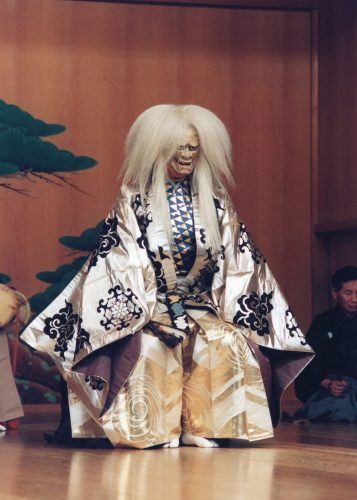
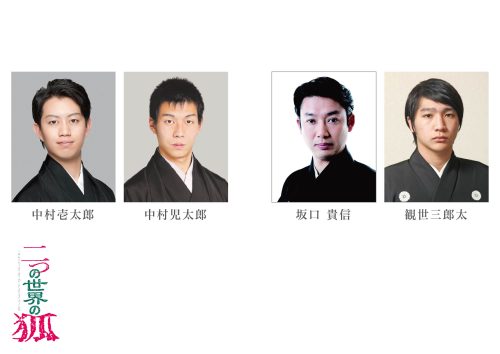
Noh and Kabuki have established their own style and beauty, and boast high popularity both in Japan and abroad as performing arts representing our country. This is a specially planned performance centered on four actors who will lead the next generation of classical performing arts: Kanze-ryu Noh actors Saburota KANZE and Takanobu SAKAGUCHI, Kabuki actors Ichitaro NAKAMURA and Kotaro NAKAMURA. The main theme of the performance is' fox, 'and Noh plays feature' kokaji 'and' sesshoseki, 'while Kabuki plays feature' kuzunoha 'and' Honcho twenty-four koro, kitsunebi no dan. '. Since ancient times, foxes have been treated as mysterious creatures as seen in folklore and folklore, and there are many stories in which foxes play an active role in Noh and Kabuki. The purpose of this project is to deepen mutual understanding by exploring the differences between Noh and Kabuki in terms of actions and direction from the common theme of "foxes," and to disseminate the diverse charms of classical performing arts, as well as by promoting exchanges between the two performing arts.
- Period of Activity / Project
- Sunday, March 27, 2022 Part 1: Starts at 11:00/Part 2: Starts at 15:00 (2 performances)
- Venues
- 20. Gozei Kanze Sakin Kinen Kanze Noh Theater (Chuo Ward, Tokyo)
Profile
【 General Foundation Kanze Bunko 】
The general foundation Kanze Bunko is an art organization headed by Kiyokazu KANZE, the 26 th head of the Kanze school, a school of traditional Japanese Noh performance. It was established in 1991 in order to preserve and study the Noh masks, Noh costumes and ancient documents handed down through the Kanze family, which is descended from Kanami and his son Zeami who perfected Nohgaku (the art of Noh) in the Muromachi period, as well as to popularize Nohgaku both inside and outside Japan. These collections were exhibited in 1993 and 2012, and in 2016 a large-scale overseas performance was given at the invitation of the Lincoln Center Festival in New York, USA.