


virtual concreteness
*Information at the time of adoption.
- Name of the organization or individual
- Aleksandr Talba
- subsidy category
- Creation Grant
- Grant Type
- single year individual
FY2 Reiwa 2020 2nd Term Creation Grant [Single-Year Grant Program]
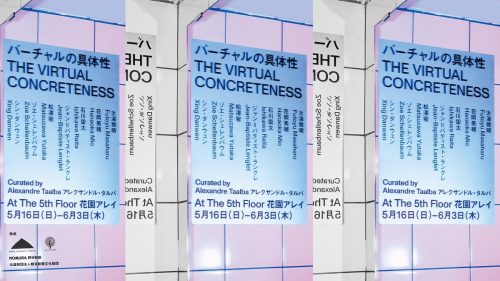


Business Overview
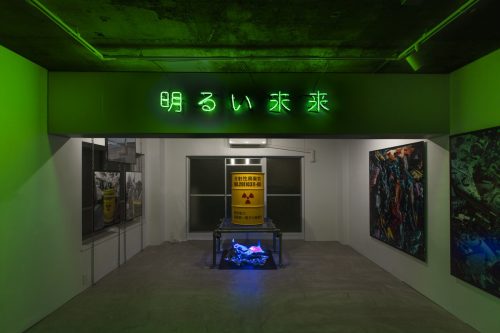
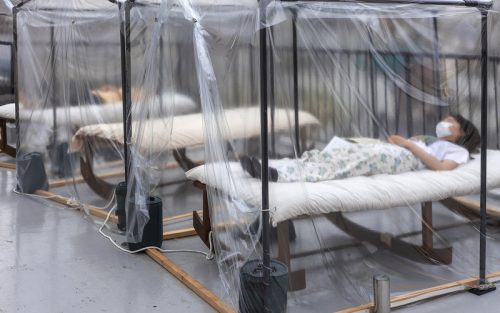
Reality has two dimensions: "actual" and "virtual." The virtual is part of reality, and access to the abstract dimension of reality is based on the enhancement of our concrete being. In other words, while the entire world seems to be going virtual, matter will also continue to proliferate. Paralleling the ecological and social crisis caused by technological overproduction in the digital age and the accelerated importance of digital due to the COVID-19 pandemic, it highlights the ethical dimension of virtual reality, where digital trash invades real space to support virtual space, while workers produce entire postmodern devices in poor conditions. Hardware plays the role of a medium to visualize the virtual, but beyond its function, it is a material and concrete device that, anchored in the present, allows us to explore the immaterial and abstract. Whether on hardware or in the cloud, data cannot exist without a physical and tangible foundation that serves as a medium. Memories and dreams are also the virtual realm that precedes digital. The organic memory must have a material and concrete basis like the digital memory. In order to answer these questions, the works that compose “Virtual Concreteness ” use motifs as virtual symbols as visual language. Seven artists, Shin Danwen, Raita Ishikawa, Masaharu Taiyu, Jean-Baptiste Langlais, Yu Matsuzawa, Zoe Schellenbaum and Mio Hanaoka, presented the complexity and potential of the virtual world by seeking answers to questions from different perspectives.
- Period of Activity / Project
- Sunday, May 16, 2021 - Thursday, June 3
- Venues
- The 5th floor, Hanazono Alley (Taito-ku, Tokyo)
*Information such as project outlines is provided by organizations and individuals providing subsidies.
Profile
[Alexandre Tarba]
As a government-funded research student in the PhD program in aesthetics at the University of Paris 8, he studied in the Laboratory of Representational Culture in the Department of Intercultural Studies at the University of Tokyo. His research focuses on the representation of the atomic bomb in Japanese postwar art and film. It focuses on the nothingness, memories, fears and virtuality of the nuclear age disaster. He discusses the tendency of Hajime Tanabe's philosophy of death and the concept of the "atomic age" to mix with the debate over modernity in postwar Japan and the political movements of the 60 s. Influenced by Gilles Deleuze, Günter Anders, and anarchist philosophy, he studies the relationship between postwar peace activism, contemporary anti-nuclear movements, direct action, and the alternative art scene from a historical perspective. He is interested in the concept of postmodernity and dystopian narratives in pop culture. He is also active in the International Coalition to Ban Uranium Weapons (ICBUW).