
This website uses cookies to improve your experience. You can also change the cookie function by setting your browser. You must agree to the use of cookies when browsing the site.

  • x
  • Instagram
  • facebook
  • Line
  • Youtube

Suzuki Fuyurai

*Information at the time of adoption.

Name of the organization or individual
Edo Itoayatsuri Ningyo Yukiza
subsidy category
Creation Grant
Grant Type
single year

FY29 Creation Grant [Single-year grant program] 2nd term

Business Overview

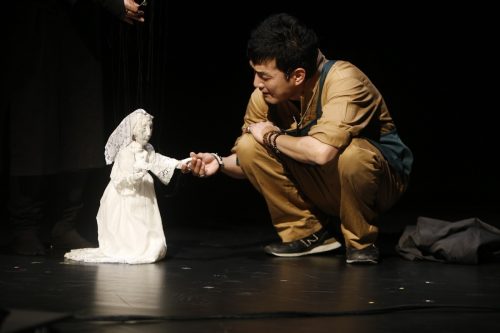
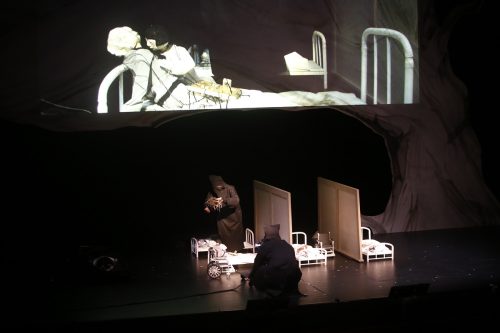
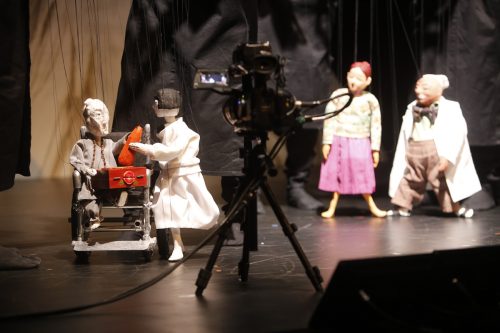
The Yuki Theater of Edo Itoa Ayatsuri Dolls (Tokyo Metropolitan Intangible Cultural Property/National Record Selected Intangible Folk Cultural Property), which has a history of 383 years, has performed a new work newly drawn by 2 young Chinese avant-garde and up-and-coming actors who are attracting worldwide attention as screenwriters and directors. Taking up the subject of the aging society that Japan, China, and the rest of the world are facing, it delves into the abyss of human life: what it means to live, to die, and to grow old. By adopting the method of multimedia theater, in which live images are shown and performed, and through a unique collaboration of "puppets, images and human beings," he challenged himself to a new expression using Edo Itoayatsuri puppets. Prior to the performance, lectures and experience sessions were held at universities in Tokyo to promote understanding of the performance. [Program] "Suzume Kaeri Fuyu-Rai" [Performers] Magosaburo Yuki XII, other puppeteers at Yuki Theater, guest performer: Atsushi Sakamoto [Staff] Script: Zao Binhao Composition/Direction: Wang Chong Puppet Art: Kazumi Kushida, and others

Period of Activity / Project
Thursday, November 30, 2017 - Sunday, December 3
Venues
Za Koenji 2


*Information such as project outlines is provided by organizations and individuals providing subsidies.

Profile

[Public Interest Incorporated Foundation Edo Itoayatsuri Ningyo Yuki Za]
Established by Magosaburo YUKI in Fukiya-cho, Edo in 1635. It has many classic masterpieces that are often performed today. His representative works include "Meiboku Sendai Hagi," "Shinrei Yaguchi no Watari," "Datemusume Koi Nohi Ganoko," and "Shinpan Uta Saimon Nozaki Mura no Kan." Since the Meiji period, he has been actively involved in overseas translated plays and newly written contemporary plays. In recent years, he has been actively involved in overseas performances and international collaborations.
Designated as Tokyo Intangible Cultural Property in 1956.
In 1996, he was selected as an Intangible Folk Cultural Property which should be selected as a national record.