



New Noh play 'Our Lady of Nagasaki' and 'Jacob's Well' European performances 2019
*Information at the time of adoption.
- Name of the organization or individual
- Tessenkai
- subsidy category
- Creation Grant
- Grant Type
- single year
FY31 (2019) 1st term Creation Grant [Single-year grant program]
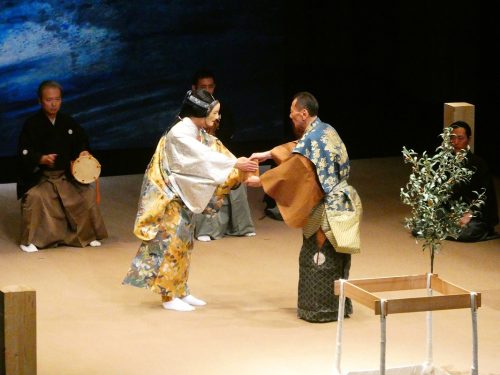
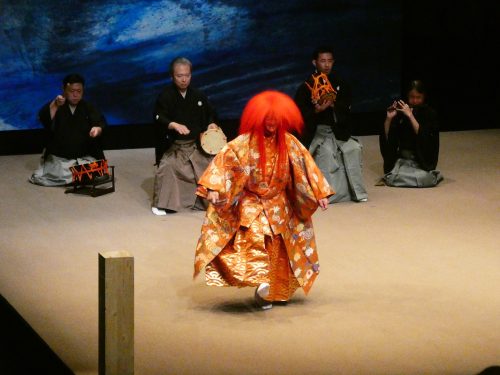
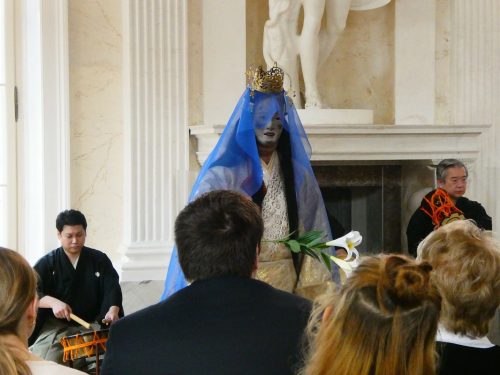


Business Overview
Vienna and Warsaw will celebrate 150 years of amity and 100 years of diplomatic relations in 2019. With the addition of Paris, two new noh plays calling for love and coexistence with one's neighbor and a celebratory classical noh are performed. They celebrated the friendship and encouraged further cultural exchange.
Performances: New Noh plays "Nagasaki no Seibo," "Jakob no Ido," Noh plays "Shojoran," "Takasago Shugen no Shiki," half-Noh play "Tenko," Kyogen play "Oobagazake," "Busshi" Performances: Kanji Shimizu, Tetsunojo Kanze, Kenkichi Tonoda, Tadashi Ogasawara, Hiroaki Ogasawara, Hiroyuki Matsuda, Daiki Hayashi, Seiichi Iida, Nobuyuki Shirasaka, Tatsu Tanaka, Kuninao Konparu, Jakub Karpolk, Nina Fogg, Krzysztof Szczepanyak, etc. Staff: Tatsuhiko Ito, Ko Yamaguchi, etc. Performances: Odeon-za Theater, Vienna, September 20, 21, 24, 25, Paris, Japan Culture Center, Paris, Japan, 28, Warszawa, Water Palace (Workshop), Warszawa, 29, Warszawa, Royal Theater, Warszawa, Russia
- Period of Activity / Project
- Friday, September 20, 2019 – 29th (Sun)
- Venues
- Odeon Theater (Vienna/Austria) Japanese House (Paris/France) Wajenki Museum Royal Theater (Warsaw/Poland)
*Information such as project outlines is provided by organizations and individuals providing subsidies.
Profile
[Public Interest Incorporated Association Tessenkai]
It was established in 1918 with the Tetsunojo KANZE family as the main branch when Sakon KANZE, the 15 head of the Kanze school of Nohgaku in the middle of the Edo period, was in charge. In recent years, Hisao KANZE, the eldest son of Tetsunojo KANZE, the seventh, reviewed Noh widely from the viewpoint of stage art, and realized a dense stage by valuing every role, and gained a high reputation. Even after the death of Hisao, based on his insistence, he continued his contemporary performance activities, such as revising his existing works in terms of staging, with the late Tetsunojo the Eighth and his successor Tetsunojo the Ninth at the center.