



Suzuru Suzuren VERSUS Tsuru no Nusobori
*Information at the time of adoption.
- Name of the organization or individual
- Japan Shakuhachi Performers Network (JSPN)
- subsidy category
- Creation Grant
- Grant Type
- single year
FY30 Creation Grant [Single-year grant program] 1st term



Business Overview
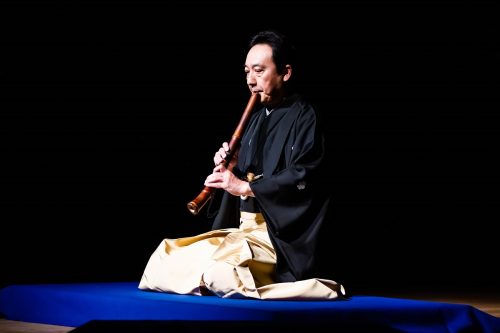
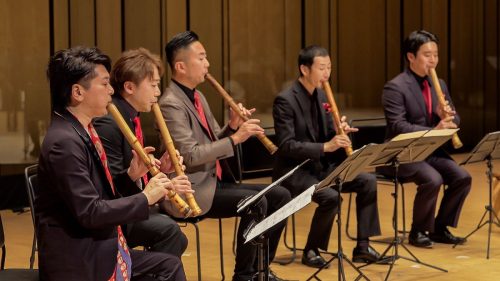
The representative traditional pieces of shakuhachi music, 'Sudaku surenbo' and 'Tsuru no nobori,' share a common theme of the love between parent and child of cranes from child-rearing to leaving the nest, and each school has pieces with the same name, which are often used even today. The fact that there are so many different songs with the same name suggests that they have repeatedly made innovative arrangements while respecting their distinctive technique and playing style. Modern masters gathered together to perform such masterpieces. In addition to the music that has been handed down in each school, we also listened to performances based on our own interpretations based on literature and sound sources, as well as new works and large-scale performances by contemporary composers and members.
< Program > [Part 1/Classical music]
Koto-ryu Honkyoku [Suzaku Suzuren]
Hotei-ken Den [Tsuru no Nukago]
Miyako-ryu Honkyoku [Tsuru no Nukago]
Renhoken/Kisen-ken [Tsuru no Nukago]
[Part 2/Contemporary music]
Satoshi Tanomura: "Jakumetsu no Uta" (Poetry of loneliness) ~ Yuki to the life of a crane ~ [New work premiere]
Kumiko Takahashi: Palestrina contrapuntal transformation [Tsuru no Nukago] (2007)
Kazunori Miyake: "Crane Spotting" for 3 groups of shakuhachi ensembles [New work premiere]
- Period of Activity / Project
- Friday, May 10, 2019
- Venues
- Toyosu Civic Center Hall (Koto-ku, Tokyo)
*Information such as project outlines is provided by organizations and individuals providing subsidies.
Profile
【 Japan Shakuhachi Performers Network 】
The network was established in July 2018 with only professional shakuhachi performers as its main purpose "To raise the value of shakuhachi music and shakuhachi players and contribute to the development and spread of Japanese culture". Recognizing the diversity and individuality of shakuhachi music, he continues to work with the intention of becoming a source of new shakuhachi music with flexible ideas and performance skills based on his abundant experience, while deepening the research and improvement of the instrument itself, the research and analysis of music, and the sharing of information on playing techniques and instruction.