



Genealogy of Wandering ... Goze Song and Asian Promenade Culture
*Information at the time of adoption.
- Name of the organization or individual
- General Incorporated Association Monten
- subsidy category
- Creation Grant
- Grant Type
- single year
FY27 Term I Creation Grant [Single-Year Grant Program]




Business Overview
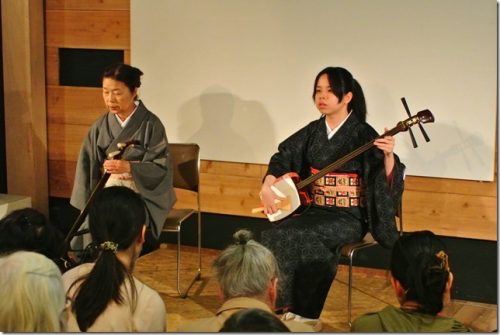
Wandering and wandering should not be forgotten when analyzing Japanese spiritual culture. The wanderers and wanderers included not only religious people, poets and haiku poets, but also goze (blind geisha) and picture parkers as entertainers. This year's event will focus once again on the culture of the drifters, who have supported society from the bottom up amidst the joys and sorrows of ordinary people, and will invite foreign researchers to explore common horizons. Planning and supervision: Yoshio Ito/Production: Yaeko Kurosaki < Sunday, May 5, 2015 > Part 1: "Why Do People Travel?" Screening: [Hearing the Song of the Goze] (34 '2009 Production/Director: Yoshio Ito) ...... Documentary film and lecture: Why Do People Travel? Japanese Culture and the Genealogy of Wandering/Masahiko Hayashi (History of Japanese Thought and Folklore) ・ Demonstration: Nagaoka Kuzunoha Kai (from a sighted group that inherits Nagaoka Goze Song)/Keiko Yokokawa, Mamiko Kanagawa ・ Discussion: [Speakers] Masahiko Hayashi, Keiko Yokokawa, Mamiko Kanagawa, Yoshio Ito Moderator: Hiromi Saito < Sunday, September 13, 2015 > Part 2: "Living in the Present' World of Illustrations': From Mandala to Picture Show" Screening: From [Bengali Painter Potua] (1995 Production/Directors: Kaio Kitamura, Yokoko Miura) ...... This film explores the depths of Indian culture through narrative paintings by Santal (West Bengal). Demonstration: Zenkoji Nyorai Eden (Illustrated Biography of Zenkoji Temple) Illustrator: Hayashi Asako (Researcher, Shodo Cultural Institute)/India Edition/Potua: Higashino Kenichi (Potua Performer) Lecture: History and Significance of Illustrator: Hayashi Masahiko (Representative of the International Kumano Society, Emeritus Professor of Meiji University, Representative of Shodo Cultural Institute) ・ Discussion: [Speakers] Hayashi Masahiko, Higashino Kenichi, Hayashi Asako, Ito Yoshio Moderator: Saito Hiromi < Sunday, January 24, 2016 > 3rd "The World of Sacred Arts Underlying Korea, the Ryukyu Kingdom, and Japan" Screening: Documentary film Mudan footage [Posthumous Marriage] (Photo by Choi Yoshiki) ・ Demonstration: Singing Kinema [Beyond the Hill of the Wind]/Cho Paku (Singer-songwriter and operatic entertainer) Lecture: The World of Sacred Arts Underlying Korea, the Ryukyu Kingdom, and Japan/Choi Yoshiki (Currently Professor at Toa University, Director of the Institute for East Asian Studies, and Professor Emeritus at Hiroshima University) ・ Discussion: [Speakers] Choi Yoshiki, Cho Paku, Ito Yoshio Moderator: Hayashi Masahiko ・ General MC: Saito Hiromi
- Period of Activity / Project
- Tuesday, May 5, 2015, Sunday, September 13, Sunday, January 24, 2016
- Venues
- Ryogoku Monten Hall (Sumida Ward, Tokyo)
Profile
Yoshio ITO
Born in Tokyo in 1941. Broadcaster. In 1967, he met Kikui SUGIMOTO, a Goze player at Takada, and after that he had many exchanges with Goze players who were still alive at that time in Nagaoka, Kashiwazaki, Ina, and Kagoshima (Chiran). In addition to the radio program "Echigo Goze Song" (4 parts series) and the TV program "Living Human Travel: 90 year-old Goze Take-san," he has produced many documentaries. 2008: He completed a documentary film called 'Goze-san no uta ga kaeri.'.
Since April 2010, a series of 6 bimonthly screenings and roundtable discussions of the documentary film "The Song of the Goze Miss Can Be Heard" have been held at Menten Hall. Since this attempt to reconsider the historical and contemporary meaning of Goze received a great response, this year we decided to invite Mr. Ito as the project supervisor for this project, the second Goze project, in order to focus on the culture of drifters from a new perspective using Goze as a keyword and to try to find a common horizon for wanderers.