



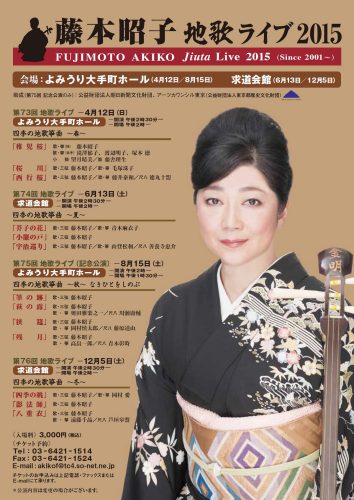
The 75 th Akiko FUJIMOTO Jiuta Live Commemorative Performance: "Shiki no Jiuta Sokyoku - Autumn - Remembering a Missing Person"
*Information at the time of adoption.
- Name of the organization or individual
- Akiko Fujimoto
- subsidy category
- Creation Grant
- Grant Type
- single year individual
FY27 Term I Creation Grant [Single-Year Grant Program]


Business Overview
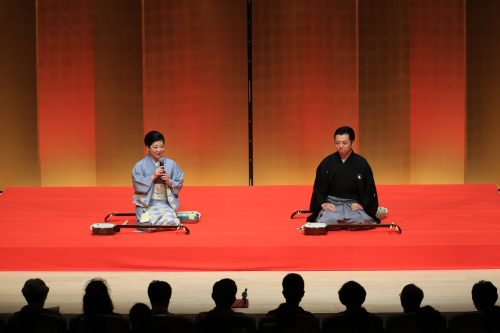
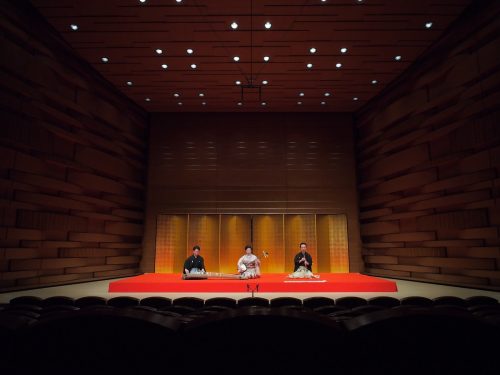
Jiuta sokyoku was created by blind musicians and composers such as Kengyo and Koto in Keihan during the Edo period in the 17 century, and hundreds of pieces have been handed down to this day. The 75 th Jiuta Live was started in June 2001 as an opportunity to pass down Jiuta Sokyoku to the modern age and to explore the new possibilities of its classical performances. Through performances with a wide range of supporting performers, from Living National Treasures to younger generations, including sangen, koto, shakuhachi, and kokyu, the true value of classical Jiuta Sokyoku and its deep appeal have been introduced. This commemorative performance will be held on the anniversary of the end of the war, 70 years after the end of the war. From the repertoire of jiuta koto music, 4 pieces that have been handed down to this day as memorial pieces for the dead will be selected, and 3 pieces will be performed in the form of a three-piece ensemble with sangen, koto and shakuhachi, and 1 piece will be performed with a sangen solo. I would like to dedicate these songs to all the people who died in the war, the thought that Japanese have cherished since ancient times, "remembering the lost."
- Period of Activity / Project
- Saturday, August 15, 2015
- Venues
- Yomiuri Otemachi Hall (Chiyoda Ward, Tokyo)
Profile
He was a performer of jiuta and sokyoku in the Kyushu region. He was taught koto and sangen by his grandmother, Keiko ABE, and his mother, Kunie FUJII (Living National Treasure) from his childhood, and he made his debut on stage at the age of four. He has been holding a recital since 1995, Jiuta Live since 2001, and Jiuta Jiuta with English commentary since 2008. He held many performances in Europe and America. He has received the Japan Traditional Culture Promotion Foundation Award, the Agency for Cultural Affairs Art Festival Rookie Award, the Traditional Culture Pola Award Encouragement Award, and the Minister of Education, Culture, Sports, Science and Technology Rookie Award. He is a director of the Ikuta school association and a counselor of the Japan Sankyoku Association. He was a lecturer at the Seiha School of Music. She is a member of the Women's Sokyoku Association. He was the vice chairperson of Ginmeikai.