


- Time of the event
- Saturday, February 10, 2018, 12th (Mon/holiday), 17th (Sat), 18th (Sun)
2 times each day
10:30~12:30 (Reception starts at 10: 15)
14:00~16:00 (Reception starts at 13: 45)
* Only on 18th 13:00~ (Reception starts at 12: 45) - Venue
- Shibuya Cultural Center Owada Learning Room
(23 -21 Sakuragaoka-cho, Shibuya-ku, Tokyo)
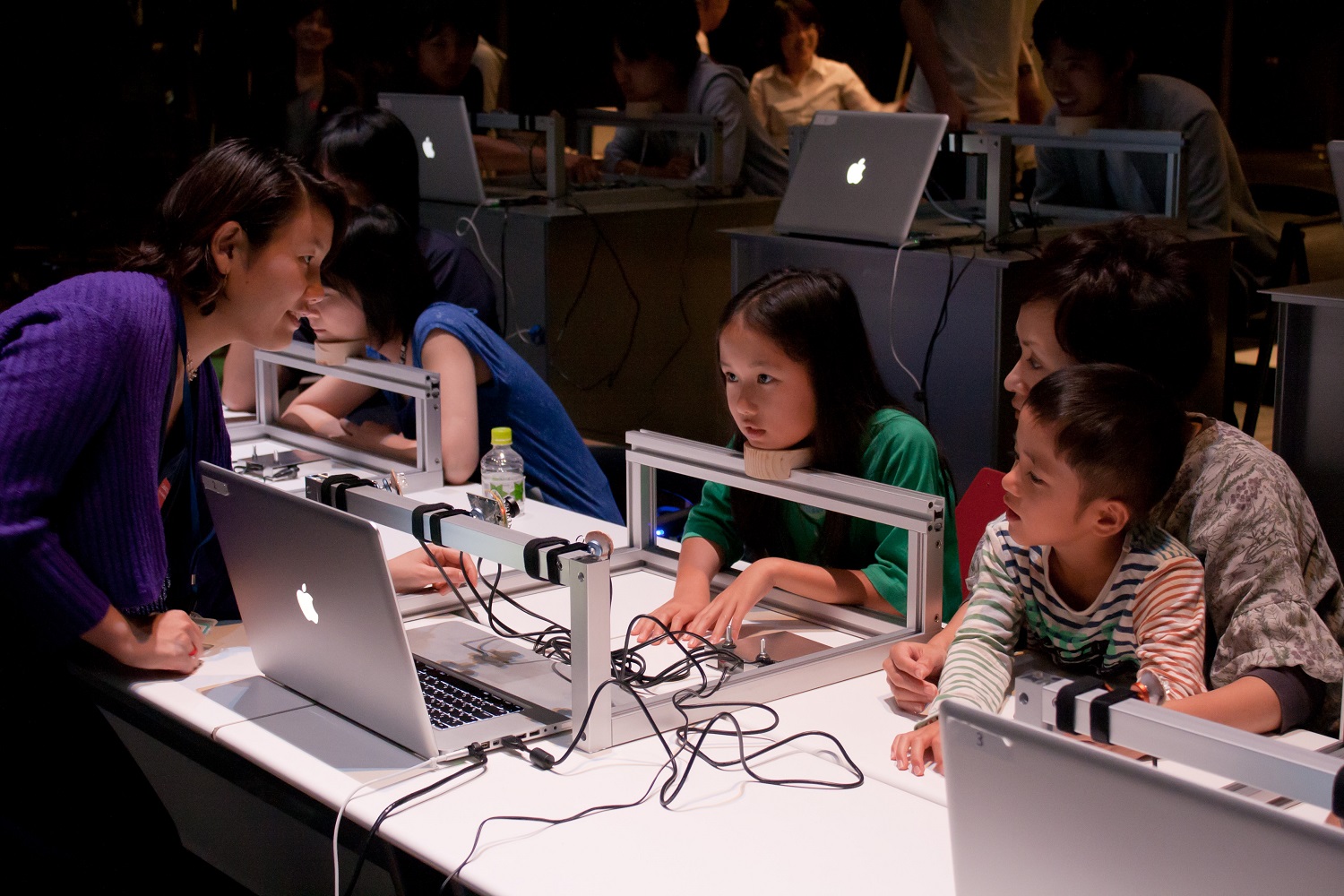
The Arts Council Tokyo and the Japan Foundation co-organized the "Art & Technology" The 2nd International Symposium "Art and Technology: For Creation, Education, and Archiving" in February 2018. As a related project, we will hold educational and dissemination workshops on the themes of "society," "the body," and "media technology" to learn about creativity in the media society. In addition to special on-site workshops developed by the Yamaguchi Center for Arts and Media (YCAM), which has been a leader in media art in Japan, for elementary school students in the fourth grade and above, hands-on workshops on programming and hardware hacking will be held with instructors from collectives in the Philippines and Indonesia.
Workshop #1 "Eye 2 Eye"
Watch watch? The Hidden Possibility of Gaze Using Eye Movements to Control Computers
A workshop using a gaze input technology called "EyeWriter" that visualizes and shares people's gaze. We consciously move our eyes and try to communicate our intentions with our gaze. For example, we say, "Blink your eyes" or "The eyes are as eloquent as the mouth." In addition, there are many tricks lurking in our daily lives to guide our eyes. But how far can we communicate with our eyes? And if you're looking at the same thing, are you really looking at the same thing? In fact, they may be focusing on different things. In this workshop, participants will play a variety of games while visualizing their gaze, and share how they use their gaze and perspective in their daily lives, and what their neighbor is looking at, in order to consider the possibilities of "gaze" and "seeing."
Date and Time
Saturday, February 10, 2018
10:30~12:30 (Reception starts at 10: 15)
14:00~16:00 (Reception starts at 13: 45)
Venue
Shibuya Cultural Center Owada Learning Room (23 -21 Sakuragaoka-cho, Shibuya-ku, Tokyo)
lecturer
Satoshi SUGANUMA (Educator, Yamaguchi Center for Arts and Media [YCAM])
Born in 1982. After graduating from the Faculty of Art, Kyoto University of Art and Design, he entered Gifu Prefectural International Academy of Information Science and Art [IAMAS]. While researching "media facades" that incorporate video and interaction into architectural surfaces, he works for an architectural design firm, designing office interiors and exhibition venues. He assumed his current position in 2009. Responsible for the development and facilitation of original workshops, the production of the Korogal Park Series, and other R & D projects related to the promotion of education in general and the utilization of local resources. Explore the realization of bottom-up community building.
YAMAOKA Daichi (Educator, Yamaguchi Center for Arts and Media [YCAM])
Born in 1987. While enrolled in the Faculty of Education at Yamaguchi University, she studied school education and obtained a first-class elementary school teacher's license and a second-class junior high school teacher's license (technical). He assumed his current position in April 2014. Responsible for overall education promotion activities, including facilitation of original workshops and production of the Korogal Park Series. While he is involved in the management of the alternative space “Maemachi Art Center (MAC) ” in Yamaguchi City, he is also involved in the development of the program with a view to spreading the experience of the workshop to as many people as possible through video and other recording media.
participant
Capacity: 8 people each time
4th grade elementary school to 3rd grade high school
* Only accompanied people can watch.
Planning and development: Yamaguchi Center for Arts and Media [YCAM]
Workshop #2 "Kotoba Body"
A dance created with words A new movement created by the gap between words and images
Using original technology developed by the Yamaguchi Center for Arts and Media [YCAM], this workshop discovers the relationship between words and the body that we are not aware of in everyday life. What kind of movement do you imagine when you hear the word "elephant"? What words do you come up with when you stretch your arms down and swing from side to side? In this workshop, you will move your body based on words, and think about words from your moving body. They also combine body movements and words, register them in a computer, create a database of "kotoba bodies," and combine these movements into new choreography. It is an opportunity for all participants to discover differences in interpretation, commonalities, oddities, and fun that arise from linking words and body movements.
Date and Time
February 12, 2018 (Mon, holidays)
10:30~12:30 (Reception starts at 10: 15)
14:00~16:00 (Reception starts at 13: 45)
Held 2 times each day
Venue
Shibuya Cultural Center Owada Learning Room
(23 -21 Sakuragaoka-cho, Shibuya-ku, Tokyo)
lecturer
SUGANUMA Hijiri (Educator, Yamaguchi Center for Arts and Media [YCAM])
YAMAOKA Daichi (Educator, Yamaguchi Center for Arts and Media [YCAM])
participant
Capacity: 10 people each time
Grade 4 in elementary school to Grade 3 in high school
* Only those accompanied can watch.
Planning and development: Yamaguchi Center for Arts and Media [YCAM]
Workshop #3""Genki Groove" - Make a record player out of everyday things!"
Experience the principle of listening to sound by playing records without using electricity
This workshop teaches the principle of sound (= air vibration) and the mechanism of recording and playback by playing back records using familiar objects. Since Thomas Edison's creation of the phonograph to record and reproduce music, various technologies for recording and reproducing sound have been created. Today, there are more opportunities to play back data and enjoy music on digital devices such as smartphones. Then, can't I listen to music without electricity? In this workshop, participants will try to play music by creating a record player in teams using familiar items such as cardboard, pencils, erasers, and rulers. Together with lecturers visiting Japan from the Philippines, we will unravel the principles and technologies related to sound that we cannot experience in our daily lives.
Date and Time
Saturday, February 17, 2018
10:30~12:30 (Reception starts at 10: 15)
14:00~16:00 (Reception starts at 13: 45)
Venue
Shibuya Cultural Center Owada Learning Room
(23 -21 Sakuragaoka-cho, Shibuya-ku, Tokyo)
lecturer
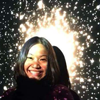
Francesca Kasaway (WSK: FESTIVAL OF THE RECENTLY POSSIBLE Co-Director) [Philippines]
Graduated from the University of the Philippines with a degree in Sociology. Engaged in cultural activities in diverse fields such as sound, video and poetry. While working as a producer of cultural projects in Japan and abroad, he also conducts research and writing activities to expand new fields and creative industries. In 2017, he was co-director of WSK AXIS, a joint project of the WSK: Festival of the Recently Possible and the Japan Foundation Asia Center. Since 18, she has been involved in the study of the Philippine Heritage Charter and the creation of the Taiwanese-French multimedia performance platform "HERESY" for women.
*There will be an interpreter during the workshop.
participant
Capacity: 10 people each time
Grade 4 in elementary school to Grade 3 in high school
* Only those accompanied can watch.
Planning & Development: WSK: Festival of the Recently Possible
Workshop #4""Glitch Tape" - Create a synthesizer that creates sound and images!"
DIY your own sound and video device
Lecturers from Yogyakarta, Indonesia-based Lifepatch, who are active in the fields of art, science, and technology, will create original equipment for manipulating sound and images. Designed for artists and musicians, the device turns a monitor into a musical instrument without using a computer. In this workshop, students will learn the basics and applications of electronic work, including soldering, assembly of small computers, and programming, while assembling equipment, operating video and audio signals, and playing together. You can experience DIY craftsmanship, hardware hacking techniques, and the creativity of media art with artists visiting Japan from Indonesia.
Date and Time
Sunday, February 18, 2018
13:00~16:00 (Reception starts at 12: 45)
Venue
Shibuya Cultural Center Owada Learning Room
(23 -21 Sakuragaoka-cho, Shibuya-ku, Tokyo)
lecturer
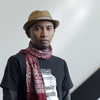
Andreas Siagyan (Artist, Engineer/Lifepatch) [Indonesia]
Born in 1981. Based in Yogyakarta, Indonesia. He mastered computer science on his own while in college, and has worked on programming for audio and video production, DIY electronics development, sound sculpture, installations, and musical instruments. Since 2004, he has organized a community for alternative education and DIY/DIWO creative activities, presenting installation works, holding workshops and various events. Co-founder of Lifepatch, an organization that works across art, science, and technology. In 14, he was co-director of HackteriaLab in Yogyakarta.
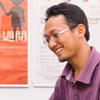
Nur Akbar Alofatula (Researcher/Lifepatch) [Indonesia]
He is a researcher in the field of agricultural biotechnology and currently a graduate student of Tokyo University of Agriculture and Technology. In addition to conducting cutting-edge research, he also makes various devices as a hobby that he doesn't even know why he made. Recently, he lives in Ami-machi, Inashiki-gun, Ibaraki Prefecture, and works on DIY biology and development of general-purpose and low-cost experimental equipment. In addition, he is working on the introduction of an open platform ubiquitous environmental control system (UECS-Pi) for greenhouse management at Ibaraki University, while studying the molecular mechanism of heat shock-induced resistance in tomato seedlings at the Graduate School of Tokyo University of Agriculture and Technology.
*There will be an interpreter during the workshop.
participant
Capacity: 10 people each time
Elementary school grade 4 to adults
* We will use a soldering iron. Elementary school students who wish to participate are encouraged to participate with their parents.
Planning and Development: Lifepatch – citizen initiative in art, science and technology
participation fee
Admission free
* Advance application required, first-come-first-served basis
Language
Japanese
* Interpretation will be available on 17th and 18th.
Credit
- Sponsor
- The Japan Foundation Asia Center, Arts Council Tokyo (Tokyo Metropolitan Foundation for History and Culture)
Contact Us
Japan Foundation Asia Center
TEL: 03-5369-6140
FAX: 03-5369-6141
E-mail: contact*meca.tokyo (replace * with @)