



*For the 3rd "For richer theater: 3 years of the garden theater company Penino continuing to search from the" way of making "(Part 1), here
Part 2 In-depth Interview What is the new relationship between artists and society?
After the presentations in the first part, interviews were conducted in the second part to review the subsequent development of the activities that were the subject of the long-term grants and the achievements and challenges of the long-term grants. In particular, the comments of the speakers and participants, which were triggered by Tanino's remarks about securing spaces for creative works, went beyond the issue of a single company to suggest art, support organizations, and a new way of public affairs.
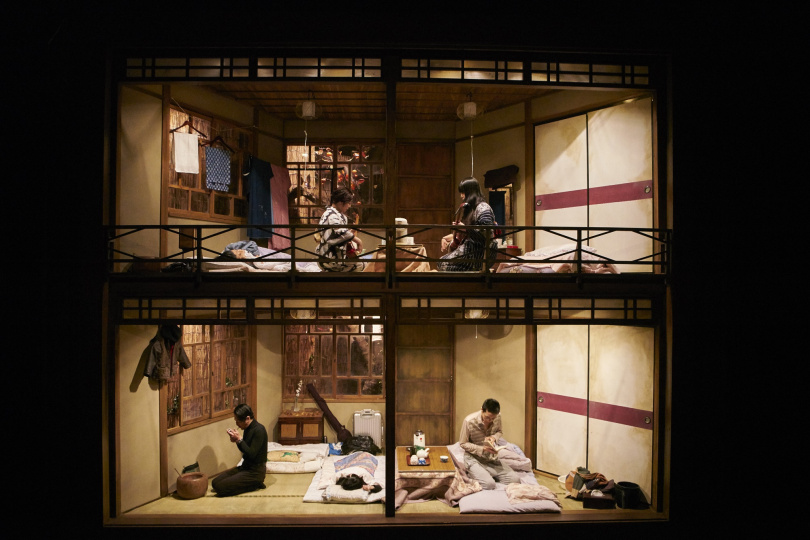
-In the first part, he talked about the history of Aoyama from his time in his studio to the Tokyo performance of Dark Master last year from the perspective of the creative scene. Looking back on the 3 years from FY 2014 to FY 28, what significance do you think there was and what changes did you see?
- Tanino
- I think it must have been a very important time. I didn't get caught up in what Natsume Soseki calls "the whirlwind of interests," and I was able to express myself without turning a blind eye.
-After 3 very productive years, you performed almost every month last year (2017). First of all, we started M Project, a unit with stage artist Kasper Bichner. We also had an overseas performance of “Jigokudani Onsen Mumyo no Yado ” and a triumphant performance of“ Dark Master ” in Osaka. I have the impression that you are expanding your activities very vigorously.
- Tanino
- Right. We have been performing every month since August. But I wasn't aware of it that way.
-Have you experienced any difficulties or challenges during the period of this long-term grant?
- Tanino
- This is what Okada Toshinori said, but a work ages one year with each stage. When this "Jigokudani Onsen" goes to Paris, France next time, I think he will probably be about 50 years old. In an interview for the reprise of "Underground," I said, "I finally create an original work at the age of 50." It's the same with my work. I think I'm a full-fledged artist only after 50 or 60 performances. But it's hard to get there in three years. "Jigokudani Onsen" may have been a coincidence, but we were able to achieve this. “Dark Master ” is also a game where I want people to age in that way, so I ’ m joking that I ’ d like to support them not for three years, but for six years ...... (laughs), especially with“ Jigokudani Onsen, ” the support they gave me until that point was very important. So there was no difficulty.
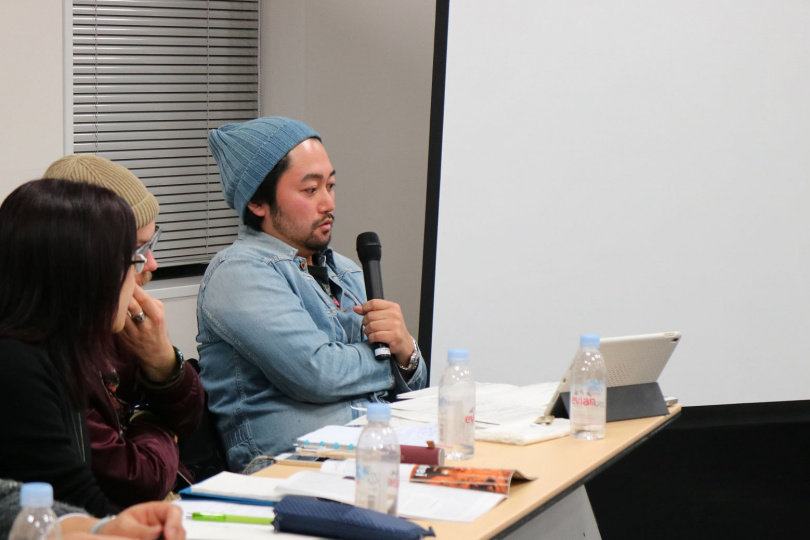
-By the way, I would like to ask about the future. Mr. Tanino and I worked together for the last three years of our thirties. As you move into your 40's and 50's, what are your goals and visions as an artist and company?
- Tanino
- There are probably only a few different ways that a director or playwright can go. You might be an artistic director or you might go into commercial theater. Maybe they'll make "Hakobune" again.
-Is making "Hakobune" an image of the atelier in Aoyama?
- Tanino
- In other words, have a private space and turn it into a theater.
-I think the problem of how to build our own careers is not only common to Tanino but also to many people in the theater industry. The choice to become an artistic director is both domestic and international.
- Tanino
- Right. I hope I can do that. Occupying the Tokyo Art Theater ...... (laughs). If there is a place where I can play as an ensemble or an actor, I would like to do it.
-SPAC is the only public theater that has a resident company in Japan.
- Tanino
- Yes. Apart from whether I have the ability or not, I think such a situation is desirable.
-As you said earlier, you might consider making a commercial work.
- Tanino
- Actually, I have something to talk to you about. But if you show them the script and say, "Hey, you can't." they usually understand. We show them one of the films we've done so far, and they say, "You can't do this, can you?". So, there used to be a lot of talk, and there were times when I was aware of color, but that's not the case anymore. I have no idea now.
-Do you mean to use the commercial world as well if you can achieve what you want to create?
- Tanino
- I think the number of works that I have created with confidence and that are widely accepted to a certain extent is about five, ideally seven. Until we do that, we probably won't have a choice. Probably, in my mind, I have three right now. So if there are two more in the next few years, I think I'll think about what I'm going to do then. I'd like to ask you all about this. What are the steps in how an artist ages? Not only in Japan, I want to ask Max, for example, if there is anything.
- Aschenbrenner
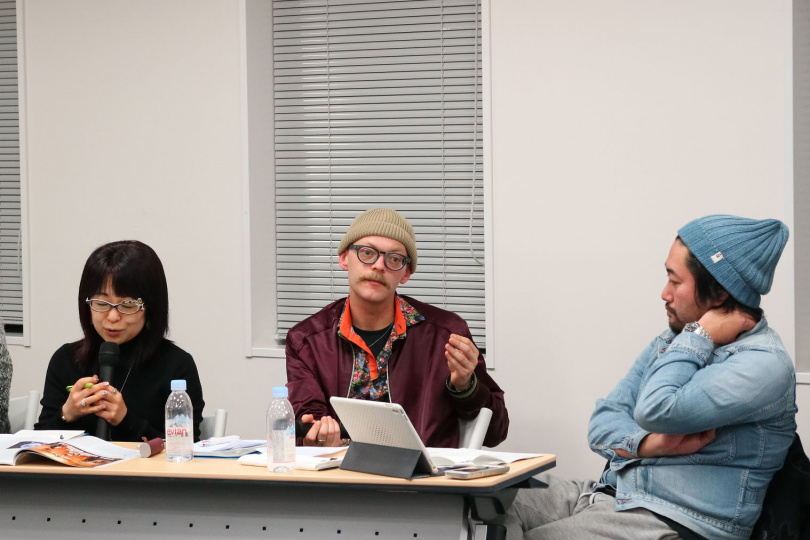
- I remember that I talked with Tanino-san at Kinosaki Art Center. I think the important thing is the development of art rather than the development of artists. People serve the arts, and Tanino is indeed a person who serves the arts. Of course, the choice to go commercial through various forms of compromise is a possibility. But that can quickly make art no longer art. We should also consider the possibility that as we age, we become more likely to compromise. There's a stage in your life where you're more likely to make bracketed compromises. Mr. Tanino is now at that age, so it is a question of whether you will choose to compromise or whether you will engage in activities that look further ahead. But looking further ahead is a very complicated thing, and the key is how to maintain sustainability.
I don't think taking on some big institution or theater is going to make a difference. The Dark Master is really about the truth of who we should be and who we can be, including whether we take responsibility or not. Tanino-san talked earlier about the economics of The Dark Master, but I think that, like The Dark Master, it's possible to do things without being front and center, or not take responsibility. The key is to get a good sense of what structure you need. It's about figuring out what kind of engagement you need right now. Mr. Tanino should find a structure where he has time for himself, time for his son. I think that finding a place where you can continue working with peace of mind will lead to future development. I don't know the situation of theater in Japan
, so I don't know what kind of place in this country would be suitable for Tanino. But there must be people who are involved in theater in various ways in this hall.I think there are people who are working in a practical way, people who are involved in a theoretical way, and all of us have to always be aware that there are people like Tanino who work in the service of the arts, and that is why we work. And I think it's important for everyone to be aware of how we can continue.
-Thank you very much. If you have any questions or comments from the audience, please do so.
- Yi Uchino
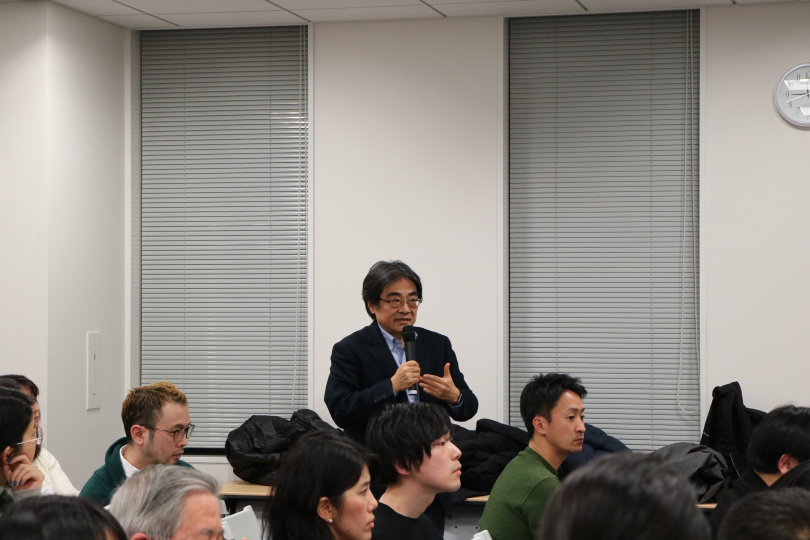
- It's called the infield that is doing criticism. I'm a board member of Arts Council Tokyo, so I'd like to be a little more specific and ask what artists like Ms. Tanino can do as a Arts Council Tokyo to further contribute to the development of the arts. The Saison Cultural Foundation has Morishita Studio, and the decision was made to rent it to Mr. Tanino for three months. As for the Arts Council, at least, it may be bureaucratic, but I think it has done a good job to some extent, saying, "There is a subsidy for this purpose, so let's do it this way." However, support is not only needed. Arts Council Tokyo For example, if there is something that is good compared to other subsidy systems, for example, or if there is something that should be done a little more, I would like to hear your advice.
- Tanino
- In the case of a production method like mine, "location" is a very important factor, and there is no other place in Tokyo where I can do it with my current creative method except Morishita Studio. As a matter of fact, at the Osaka performance of "The Dark Master" with Ogata, the owner of the building said he could use it for as long as he wanted. "I don't care how long I stay or how much I spend" he said. It's a place that has a grid and works as a theater, but it's rarely used. So I could do it. It's a small theater in the back alley of Tennoji.
As a matter of fact, I'm planning to release a new work in June of this year, and it will also be done at Morishita Studio. I'm based in Tokyo, so it's great to be premiering my first completely new production in three years. However, the current situation for me is that Morishita Studio is the only place to work in Tokyo, and I don't think that will last forever. If I went to the Saison Cultural Foundation with a kitchen knife wrapped around my stomach every time, they would just think, "Yes, yes, you're here again." If I continue this way, I'll have to go somewhere someday. If there is a place where preparation, practice and the performance can all be done for a long time ...... Morishita is not designed to be used for a long time like that. It may be a luxury, but in order to make good things, it is absolutely necessary, and I feel that it does not matter where the land is as long as there is a place for it. - infield
- I don't think that story is unique to Tanino-san. So whether it's the city or the foundation, you should say more. The reason why Tadashi Suzuki went to Togamura was that there was a kind of theater that could only be performed if people lived in the same space for a long period of time. I hope Tanino-san will be more assertive about "Why can't we do that in Tokyo?."
- Aschenbrenner
- I wondered a little, but the population of Japan is decreasing rapidly due to the declining birthrate and aging population, so the number of places should increase rapidly. Are there any vacancies?
- Tanino
- I'm looking for that, too. For example, I was sort of raised in Shibuya, so I've looked for good places in Shibuya. There are love hotels in Shibuya. The ward is trying to clean up that area and it can't be handed down to the next generation. I can't reopen. That means there will probably be a lot of ghost love hotels there. Isn't it interesting that those huge love hotels are ghosted? I think it would be nice to have something like a "hacobune" in it. In reality, the population of Tokyo will not decrease much by aging alone. So there may never be a place available. But like I said, there are places that want to be clean, so I do think there might be an opportunity there.
- Taneo Kato
- I am also a board member of Arts Council Tokyo. The "place" you just pointed out is the place itself. However, it is not being used effectively. The place that could have been used for theater is also operated in an extremely inconvenient way. I think we should use more wisdom to tackle such things. For example, the Tokyo Metropolitan Theatre in Ikebukuro and Arts Council Tokyo are not directly related, but both are operated by the same foundation within the cultural policy of the Tokyo Metropolitan Government. Therefore, if it can be incorporated as a policy issue, it may actually be possible to occupy the Tokyo Metropolitan Theatre to some extent. This is a matter of policy judgment, so we must also judge it Arts Council Tokyo and make proposals to the Tokyo Metropolitan Government. In the sense that we will also consider such possibilities, today's report was very meaningful.
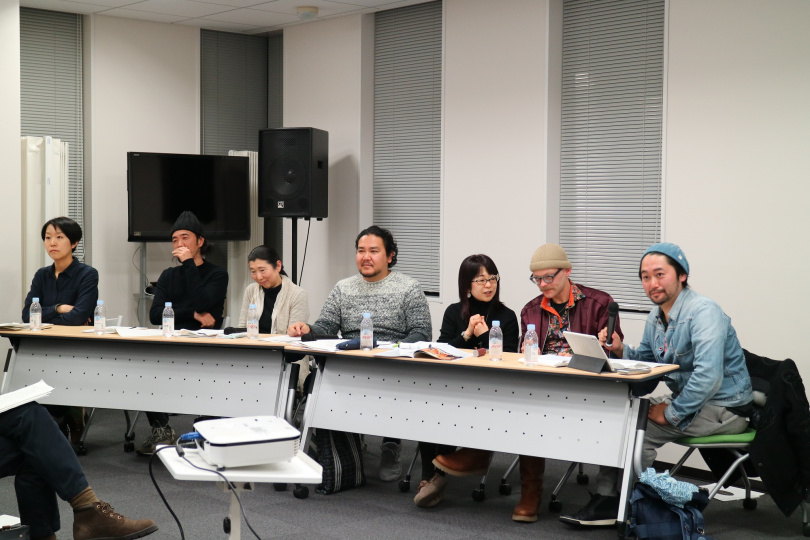
- YAMAGUCHI Hiroko (Asahi Shimbun)
- In such an open and open space, I don't think there are many places where artists and their supporters can talk about economic issues. I think it is meaningful that he did not discuss Penino's maniac works, but talked about how to position theater in society and how to create in it. Nowadays, there are more and more opportunities for artists to speak to the general public in the form of after-talk and pre-talk. There are also various workshops for creators and those who want to create in the future. However, it is aimed at people who have a strong interest in theater, and in the after-talk, actors and directors often talk about things like, "I had a hard time on that stage today," and it is often a closed place only for those who come to the theater. Therefore, it is important to disseminate in this way what artists think about and what they are doing in the performing arts in society in a language that even people who are not involved in theater can understand, in order to improve the creative environment, and I think it would be good to create more opportunities like this.
By disseminating the creator's thoughts and thoughts, even if we talk about the place that was talked about earlier, there may be people who say, "I've never seen a Penino play, but my warehouse is empty, so I can use it." I think there are probably quite a few people like that in Tokyo. At that time, even if you don't know what kind of person Tanino Kuro is, I think that the lender may feel relieved and the conversation will be easier to proceed with by having Arts Council Tokyo in between. I think the Arts Council can not only subsidize money, but also support artists by becoming a guarantor, so to speak. Even if you don't have a special interest in theater, more and more people may feel a sense of fulfillment and accomplishment when artists work in their empty warehouses and various people come and go there. As residents interact with artists on a daily basis and the number of people in the neighborhood increases, the area may become more lively than before. I feel that it is important to increase the number of theater fans in that way.
In the case of Japan, the line between profit and non-profit, commercial and art is not clear. I think there are good parts there, so I have no intention of denying the current situation. However, for example, at the New National Theater, when talking about its results, the number of spectators and the occupancy rate are the yardsticks. In other words, it is difficult to explain how art and the public are connected except for easy-to-understand numbers. So, of course, it would be nice for Mr. Tanino to occupy the art theater in Tokyo (laughs), but when I looked at Tokyo as a whole, I felt that there was a possibility that we could find an unprecedented way of public by proposing a new form of connection between artists and the general public, as I just mentioned.
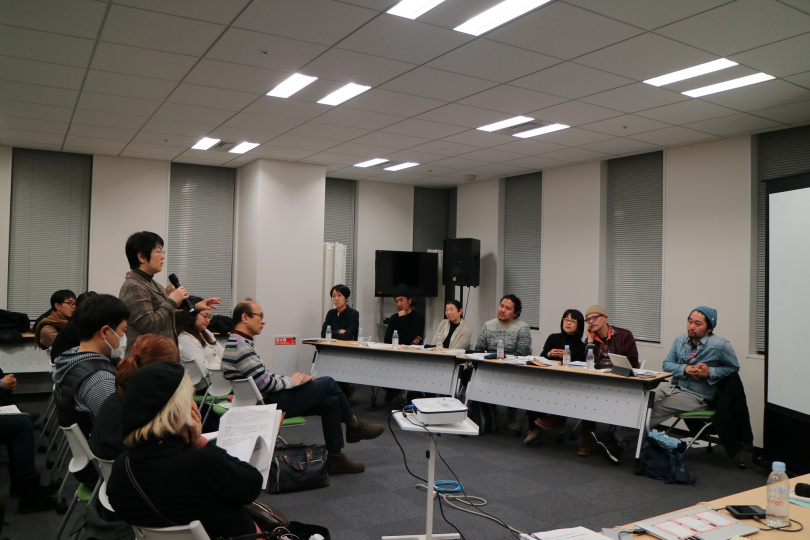
-Thank you for your valuable opinion. I appreciate the interview and the comments that have gone into what we can and should do to support artists. We will continue to hold these meetings next fiscal year, and we would like to have the opportunity to have a dialogue with those who have gathered here. We would like to use these meetings as a starting point to make efforts to increase the number of opportunities where we can listen to more opinions. Please look forward to the next long-term grant report meeting!
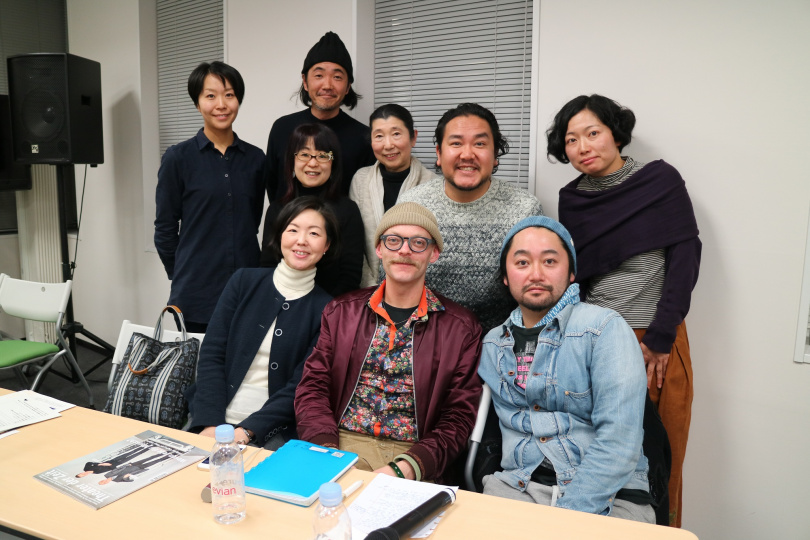
Niwa Gekidan Penino
2000年1月、昭和大学演劇部メンバー有志にて「庭劇団ペニノ」を結成。自宅マンションを改造した劇場スペース「はこぶね」や野外での公演など、作り込んだ舞台美術とともに上演空間には透徹したこだわりを持つ。「フェスティバル/トーキョー09秋」や「ふじのくに せかい演劇祭」、「KYOTO EXPERIMENT」など国内の主要な国際舞台芸術祭に多数招聘。『苛々する大人の絵本』は09年にベルリン(ドイツ)、10年にチューリッヒ(スイス)、グロニゲン(オランダ)などで上演され、スイスの著名な演劇賞ZKB Patronage Prize 2010 にノミネートされた。2014年『誰も知らない貴方の部屋』アメリカ5都市ツアーを行う。2015年『大きなトランクの中の箱』がウィーン芸術週間、世界演劇祭(ドイツ)にて招聘され、ウィーン地元紙で五つ星の評価を得た。2016年『地獄谷温泉 無明ノ宿』ではヨーロッパ4カ国ツアーを行ない、好評を得、2018年フランス公演が決まっている。作・演出のタニノクロウは、2016年「地獄谷温泉 無明ノ宿」にて第60回岸田國士戯曲賞受賞。2016年北日本新聞芸術選奨受賞、第71回文化庁芸術祭優秀賞受賞。
http://niwagekidan.org/
Speaker Profile
Tanino Crowe
Born in Toyama Prefecture in 1976. He is the director of Penino, a garden theater company, and a theatrical playwright and director. Senior Fellow, Saison Cultural Foundation (until 2015). In 2000, he started a garden theater company, Penino, while he was in the medical school. Since then, he has written and directed all films. He has been invited to major theater festivals in Japan and abroad, mainly in Europe. In January 2011, he wrote and directed "Chekhov?" for a performance hosted by the Tokyo Metropolitan Art Theater. It expresses a beautiful spiritual world that is just a hair's breadth from madness and is well received. In March 2015, he released 'The Water Cage' as part of his theatrical repertoire in Germany. In 2016, he received the 60 Kishida Kunio Drama Prize for 'Jigokudani Onsen Mumyo no Yado.'. In 2016, he received the Kitanihon Shimbun Fine Arts Award and the 71 Arts Festival Excellence Award from the Agency for Cultural Affairs.
Max-Philip Aschenbrenner
Born in 1981. In 2010, while Frie Leysen was artistic director of the Theater der Weld, Aschenbrenner worked as artistic collaborator and became artistic director of the Jute Ball in Kriens, Switzerland. Since then, he has been involved in the planning of Vienna Art Week with Frie Leysen, Dramaturk at the Asian Arts Theater in Gwangju, South Korea, and as a director at the International Performing Arts Meeting (TPAM2018). Based on Mr. Tanino's experience of producing performances in Europe, etc., we request him as a person who can certify this project from the standpoint of a third party.
Kayo Ishikawa
He was born in Yokohama in 1944 and is 73 years old. While working as a freelance career counselor, she joined the Saitama Gold Theater presided over by Yukio Ninagawa in April 2006. Since then, she has appeared in all productions of the company's rehearsal and main performances (However, he had no prior acting experience, and was literally making slow progress with "60 lessons."). His recent performances include Richard II, the return performance of 10,000 people's Gold Theater 2016 Golden Symphony "Raven, we'll put a bullet in it," and GEKISHA NINAGAWA STUDIO performance of 2017・ Waiting. "Jigokudani Onsen Mumyo no Yado" is the first Penino production to participate.
Yui Matsumoto
He was born in Ome City, Tokyo. Graduated from the Department of Human Relations, Faculty of Human Relations, Musashino Women's University. After working as an actor and assistant director, he started studying art when he met Kenji Hamasaki, a stage artist. At present, he is engaged in the art of small theaters in Tokyo at Rokushakudo, a stage art research studio. He participated in Penino's works "A Box in a Big Trunk" and "Jigokudani Onsen Mumyo no Yado."