



Performance at the Paris City Theatre and CD recording on the Okola label
*Information at the time of adoption.
- Name of the organization or individual
- Japanese music quartet
- subsidy category
- Creation Grant
- Grant Type
- single year
Reiwa 4(2022) 2nd Term Creation Grant Category I Single-Year Grant


Business Overview
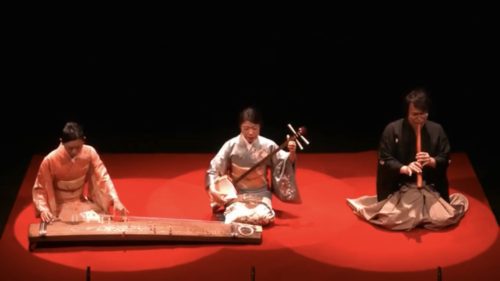
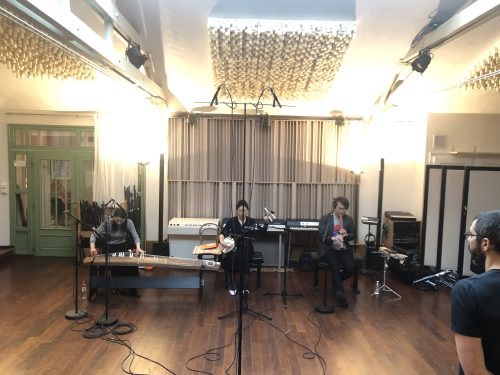
This project was carried out with the cooperation of two major organizations, Radio France and the Paris City Theater, which are particularly influential in the field of music in France, a country with a deep knowledge of traditional Japanese culture. Focusing on "sankyoku" among Japanese music, they performed and produced CDs, and fascinated Parisian audiences with their performances that are unique to a Japanese music quartet that works from both classical and modern perspectives. Performers: Japanese music quartet (Soh and sangen: Noriko HIRATA and Yuko TERAI, shakuhachi: Suzumon KURODA) Songs: ・ Chiyo no Uguisu (Mitsuzaki Kengyo) ・ Saga no Aki (Kikusue Kengyo) ・ Oshu Satsuji (Masanosuke JINBO) ・ Onoe no Matsu (author unknown) ・ Kei HITOTSUYANAGI/Hana no Hegen (1988)
- Period of Activity / Project
- Saturday, April 1, 2023 -2 (Sun)
- Venues
- Paris Theatre, Radio France (Paris/France)
*Information such as project outlines is provided by organizations and individuals providing subsidies.
Profile
【 Japanese music quartet 】
A quartet formed in the spring of 2011 by four graduates of the Japanese music department of Tokyo University of the Arts (Soh, sangen (three-stringed instrument), and 17 stringed instrument: Noriko HIRATA, Yuko TERAI, and Hiroyasu NAKAJIMA, and shakuhachi: Suzumon KURODA). Based on the concept of "creating music of the present and the future with traditional Japanese instruments," he has developed activities from three perspectives: "commissioning new works to composers = joint activities with composers to explore Japanese music of the present and the future," "revisiting masterpieces of contemporary Japanese music composed since the 1960s," and "traditional sankyoku gasso (classical ensemble of sangen, koto, and shakuhachi)" which is the basis of these activities, and his performances have been highly praised both in Japan and abroad.