



Naoyuki MANABE GAGAKU Ensemble 2026 Performance: Tradition and Innovation 4 ~ Unraveling the Classics and Creating Future Tradition ~


Business Overview
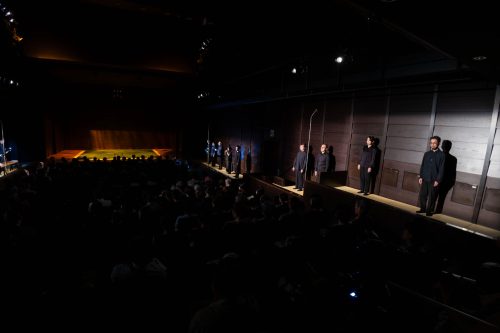
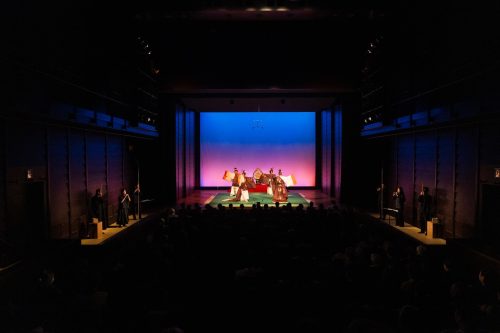
At the venue this time, there was a space for box seats next to the audience seats, and the performance took advantage of that space.
< Program and Contents >
◯tradition
・From Kagurauta: "Kichiriri"
◯creative innovation
・GONSHIRO Atsuhiko "Equinoctial/Cochal": for 2 tubes of sho, Op. 204 Sho: Naoyuki MANABE, Soki AOKI
・Yukita FUKUMOTO "Tome nai nai" (Never Stop) (commissioned work, first performance) Hichiriki instrument: Motonori MIURA, Yoshie KUNIMOTO
・Manabe Naoyuki "Invention VII" Yokobue = for Ryuteki flute (commissioned work, first performance) Flute: Ota Yutaka, Iwasaki Tatsuya
All of the above three pieces were composed by two players, and they were played by a combination of experienced players and young players.
◯creation of tradition
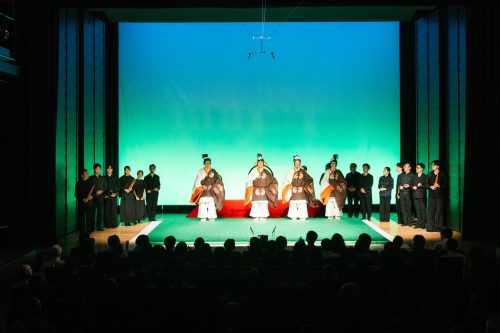
・"Oshikicho choshi" "Kishunraku" preface and end
In this performance, as an original attempt of NMGE, "Choshi" was performed by 'koryo-buki' and "Jo" was performed by 'taibuki' in four groups of kankata. In addition, four dancers danced in concert with the sounds of their respective counties for the first time in the 'Four Groups of Dancing Dance.'.
- Period of Activity / Project
- Monday, August 31, 2026
- Venues
- Shibuya Ward Culture Center Owada Densho Hall (Shibuya Ward)
Profile
【Naoyuki MANABE GAGAKU Ensemble】
In response to Naoyuki Manabe's call, they gathered talented young musicians, and since 2015 have been active mainly in workshops and performances at elementary schools in Yokohama. It was formed in September 2020 with the aim of conveying gagaku not only to Japan but also to the world and promoting its understanding, with the main group of active musicians who studied gagaku at Tokyo University of the Arts, Kokugakuin University, Tenri University, etc. transcending the boundaries of traditional organizations and schools. While presenting the tradition and attractiveness of gagaku to the fullest extent, he has sought and presented new ways of performing and appreciating it. He also aims to create and premiere new works.
In 2025, he received the 16 "Creative Traditional Award" for his efforts to combine contemporary gagaku with modern music.