


- Date & Time
- Wednesday, December 21, 2022 19:00~21:00
- Venue
- Arts Council Tokyo
- Name of reporting organization
- Tokyo Deaf Film Festival Executive Committee
- target business
- Tokyo Film Festival for the Deaf (selected in fiscal 2018: 3 years)
- Speaker [Rapporteur]
- Yori MAKIHARA (Filmmaker and representative of the Tokyo International Deaf Film Festival)
Yoko YUYAMA (Tokyo International Deaf Film Festival, overseas liaison, Deaf interpreter) - moderator
- USUI Chizuru (Senior Program Officer, Support Division, Planning Department)
The Tokyo Deaf Film Festival Executive Committee's long-term subsidy project aims to create opportunities for the development of Deaf film art and the sharing of the unique culture of Deaf people and audiences through films, including holding festivals and forums that screen films selected from the perspective of Deaf people, human resource development through workshops on filmmaking by Deaf people, networking with overseas Deaf film festivals, and expanding the audience for the Tokyo International Deaf Film Festival.
- [Year 1]
- Tokyo Deaf Film Festival Forum: Thinking about the possibility of Deaf Film Festival
DeafFilmCamp (DFC) invited lecturer close workshop - [Year 2]
- 2nd Tokyo International Deaf Film Festival
- [Year 3]
- Deaf Film Production Workshop
Tokyo International Deaf Film Festival Forum 2021
Part I Report
The Tokyo International Film Festival for the Deaf is held with deaf and hearing people serving as staff. With a focus on medium-length and feature-length films from Europe, America, Africa, Asia, and other countries around the world, Deaf staff members select and screen works related to the Deaf. We also hold a wide range of events, including after-talks, symposiums and workshops with guests from Japan and overseas. In addition, the festival offers information security in Japanese Sign Language, International Sign Language, American Sign Language, multilingual support through a voice recognition application, and various accessibility features. Since its launch in 2017, the festival has attracted attention from many audiences and the media. Contributing to the development of Deaf society and art, and creating a place for mutual understanding between deaf and hearing people, how did the film festival start and have an impact on society? Three years of long-term subsidized activities were reported.
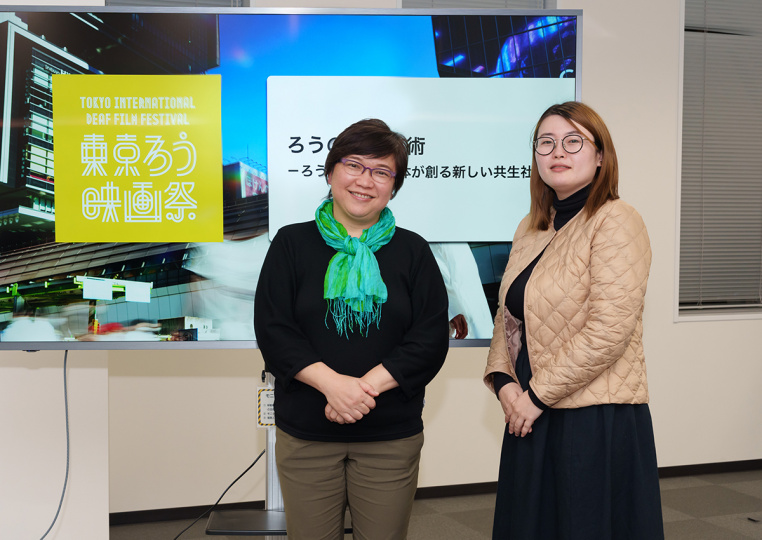
The Birth of the Tokyo Deaf Film Festival
The Tokyo International Deaf Film Festival is a film festival held once every two years for 2~4 days by renting Euro Live in Shibuya, and deaf staff select works related to deafness. The first one in 2017 screened 12 films, all operated at their own expense. In 2018, it was selected for the Arts Council Tokyo Creation Grant [long-term grant], and from the second edition in 2019, it established a domestic and international public submission category as a new attempt, screening 31 films, and changed the name from "Tokyo Deaf Film Festival" to "Tokyo International Deaf Film Festival". After a one-year postponement due to the spread of the new coronavirus infection, the third edition of 2022 featured screenings of 30 films from Japan and abroad at physical venues and online distribution.
Makihara Yori, who is deaf, represents the constantly updating film festival. While working for a company, he and his deaf friends started a film festival from scratch.
"It all started in 2012 when she visited Rome on a sightseeing trip. By chance, the Rome International Deaf Film Festival CINEDEAF (organized by the Rome Institute for the Deaf) was being held, and I was very moved. Films from all over the world were screened in theaters, and Deaf people and listeners cooperated in the management. When I was watching works created by listeners in Japan, I often felt uncomfortable with the presentation when Deaf people or sign language were used, but the works I saw in Rome conveyed something even if I didn't understand the language, and I felt that they overlapped with my own experiences, even though I was from a different country. After the screening, I saw a Deaf filmmaker appear on the stage, and I was shocked that even Deaf people can make movies." (Makihara)
After returning to Japan, he studied film production, and in 2017, he co-directed the film "LISTEN LISTEN" (2016/Japan) with the deaf dancer Shizukakai, which was released in theaters nationwide.
"At that time, I realized that I wanted to increase the number of people like me and revitalize the Deaf arts, so I started a Deaf Film Festival in Japan based on my knowledge of advertising and distribution from LISTEN LISTEN." (Makihara)

©︎ Deafbirdproduction2016
The Role of Film "Expression is the feedback of this world"
There are some things he has been careful about since the beginning of the festival. First, the Deaf should take the lead. Second, value the art aspect. We also take care to ensure that it is a place open not only to the deaf but also to the deaf, hearing impaired, and hearing impaired.
"It is important not only to preserve the art of the Deaf, but also to confront various differences and to communicate to people who do not recognize it." (Makihara)
Makihara describes the role of film as follows. "Unlike on stage, movies have subtitles, which makes it easier for both deaf people and listeners to share."
He also learned a lot from the words of director Koji Fukada, whom he met through a workshop organized by the Tokyo Deaf Film Festival Executive Committee: "Expression is feedback from the world.".
"For example, people from various countries appear in movies. It is difficult to actually go to the places, but by watching films, you can share the culture and background of the creators. Deaf culture is one of many people and perspectives in this world. Movies may not be able to change society, but they have the power to communicate to individuals. I believe that increasing the number of such individuals will lead to changes in society." (Makihara)
Apply for internationalization and long-term grants for development
The first event in 2017 (April 7th ~ 9th) was a success with about 1,500 visitors, but during the preparation period, they stayed up all night due to various responses, and some works were cornered to the extent that they did not have subtitles until the day before. In 2018, I applied for a Arts Council Tokyo Creation Grant [long-term grant] for future development and faced the challenges.
"One of the challenges in continuing the festival was to discover works related to the deaf. There is a limit to the number of domestic works, so I felt the need to deal with more works overseas. When selecting films, we pay attention to whether there is art that makes deaf people think, and what is unique to the Tokyo International Film Festival for the Deaf, rather than films that are easy to understand and commercial. It is not just the use of sign language, or the imitation by the Deaf of means already created by the listener. I try to consider whether it is a new expression unique to Deaf people. I also try to pick up works by listeners that take interesting approaches to topics such as sign language, deafness, and hearing loss from the listener's perspective. The same applies to people with hearing loss and those with hearing loss. As I explained earlier, we select films while facing the differences in feedback from each person's world. The final decision is made by me, of course, but I ask the opinions of all deaf and hearing staff before proceeding." (Makihara)
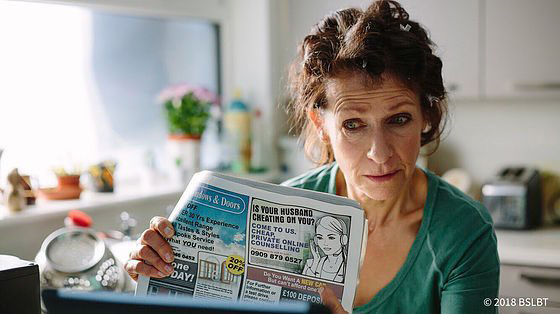
The second issue raised was human resource development.
"There was a need to review the management structure, including overseas relations, as well as enhancing staff with specialized skills such as promotion, translation, and sign language interpretation coordination related to film festivals. At the same time, I thought it was important to train filmmakers for the development of Deaf art."
The third challenge is about networks.
"Deaf film festivals are held not only in Japan but also in dozens of countries overseas. I visited the Shanghai International Deaf Film Festival in China and the Seattle Deaf Film Festival in the United States. Research is necessary to share information with other countries, select works, and develop human resources. Based on this, we applied for grants and worked on internationalization for further development." (Makihara)
Managing a Deaf Film Festival
The name of the 2nd festival in 2019 (May 31 to June 3) was changed to "Tokyo International Film Festival for the Deaf." In addition to the screening of foreign films for the first time in Japan and the establishment of a section for films from around the world, internationalization was promoted through forums with visiting guests and the enhancement of information accessibility in accordance with the sign language of guests from overseas. The number of spectators increased to about 2,000, with the aim of creating an environment in which more people could enjoy the show.
"As an executive committee for the film, 70~80% are deaf and 20~30% are listening, and we are working together with friends who have approached us and professionals with skills. The main roles include director, accounting and ticketing, overseas relations, sign language interpretation, publicity, subtitle production, venue, and information security. Regardless of whether the listener could sign language or not, communication was facilitated by text communication and sign language interpretation. The cost of sign language interpretation is also covered by a Arts Council Tokyo grant. The overall schedule will start preparing one year before the festival period, and the Euro Live will be held six months before the start of reservations. Ticket sales usually start 2~3 weeks before the festival, but we sell 3 months in advance. Deaf audiences gather from all over Japan, so the timing of information dissemination is set early. If you want to gather deaf participants, I think it would be a good idea to contact them as soon as possible."
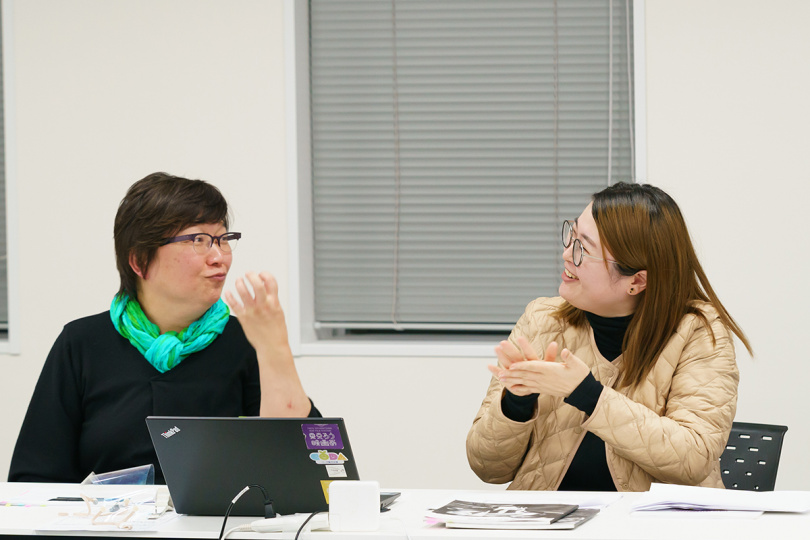
Yoko Yuyama, a Deaf person who has lived in the United States and worked for a foreign company, took on many of the roles for internationalization.
"In 2012, an American deaf friend I met at the university I was studying at founded the Seattle Deaf Film Festival. I had been supporting the festival for a long time because it was not about "Otoashi chasai" but about the art of the Deaf, and I was very impressed to hear that a Deaf film festival had been established in Japan. I really wanted to support him, so I connected Makihara-san with his junior colleague in the form of providing information, and before I knew it, I was involved. In the beginning, there were so many things I didn't know that it was hard, but now I'm in charge of public relations with two staff." (Yuyama)
In addition to English, he uses American Sign Language and International Sign Language to communicate with Deaf people in other countries.
"My responsibilities include negotiating screening rights, helping invited guests apply for visas (preparing invitations), attending to hotel reservations, and checking English for promotional materials. In addition, in addition to finding sign language interpreters for French Sign Language, Chinese Sign Language, and other sign languages used by the guests, it is also important to coordinate communication with the attending staff on the day, and to connect the guests with related organizations." (Yuyama)
As a result of the grant, the promotional activities were expanded, and the entire staff as well as the promotional team worked to build a core branding for the entire festival.
"I didn't want people to get the impression that 'Deaf people = poor' or 'welfare'. As a result, when we thought about what sign language and Deaf people are, we came to a consensus that they are spaces created by the sight line, the body, and the person itself. We decided to promote branding that puts the person itself at the forefront. At the second and third film festivals, we created key visuals featuring Natsumi Wada (interpreter), a coda (CODA) with a deaf parent, which were well received. Video announcements in sign language have produced great results. It seems that people who watched the video messages by directors and famous Deaf people could easily imagine the content of the films. The advertising team consisted of 3~4 people, mainly Deaf people who worked with LISTEN LISTEN LISTEN on the same promotional activities, as well as listeners. The team was asked to promote from the perspectives of both Deaf people and listeners, including press releases and interviews with various media." (Makihara)
Use of Grants and Importance of Information Security
Arts Council Tokyo subsidies were mainly used for screening and planning costs, personnel costs, and advertising expenses, but compared to general film festivals, the Tokyo International Deaf Film Festival also accounted for a large proportion of information security expenses.
"In the second film festival, about 15% of the total budget was spent on information security, and when securing interpreters for Japan Sign Language, International Sign Language, American Sign Language, etc., it was necessary to find people who could properly learn not only about technical skills but also about the background of the screened films."
In addition, UD Talk, which transcribes and displays the voice during the talk in real time, is used to guarantee information in Japanese and English. Since many elderly Deaf people cannot understand the meaning of (Co-directors: Su Qing, Meina/2010/China), which unravels the ancient history of China, even if they read the subtitles, the film was screened with a sign language speaker in cooperation with an association for enjoying films with the Deaf. We also commissioned an audio guide for Helen Keller's Whirlpool (Co-directors: Kate Baxter and Elizabeth Dixon/2017/UK) for visually impaired and deaf-blind audiences.
"Hearing people sometimes say that we don't need to spend so much money on information security, but in order to live in a society where hearing people are the majority, we deaf people always need information security. For example, when we enter a university, we face the problem of how to pay for information security. Listeners also cannot learn about the world of the Deaf without the security of information provided by voice." (Makihara)
"Society has many subsidies for information security. I hope the audience will know about this and use it. Some people think that it is good to hire a volunteer interpreter, but I would like you to know that it is important to hire a professional interpreter and that understanding of Deaf culture and film art is also important for an interpreter." said Yuyama.
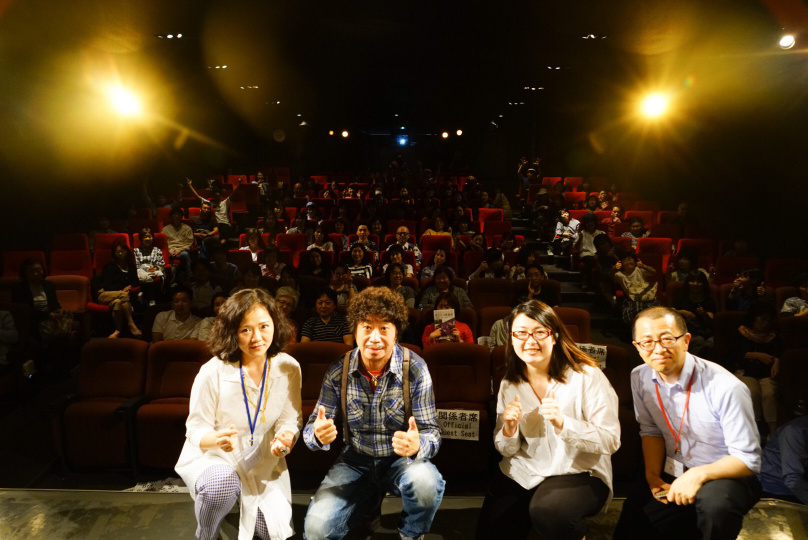
Human resource development and workshops
Human resource development projects carried out in parallel with the planning and management of the film festival include the "DeafFilmCamp (DFC) Lecturer Invited Closed Workshop" in 2018, the "Film Production Workshop for Deaf Students" (not eligible for grants) at TURN Festival 5 organized by Arts Council Tokyo and others in 2019 (not eligible for grants), and the "Deaf Film Production Workshop (Online)" in 2021.
"In order to expand the art of deaf cinema, it is also important to train filmmakers. Since there were no filmmaking workshops for deaf people in Japan, we discussed planning them ourselves. The first year was a period for us to learn about filmmaking workshops, and then the second and third years were for practice."
In 2018, as a research year, they invited lecturers to Japan for DeafFilm Camp (DFC) held every year in the US. The students were film festival staff. It is usually a two-week program in which children of the age set for the workshop learn filmmaking, sometimes play, and end with a recital with their parents. The lecturers were Deaf people involved in film production, and the proceedings were conducted in American Sign Language and Japanese Sign Language through an interpreter.
"I asked DeafFilmCamp if our staff could take the workshop. We then decided that it would be more efficient if the instructor came to Japan to teach instead of going to the United States. Fortunately, the instructor loved Japan, so he conducted a mock workshop in Japan for several days. I learned a lot." said Yuyama.
"The staff in charge of the workshop said that it is important not only to have the skills to make films, but also to have the ability to teach others. They had the energy to inspire and attract people. to create an environment where everyone had fun and was excited together." (Makihara)
"In the US, many of the workshop instructors are active in the film industry. Deaf actor Lauren Ridloff, who starred in the Marvel Studios blockbuster Eternals (directed by Chloe Zhao in 2020), was a member of the crew. The idea was to invite high-quality Deaf lecturers, including professionals who deal with art and education, regardless of nationality." said Yuyama.
In the second year, the staff of the Tokyo International Film Festival for the Deaf acted as lecturers and held a "Filmmaking Workshop for Deaf Students" (not subsidized) at TURN Festival 5. She said she realized many things by combining what she learned at DeafFilm Camp with Japanese deaf culture for middle and high school students who are deaf or hard of hearing.
"Each person who is deaf or hard of hearing has a different background. The first language such as Japanese Sign Language and Japanese is also different for each person. Therefore, I found it difficult for participants to communicate with each other. But it was a very good experience including those. As for how to proceed, the participants found ways unique to Deaf people, such as using storyboards effectively, and it was interesting to see their efforts that come from different languages and backgrounds." (Yuyama)
In the third year, in response to many requests, we held the Deaf Filmmaking Workshop (online) for adults who are deaf or hard of hearing. The 2020 event was postponed due to the COVID-19 pandemic, and the first virtual event was held in 2021.
"We asked American director Jason Roberts, who won the Audience Award in 2019, to teach, and Deaf film director Mika Imai (Filmed "The Nickname Game" in the second edition, "Until Rainbow Morning Comes" and "Ginger Milk" in the third edition) and actor Akito Imai, who directed and appeared in the film "My Father," which was screened at the first festival. Director Jason Roberts was in charge of directing and writing, Mika Imai was in charge of editing, and Akito Imai was in charge of filming. It was a wonderful course even if it was not held in person, and I am happy that it opened up more possibilities." (Yuyama)
The works produced at the 2021 workshop were shown at the forum of the 3rd Tokyo International Deaf Film Festival.
"You don't just make it, you let someone see it. He hones his expression while receiving feedback and reactions from the audience. And when people see that expression, they feel like they might be able to do it too, so they try ... So it doesn't end at one time, but it has a positive impact on each other, and that leads to the next time, and I try to create a flow where things are further linked." (Yuyama)
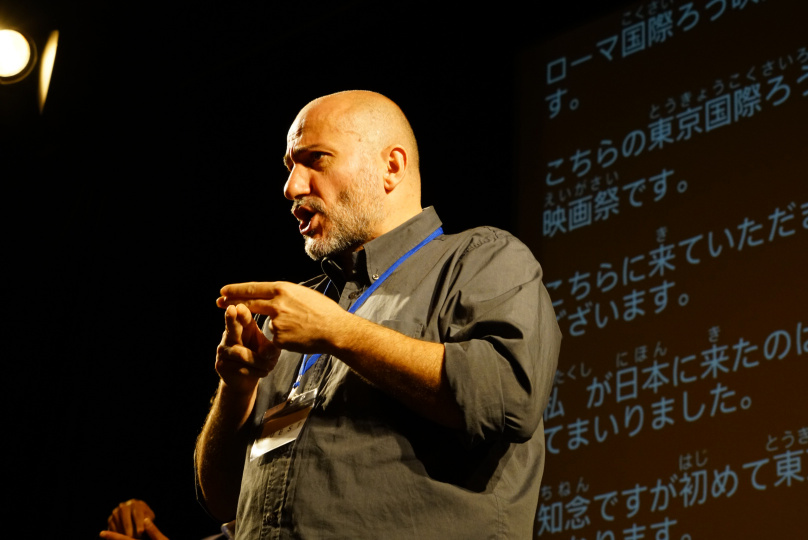
Networking in Japan and overseas
In order to share the art of Deaf cinema, we also put effort into networking and held a symposium inviting guests.
"In 2018, we introduced the current status of Deaf film festivals around the world. In 2019, we invited guests such as the director of the Seattle Deaf Film Festival and founding members of CINEDEAF (Rome International Deaf Film Festival for the Deaf) to discuss the present and future of Deaf film festivals in each country. In 2021, the achievements of the Tokyo International Deaf Film Festival were presented. Outside the Tokyo metropolitan area, Shizuoka City, a sister city of Cannes in France, holds an event called "Shizukan Week" in conjunction with the Cannes International Film Festival. In May of each year, Shizuoka City screens Deaf films." (Makihara)
As for overseas networking, Makihara and Yuyama will visit the area first.
"I have been to Seattle Deaf Film Festival (USA), CINEDEAF (Italy) and Shanghai International Deaf Film Festival (China). The lecturers I met at the DeafFilm Camp introduced me to people in the film industry, and it is important to build cooperative relationships by developing from meetings to exchanges. They also provide us with information about the Tokyo International Deaf Film Festival, and we are working together to build relationships with Deaf people around the world, such as providing overseas information in Japan." (Yuyama)
unforgettable memory
At the debriefing session, Makihara talked about one unforgettable memory.
"On the last day of the second session, an elderly woman came to the audience to say, "I'm really glad I came today." She came all the way because she happened to see an introduction of the film festival on a news program on TBS TV. She was working as a teacher, and when she saw a film called "I had never had a chance to know about Chinese Deaf people before, but I learned about them for the first time by watching the movie." which showed Chinese Deaf people, she told me that she was moved. I was really glad you could see it. We are also happy that many people are sharing their impressions on social media, and this energizes us." (Makihara)
Movies may not be able to change society at once, but they have the power to move individuals. The spread of these individuals will lead to changes in society. The episode that gave a glimpse of the role of the film festival was impressive.
(Composition and text: Wataru OKUBO)