



- Date
- Tuesday, January 24, 2023 19:00~21:00
- Venue
- Arts Council Tokyo and Zoom Webinars
- Name of reporting organization
- The Dance Archive Initiative
- Speaker [Rapporteur]
- Toshio Mizobata
Naoto Iina (Director of the Dance Archive Initiative/Director of Dance and Media Japan)
Toshiko Oka (Ensemble Zone, choreographer)
Takao Kawaguchi (dancers and performers)
Tomomi Tanabe (dancer) - moderator
- Tatsuko Mizuno (Arts Council Tokyo Senior Program Officer)
The 15 "Dance Archive Project" - Creation of a new dance archive (Part 1) is here.
[Part II: Report of the Debriefing Session]
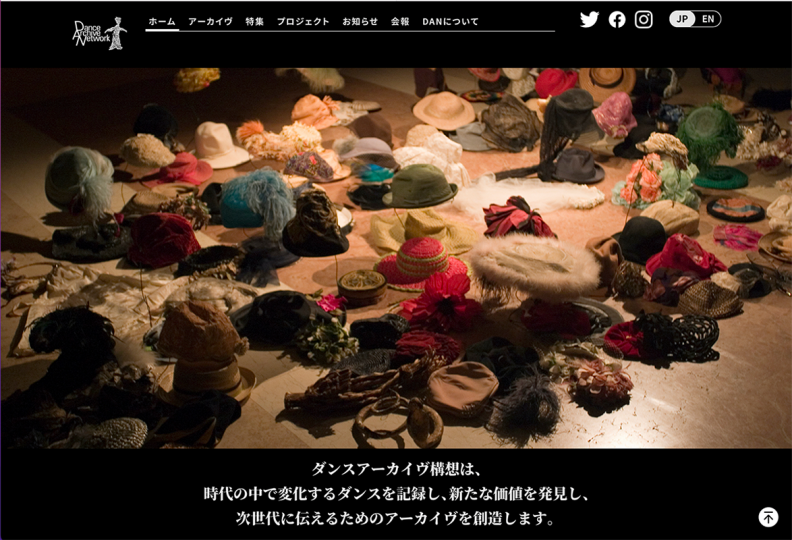
In the second part, we will look at the process from development to publication of the Butoh Digital Archive, which can be said to be the centerpiece of the "Butoh Archive Project", and the actual archive site with the explanation of Toshio Mizobata, the representative director. In addition, we will touch on the archive projects "TOKYO REAL UNDERGROUND" and "Re-Butoooh" developed by the organization after the end of Grant Programs, and explore the possibility of new archiving in the future.
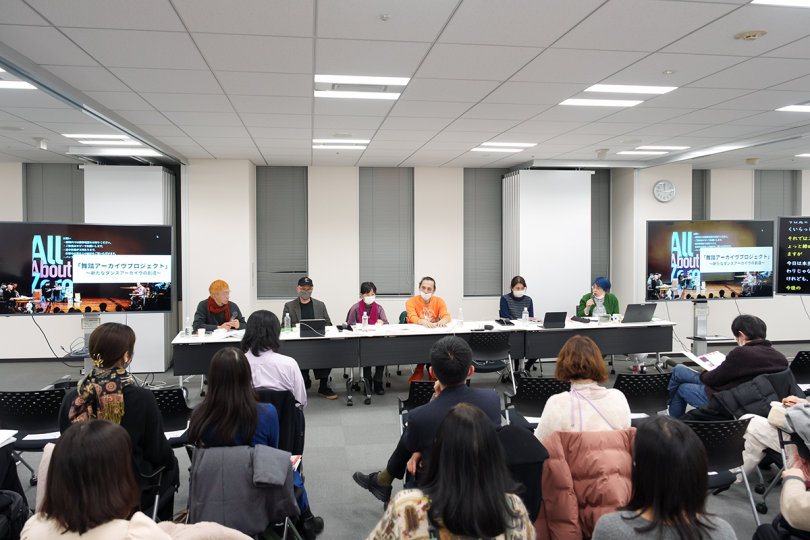
The Way to the Development of a Digital Archive for Buto: The Power of Ideation by Categorizing [People], [Things], and [Things]
The Dance Archive Initiative has established a new digital archive system for dance, and some of the materials archived by Kazuo Ono have been made available online as a digital archive since March 27, 2020. The system design and archive were done in collaboration with Human Human Promotion and Pixel Lab.
- Toshio Mizobata
- The term "digital archive" is a different concept from what it used to be, especially after the COVID-19 pandemic, or it has become commonplace. When we applied for this grant in 2017, we were very optimistic. I was thinking that if the data in the archive is stored digitally somewhere, it can be stored forever, and probably doesn't need anything, so it would be very convenient to make it lightweight and also searchable, but in reality, it doesn't work that way.
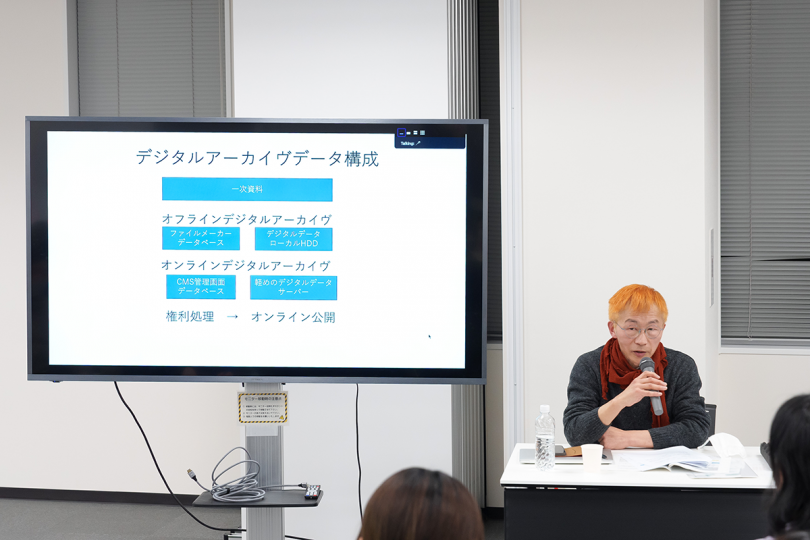
The archival work began in the mid-1990s by collecting and organizing everything Kazuo Ono had in his studio. From these primary documents, possible data were scanned and stored on hard disks and Blu-ray discs, which became the basis of today's digital archives.
- Mizohata
- Online digital archives are, of course, based on offline digital archives, but it's incredibly expensive to deploy digital archives online. In fact, we didn't know that six years ago. In addition to the running costs of renting a server and maintaining it, we also need the manpower to register the data in the database, so I think it's more than a small NPO like us can afford. In that sense, this discussion on how to manage digital archives is a good example of how small NPOs manage archives, and it is a very useful case. Now, let's take a look at the actual digital archive.
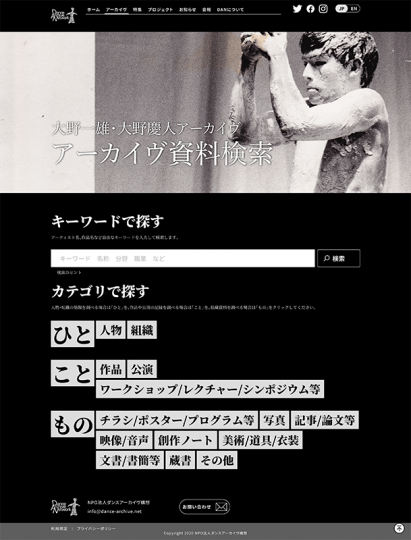
The digital archive can be accessed from the archive on the menu bar of the official website of the Dance Archive Initiative. In addition to keyword searches, you can search by three categories: people, things, and things, followed by the following subcategories:
- human
- Person, Organization
- thing
- Works, performances, workshops, lectures, and symposiums
- stuff
- Flyers, posters, programs, etc., photographs, articles, theses, etc., images, sounds, creative notebooks, art, tools, costumes, documents, letters, etc., collections, etc.
- Mizohata
-
I think this is a characteristic of dance archives or performing arts archives, but [things] are not always the end of the story. If [things] are not included in the archival materials, the works and achievements of dancers will not survive, so [things] are included. When I click on [Works], there are not many data yet, but among the data I have now, Kazuo Ohno's "Dead Sea," "Water Lilies," "Kachofugetsu" and so on are listed in the following order. Let's take a look at a piece called The Invitation of Jesus.
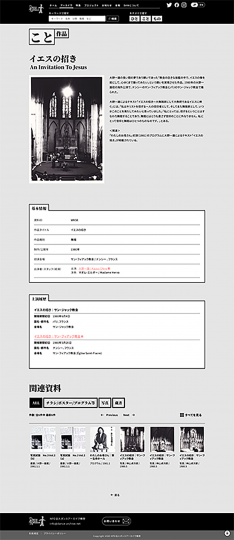
「イエスの招き」資料ページ(https://dance-archive.net/jp/archive/works/wk6.html)
The information page includes a description of the work and a photo of the church in Nancy, France, where the performance took place. Scrolling down the page shows the title, year of production/release, performers, staff, and other basic information, as well as the performance history.
- Mizohata
-
In addition, there is some data in the [Related Materials] section. Let's choose one. My Mother was first performed in 1981, and the program notes published at that time included a text titled "Jesus' Invitation." So the association is made here, and when you come in from the work called "Jesus Invitation," you can see from [thing] the text "Jesus Invitation" in the program notes of "My Mother."
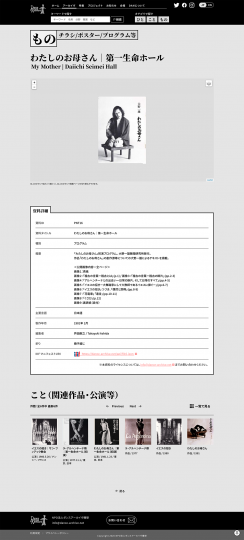
「わたしのお母さん」資料ページ(https://dance-archive.net/jp/archive/data/fl16.html)
By using viewers compatible with Triple I/F (IIIF), a framework for international image interoperability, it is possible to publish and browse high-definition images on the archive site, and characters can be read reliably when the material is enlarged. If you place the cursor on the button at the upper right of the viewer, you can see that there are nine pages of data in the booklet. It is possible to browse not only a single image but also materials having a number of pages such as a booklet.
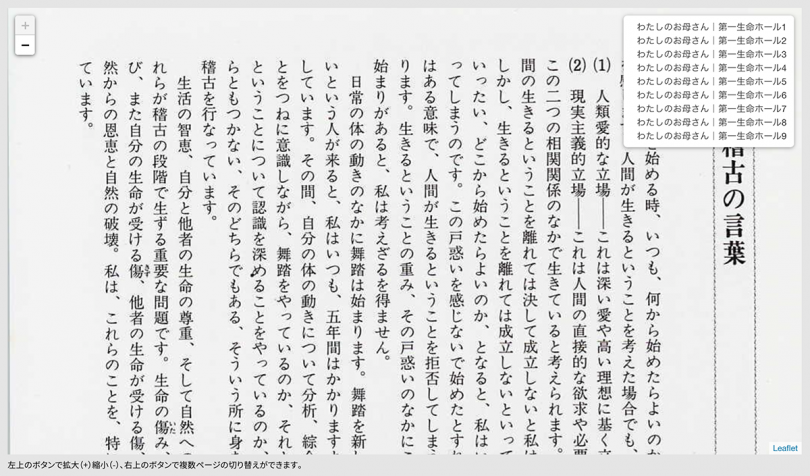
- Mizohata
-
Then I went to [Koto (related works, performances, etc.)], and this time I came to the page of "The Invitation of Jesus" performance. [Performance] and [Work] are separated, so this is the performance of "The Invitation of Jesus." I have a slightly different picture from the one before.
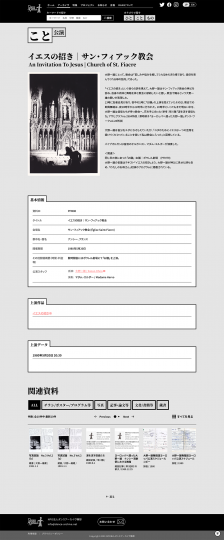
「イエスの招き|サン・フィアック教会」資料ページ(https://dance-archive.net/jp/archive/works/pf80.html)
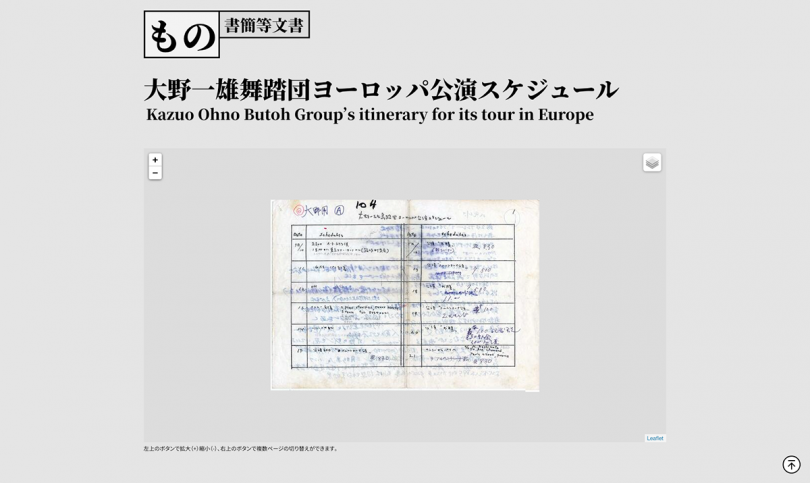
In the "Documents/Letters, etc." category of related materials, Kazuo Ohno's handwritten schedule for the June 1980 tour is displayed.
- Mizohata
- There are 8 pages of this schedule table, and this reflected part is written by Kazuo Ohno on the back of the schedule table. At that time, a newspaper called Le Monde published a very good review, and a Japanese person who was there translated it for me, and I wrote it down. You can see it clearly in the Triple IF viewer.
The "Related Resources" section at the bottom of the page also shows a production of "Ozen" at Nancy's Poirel Theatre as part of the same European tour. Even users who do not know the relationship between each of the items will be able to follow related items, and will be able to touch the archive as a whole.
- Mizohata
- Kazuo Ono always wrote a lot of creative memos every day. There are thousands of such documents left, so we digitize these original data so that you can see them. Copyright is also a big issue with online digital archives, but our creative memos are entirely our own work, so we'd like to make them available as many times as possible. Also, there are some things that are difficult to understand just by looking at them, but I would like to use digital archive technology to make it a little more intuitive to understand what is written here.
Keyword search also enables deep data search beyond the surface.
- Mizohata
-
If you enter the keyword "Yurei," for example, works such as "Kachofugetsu" and "Dead Sea" come up. The reason for this is that the subtitle of the work "Dead Sea" is "Wiener Waltz and Ghosts," so this is included in the metadata, and the word "ghost" hits in the original text, so when you enter the keyword "ghost," this work comes up.
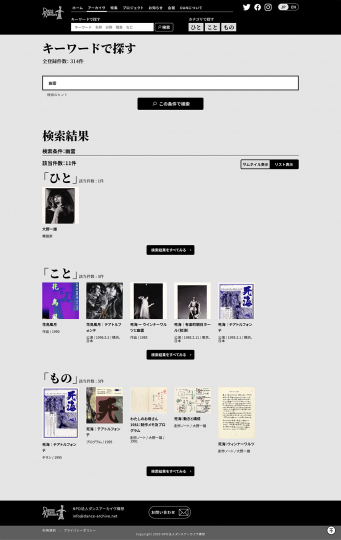
キーワード検索「幽霊」検索結果(https://dance-archive.net/jp/archive/keyword/)
Behind the scenes of the digital archives we've seen so far is a management screen for writing metadata. The way this is constructed determines how search terms are found and what is shown as related material for each document. At first, Mizobata and his colleagues thought of creating a database system using a commercially available application, but because of the special nature of dance archives, it was difficult to use a commonly available application, so they developed and operated a content management system themselves.
- Mizohata
-
But I can't say for myself whether that was right. It's very expensive. Time and effort. Even now, what you have seen are the parts that have been completed, and the reality is that the parts that have not been completed must be developed over time. Considering that it takes money and manpower to do so, I think a big problem for small organizations is to create an economic structure and a sense of purpose about what to do with digital archives.
For a small archive like ours, conversely, one way of thinking might be to do it in a limited way without overdoing it too much. For example, people think that the Internet is 24 hours a day, 365 days a year, but that's not the case with this archive. Even if it's a limited release, if it's open to the public, it can be fully utilized, and if it's economical, it can be an option.
So far, we have looked at the wide range of business results of the Dance Archive Project. How does the organization view the three years of long-term funding? Mizobata recalls that it was natural to set up a business plan when running an organization, but it was not easy to set up a medium-term business plan, such as a three-year plan.
Formulating a long-term Grant Programs plan was a question of the way the organization should be
- Mizohata
- Of course, we can all think about this year and next year, and we can set goals that we want to do in the long term. But when asked to submit a budget for three years, it's actually quite difficult and I can't think about it. On the other hand, asking them to think about the three years ahead is, of course, a financial support, but I think it is a question about the way the organization should be. Responding to that is important and forms the core of our activities. Ideally, that is the meaning of long-term subsidies. In our case, there was a lot of trial and error, but the most important thing was that we were able to carry out the core activities of the organization, rather than that it was useful as funds.
Further development of archiving business
- Naoto Iina
-
Mr. Mizobata said earlier that doing it on a limited basis may be an option. However, limited should not mean closed. Even if we have a good archive, people will not use it if it is not well known. So I started a website called Re-Butoooh. The site not only contains the archival content of the Dance Archive initiative, but also mixes other content. The idea is to publish various archives with a table of contents.
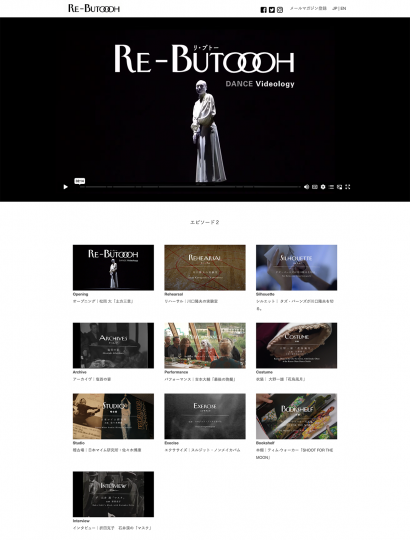
「Re-Butoooh エピソード2」トップページ(https://dance-archive.net/re-butoooh/episode2/index.html) - Iina
- We're currently up to episode three. Each piece of content lasts about 30 minutes, and there are 8 to 10 sections where various archives are introduced. I mean, let's get people to watch things like TV shows online.
On Re-Butooh, you can see not only videos but also related essays, biographies, pamphlets, and other materials. Video is useful, but archiving textual information in it is difficult. The archive will be presented in the form of an online magazine, designed to separate text, photos and videos.
- Iina
- The dance genre itself is very specialized, and only a few people see it. Our mission is to spread dance and leave it for the future. For that reason, we aim to have people enjoy watching.
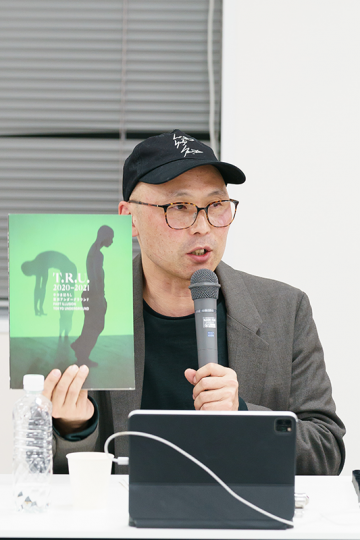
Another project is the dance festival "TOKYO REAL UNDERGROUND", which was developed as a project of the "Tokyo Tokyo FESTIVAL Special 13" organized by Arts Council Tokyo. It was originally scheduled to be held in 2020, but was postponed due to the coronavirus pandemic, and the following year it was switched to an online video festival.
- Iina
- For this festival, we did not broadcast past videos as an archive, but had current filmmakers and current dancers and dancers create video works about dance. We also held a dance exhibition that introduced the history of dance. After the festival is over, how to distribute and distribute the video works is a future issue. Festivals often end up being built on the budget at the time, but there is a business opportunity by distributing films. We are currently working on offline activities, participating in organizing dance film festivals in various countries, and partnering with them.
Q & A
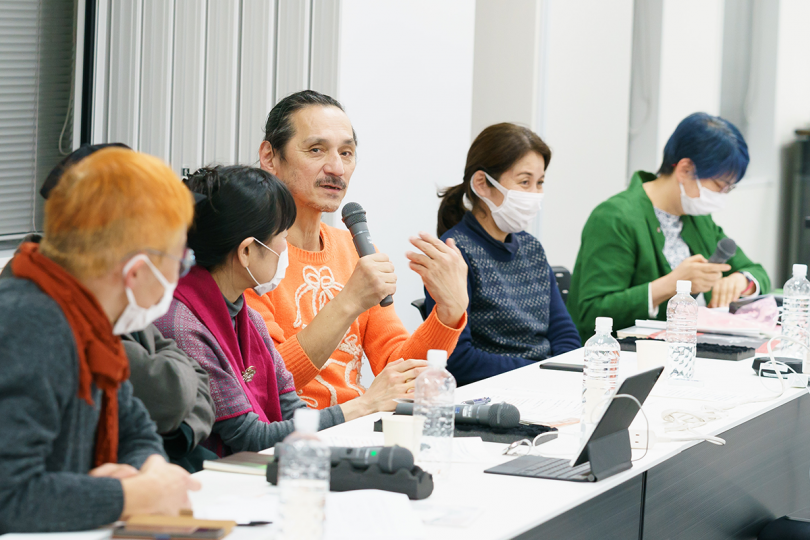
A Q & A session was held between the speakers and the audience at the end of the presentation.
What values do you pursue in dancing? I would like to hear your vision.
- Toshiko Oka
- Through physical expression, I want to make my body and what is inside my body into a dance. With this vision in mind, I want to continue creating works and dancing.
- Takao Kawaguchi
- I think it's all about making an interesting stage, letting people watch it, and experiencing it. I have never learned dance or seen Ono's performance. I started working on "Kazuo Ono" because I wanted to create interesting shapes and movements inside my own body, rather than trying to create interesting shapes.
- Tomomi Tanabe
-
I didn't aim to become a dancer, but what I did to confirm my existence led me to become a dancer, so I would like to continue doing things that I find interesting, valuing the fact that I am here now, including how I have lived my life and my physical condition.
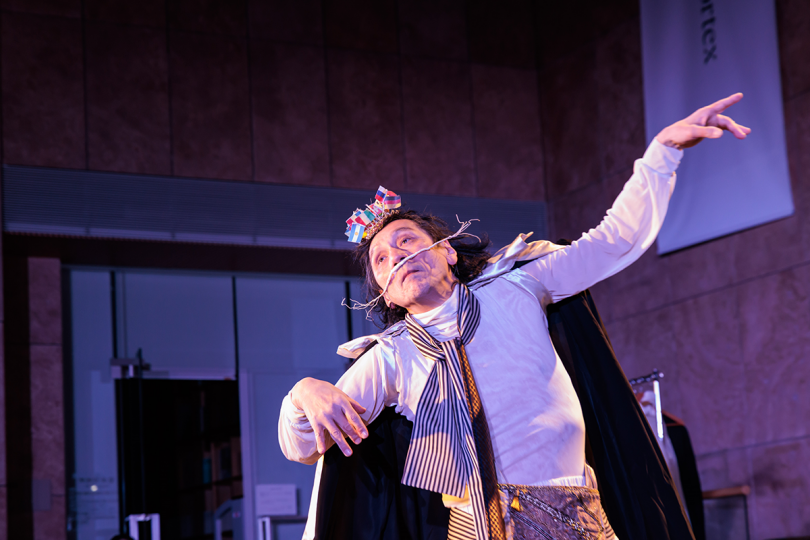
"About Kazuo Ono" Composition, direction and cast: Kawaguchi Takao (Photo: Nakagawa Tatsuhiko)
As a critic, I would appreciate it if you could give me some ideas about your vision and how to participate in your activities.
- Kawaguchi
- Please join us. I think there are various forms of participation. I created this book based on discussions with various critics, including Shigeo Goda, who was a critic of The Sick Maihime. I think there are places where you come to the actual creation or talk at the performance.
To the question, "What brought you to dance?" there were many answers such as "I met a dancer who was fascinating." or. Today, how often do young dancers come across such opportunities unconsciously?
- Mizohata
- I think you mean that the current situation is different from the past. Certainly, in the 60's and 70's, new arts were born not only in dance but also in art and architecture, and there was a swell all over the world. I cannot say that there is no such swell now, but I think it can be said that it is different from now. If you ask me if I will ever encounter it, I think I probably will. Also, I think that what you can meet will be determined by the sensibilities of young people who are different from us, so there is no such thing that what was good in the past is not good now, and I think that there are endless opportunities to do so, although it may be very optimistic.
- Oka
-
Gutai art was born in Ashiya in 1954. In a small town in Kansai, many artists gathered and created their works, and their works are still appreciated around the world. Next time, I will create a dance work as an homage to concrete art, and I hope that it will lead to the sensibility of young people as Mr. Mizobata mentioned.
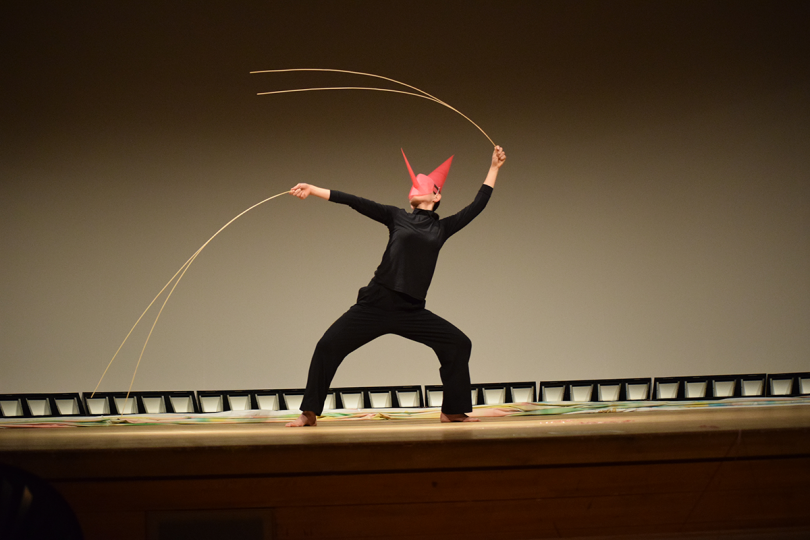
An homage to the AAP Asia Art Project "GUTAI Tried Stage Space" "Into the Big, Big Expansion" Trial performance composition and direction: Toshiko Oka
Once the database is established, the number of people who want it will increase. In other words, if it belongs to the [stuff] category, we can provide it as data. Do you actually have that kind of skin feeling? I thought that if it worked well, it would lead to the resolution of the weakness of the economic structure, which was a concern.
- Mizohata
- I think it's a business development, but certainly if we can show more things in the digital archive, there will be people who want that. I think it's very important that we register more and more data so that we can see a lot of things. However, as I mentioned, there is also the question of cost-effectiveness, and we need to carefully consider this from the perspective of group management. However, when such a thing is created, there may be people who want to buy it, want it, and want to keep it even if they pay for it. I don't think that's a problem if it's possible, and it's possible that someone might want to keep the creative notebook I showed you earlier, even if it's just data.
Building a digital archive for dance is a difficult task, with many resources left to be tackled and ongoing funding required. On the other hand, Mizobata's remark that the long-term grant program formed the core of the organization's activities is impressive. The participants of this briefing session were also able to gain hints on how to position and utilize long-term grants. The Dance Archive Concept will further develop the archival perspective even after the completion of the grant activities, and will continue to develop new projects. I would like to keep an eye on their activities and the trend of archives in the performing arts industry.