



- Date
- Tuesday, December 12, 2023 19:00~21:00
- Venue
- Arts Council Tokyo
- target business
- "Cross Transit" (adopted in FY 2015: 3 years), "Echoes of Calling" (adopted in FY 2020: 3 years)
- reporting body
- Office Alb
- Speaker [Rapporteur]
- KITAMURA Akiko (Office Alb Artistic Director)
HAYASHI Keiichi (Office Alb Production) - moderator and facilitator
- Ritsuko Mizuno (Senior Program Officer, Grants Division, Arts Council Tokyo Activity Support Department)
[Part II: Report of the Debriefing Session]
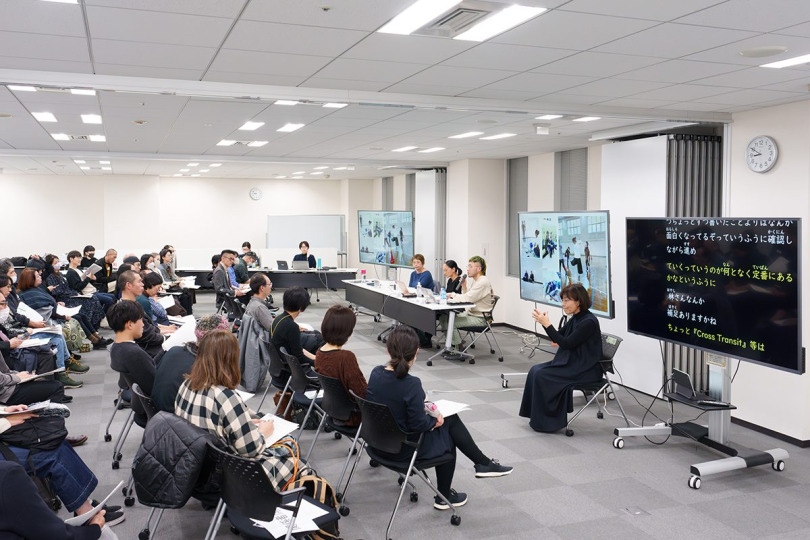
The second part reports on the long-term grant program "Echoes of Calling" implemented in FY 2020 following "Cross Transit."
“Echoes of Calling ” Connecting Eurasian Traditional Culture and Dance
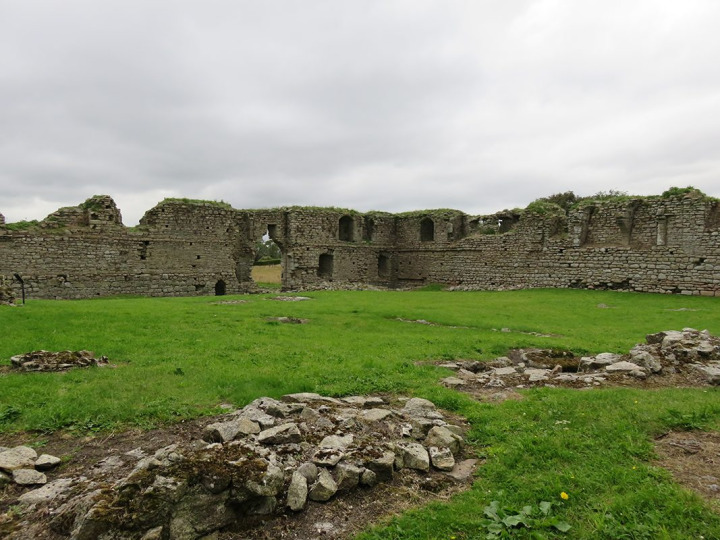
"Echoes of Calling" is a long-term international co-production project that has expanded to Japan, Ireland, and Central Asia. How do the intangible physical expressions and sounds that have been handed down from ancient times in Japan to traditional Celtic culture affect our memories? Also, how can tradition and the present relate beyond differences in forms of expression, culture, nationality, and language? The aim was to create a dance that can open up the way for the future by traversing diachronically and synchronously the "local culture" that tends to become opaque in a globalized society.
The theme of this project was to explore the relationship between oral singing and dance. For example, we conducted research on natural rhythms, breathing, and vocal echoes that transcend language in order to explore the relationship between singing fists and throats, and between singing and speech and dance. We also focused on animism and shamanism in order to capture from a modern perspective the “prayer ” of a community that has been deeply involved in the symbiosis of humans and nature in a fluctuating natural environment. While sharing the concept and aim of the international collaboration with Asia of "Cross Transit" reported in the previous part, the scope of research was broadened by adding Ireland to the scope of research, and collaboration over long distance became a new challenge.
"I was interested in what would happen if we collaborated in a three-way partnership with people who were very far away. I had been researching Asia so far, so I was worried about what I could do, but the phrase "Euro = Asia" became a big inspiration. I thought, what if I could do a dance piece based on this Euro-Asian cultural research?" said Kitamura.
"Euro = Asia" is the name of the civilized world stretching 10,000 kilometers from the western edge of Europe on the Eurasian Continent to the Japanese archipelago proposed by Mayumi Tsuruoka, a historian of art and civilization. Based on the study of the common features of decorations handed down to peoples around the world, this study attempts to find cultural commonality and universality in human activities such as rituals and traditions.
An encounter with Irish culture where songs and dances are rooted in everyday life
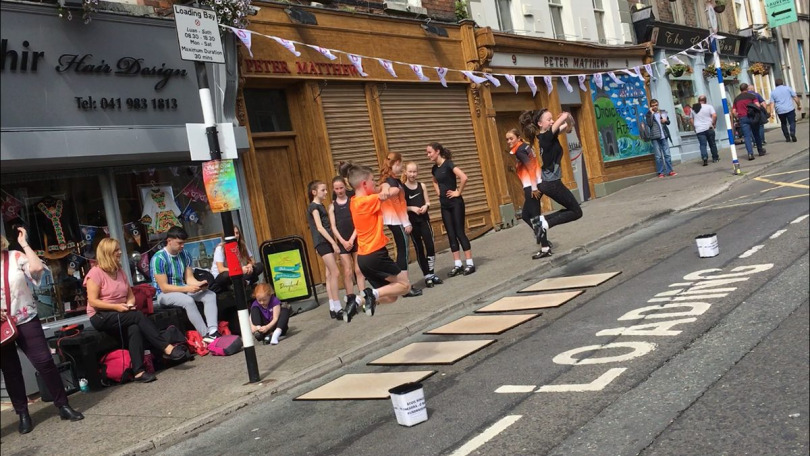
In 2019, preparatory research for a grantee project took him to Dublin, Drauedah, Galway, Limerick, Inissier, Isle of Aran, and Donegal in Ireland.
The first thing I did in Ireland was research into pub culture. Unlike bars in Japan, pubs are places for socializing that can be enjoyed by anyone regardless of age, and at the same time, they are places where people can experience music and dance. I was eating in a pub in Draueda when someone started playing the fiddle, another musician who happened to be there joined the session, and a passer-by started singing. Kitamura says he was impressed by the way everyone, young and old, danced and sang together.
"As soon as the music was played, they suddenly started dancing, and as soon as they shared the chords, they started playing in earnest. I felt a sense of relief and openness. The moment when you suddenly become a group, a kind of "tentative community," is really wonderful. I thought that was a characteristic of Ireland with its pub culture." said Kitamura.
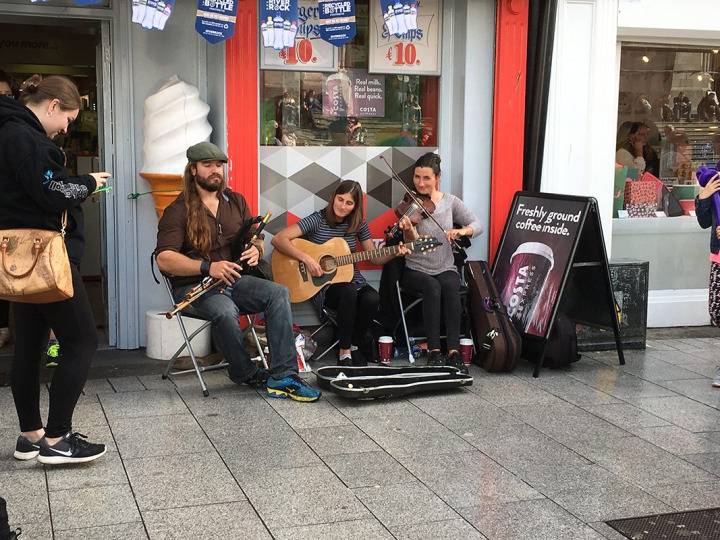
On the small island of Inissiah, one of the Aran Islands with a population of 250, Kitamura was fascinated by the traditional song "Shan North" (meaning "old style" in Irish), which has been handed down by word of mouth from ancient times to the present day. The song seemed to contain a prayer for the world. Shan North refers to both singing and dancing, and the original Irish step dance is often performed with accordion accompaniment. Kitamura says that the fisted sinews of Shan North's songs have something in common with songs from various parts of Asia.
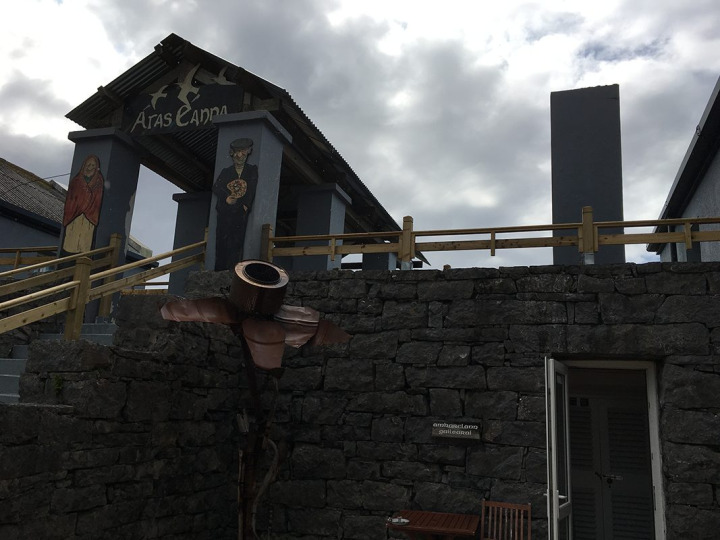
An artist-in-residence was taking place at the Aras Ena Arts and Cultural Centre on Inissiah Island, where artists worked with children on the island in music, theatre and other activities. Kitamura recalls that she was moved by the warmth she felt when she saw the small scale of the community flourishing around the activities of expression.
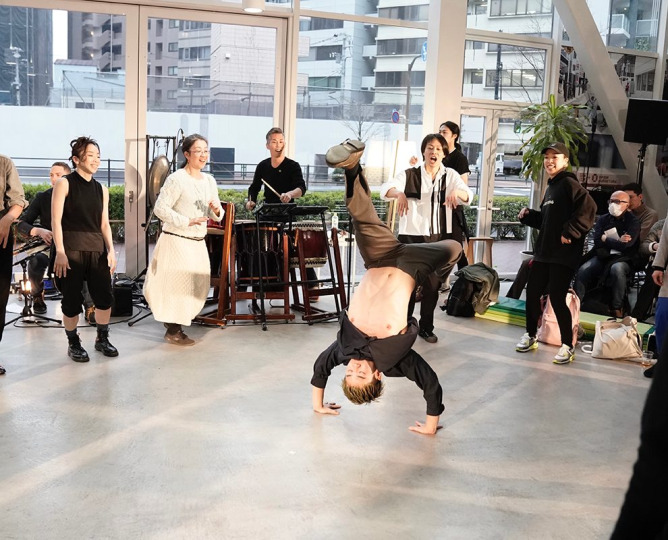
In February 2020, Kitamura held a kick-off event at SHIBAURA HOUSE in Tokyo aimed at launching his creative activities to connect Irish and Japanese lifestyle, dance, music and local communities. From Ireland, Champ North singer Oña Nee Hollynon and Erian Pipes player Paulique Keane were invited to present a Work in Progress work of song and dance. In order to recreate the atmosphere of the pubs that fascinated them in Ireland, lectures and workshops introducing Irish food and drink sales and local culture were also held, and a variety of opportunities were created for participants to not only watch but also dance and experience together.
According to the original plan, the kick-off event would be followed by a residential production in September at the Arts and Culture Centre Áras Éanna (Áras Éanna). But due to the spread of the novel coronavirus, he was unable to travel abroad, and his plans were all revised.
Traveling Online: The Research Process in the Face of COVID-19
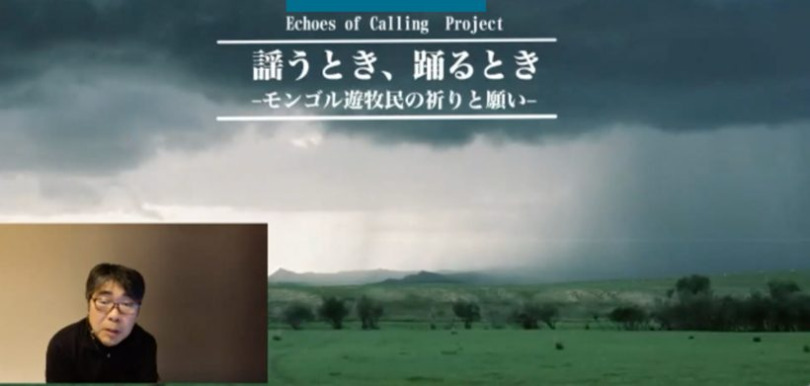
The inability to travel was a major blow to Kitamura, who had previously used the fieldwork method of staying in the area and entering the community or society being researched.
"While I thought I might have to stop, I came to think it was a good opportunity to find ways to continue my work even if I couldn't go there. I was interested in singing, dancing, and storytelling, and I started to think that I would like to create a dance work by researching Central Asia, Ireland, and Japan online in parallel." said Kitamura.
From this point on, the concept of creating dance through remote contact with the techniques and lifestyles of songs and dances handed down in each region as an international collaborative project involving Ireland and Japan, which are located on the eastern and western poles of Eurasia, and Central Asia, which connects them, will move into concrete action. In particular, I deepened my research on contemporary aspects of traditional culture in Ireland and Central Asia from the perspective of songs, dances, and karari.
Specifically, they visited experts living in various regions, interviewed Japanese researchers, and formed study groups to engage in a series of dialogues. He met a wide variety of experts, including literary scholars from Ireland, Uzbekistan, and other Central Asian countries, music specialists, anthropologists, tour guides, and social historians.
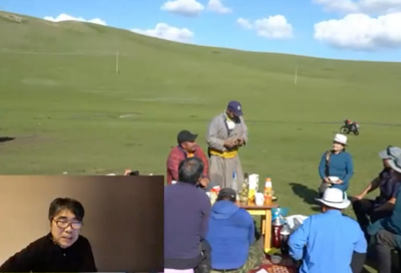
One of the experts we interviewed was Mikiya Nishimura, who specializes in "Shamanism, spirits, Mongolia". Nishimura has been conducting fieldwork from the perspective of local people in the taiga (coniferous forest), where Mongolian nomadic life culture remains, for many years. Kitamura spoke to him about Mongolian spirit rituals and shamanism. Seijitsu Wazaki, who specializes in "Sufism and shamanism in Central Asia and Uzbekistan" will give several lectures over Zoom. Wasaki later became involved in the project as Drama Turku.
Kitamura says that during this period, when he could not move, he devoured literature on coexistence between nature and humans, migration, nomadism, shamanism, oral traditions, music and dance, and expanded his ideas.
First online choreographic creation and presentation
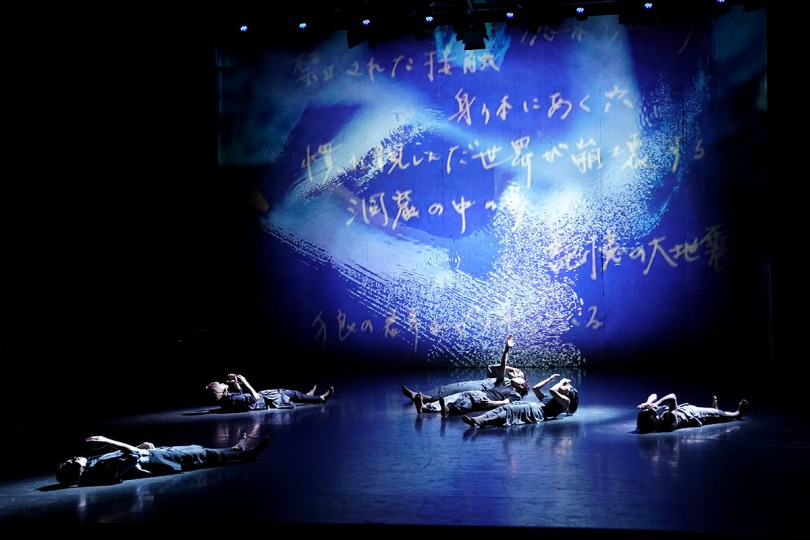
In parallel with his research in Ireland and Central Asia, he worked on his creations in Japan. The first year (2020) was a collaboration with Ireland, creating a dance work with Champ North singers. Due to the spread of the novel coronavirus, Output decided not to allow audiences to perform, and instead streamed video from Spiral Hall.
After streaming the video without an audience, Ireland suggested that we expand on the work and create a video production. Based on the work created in Japan, we decided to try our first online choreography via Zoom. He created Echoes of Calling – Encounter – a dance video by assigning tasks to Irish dancers over Zoom, and then having the dancers work out the choreography on site, filming and editing the dance.
"Ireland had stricter COVID-19 restrictions than Japan. We ended up being able to shoot the three of us together outside, but we couldn't all be in the same studio while we were choreographing online, so we had the dancers connect to Zoom separately from their rooms and studios, and we did the choreography in different rooms at different times." said Kitamura.
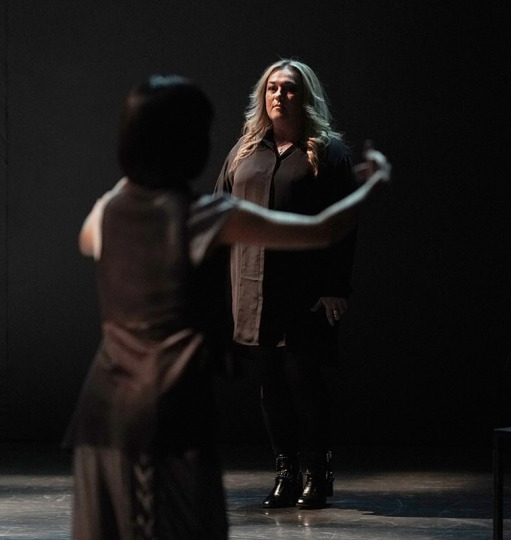
After an online choreographic creation, Echoes of Calling-Gushland- was finally performed at Spiral Hall in February 2022. Dancer Mynte Warde, musicians Dominique McCarroux Veliger, and Diane Cannon, who were scheduled to come to Japan from Ireland, were unable to do so due to the extension of border restrictions.
Collaboration with Uzbek minstrel "Bakhshi"
In learning about Uzbek culture, Kitamura became interested in the minstrel "Bakhshi." In 2021, online exchanges with local Bafushi began. We met a diverse group of Bahushi, young and old, over Zoom and talked to them about everything from their craft to their daily lives.
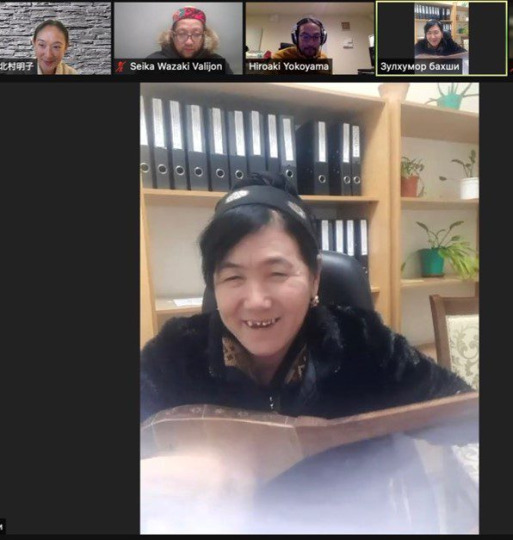
Since ancient times, 'Bafushi' has been a shaman who spoke words given by divine spirits. Now that the religious role has faded, the word is used to mean "storyteller" or "poet," but elements of shamanism are still reflected in the oral literature and heroic epics that Bafushi tells.
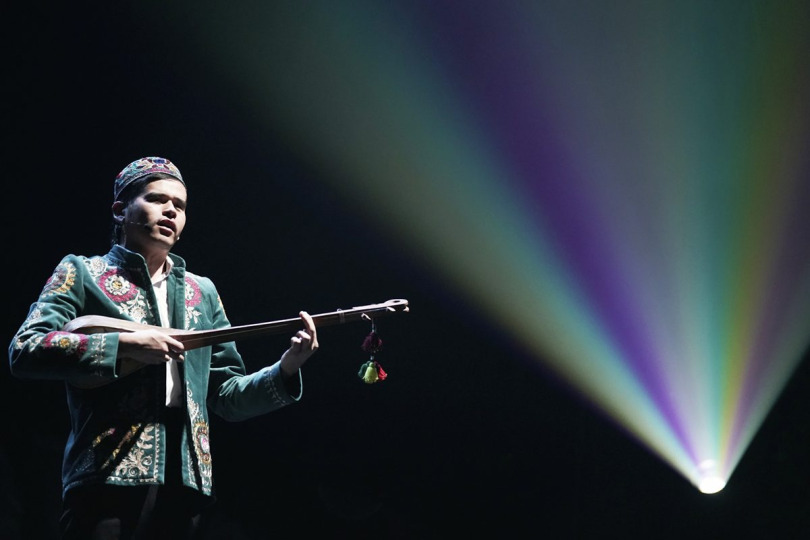
Hiroaki Yokoyama, a musician with an interest in traditional music and musical instruments who has been working with Kitamura on fieldwork and creation for many years, also interacted with many Bafushi via Zoom. Among them, they were particularly interested in Afrol Bafshi. A young minstrel of only 27 at the time, Bakhshi added modern elements to the traditional Bakhshi technique and had a great influence on the Uzbek pop world.
"Among the Bafushi, it is taboo to do anything out of the traditional. Although he belonged to a traditional community, Afrol Bafushi wanted his younger generation to know more about his work. I was very interested in her because she is working on what songs resonate with the present while valuing tradition. Later, I learned that in Japan, Afrol Bakhshi is like a superstar who can fill Tokyo Dome."
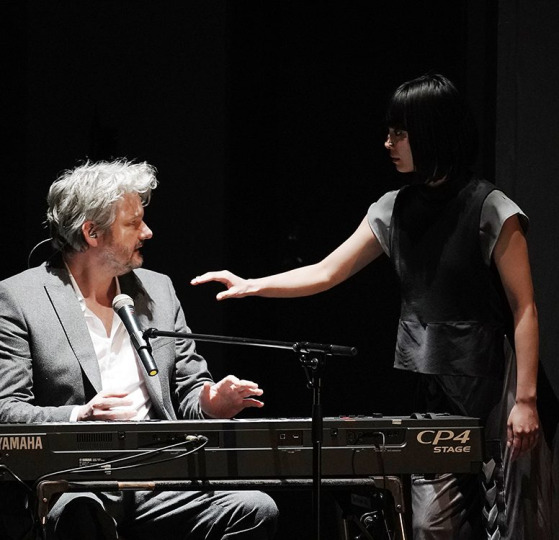
As a result, Aflor Bakhshi participated in the creation as a co-creator, providing music and acting as performers until he released Echoes of Calling – Gushland – in Tokyo in 2022.
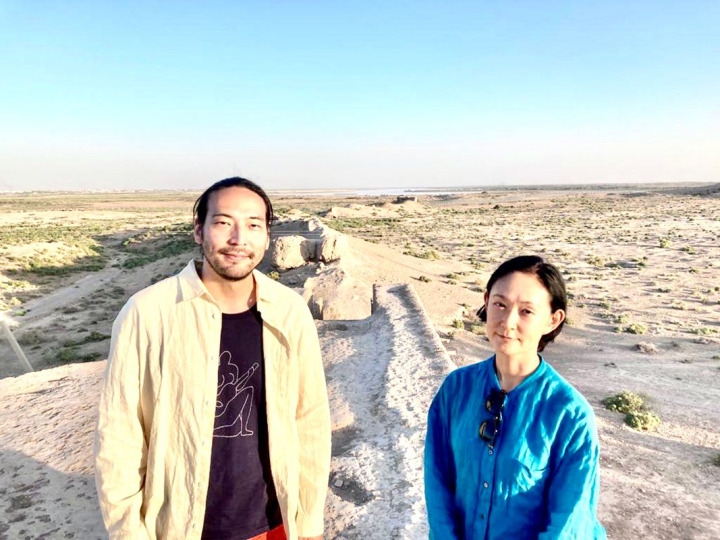
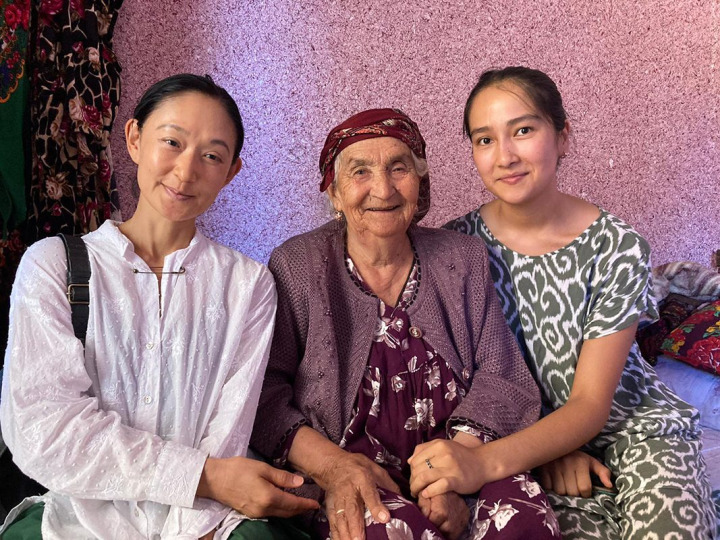
By the middle of 2022, the COVID-19 pandemic began to subside, and I was finally able to visit Uzbekistan to conduct fieldwork in August and September. Mr. Wasaki, whom he had met through online research, and Professor Adham Asirov of the Institute of History of the National Academy of Sciences, who is practicing history in Uzbekistan, accompanied him on a tour of Surkhandarya, the capital of Uzbekistan, Tashkent, Samarkand, Baisun, and many other places. Musician Yokoyama also accompanied him on the local research. I visited the province of Surkhandarya in southern Uzbekistan, where the art and culture of singing and singing, represented by "Bakhshi," have permeated everyday life. We met and recorded interviews with a variety of buffaloes, including nationally famous buffaloes and elders.
"Bafushi is a performing art that represents people's feelings and emotions by singing and singing. Under the former Soviet Union, they were oppressed as dangerous elements who agitated the people. Around the time of the dissolution of the Soviet Union, Bafushi's reputation was gradually restored, and people began to look forward to Bafushi's art." said Kitamura.
Ritual and traditional music that coexists with people and life in Uzbekistan
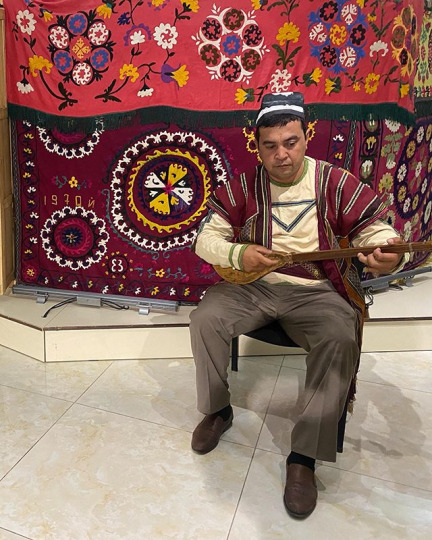
Kitamura shared two particularly impressive experiences during his fieldwork in Uzbekistan.
I visited many musicians in Uzbekistan. When we went to the Academy of Sciences of the University of the Arts in Tashkent and were introduced to the music of various regions, 5 ~ 6 university teachers, who had not been asked to perform in particular, suddenly began performing, saying, "Let us perform, too." Kitamura was surprised by this unexpected event, but he fell in love with the music.
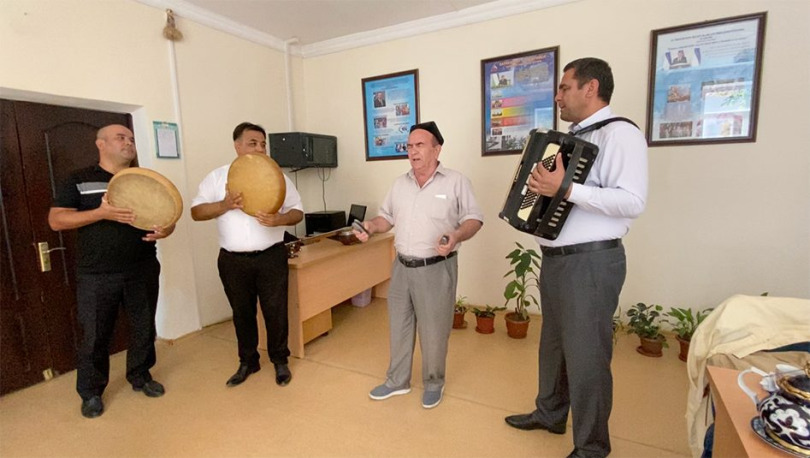
"Do you call it a music group composed of university teachers? I thought that students would be very happy if there were such pleasant teachers at Japanese universities. It's like a professional wrestling brawl, and the teachers come in and start singing quietly at first, then instruments like castanets come in, and the groove gradually changes. It was a form of music with call and response, and the dean and the principal joined in, and the music and singing continued for more than 10 minutes. From the music to the dance, it seems to connect naturally. I was most interested in these teachers during my fieldwork." said Kitamura.
The second is the rare experience of witnessing a circumcision ceremony involving Bafushi.
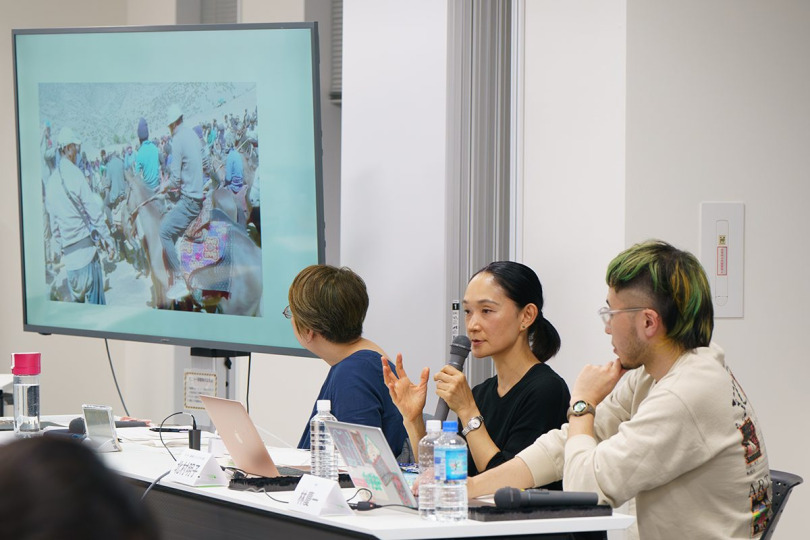
Many Bafshi now work in weddings and circumcision ceremonies. As he met many bafushi in the area, Kitamura learned that there were many bafushi who engaged in various activities, and that each had different skills. He was invited by an acquaintance to attend a circumcision ceremony in Kuzurnavur village, Baisun district, Surkhandariya province, because he knew a Bafushi who was involved in the ceremony. Here, there was a fight to show the "man" of a goat that had lost its head. Before the ceremony, relatives and villagers offered lambs to the participants, and we witnessed Bafushi singing impromptu songs based on heroic epics. Kitamura's descriptions of the rituals overflowing with a sense of reality gave me a strong sense of impact that can only be gained from experiencing them in person.
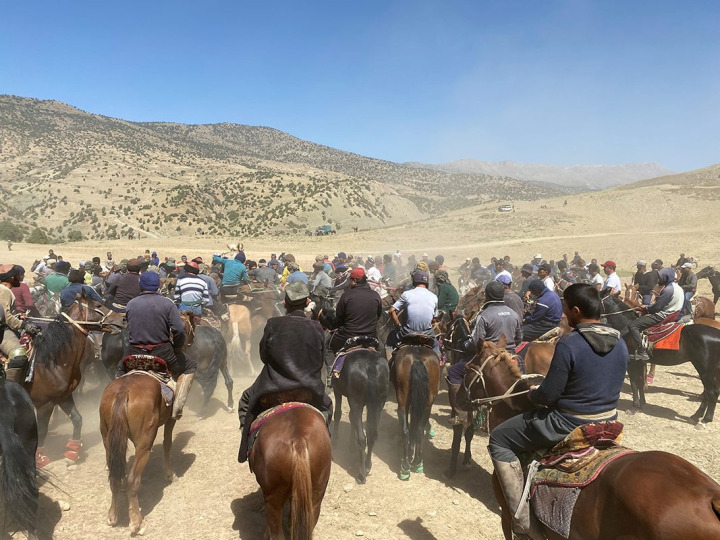
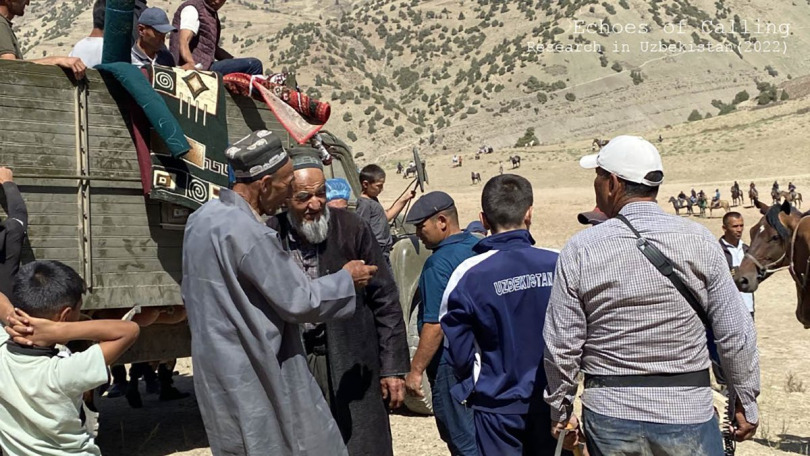
"Among the 200 or so participants, there were people from Kyrgyzstan who rode horses to fight for a baby goat that had been decapitated. It was a real fight for life, and it was extremely powerful. I watched it for 3~4 hours under the hot sun, and I was terrified, but Professor Adham, who went with me, was moved to tears because he thought this was a battle between nomadic men." said Kitamura.
Achievements through long-term subsidized international co-productions
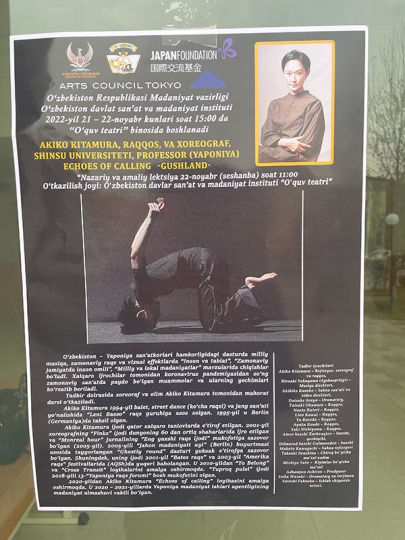
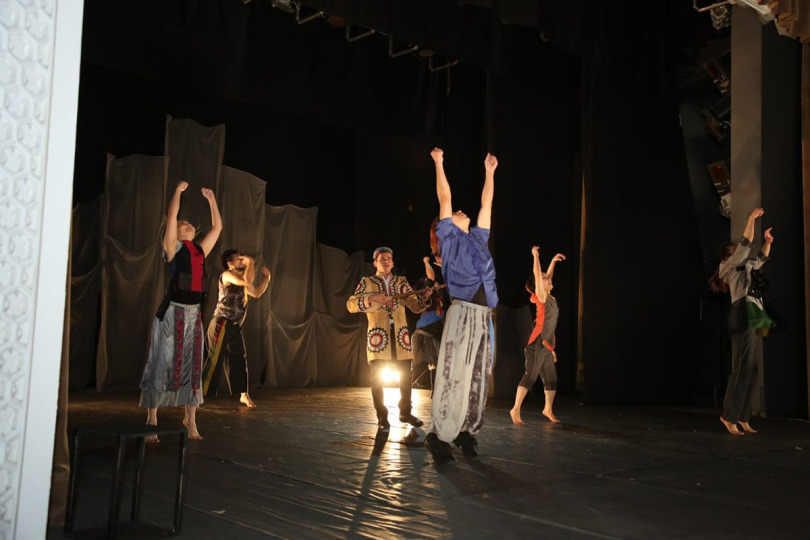
After his stay in Uzbekistan, he was invited by Irish dancer Mynte Wade, who was unable to come to Japan last time, and began his creative work in Japan. In November 2022, they toured Uzbekistan and Ireland, performing in "Echoes of Calling – Gushland-."
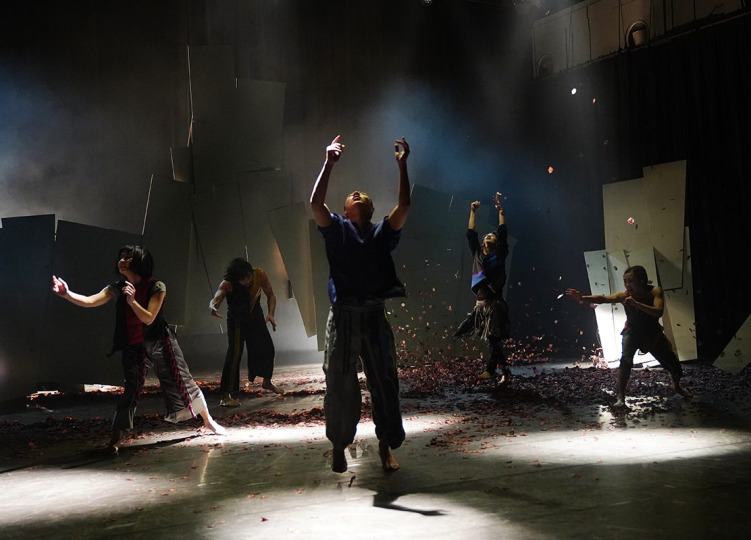
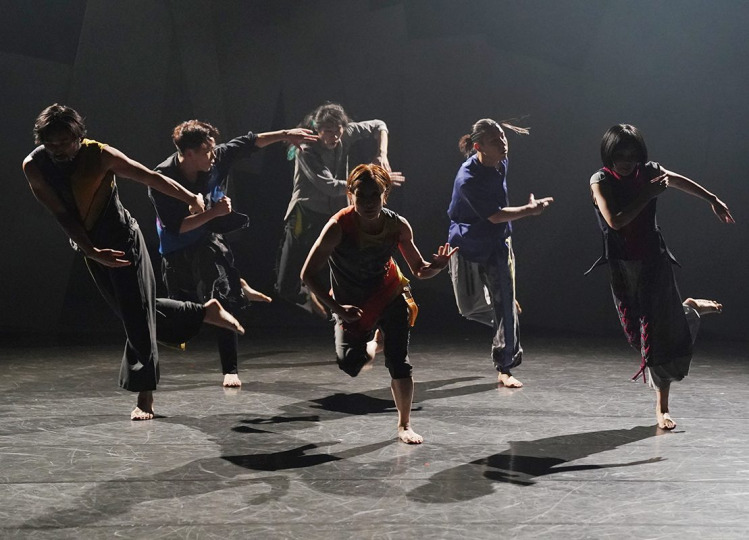
In January 2023, she invited Aflor Bafshi from Uzbekistan and dancer Wade and singer Diane Cannon from Ireland to join Japanese dancers for creative work. In March, he performed "Echoes of Calling -rainbow after-" at the Tokyo Metropolitan Art Theater Theater Theater Theatre East. This is the culmination of a long international collaborative project called Echoes of Calling.
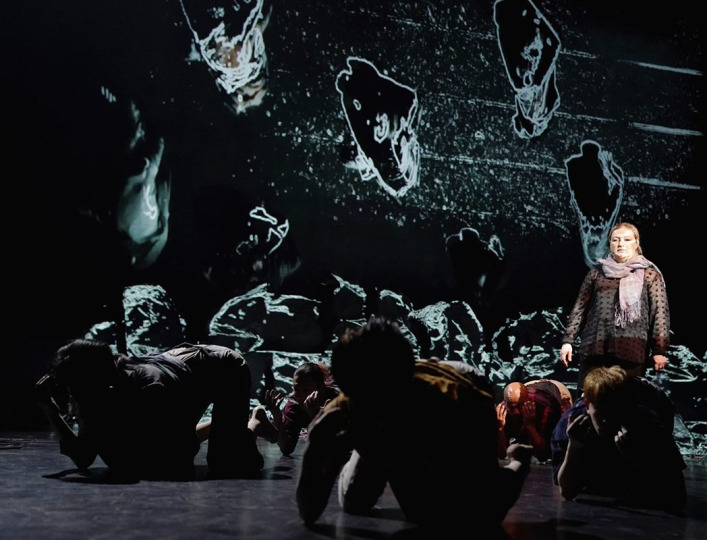
"Cross Transit" and "Echoes of Calling", two international joint projects, have been developed for about eight years with the support of Creation Grant long-term and single-year grants. Kitamura and Hayashi talked about the benefits of the long-term grant program as follows.
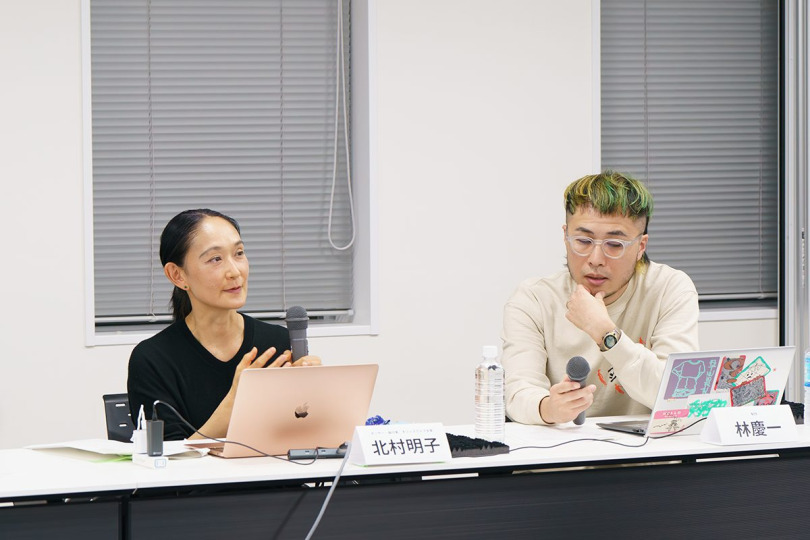
“In a project where all the landing points are not clear, there are things that are difficult to explain at the start. In this context, it is very important that if you are convinced by the purpose of the project, you can receive grants for research that is difficult to see as results or for content that cannot be reduced to a stage performance. I think there is no other example of this.
It was also a great support in terms of continuity. Projects that involve research and dialogue take time and are not efficient, so I don't think you can do it on your own. I think the mission of reporting every fiscal year was important, not just the budget issue. You can set your own challenges for what you will continue to lead to. I was grateful that they created an environment where there were no restrictions on my ability to concentrate and achieve what I wanted to do. "
"Project flexibility requires frequent changes in budget allocations. The ability to move budgets between years is a huge support for these research-based projects, and I don't think we could have done it without it." said Hayashi.
A question-and-answer session was held at the end of the meeting.
- Questioner (1)
- "You talked about the flexibility of budget allocation in this long-term grant, but the report documents are very detailed, month by month, what was done, who did it with. What kind of plan did you have when you wrote the application?"
- Kitamura
- "I started thinking about the project two or three years before the application. I try to write down things that I can't do now, but I want to try someday or topics that I care about in notes, and when I start to accumulate them, I try to put them in my own words first. When the time comes, we will ask the production staff to organize the preliminary steps of the proposal and put them into the application format. I try to carefully confirm the key words related to the concept with the production staff. However, I think it is important that the actual activities deviate greatly from the initial plan. So, the proposal is like a bible that you can come back to when you get lost because it's too far out, and it's an important indicator for moving forward with activities."
- Hayashi
-
"There were Japanese and local people in each region who would be our collaborators, and we discussed with them and firstly established the base of which region we would join. I think the basic theory is to consider how to expand and develop it according to the harvest in the region."
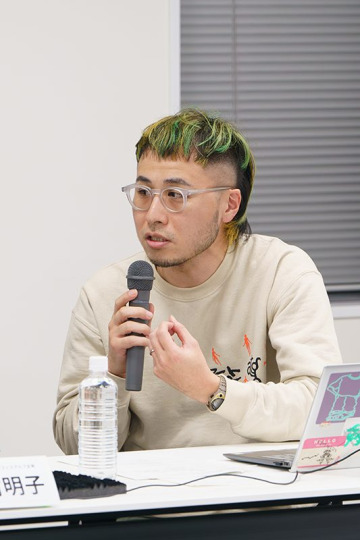
Speaker: Keiichi Hayashi (Photo: Kazuyuki Matsumoto) - Questioner (2)
- "How do you meet local collaborators? For example, do you check in advance and contact them, or do you meet them there?"
- Kitamura
- "Most of the time, I do a lot of research on what kind of collaborators I need in advance and meet them by sending emails or asking mutual acquaintances to introduce them. For example, if I contact people in the performing arts in advance, I may be able to meet many dancers, but I find it difficult to accidentally meet someone who matches the creation or theme I want to do. Most people don't know what my title of contemporary dance creator is. I don't need to know, but I think one of the indicators is whether people are interested in my activities."
- Hayashi
-
"A new project, Xstream project, is going into the mountainous region of the Philippines where the indigenous people live and interacting with the people they can only meet there. Again, we need collaborators."
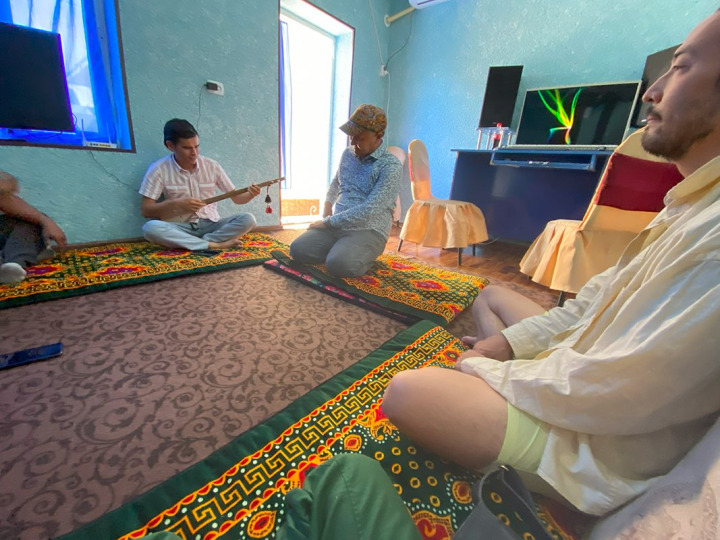
Music session with Afrol Bakhshi in Karshi, Kashkadarya province, southern Uzbekistan - Questioner (3)
- "What motivates local collaborators to help with research?"
- Kitamura
-
"In most cases, it starts with me interviewing the person to hear their story. When we talk about the need for this kind of collaborator, some people introduce us to someone, and some people say they want to participate themselves. For example, the research I did with Professor Adham Ashirov in Uzbekistan was realized because what I wanted to know and what he was interested in at the time were exactly the same. Anthropologists have taught me that I always try to think about the benefits to my collaborators. I am a contemporary dance creator, so he can do research that he usually can't."
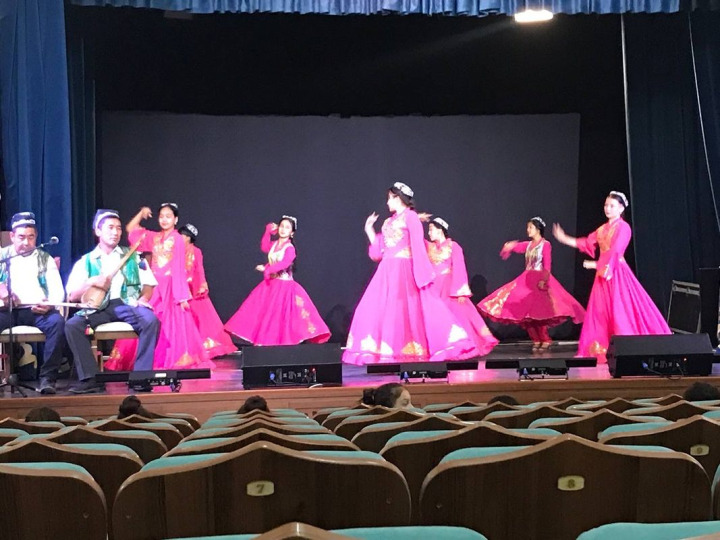
Welcome to traditional Uzbek dance and Bafshi performance at Samarkand-Nuravshan Theater - Questioner (4)
- "When you collaborate on an equal basis with people from countries with economic disparities, such as Southeast Asia, how do you reward the interviewees?"
- Kitamura
- "It depends on the price, the condition of the area and the relationship, but basically we pay. However, it seems that it is not good for the local community if the reward for the interview becomes constant, and in that case, I cannot make a judgment, so I sometimes leave it to the judgment of the local collaborator who connected me with the interviewee and do not pay the reward."
Many of the participants were dancers, choreographers, researchers, and those interested in creating works through research, and were enthusiastic about long-term Grant Programs and specific research processes.
In this first and second part, we looked back on the activities of Akiko Kitamura of OfficeALB as a long-term international joint project. Please refer to the articles on Kitamura's website for the details of his research and his thoughts, which were not covered in the two-hour briefing session.
Through the accumulation of enormous research into traditional performing arts and traditional culture that have been handed down from generation to generation, and through constant dialogue with diverse people in other fields, Kitamura has acquired a new way of expression that integrates with the modern body, and has developed its potential in various works. Kitamura's journey into the body, using the method of fieldwork, established a path for the future dance scene. It will be interesting to see how this experience develops and is passed on to the next generation as they continue their research and creative activities.
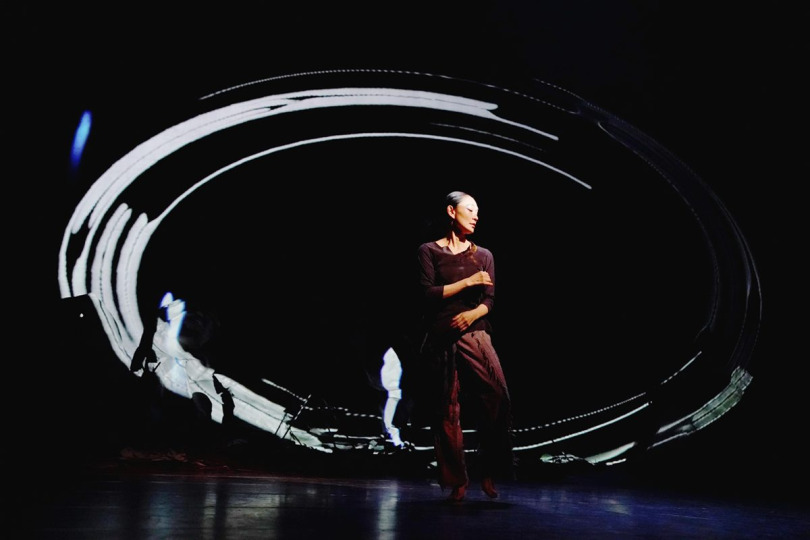
(Composition and text: Kanako IWANAKA)
Profile
Office Alb
2010年北村明子を中心に設立。国際共同制作プロジェクトの実績として「To Belong」(2011年~2014年)、「Cross Transit project」(2015年~2019年)、「Echoes of Calling project」(2019年~2023年)がある。また、2023年春、新たに「Xstream project」が始動。11月に第一弾公演「Soul Hunter」を上演。
Office ALB 北村明子 WebSite
Akiko Kitamura (Akiko Kitamura)
Dancer and choreographer. In 1994, while a student at the Graduate School of Literature, Waseda University, he led the dance company Leni Basso (until 2009). In 2010, he established Office Albu, and developed international collaborative projects for research and creation. It has been performed in Japan and overseas through international co-productions with Indonesia and Southeast Asia.
Keiichi HAYASHI
Creator. In 2006, he joined the small theater die pratze as a staff member. He has been the representative of the executive committee of "I want to dance!" since 2012. In the same year, he produced d-warehouse. Produced 'Afterschool Diversity Dance' in 2019. He turned freelance in 2022.