


- Date
- Tuesday, December 12, 2023 19:00~21:00
- Venue
- Arts Council Tokyo
- target business
- "Cross Transit" (adopted in FY 2015: 3 years), "Echoes of Calling" (adopted in FY 2020: 3 years)
- reporting body
- Office Alb
- Speaker [Rapporteur]
- KITAMURA Akiko (Office Alb Artistic Director)
HAYASHI Keiichi (Office Alb Production) - moderator and facilitator
- Ritsuko Mizuno (Senior Program Officer, Grants Division, Arts Council Tokyo Activity Support Department)
[Part 1: Report of the Debriefing Session]
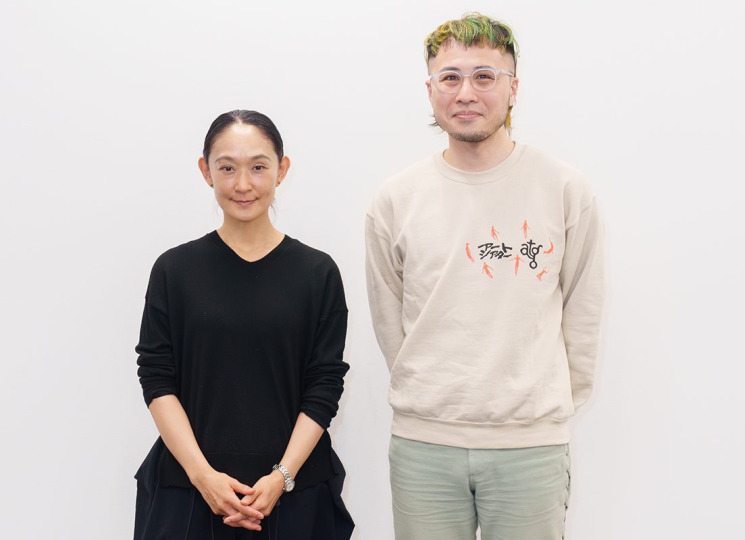
"Cross Transit" in fiscal year 27 (2015) and "Echoes of Calling" in fiscal year 2020 (Reiwa 2), international co-production projects of Office Albu led by choreographer and dancer Akiko Kitamura, were supported by long-term grants.
In these two projects, I stayed in Southeast, South and Central Asia, and Ireland. I researched the art, culture, and history of each country through classical dance, music, and martial arts. I collaborated with local artists to create works that expand the physical expression of dance art from the social backgrounds and cultural perspectives of each country.
This report presents the contents of the debriefing session in two parts.
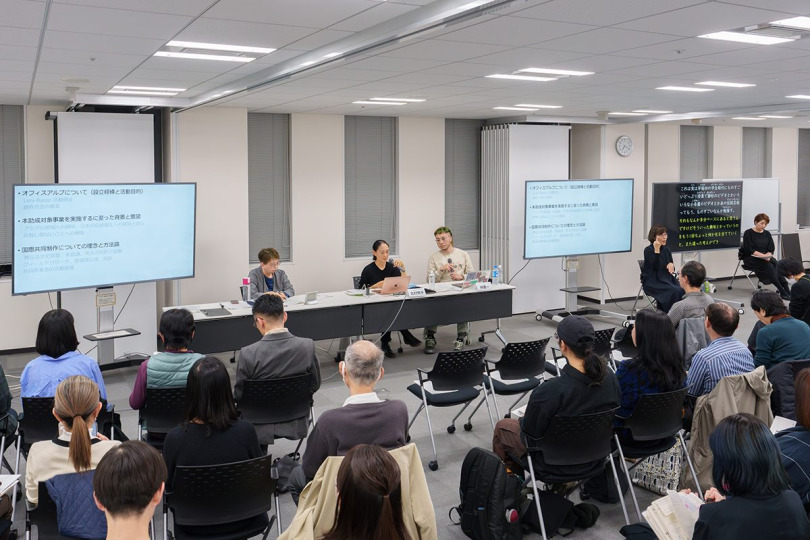
Journey to joint production with Asia incorporating fieldwork
First of all, Akiko Kitamura introduced herself by talking about her past activities and career, as well as the background and motivation for the long-term international co-production that was carried out as a target project for this grant.
Kitamura studied ballet and jazz dance from his childhood, worked as a choreographer and dancer from his teens, and founded the dance company Leni Basso in 1994 while he was in graduate school. It was a time when overseas "contemporary dance" was widely introduced as a new trend in post-modern dance, and she was greatly inspired by it. Aiming to create a choreography that deviates from existing dance movements, he explores the unconscious movement. He read a lot of books on soccer strategies and AI programming, and went beyond the framework of choreography to devise a "grid system," a way for dancers to move and communicate with each other.
However, his experimental style was not appreciated in Japan, and he moved his work overseas. He was invited to festivals in Europe and other parts of the world, and his works were commissioned. For a time, he actively worked overseas. During this time, he came across several Asian dances and rediscovered his original interest in Asian lifestyles, traditional dances, shamanism, and martial arts. Kitamura came to strongly feel that he wanted to create works from a spontaneous motivation within himself, rather than repeatedly creating and presenting works in a short period of time for the purpose of performing them on the stage. She reflected on her feelings of impatience and discomfort at the time as follows.
"I felt an obsession with contemporary dance that I had to do something that no one had done before. But at the same time, I had a question that it wasn't possible, that it wasn't right to stick to that. Gradually, I began to see the potential of shedding light on Japanese and Asian traditions that had been considered separate from contemporary dance. Collaborating with people from other fields who don't share the same assumptions or common understanding can lead to disapproval and fights. However, I thought it would be more interesting to work together with people from different walks of life because it would be a trial experience and I would be able to learn a lot of new things, so I decided to work on a collaboration based in Asia." said Kitamura.
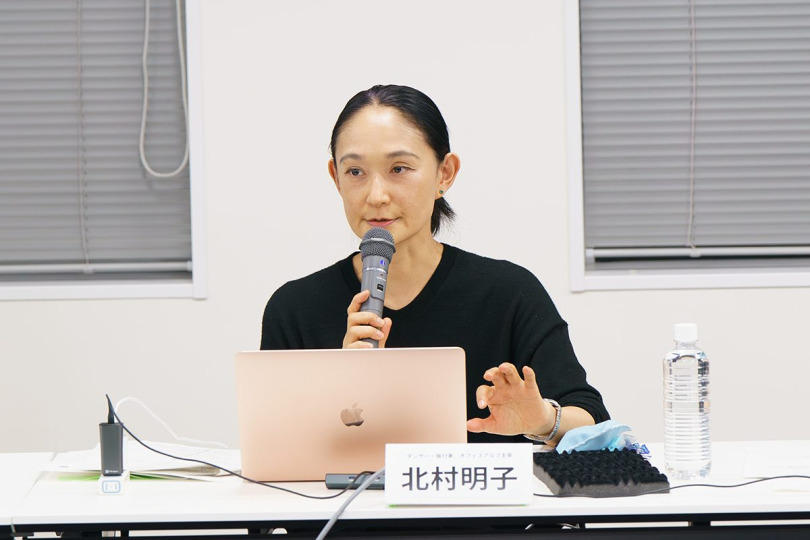
In 2009, he disbanded Leni Basso and in 2010, he launched Office Alb, a private project. From there, he shifted to a style of working collectively on a project-by-project basis and started long-term international co-production projects. At that time, he adopted fieldwork as a creative method, which is conducted in the field of cultural anthropology. His creative style incorporating fieldwork has continued for more than 10 years. From the early stages, musician Hiroaki Yokoyama and filmmaker Akihiko Kaneko accompanied him to the site and created works together based on their experiences there. In addition, he collaborated with people he met there in research, dance, music, drama turku, and so on, always bringing multiple perspectives together as he created his work.
"In addition to dancing, they interact with people from other fields and engage in serious and dull dialogue. Work to promote each other's activities is carried out. The philosophy and methodology of this project is not to push forward with what you want to do, but to exchange words, exchange perspectives, and develop activities in a way that stimulates each other." said Kitamura.
Kitamura started an international exchange production project with Indonesia called "To Belong" in 2011, and started research in Asia. He continued research and production until 2014, and the methodology he developed there led to Kitamura's unique approach to international collaboration.
Memory of the land entrusted to the body< Body as a medium >
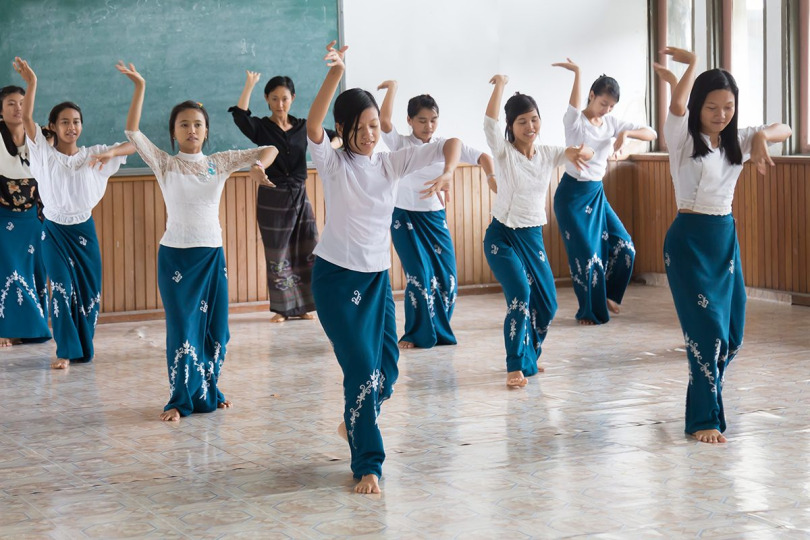
The long-term Grant Programs in FY2015 "Cross Transit" is a project targeting Southeast and South Asia, including Cambodia, Myanmar, India, and Indonesia. Kitamura's concept was "a prayer that transcends cultural and linguistic differences and fuses and coexists as 'seeds' of the music and body gestures of the Transit land that has been carefully passed down as a 'species' and blooms into the future of Asia."
The theme "body as a medium" was set with the desire to experience the local environment and the spirituality of the people who live there, and to feel the origin of it, rather than cutting out the state of physical techniques that differ from culture to culture as "dance". In order to explore this theme, we decided to conduct fieldwork covering the whole range of connections with others through the body, including traditional dances, rituals and festivals, martial arts, vocal techniques, and physical techniques born from daily life in various parts of Asia.
"I was originally interested in traditional physical techniques, martial arts and performing arts, but gradually I became interested in how these cultures were passed on. What kind of philosophy do you have and what do you value when passing on skills and techniques? I wanted to feel these things by actually entering the society and community and spending time with them." said Kitamura.
I paid particular attention to the connection between traditional and modern expression techniques. As Kitamura carried out research on "disappearing things" and "things handed down from generation to generation," his interest naturally turned to local communities that inherited traditional culture.
"When I was learning martial arts, I didn't just have to be taught techniques, but I valued the time we spent talking and being together. When I enter a community alone as a foreigner, various events occur, just as irregular molecules undergo chemical changes. By doing so, I was able to learn about the lifestyle and thinking of the community, and I was able to see the current state of the traditional culture that is being lost and the challenges of the community." said Kitamura.
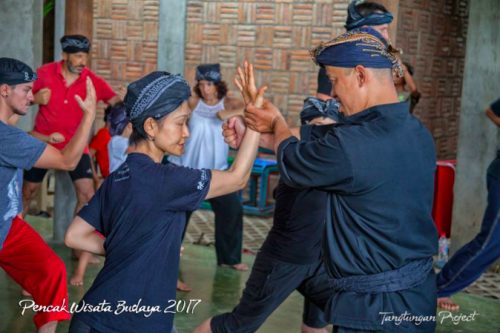
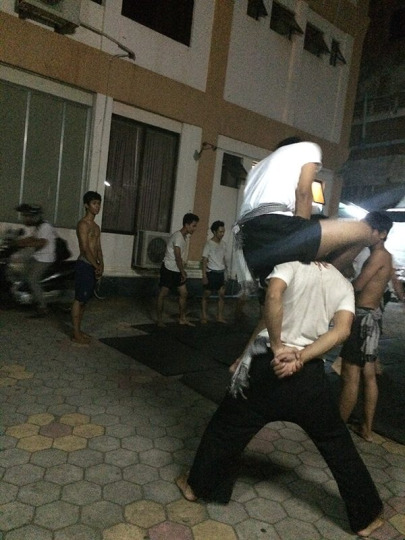
Through his fieldwork in Asia, he gained a firsthand sense of the lifestyles and cultures that are richly permeated by tradition, and gained a deep insight into the connections between body techniques and lifestyles, as well as the Asian body, which is linked to memories of the land. In the process, he realized once again that contemporary dance in Japan has a special structure that is not related to the life culture and history of Japan, but was imported from Europe and America.
"Japanese contemporary dance is not developed by building on tradition, but is broken. There was something about standing in the wilderness, gracefully cut off, without any resistance to tradition." said Kitamura.
Kitamura continued her journey to pursue a body rooted in Asia, different from contemporary dance based on techniques and theories that originated in Western Europe, with a focus on the "body as a medium" that is linked with the memories of the land. Later, Kitamura left the following text as one of his answers.
what the body can say (excerpts)
The term "pulse of soil" was born out of field research. Through daily life and dialogue, I was able to experience the rhythms exchanged between people, the pulses in the body (heartbeats), and the rhythm of the community that envelops them — the pulse — with my own hands. Taming the body can feel more difficult than anything else. Selfish bodies sometimes fail beyond expectations. On the other hand, it can be a wonderful reminder. When we meet others in the form of our own bodies, and travel, we find such companions even more reliable. My body's thoughts, which go beyond language, speak to me.
Songs, rhythms, dances, and gestures that tie the body to the land cannot be left behind like things. However, the "pulse" is passed from the past to the future, from one place to another, using the body as a medium. One of the missions of modern dance may be that things that are disappearing circulate in our bodies here and now and emerge as "pulses."
Encounters with diverse media that connect stories of local history and culture to the present day
From July to September 2015, we conducted our first Asian research for Cross Transit in Cambodia, Myanmar, India, and Indonesia. What approaches were used in the fieldwork and what kind of research was conducted? Kitamura introduced many of the activities and people he met in the field, and showed the concrete process of international co-production. Especially, Cambodia and India are reported.
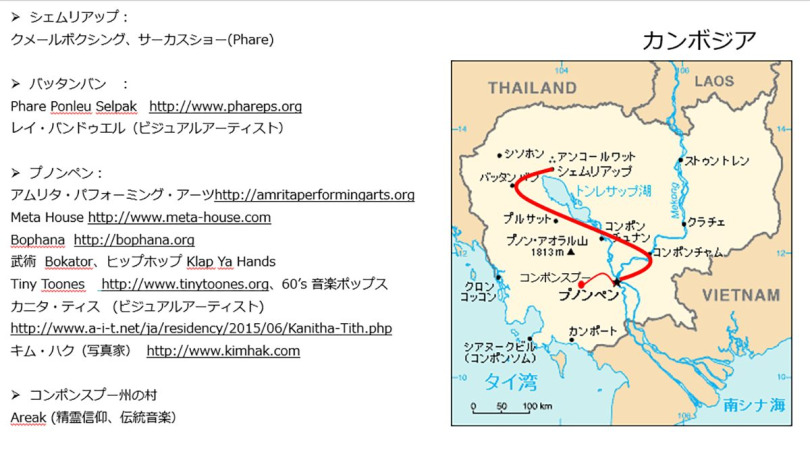
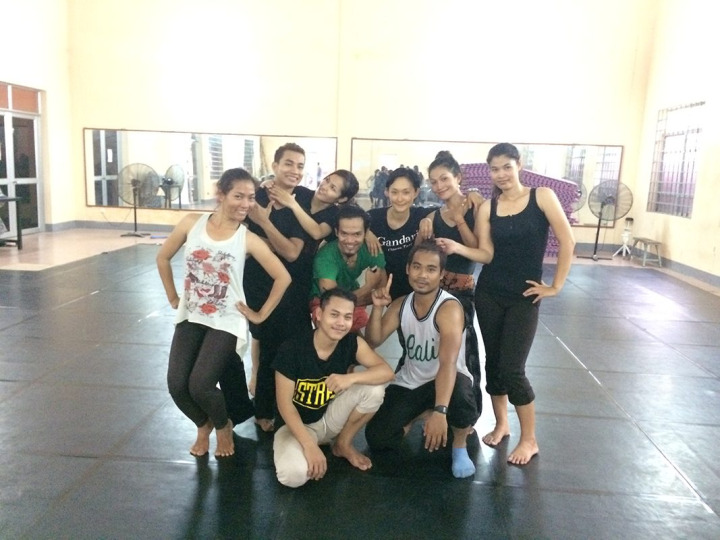
On his first trip to Cambodia, he visited Siem Reap, Battambang, Phnom Penh and Kompong Speu. In particular, her interaction with Amrita Performing Arts, the host organization in Cambodia, had a significant impact, and led to an important encounter that led to her subsequent creations. Amrita Performing Arts is an international NGO founded in 2003 by American Fred Flamberg with the aim of restoring and preserving traditional dances that were destroyed under the Khmer Rouge regime. Amrita also worked to nurture the next generation of dancers and promote contemporary dance. Kitamura conducted a class for Amrita Performing Arts dancers. As I interacted with them, I was impressed by their forms of activities that combine traditional and modern dance.
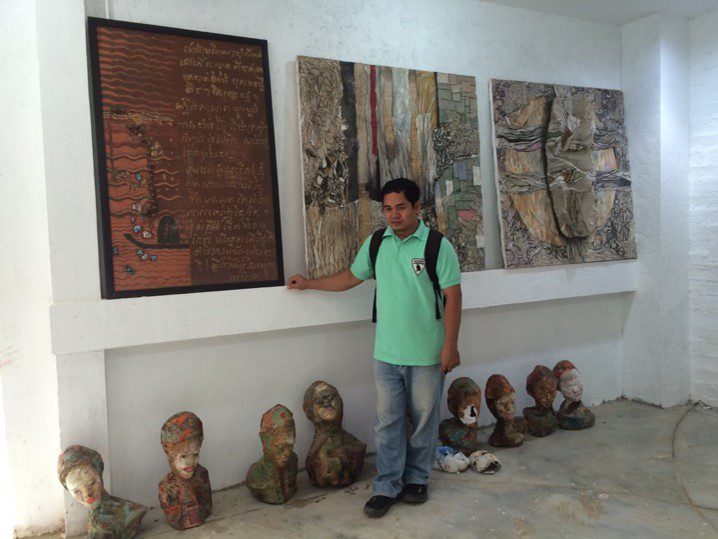
In Cambodia, I met many young artists who run schools and galleries with a view to passing down their culture to the next generation. They realized that the Khmer Rouge regime's massacre had a great influence on their activities and conducted a series of interviews with artists. Kitamura says he was shocked by the gap between himself and himself.
One of the artists I met there was Kim Haque, a photographer who works to convey Cambodia's fading memories to younger generations through photography. Kitamura says Haku's work, which weaves stories from the perspective of people and landscapes, was an important key to his understanding of the land.
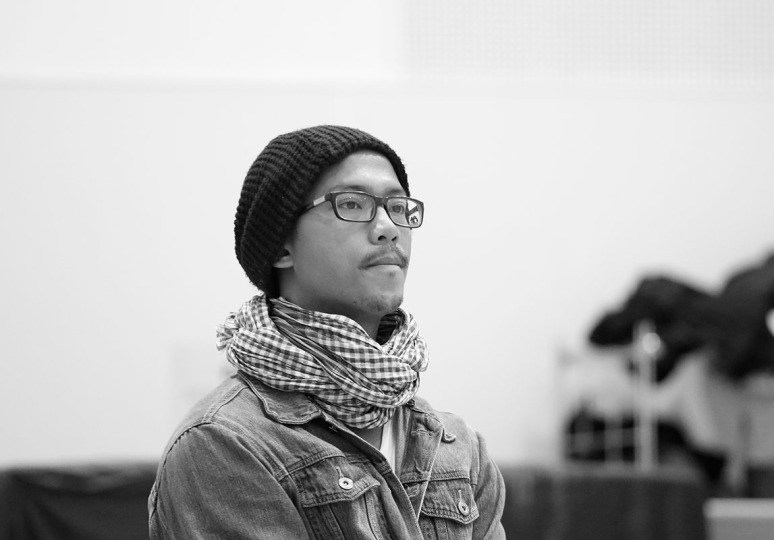
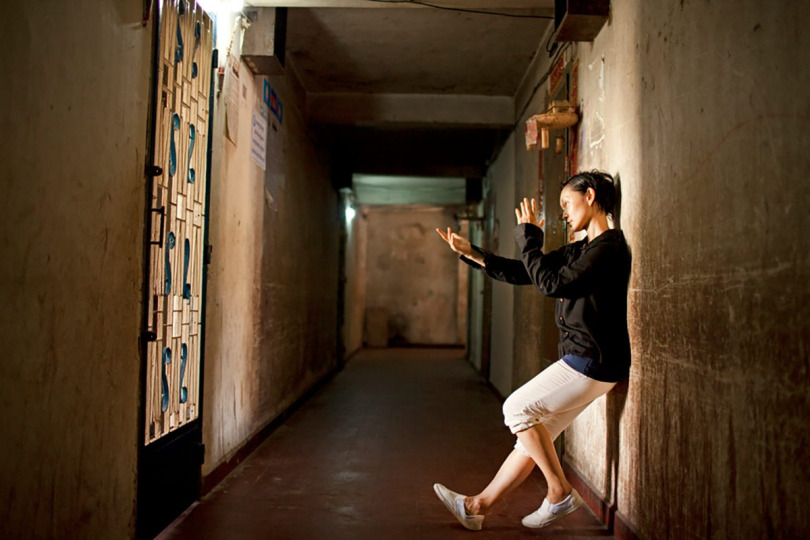
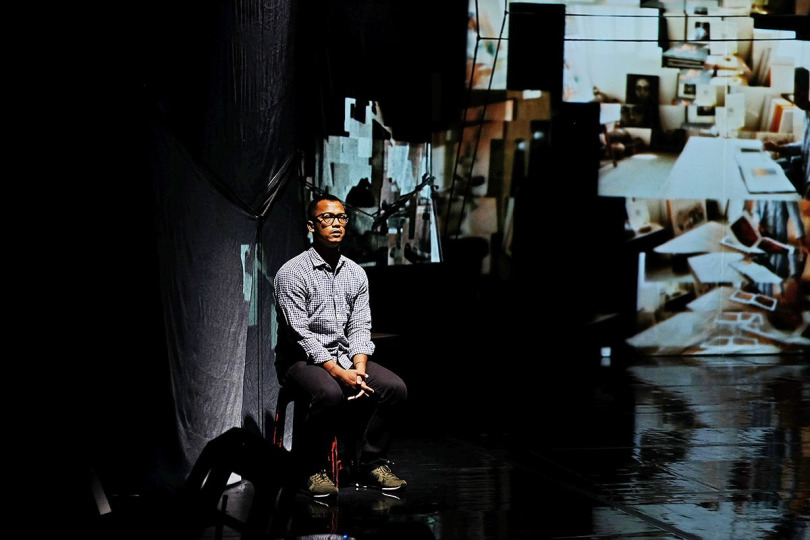
The two hit it off and traveled around Phnom Penh on motorcycles, talking and creating. The photo used as the key visual for Cross Transit (below) was taken during a session with Haque in the White Building apartment building in Phnom Penh.
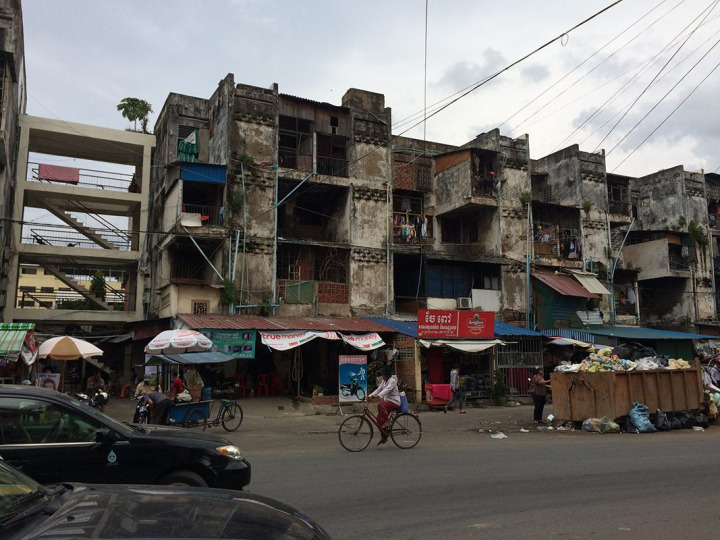
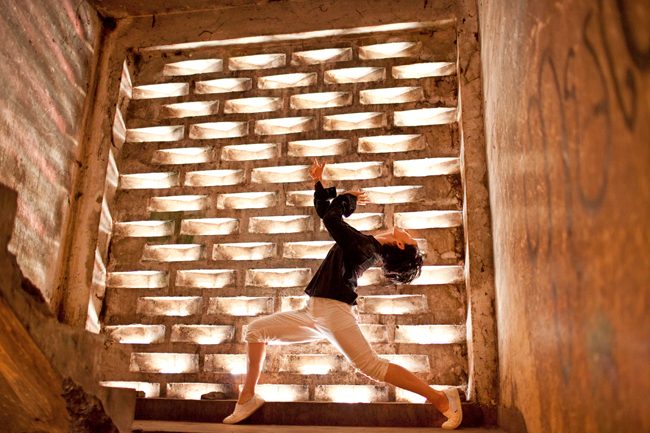
In an apartment that has been demolished because of its age, Haque interviews people who are being evicted. The theme of "demolition and revival" experienced here led to the motif of the 2016 performance. Kitamura recalls that their collaboration in Cambodia was "like sowing the seeds for each other's creations."
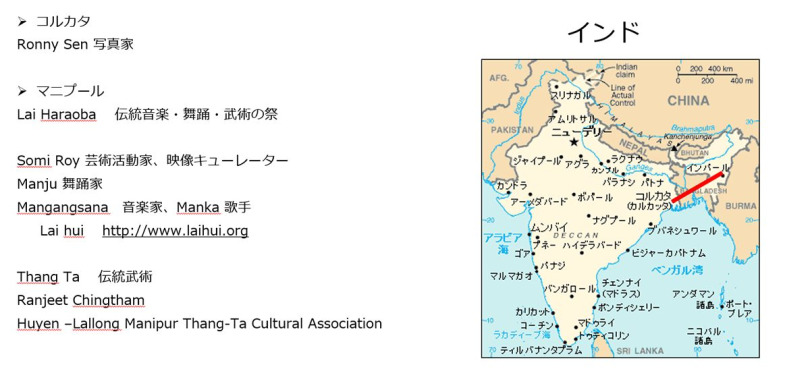
In India, he and his collaborator, the musician Hiroaki Yokoyama, conducted a wide variety of research, including sankirtana rituals, shaman songs, fortune-telling, and movements, and agricultural labor songs. The main dance I researched was Manipuri dances, one of the four great classical dances in India, and I visited Manipur in the Assam region on the Myanmar border in the far east of India. Imphal, the capital of Manipur, was the site of the Imphal Campaign, one of the most gruesome operations of the Second World War, carried out by the Japanese army. Although he was stuck in Kolkata due to martial law caused by political instability, he encountered the Manipuri ethnic minority who were striving for independence from the Indian government. Kitamura was greatly impressed by their manipuri dances and Thang-Ta, a traditional martial art. He was particularly attracted to the beautiful sound of the pena, a traditional bow instrument used for accompaniment, and developed a friendship with Mangansana, a famous archer. Yokoyama could not forget the sound of the pena at that time, so much so that he visited again in 2016 to learn pena. Their work with Mangansana continued, and their research into the roots of music and dance as a medium for telling local stories led to the creation and performance that followed.
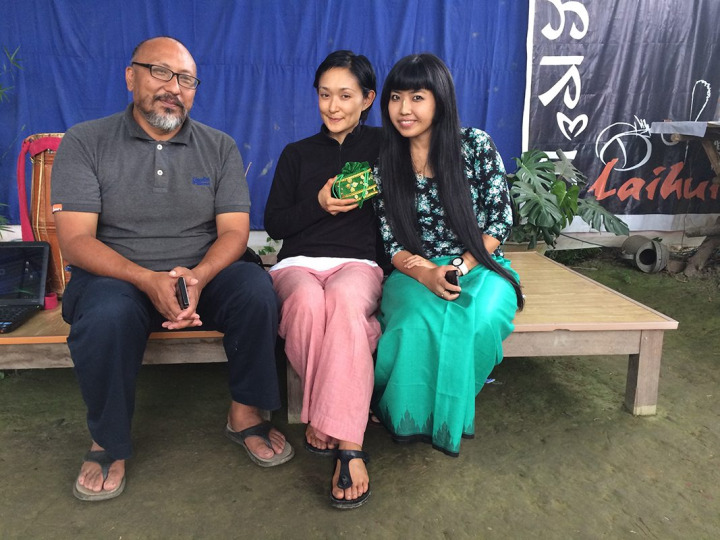
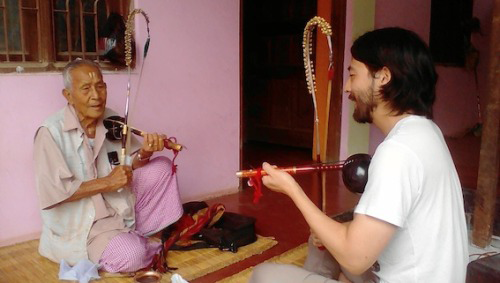
Creation with photographer Haque and musician Mangansana in drama Turku
How was his extensive research in Asia translated into physical expression and reflected in his creations?
In September 2015, after completing about 3 months of fieldwork in Southeast and South Asia, Kitamura, musician Hiroaki Yokoyama and filmmaker Akihiko Kaneko returned to Japan. From November to December, Yokoyama stayed in Cambodia and Manipur, working with local artists to record music. In December, she started creating with Japanese dancers. The following year, in January 2016, photographer Kim Haque and dancer Chi Ratana were invited from Cambodia for a full-scale joint creation.
In the creation process, he set themes for each category, such as “the body transcending time and space from memories of land and photographic records ” for choreography,“ the body living and speaking with photographic images ” for video, and “songs, voices, and narrations of funerals ” for music. Using Haku's photographs as the inspiration for his work as a focal point, he created a story, choreographed dances, and created music and images based on the image of a double style mugen noh performance.
Kitamura felt that in the process of making use of local experiences in his creations, it was also necessary to examine them from the perspective of those who lived there. So I asked Haque, whom I met during my fieldwork, and Mangansana, an Indian pena player, to be involved in the project not only as guest artists but also as dramaturks (Haque performed from 2016 to 2017 and Mangansana in 2018.).
"Neither of us knew about Drama Turku at all, but when I explained it to them, they replied, "Okay, I can do that." Not only did I offer my work as a performer or performer, but I was also consulted on various questions I had while researching the local culture and way of thinking. In short, you are a consultant." said Kitamura.
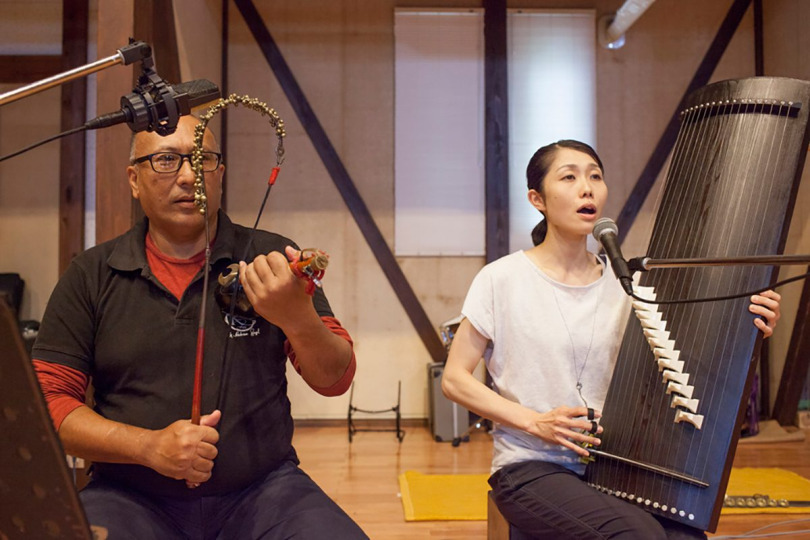
Left: Musician Mayanrambam Mangansana from Manipur as a Drama Turku
Right: Yoshie Abe (Kodo) as a performer and singer
(Photo by Kim Haque)
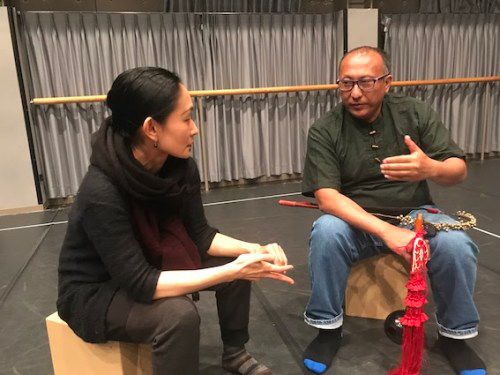
Left: Akiko Kitamura
Right: Manipur musician Mayanrambam Mangansana, newly invited as Drama Turku
"Mr. Haque used to work as a tour guide in Phnom Penh and was very knowledgeable. When I asked him to do Drama Turku, he willingly agreed, saying that although he doesn't know about dance works, he can tell me what he thinks is interesting from his point of view and what he wants Japanese people to see. Mangansana works to preserve traditional music and is also a Pena meister. He was also interested in Japan and did research on Sado and Okinawa. I learned a lot about the connections between traditional music and the roots and traditions of musical instruments." said Kitamura.
Kitamura said that their presence is the key to his creation, but Keiichi Hayashi, who took the stage as the creator of the film, pointed out the uniqueness of his creative method.
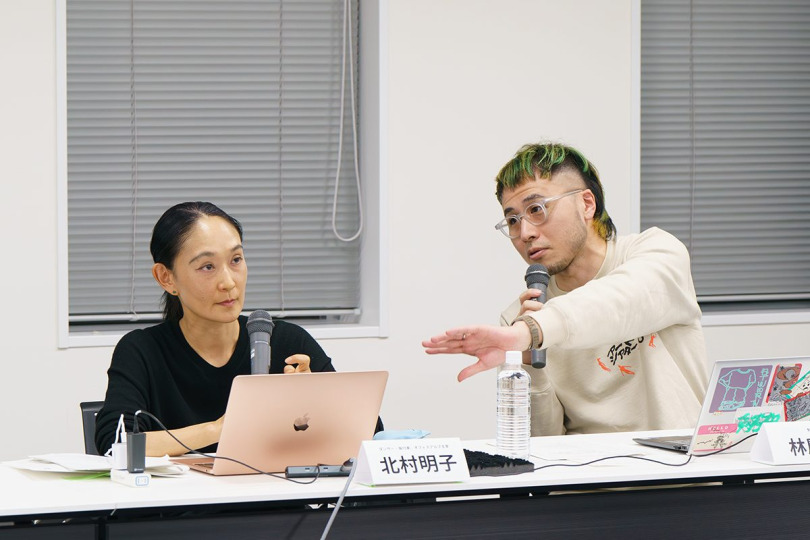
"I think one of the characteristics of Kitamura-san's project is that collaborators are not decided from the beginning, but are searched through research. In this case, you met Haku, and based on his photographs, you and I discussed the story and connected it to the structure of the work." said Hayashi.
"Yes, it is a way to look for someone who you think you can work with. Sometimes I get cold feet when I can't find one, but I can't do it unless it's with someone I get along with. I think it was good that I didn't decide to find a dancer and a choreographer in the beginning. I made an effort to find people with whom I could somehow get along, who were willing to take on this kind of project, and who wanted to see new horizons with me. I think I was lucky in that way." said Kitamura.
Works created through multicultural fusion and coexistence
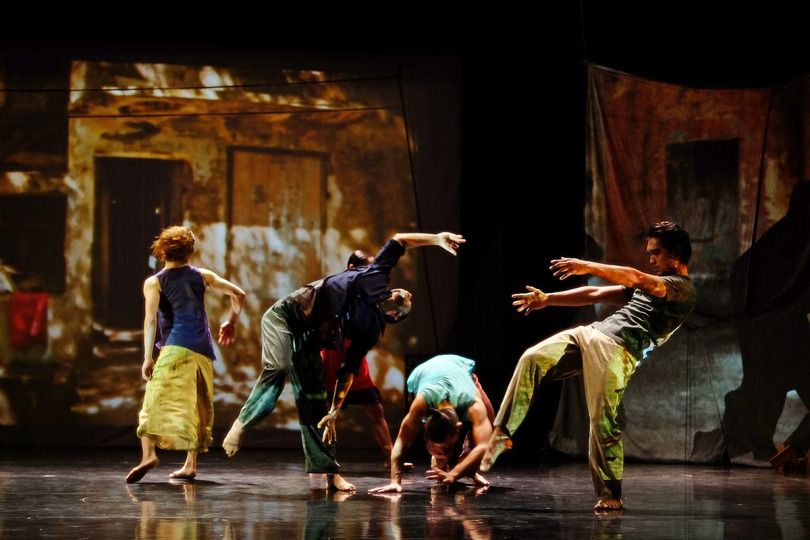
Kitamura expanded and continued his fieldwork in search of Japanese kagura and encounters with shamans in various parts of India. Through this process, various "seeds" such as sounds and body movements handed down in various places and societies gathered in Japan, Southeast Asia and South Asia fused and coexisted through collaboration with many collaborators in other fields, and colorfully "blossomed" in new works.
In March 2016, he performed "Cross Transit" at the Sengawa Theater and in September at the Theater Tram. Then, in November 2017, he collaborated with Amrita Performing Arts in Cambodia and presented a work with a major revision of the stage design from the previous year's "Cross Transit". In 2018, he performed "Cross Transit "vox soil" at the Sengawa Theater, which was the culmination of a long Grant Programs of vigorous fieldwork and creative work.
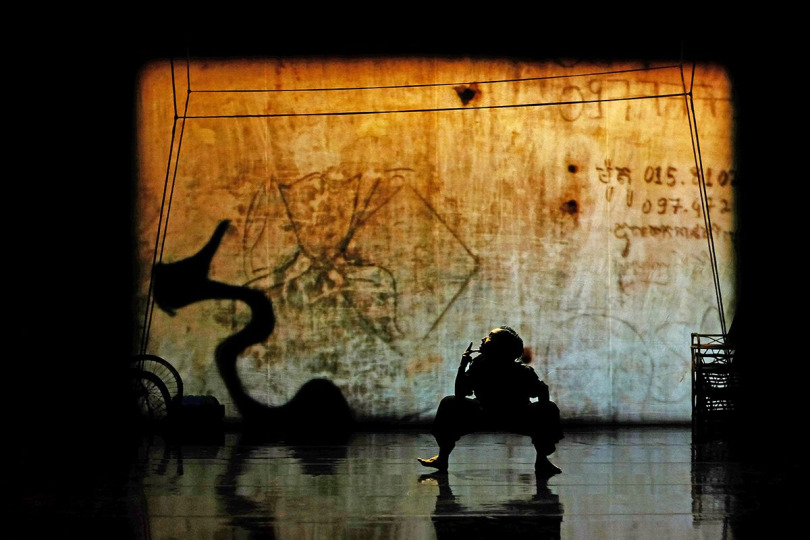
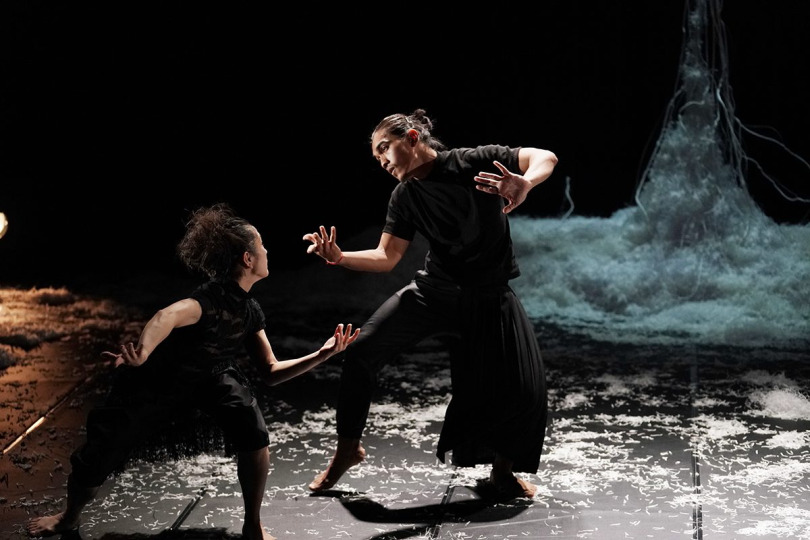
Kitamura's collaboration with Asian artists on the theme of "the body as a medium" using the method of fieldwork not only incorporated elements of different cultures and traditional performing arts into his works, but also expressed his original style of body expression rich in originality. Even after the end of this long Grant Programs tour, "Cross Transit" continued and developed into a North American tour and video creation with Kim Hak. Kitamura's new international collaboration continued with Euro-Asia * (proposed by art and civilization historian Mayumi Tsuruoka). In the second part, we report on the activities of the second long-term Grant Programs "Echoes of Calling," which was carried out as the next development of "Cross Transit."
「Cross Transit 」のリサーチのプロセスについては、下記ブログに詳しいレポートが掲載されているので、興味を持った方はこちらをご覧ください。
「Cross Transit 」ブログ
https://akikokitamura.com/crosstransit/blog/index.html
▼「北村明子の身体をめぐる日々のあれこれ」:神楽+インドネシアフィールドリサーチ
http://ctblog-kitamura.tumblr.com/
▼「マンガンサナ × 北村明子 対談 2018年3月」:マンガンサナとの対談、ワークショップ風景、マニプールフィールドリサーチ
https://ctblog-mangangsana.tumblr.com/
You can also download a PDF version of Akiko Kitamura's essay, ("Ryojin no Uta" Choreography Discussion, Symposium "Body, Expression, and Image") by searching the title on the Internet.
(Composition and text: Kanako IWANAKA)