



*The first part, "Looking back on three years of Company Delacinella's young projects" (Part 1), here
To get a real sense of life as a dancer and actor ...... Change triggered by "The White Theater"
――― Today we have some young members who are participating in this project, so I'd like to talk to them a little bit. What made you want to participate in Mr. Onodera's new activities? Also, please tell us what you have discovered or any changes you have made in yourself through your involvement in the activities of the White Theater.
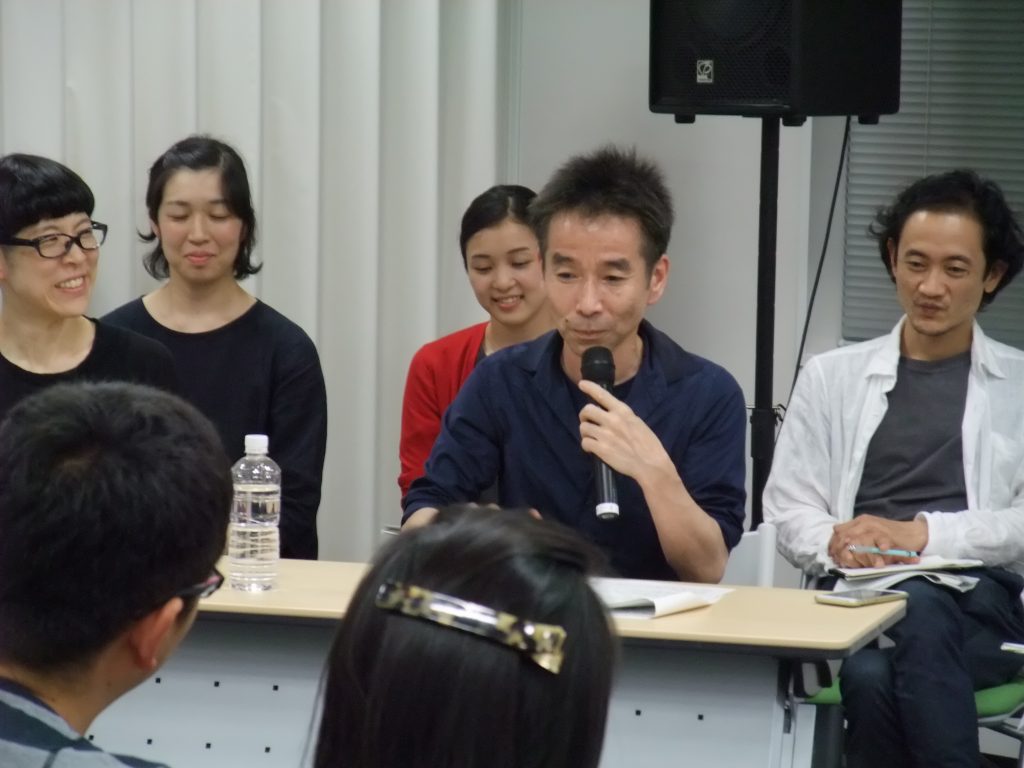
- Sakiyama
- After graduating from university, I worked part-time and took auditions as I could find them, but I was rejected every time. For about a year, I got sick of everything and didn't even dance. At that time, I saw a friend from college appear in Delacinella. That was my first Delacinella work. It's a work that expands my imagination to many places, and I was very shocked. So I asked my friend, "How can I get out?" and she said, "You can meet me if you go to the workshop." At that time, however, there were few opportunities to do so, and after a year had passed, I was told that there would be an audition for the White Theater. My parents in Ishikawa said to me, "If this doesn't work, I'll go back to my parents' house." so I took it as my last chance. The interview was frantic, I was accepted, I practiced for a long time, and it was all my first experience to do a play that lasted more than an hour.
I used to work part-time at a family restaurant, and before I practiced, I worked on opening the restaurant, went to practice, and after I finished, I went back to the restaurant and worked until midnight. But now I work as a choreography assistant and ensemble, and I can make a living by dancing and performing. That gives me a lot of confidence. Some of my friends came to see the Ishikawa performance, and even in my hometown, I think I used to be someone who didn't know what I was doing, but now people are telling me exactly what I'm doing. - Nishina
- Mr. Onodera gave an intensive lecture at the university I went to, and that's how I learned about Delacinella. The department specialized in dance, so there were choreographers and dancers who gave short-term lectures besides Onodera. So, I was in a very comfortable position as a student, and I experienced various methods with the feeling that "I like this one, I don't like this one." But I had never seen Delacinella before, so I watched it on film to decide whether to take the class or not, and that was my first encounter. It was so wonderful, and I was like, "Wow!" But, just like Mr. Sakiyama, I didn't know how to get into it, and the workshop was irregular, so I wanted to participate if I had a chance, so I was waiting, and then there was an application for the "White Theater.".
I joined with 100% excitement that my dream of "Interesting, I want to do it!" had come true, but I couldn't do it well in my first year as an alter ego. So if this "White Theater" had been a one-year project instead of training young people, I probably wouldn't have been able to stay here anymore. In that sense, I was very lucky to come across a project that started with the idea of nurturing people and believing in the power of a group, which would also benefit Delacinella. In fact, in a situation where we can create works without using young people, I think it is rare among Japanese performing arts, not only in dance and theater, that we open the door to them, and that it is a long-term entrance with a view to the future, different from "Interesting person now." or "a person who is capable now". The spirit to make dancers and performers a living, which was mentioned earlier, and the audition for each work are both severe and open. I feel that it is very meaningful for young players. - Oba
- I participated in Delacinella's work several times before this project started. But, as Mr. Onodera said earlier, I feel frustrated that there is nothing to build up by participating in only one film. When I saw the flyer for "The White Theater" and learned that it was going to be held for three years, I knew I had to be involved. But the leaflet says it's up to 30 years old in principle. For me, that had passed about 10 years ago, so I auditioned after I asked, "Can I apply?". Actually, I've been in a theater company twice before. I happened to be a free skater at the time, but I think I longed for something that could only be done in a group. After participating, I felt ...... First of all, I was grateful for the increased opportunities to be on stage and to perform in front of children. Currently, I sometimes go to workshops with only young members, and I hope I can help the company through such activities. I think it is significant that I was allowed to not only play one role in one performance but also think about what I can do in this group.
――― Each of the members had a very good meeting.
- Onodera
- It really is. My motivation also increased. By talking with young people, I feel that I don't want to lose and I want to work harder. Nishina was on the verge of tears while talking to a young person who was working hard right near her, but it was also a chance to remember what she had almost forgotten. When Sakiyama and Nishina are assistant choreographers, I feel more nervous than when I work alone. I think it's a big thing that I've come to think that every single thing I do is being watched.
Overseas performances, school tours. Pleasure of visiting, change of thought
――― This may be a little before the beginning, but in January 2016 you presented your work "Another Story" in Vietnam and Thailand. In the original plan, you were thinking of performing overseas in the third year. In fact, you had a chance to perform in Asia in your second year, which was a different experience from what you had planned. How did it feel? Were you able to utilize to some extent what you wanted to realize in the original concept?
- Fujita
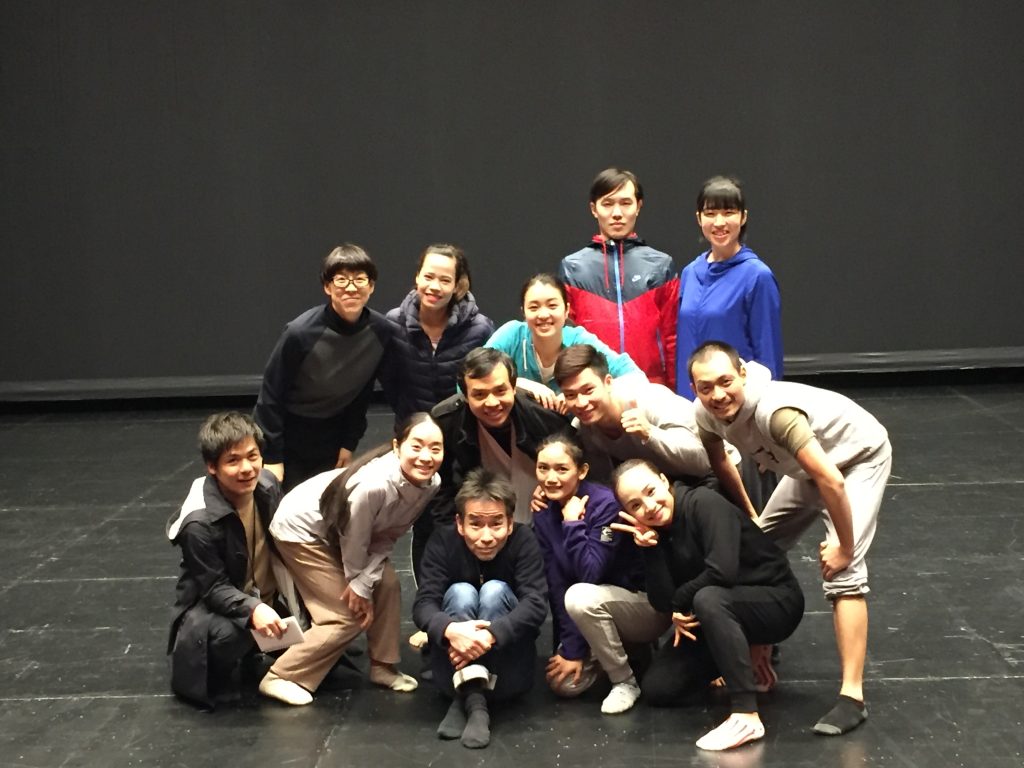
- I think I set a very high goal when I wrote the application. The first year is one performance, the second year is 50 performances, and the third year is overseas. That's how I wrote my dreams. I once participated in an off-stage performance in Avignon and Edinburgh as "Oil and Water," performing 50 times, and it really helped me, so I was thinking of giving it another go. But as a result, we had to make some course corrections. The first (La Traviata) was performed 6 times and the second (Alter Self) was performed 10 times. However, it was a big step to increase the number of times, and there was joy in it.
- Onodera
- I have changed my way of thinking about overseas performances. At first, I had a vague yearning to go abroad. This year, for example, we are going to a school in the mountains of Nara with eight elementary and junior high school students, and I wonder what difference there is between going to meet people who don't know us at all and have no connection with theater and performing in a foreign country. So, rather than going to foreign countries and boasting about it, I want to get fruits ...... I want to confront the viewers as much as possible about why I am doing this now, and I want to get something from it. The interaction with the grandmothers who came to talk with us night after night at "URA-SHIMA" in Inujima, and the way Sakiyama and Nishina acted as assistants to people who had never seen a play or dance, and they were surprised and delighted. I feel that we are now able to catch such moments and confirm what we are. So, of course, the original plan is what brought us here, and while the goals of the White Theater as a whole have not changed, the way we perceive things has changed a lot.
――― That's growth, isn't it?
- Onodera
- Yes. At first, I was really looking for the excitement of "I can do something different with someone else!" because my only goal was to continue Company Delacinella together with Fujita. But I didn't actually know how to do that, so I went through a lot of different things and realized, gave up, and then wanted to take on more challenges. At least I got a lot out of it.
――― We are very happy to hear that the content of your activities has developed and that you have gained something from this grant. But a grant only supports a part of the fund, and there are many procedures. Have you experienced any inconvenience or trouble when using this system?
- Fujita
- The subsidy rate is up to 1/2 of the actual cost. So, for example, I didn't feel a big impact on ticket pricing or cutting down on art costs.
- Onodera
- However, it is a great advantage to be able to make a plan at the beginning because you have an informal offer of a 3-year grant. Of course, you have to do what you have to do without support, but there are some projects that make it easier to start because you might get a grant. It was very helpful to be able to have hope that I could do it this way. It's a hassle ...... I didn't write it myself, but it sure looks like there are a lot of documents. However, it is written because it is necessary.
――― Of course, I want to reduce the number of documents as much as possible. However, this program is operated with financial resources from Tokyo Metropolitan Government. This is a big difference from private subsidies. We have to be able to explain how the tax money we receive from you is used properly and effectively. We believe that there is a necessary flow and documentation for that. This time, when there was a change in the activity plan, they submitted a notice of change, and they also submitted an annual report. Therefore, in addition to the economic aspects, we have also asked you to verbalize the results of your company activities and works.
- Fujita
- First, we make a long-term perspective, and then we write a report on where we are now. Then, for example, just by writing down the numbers, I often notice a lot. So, if I had not done this at all, I think that it would have passed more vaguely and I would not have achieved the growth I just mentioned. In that sense, I think it was a necessary procedure for us.
――― Thank you very much for your very meaningful report today, from the state of the performance to the environment for creating works. Finally, I would like to close this meeting with Mr. Onodera's outlook for future activities.
- Onodera
- I believe that this subsidy program gave us a great start as a new company. I think the question is how far we can continue this, and we want to continue it as long as we can. I also have a dream that it will be a force to change even bigger systems.
By the way, at the time of the Great East Japan Earthquake, I was going to perform a play at the Aoyama Amphitheater, and I received an email asking me why I was doing it at such a time. Of course, there was something about it that I thought was true, but there was also something about it that I thought was not true. And I felt like they were asking us what our work meant. I still don't have a clear answer to that question, but it's a coincidence that I continue to work in this kind of world, and I certainly feel the significance of it. That's why I want to do everything I can to ensure that this kind of expression continues for as long as possible. I believe that the "White Theater" project, for which we received a grant this time, will be able to provide some kind of answer in a big sense, and I will continue to do so with the intention of doing so. I will do my best to show you the results in my work, so I look forward to your continued support.
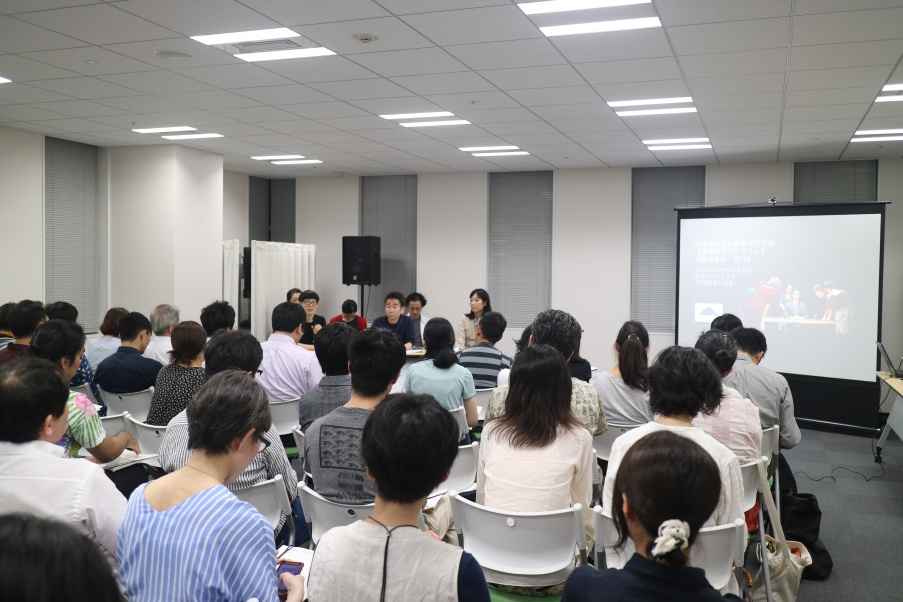
Questions and Answers from Visitors (Excerpt)
- Questioner 1
- How much money was given over the three years and how was it spent? Let me know if there are any areas that were missing, areas that were fully utilized, or other things that you wish you had money to spend on.
- ACT
- Company Delacinella received the full amount of 12 million yen for 3 years. However, this is carried out under the rule that it is limited to half of the expenses to be subsidized, so the actual activities cost more than double. To make up for the shortfall, they raised various funds such as ticket income, their own funds, and other grants.
- Fujita
- Copayment is inevitable. As for the grant, the plan was to spend as much as we could get in three installments over three years. However, in fact, the overseas tour was decided in the second year, and the expenses for that greatly increased, so the allocation changed.
- Questioner 1
- How do you feel about the amount of 12 million yen for 3 years? Will you be able to take a long-term view to some extent?
- Onodera
- It will certainly be the foundation of our activities. Of course, it's not money that can be used for everything, but it can be used as part of the expenses for performing activities, overseas performances, and training rooms, so you can start with it. Nowadays, when they are active as a group, for example, they impose a ticket quota, or they perform anyway even though they don't have money. In short, let's take money from the customers who actually came to see the movie, cover the deficit, and pay for the staff and cast. Of course, that kind of entertainment is possible, but if there is a subsidy, it is not that dangerous. After all, if you make a proper budget, you can do it properly, and I think you will have a consciousness that you have to do it. 12 million yen sounds like a lot of money, but it costs a lot to perform a performance. Therefore, I think it is important to think about how to develop the received money rather than just receiving and using it.
- Questioner 2
- The Saison Cultural Foundation has been providing long-term grants for some time. Mr. Onodera, you received a subsidy there in the past. You mentioned that you didn't have a medium- or long-term vision before you started the White Theater. When you were subsidized by Saison, how did you make the most of it?
- Onodera
- I received a grant from the Saison Cultural Foundation for 3 years from fiscal 2009 as a Senior Fellow. This is not a matter of which was better, but I think it was the difference between trying to run a group and individual activities. When I became a senior fellow at Saison, I was still trying to figure out what to do for myself. So, with the grant, we were able to expand the scope of our activities, but it didn't develop gradually in the first, second, and third years. But this time, I started by trying to run a group, so instead of doing what I like or want to do, I was able to think about how to develop other people, groups, and environments, and have a medium- to long-term perspective.
- Questioner 2
- There are already some resident companies of public theaters in Japan. Have you ever thought about doing activities in that way instead of subsidizing performances?
- Onodera
- I have aspirations. I honestly don't have the method for that yet, but if I really had the opportunity and it was okay to do it, I would do it. I also feel that the activities of the White Theater are laying the groundwork for this. We are currently experimenting with what kind of training will produce results, and we are also trying to figure out how to interact with the company members in the future. After 10 years of running "Water and Oil," I have come to realize how difficult it is to keep one organization going. This is a permanent challenge, but I would like to think about how to overcome it somehow, and also consider the possibility of becoming a resident.
- Questioner 2
- It must have been difficult for you to create a long-term subsidy program in a public works project where most of the accounts are settled in a single year. Please tell us if ACT was a key point in designing the system.
- ACT
- I believe that this program's strength lies in the fact that it is possible to change the plan over the course of three years and to change the allocation of grant funds. However, with this approach, there are concerns about management, so I think there is room for further consideration in the future as to how to hedge risks.
――― In the first session of the long-term grant debriefing, we were able to hear the lively talks of the Delacinera members, as well as the real feelings, struggles, and visions of the artists. At the same time, he introduced one way to utilize long-term subsidies.
In the future, we will organize this series of briefings to introduce a wide range of past long-term subsidized activities, including theater, music, art and video, and traditional performing arts. Stay tuned!
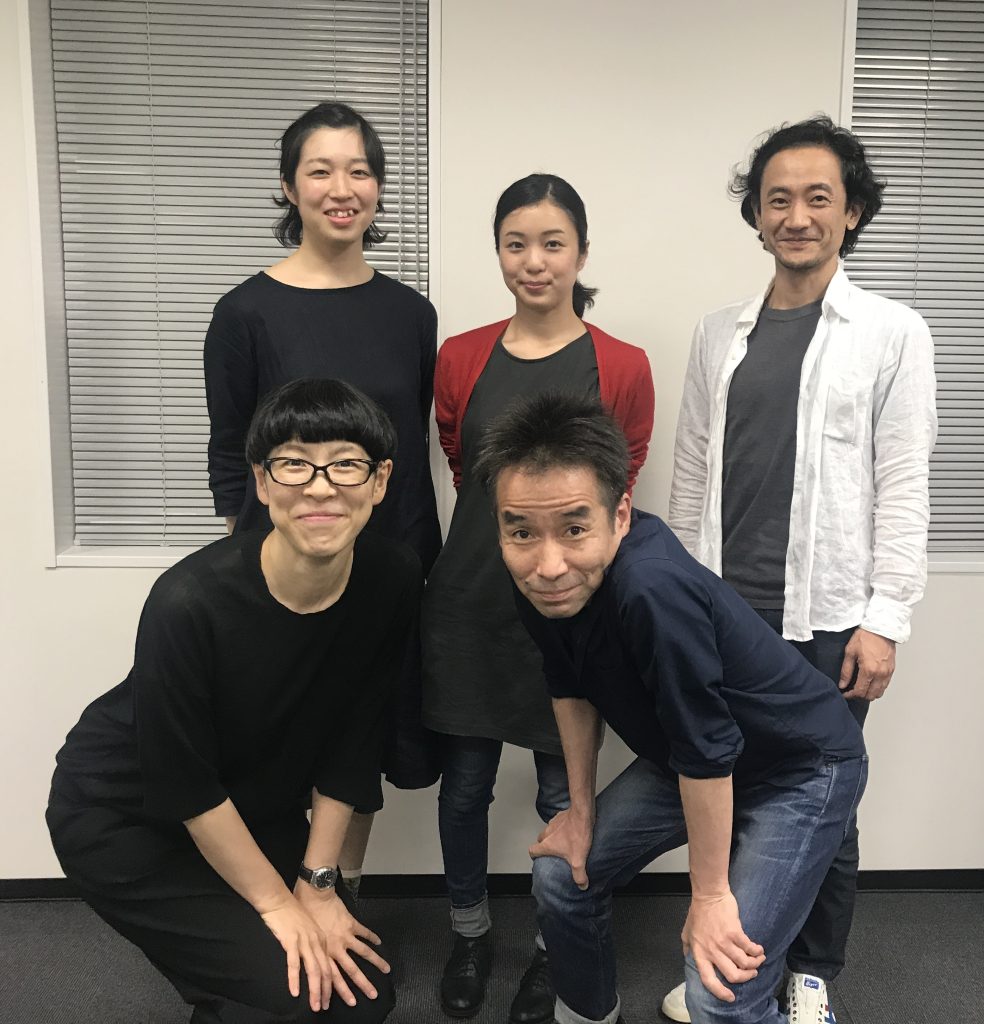
Company Delacinella
Shuji Onodera Established in 2008 as a self-service unit. Since then, several new works have been released every year. Based on mime, he has won the support of a wide range of audiences with his outside-the-box expression. They perform not only in Japan but also overseas. In addition, they are actively approaching the next generation by touring schools and performing arts at high schools. He often shows his works outdoors and is often commissioned by art museums and art festivals.
Shuji Onodera
A director. Presides over Company Delacinella. He studied mime at the Japan Mime Institute. From 1995 to 2006, he was active in the Performance Theater Water and Oil. After that, he stayed in France for one year as a trainee under the Agency for Cultural Affairs' overseas study program for up-and-coming artists. After returning to Japan, he established Company de la Cinera. It has attracted attention for its unique production that incorporates dialogue based on mime movements. Won the Best Staff Award at the 18 Yomiuri Engeki Taisho. She also participates in the Setouchi International Art Festival and performs outside the theater. In 2015, he was appointed as the Cultural Exchange Commissioner of the Agency for Cultural Affairs.
Momoko Fujita
He studied mime at the Japan Mime Institute. Participated in the performance theater "Water and Oil" from 1995 to 2006. After taking a break from 'Water and Oil' in 2006, she appeared mainly in the films of Company de la Cinera. He appeared in "That raven, even" (directed by Shuji ONODERA), "Igenjin" (Stranger), "Romeo and Juliet" (Company de la Cinera), "Howling" (choreographed by Shota IDE), etc.