



Part 2: Talk Session
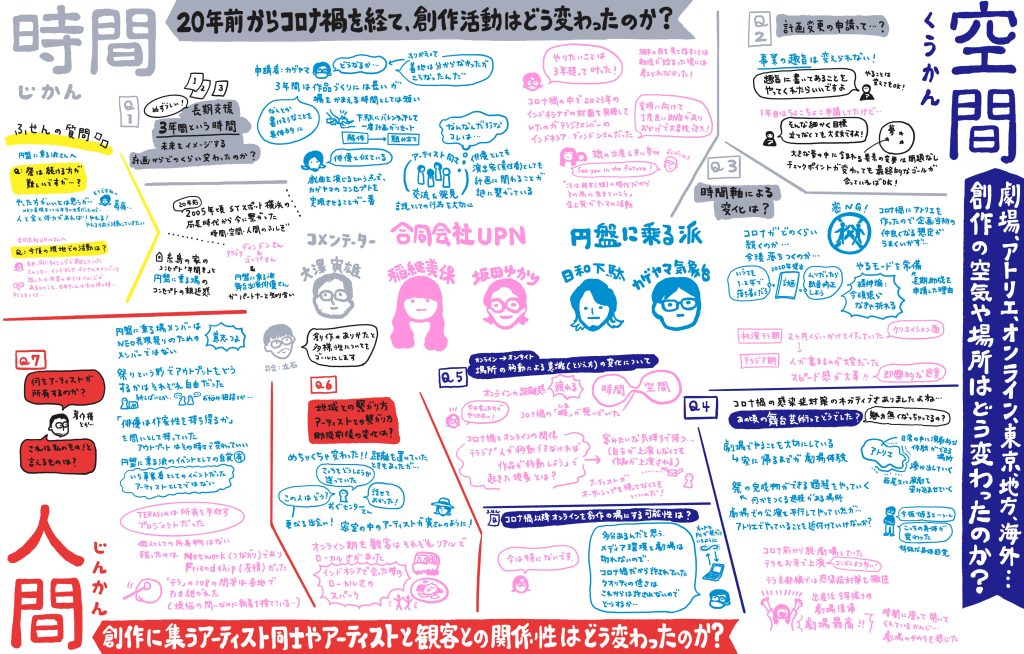
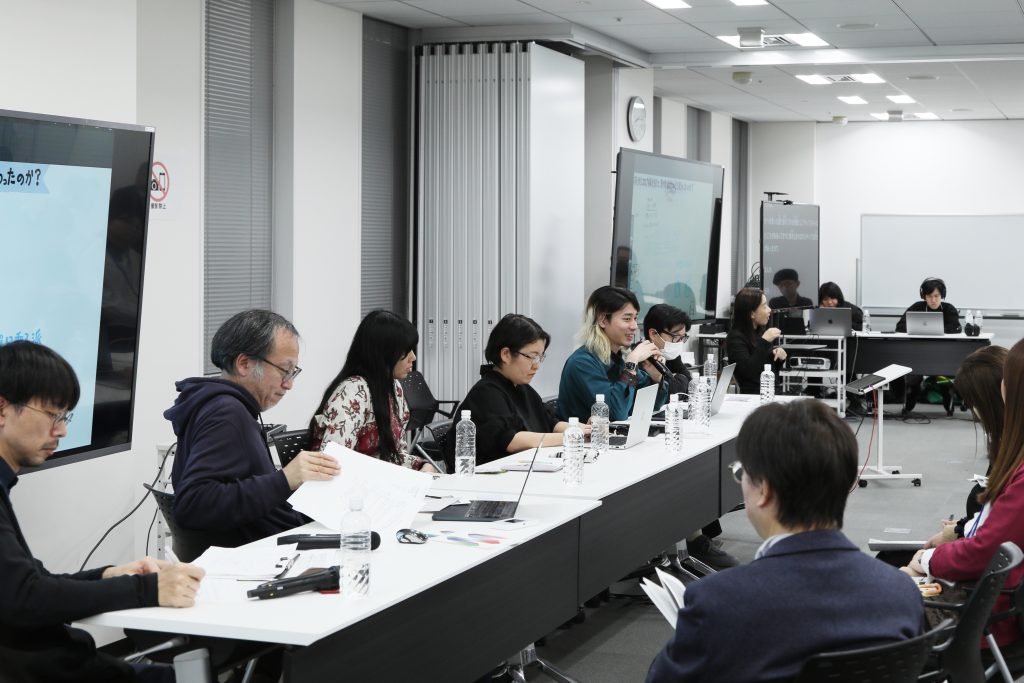
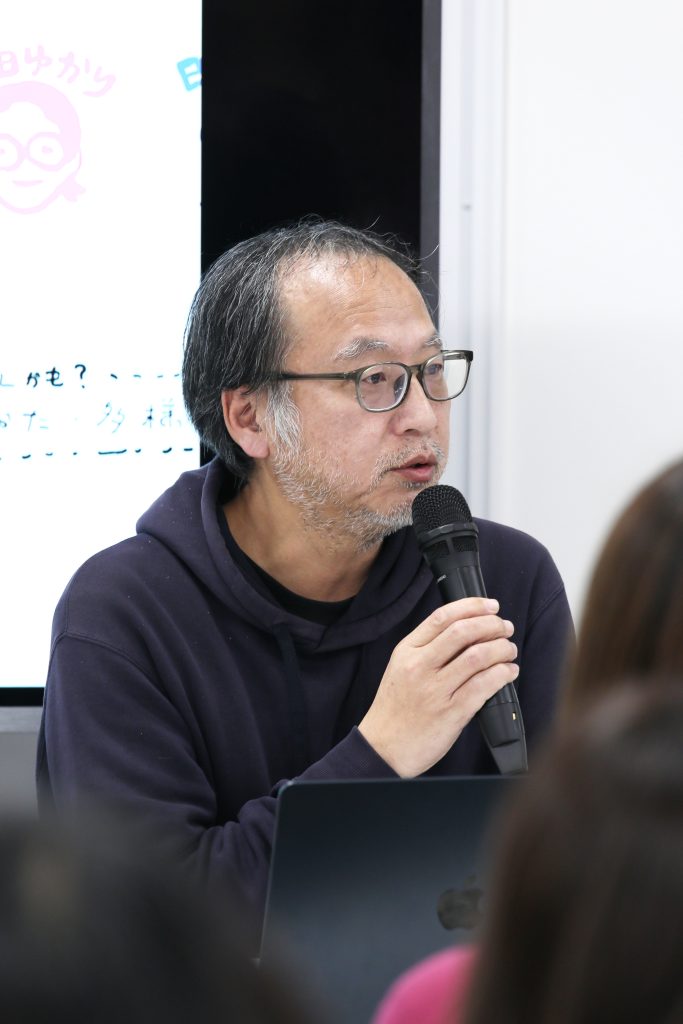
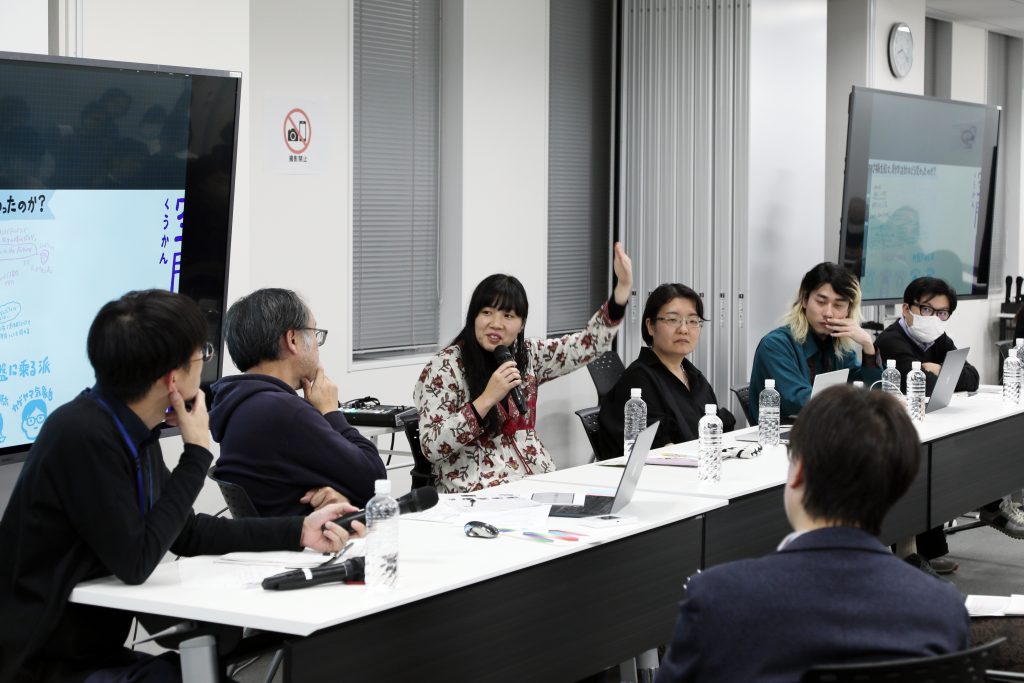
In the second part, a talk session was held with two people from the discus group, two people from UPN, and Torao Osawa (hereinafter referred to as "Osawa"), a representative of Cultural Commons Research Institute, who specializes in cultural policy and art management. In the talk session, the three perspectives of time, space, and people were presented, and Osawa asked questions about the two projects from the three perspectives. Before starting the talk session, Osawa mentioned that he has a personal connection with the discus riders and the artists involved in Terazia.
Hours: About Long-Term Funding
First, there was a discussion of "time" and questions about long-term grant programs. It is rare for a grant to support a creative activity that lasts for three years. Did the project go as planned in three years? How well did it go according to plan, if at all? What is the difference between what you had imagined and what you see when you look back? Osawa asked the two organizations.
"I thought three years was a long time to create a play, but a short time to set up a place like running a studio." said Kageyama, a discus rider. He said he didn't know how the situation would turn out, but he expected it to change. In response to Kageyama's remarks, Hiyori said, "It was important to realize the concept presented by Kageyama, and we carried out the project with the idea that the details of the plan would change." In other words, “The landing point has not changed, but the method of landing has not been decided.” The goal was to present the results of the discus ride in a joint studio and leave them as a form of discourse.
Regarding Terazia, Sakata said, "I think what I wanted to do in the early days has come true after three years." As mentioned earlier, at a time when it was difficult to predict when the pandemic would end, Dingdon W.S. from Indonesia, one of the members of Terazia, had a clear vision, which was a great support. He added that it was only with the long-term grant of three years that the project was able to progress to its present form in the dark. Projects are not the only things that change over the course of a three-year grant. Three years is a period of time that will bring about significant changes for the project participants themselves. Inatsugu said humorously, "After all, adding one more person is a great change." As mentioned earlier, Inatsugu gave birth during the period of the grant, and it is said that there was a time when he left the theater scene. However, he was able to come back even after his career was interrupted because he was protected by a long-term grant, he said in sincere words from his standpoint as an actor.
time: about rescheduling
Osawa asked a question that delved into the actual situation of the grant, with future applicants in mind, such as "How many times did you consult with Arts Council Tokyo for the change in plans, and how much did you communicate with the grantee about the change in plans regarding long-term grants?"
Hiyori, a discus rider, said that he had been working on the project with the understanding that "The purpose of the business cannot be changed, but what the business does can be changed." In the first year, the project was carried out according to the plan, and in the second year, the plan was changed to conform to the current situation. That's why changing plans in the second year was the most difficult. In the third year, they planned to expand the business they had done in the second year, and they were able to expand their activities smoothly. Terazia said it initially applied for changes in detail, but in the second and third years, with the help of advice from the grant manager, it set bigger goals and structured its activities within them.
There was also a supplement from the standing stone of Arts Council Tokyo who stood on the side of support. We share a certain understanding that long-term subsidies do not go in a straight line towards the goal, but rather twists and turns, and that progress and checkpoints can change from where they were originally planned. However, whether the final goals and goals are consistent with the contents of the application will be an important point in long-term subsidies.
Time: Creative work during the COVID-19 pandemic
Next came questions about creative writing during the COVID-19 pandemic from the perspective of time. How was the time spent creating different from the time spent creating during the pandemic?
"I worked with the expectation that the COVID-19 pandemic would be over in a year or two, and I worked on my work by adjusting the course accordingly." Kageyama said. He said he thought the mindset of “We can't express ourselves because of the COVID-19 pandemic, so let's resume our activities when we can.” would not work. Referring to the fact that the discus was launched during the pandemic, he said the pandemic forced him to rethink his original plan. At first, she envisioned deepening relationships through parties, but she recalled that it was impossible to run her studio in that way.
Sakata described the difference of creative style between "Terra" and "Terrasia". When he premiered "Terra," he spent about two months creating it. It was an environment where related people could gather and practice. On the other hand, when "Terazia" was being created, it was very difficult to get together. They had to be rushed, improvised, and completed in a short period of time, such as one or four days.
Sakata also mentioned the COVID-19 pandemic and the change in the sense of time after the pandemic. During the pandemic, participants had more time to spare, and online meetings went smoothly. But now people are too busy to set up online meetings. It may sound paradoxical, but now they even find it easier to do things in person.
When asked if they wanted to go back online, the two groups were sharply divided. Terazia's response was unequivocal: they weren't thinking about it now. On the other hand, discus riders acknowledged that the media environment around us is part of theater, and that they might link their constant connectivity to theater performances.
space: place of performance
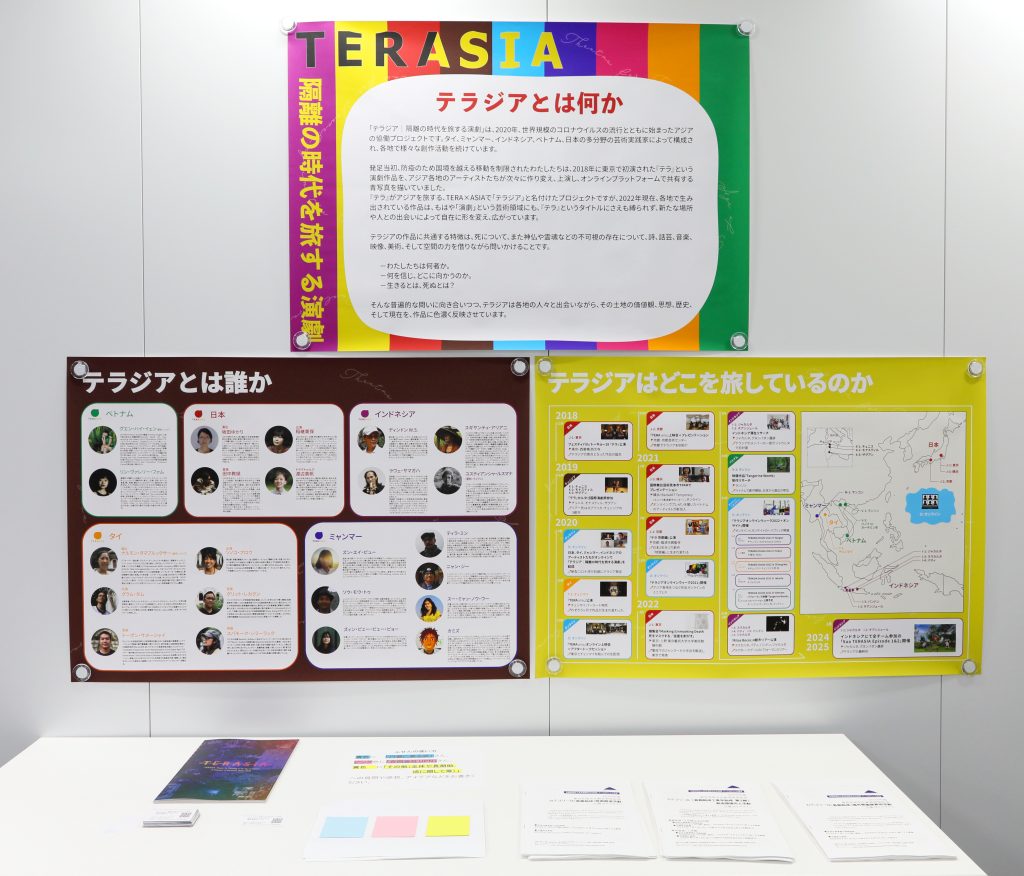
Osawa mentioned that the two organizations that made the report "Although they specialize in theater and performing arts, they seem to be working in a place apart from the theater." They were asked how they thought about the theatre and whether it was still an attractive place for the two organizations.
According to Kageyama, the theater is still an important place for discus riders. On the other hand, the idea that there are other places for theatrical experiences is a guiding principle of the discus group. In that sense, places like the discus ride, a joint studio, are important. In the studio, there is always a process of making a finished product. The studio is half open and half closed. Kageyama says that when he expands his expression from such a place, he feels that if the viewing environment is theatrical, it becomes overly theatrical. ""Matsuri" may have come about as a practice of creeping theatrical experiences into everyday life, centered on the studio." Kageyama recalled.
The discus group started performing again around 2021. At the time, theaters were under strict infection control measures, and it was a great deal of tension to perform. However, Kageyama believes that the works made during this period were suited to the physical sensations of the time and the environment, so when he looks back at them now, the way they look and feel may change greatly. "Part of the meaning of the theater has changed, but part of our physicality has changed. And if the physicality that has changed has completely returned to normal, some parts of it may not have changed." he said.
Inatsugu of "Terazia" is said to have been practicing the anti-theater approach even before the pandemic. It is said that there are more than 70,000 temples in Japan, and one of the reasons for setting the film in a temple was the expectation that it could be developed in a different way from the theater. However, during the COVID-19 pandemic, temples had to take measures against the spread of the virus, and there were still restrictions on performances, just as there were in theaters. In addition, while he is pursuing activities that are not theatrical, when he actually stands in a theater as an actor, he cannot deny the moment when he feels that there is a charm that can only be felt in a theater.
people: artist authorship
Osawa posed a question about the authorship of the work. In the case of the NEO Expression Festival, the entire festival cannot be owned by anyone. In the case of "Terasia," it does not insist on strong authorship of the work, such as allowing foreign artists to modify it. Under these circumstances, what do artists own and what do they not own?
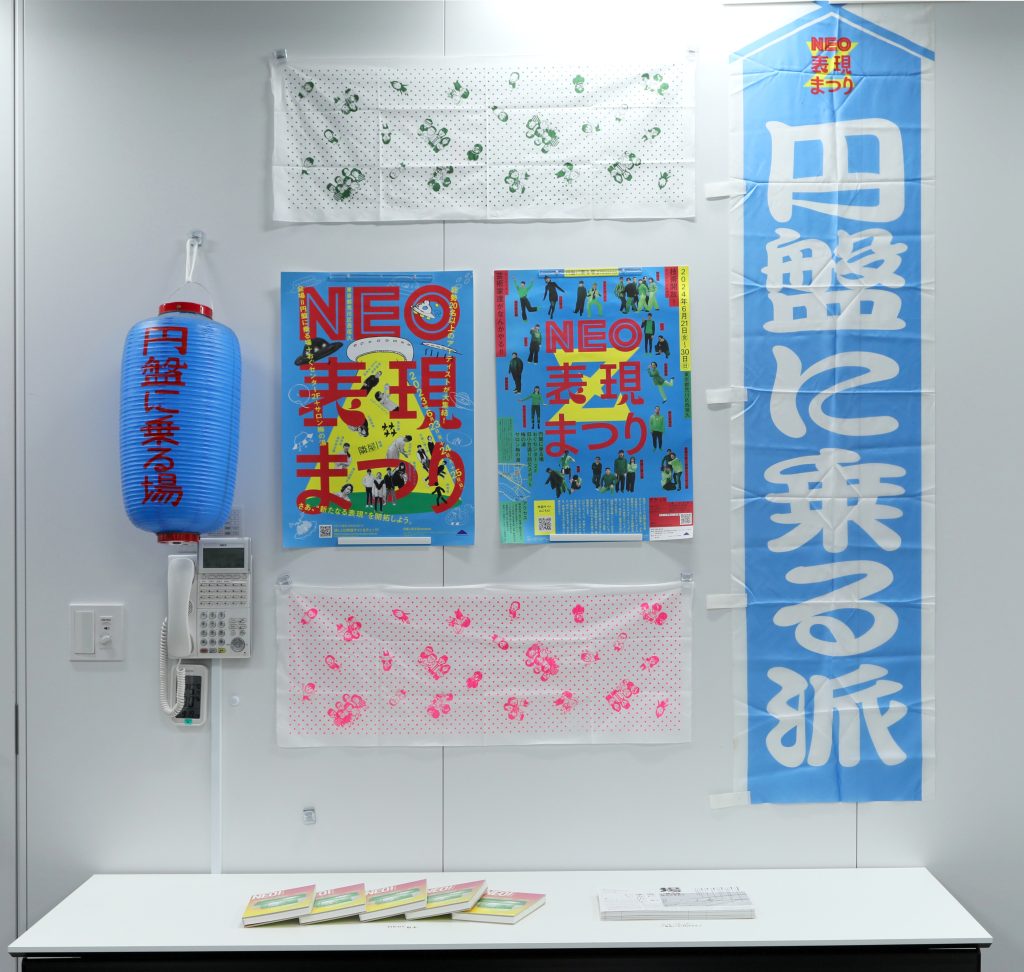
Hiyori says, "The big premise is that the artists gathered for the discus are not originally gathered for the NEO Expression Festival. As a result, the discus crowd does not dictate what each artist does, leaving it up to the artists themselves. The nature of each artist's output and how much control they feel over it will also vary from artist to artist." "However, I believe that the participating artists recognize that it is an event organized by discus riders." Kageyama says, but if you ask him if he was describing himself as a discus rider, I don't think so either. In other words, "It might be more fitting to say that I did my job in a way that was different from the discus crowd."
Sakata recalls, "'Terazia' would not have started without the suggestion of Thai director Narmon Thamapruksahgop." The way "Terazia" unfolded was like waiting for the recipient to make it interesting without making it. This is different from selling a work or being invited to a theater festival to go out into the world as a creator. "This project made me feel like I don't have to be in control of authorship." says Sakata. You could say that Terazia is a project that lets go of ownership, a sense of not owning anything. When Sua TERASIA, positioned as the culmination of his activities, was discussed with the participating artists about what remained of the project, Inatsugu said thoughtfully, "Friendship remained."
People (Jinkan): Relationship with Local Communities
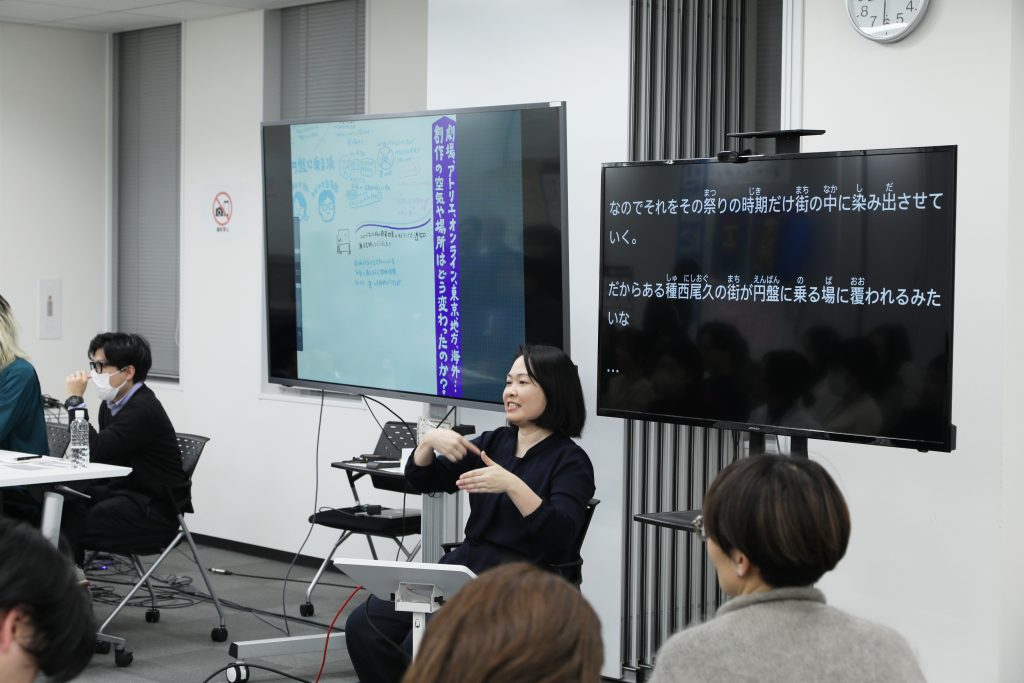
Finally, questions were asked about how connections with the community and relationships with non-artists had changed. The discus group says their relationship with the community has changed dramatically. At first, I thought I would keep my distance from the community, but when I actually talked to the local people, I realized that they were interested. At first, they and the people in the community kept their distance from each other, although they were concerned. As they got closer, they were introduced to spaces and people, and their relationship with the community was completely different at the beginning and end of the project.
In the beginning, the artists were connected online. However, the artist always had a connection with the local audience. In that sense, he always had a connection with the local audience. It was against this background that when we met in Indonesia after the COVID-19 pandemic, the participants had a lively exchange of views on the local approach and the next steps in their respective regions.
Future Developments
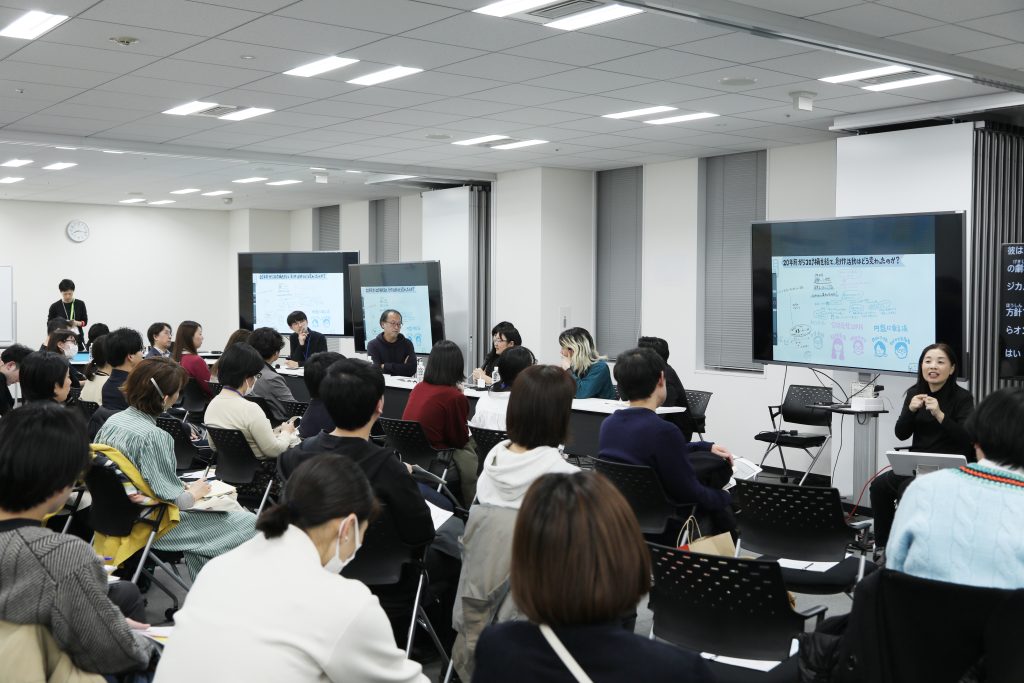
Finally, questions were asked about the future of both parties. In response to the question, "I think it is more difficult to continue the festival than to start it. What do you think about the future prospects?" the two discus riders said they thought it would be desirable to continue the NEO Expression Festival, but were conflicted about the difficulty of establishing a system to continue it. "When "NEO Expression Festival Z" ended, I really didn't want to do this again, but I think it's better to do it. I think I should do it, but whether I can actually do it is a struggle. To put it simply, people, money and physical strength. We talk about finding ways to do it." In addition, two people from UPN, a limited liability company developing "Terrasia," mentioned that members from Myanmar, Indonesia, and Vietnam visited Japan and met with each other the other day, and concluded that they felt it was time to wait for the next development because they each had their own ideas. I felt that this talk session was an opportunity to look back on what each of them had achieved after completing the three-year grant period and to find the next direction for their creations.
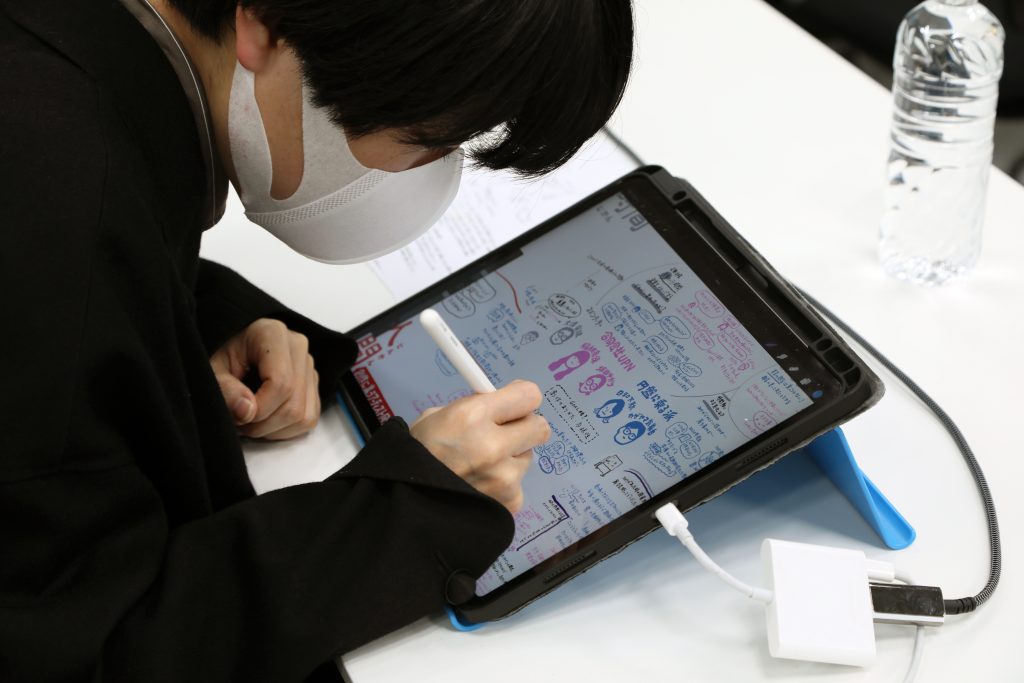
The scene of the second part was recorded graphically by Ryo ARADA. Centered on cute portraits of the participants, the discussion and its main points were summarized visually, providing an opportunity to grasp the whole discussion and reflect on it later. At the end of the session, there was a time for exchange, which showed signs of creative ideas and new collaborations between speakers and participants.
I think it is quite rare to find a place like this talk session where the grantor and the recipient can frankly talk about the actual situation of the subsidy. It would be desirable to have such a place on an ongoing basis as an opportunity for grantees to reflect on their own activities, and for artists who want to receive grants to have an image of the reality of long-term Grant Programs. In addition to this, those who are considering applying for a grant should also take advantage of the opportunity to consult with Grant Programs.
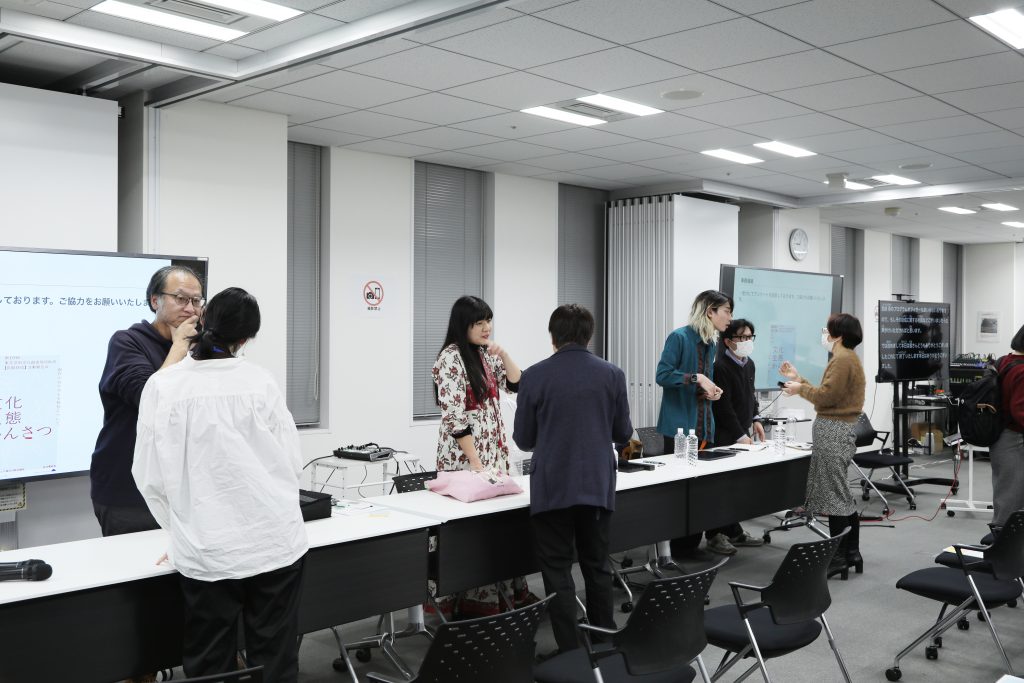
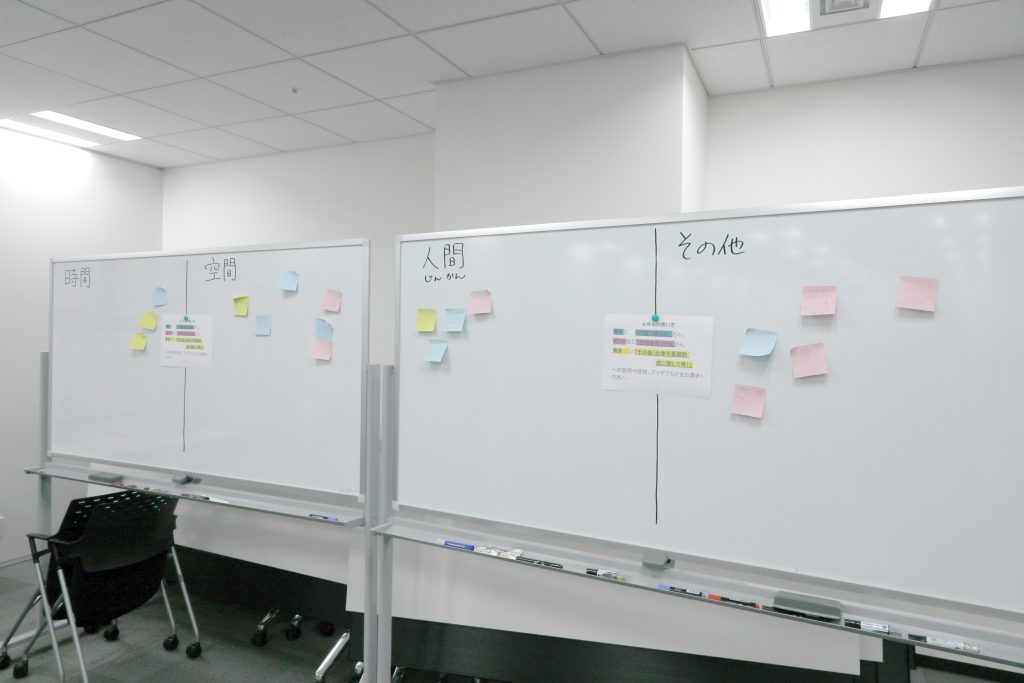
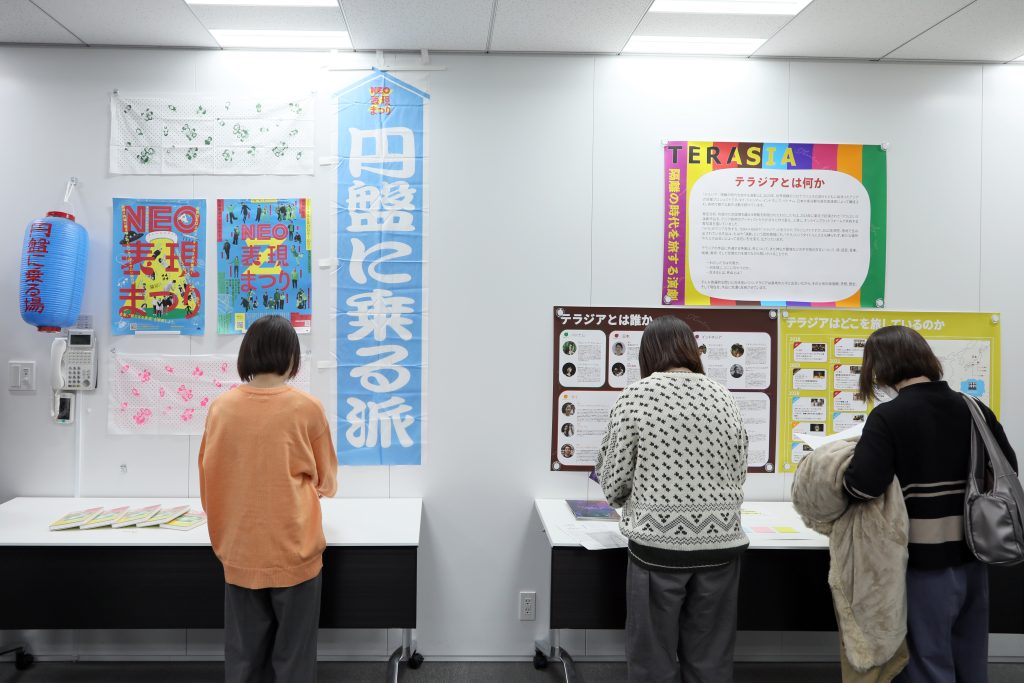
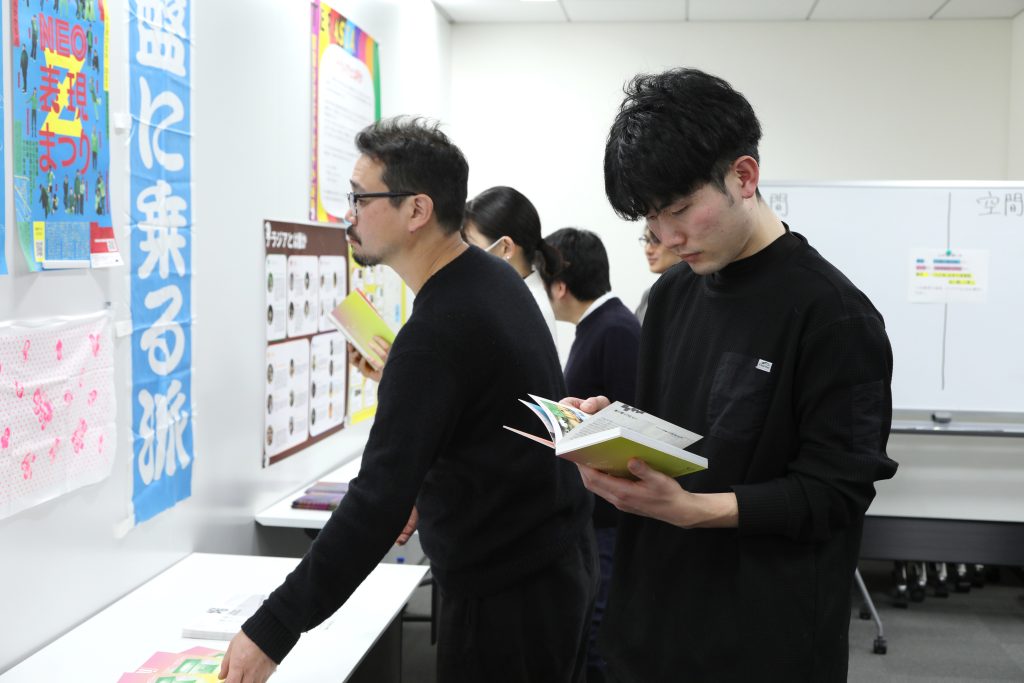
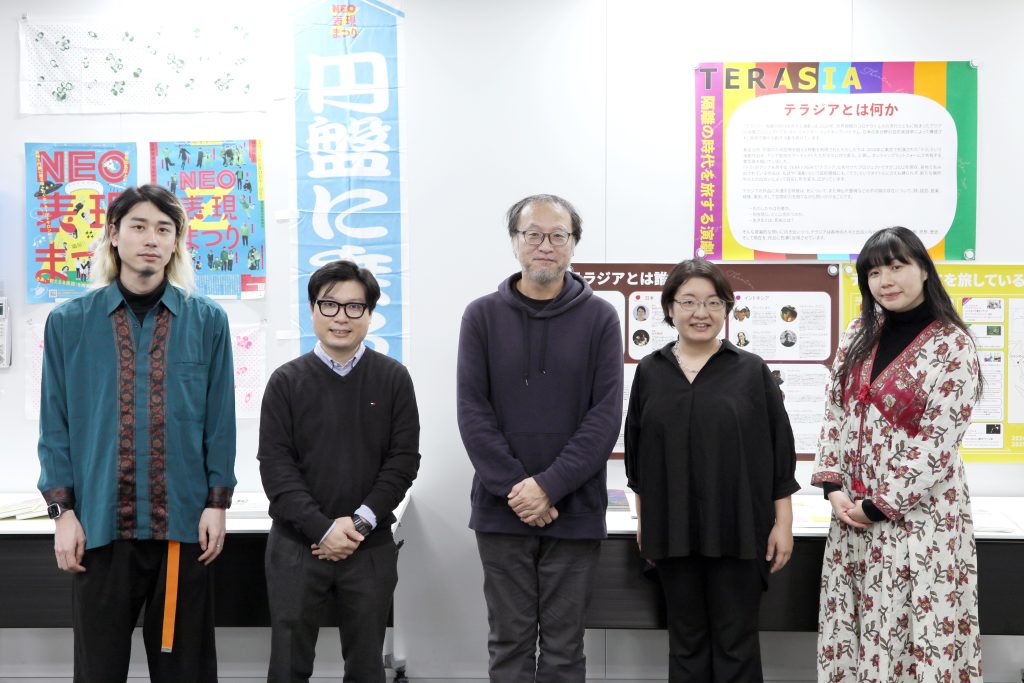
(Photo by kabo)
(Composition and text: Shunichiro OKA)
Profile
discus group
Started in 2018 as a theatrical project to create "time for multiple writers and artists to be flat together, where they should be". They consider everything they experience from the time they visit a theater to the time they return home as "theater," and they are developing activities that are not limited to just presenting performances, such as publishing booklets and holding various events. In 2021, she established a communal studio called "The Place to Ride the Discus" to explore new connections related to expression. His recent works include (2024: Tokyo Art Festival 2024 Program). The current members are Kageyama Meteorological Observatory (playwright/director), Hiwari-Geta (actor), Shun Hatakeyama (actor) and Suzu Shibuki (advisor/watcher).
UPN Limited Liability Company
It is a corporation formed by Sakata Yukari (director) and Watanabe Maho (drama turku, interpreter and translator), who have been working as freelancers, to conduct cross-disciplinary cultural and artistic business. They are engaged in activities that are not limited to their own fields, such as planning and management of art events, production of works, editing and publishing.