


- target activity
- Dance Nippon Associates "Dance New Air" (adopted in FY 2015: 2 years)
- Speaker (Reporter)
- Maki Miyakubo (Chief Producer)
Kumi Hiraoka (Producer)
Shinji Ono (Producer)
Hiroyuki Kobayashi (Producer) - moderator
- Mariko Konno Senior Program Officer, Planning and Support Division
Outline of subsidized activities
The festival "Dance New Air," which started with a new structure, developed over two years.
- First year
Conducted a new site-specific series of performances in the previous year of the festival, as well as research and programming for the festival. - Second year
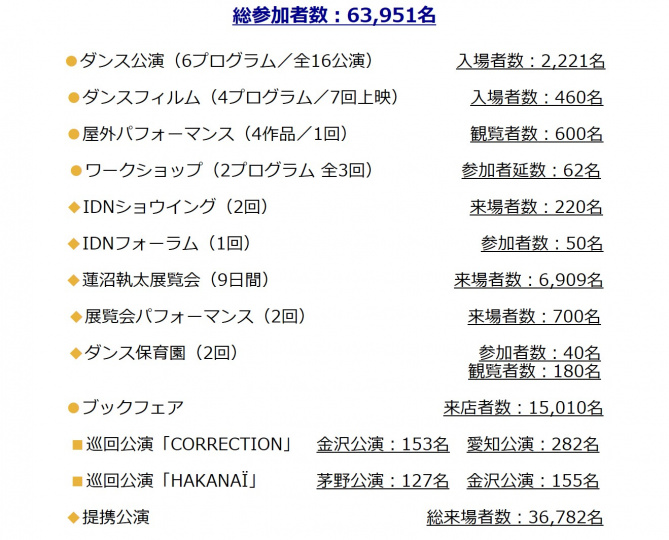
Festival held. In addition to a total of 16 dance performances in 6 programs, outstanding old and new dance films will be screened, outdoor performances, workshops and book fairs will be held. About 64000 people participated through various programs such as collaboration with an exhibition by musician Shita Hasunuma, new innovation of dance and childcare "DANCE NURSERY!!," invitation program of 20 dance producers from around the world "International Dance Network," etc. Networking with national and international festivals was also actively undertaken, creating a broad-based process for the upcoming 2018 festival.
Part 1: Introduction & Analysis “DNA that crosses borders and takes root in cities”
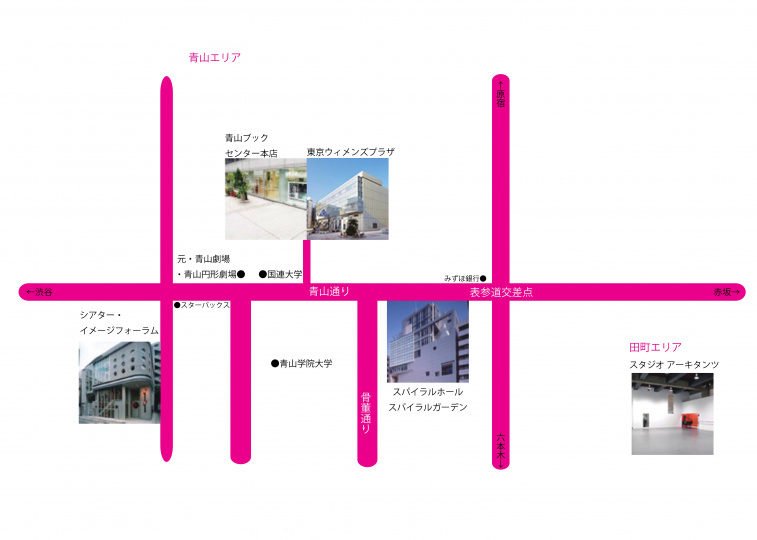
The international dance festival "Dance New Air" is held once every two years in the Aoyama area of Minato-ku, Tokyo. Arts Council Tokyo 's Creation Grant [Long-term Grant Program], the two-year activity report (Part 1) focused on the history and business introduction of the predecessor festival "Dance Biennale Tokyo" from the start of the festival "Dance Biennale Tokyo" to the present.
(Text: Rieko Suzuki)
"Dance Biennale Tokyo" started in 2002 as an independent project of the Aoyama Theater and Aoyama Amphitheater. It introduced new talents from around the world and presented the "current state of contemporary dance", and has attracted a lot of attention since its inception as one of the largest dance festivals in Japan. In 2004, Spiral participated. Since 2006, it has become a "Dance Triennale Tokyo" held every three years, but the screening of dance videos at the theater image forum of nearby mini-theaters and a number of promotional projects involving the Aoyama Book Center made the festival even more impressive.
Such a major project reached a crossroads just before the "Dance Triennale Tokyo" was held in 2012. The Ministry of Health, Labour and Welfare announced the closure of the Aoyama Theater and Aoyama Amphitheater (Child Development Association), which is the center of the organizers, in March 2015. In the fall of 2014, the last year before the museum closed, the festival was renamed "Dance New Air". At this point, the event after 2016 was not decisive, but while exploring the possibility of continuing and considering the establishment of a new corporation (Dance Nippon Associates), we came across Arts Council Tokyo 's long-term grant program.
"When I applied, it was still the executive committee, and it hadn't been decided whether to do it as a general incorporated association or not. However, I have expressed in writing and in interviews that I intend to establish and continue a new organization. It's a festival that happens once every two years, so we really need time to prepare in advance. In that sense, I was grateful to receive a long-term grant instead of a single year." said Miyakubo.
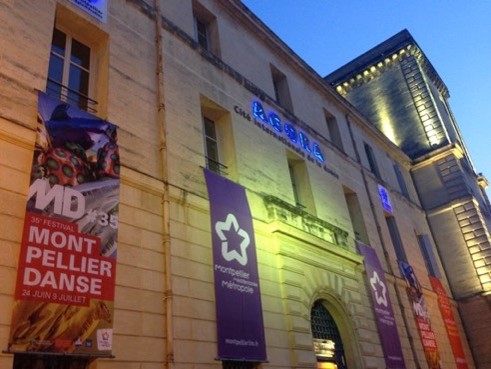
With this grant, Dance New Air is now in full swing for its next show in 2016. In the first year, we visited the Montpellier Dance Festival (France) and the GREC Festival (Spain) as an inspection tour in order to select works to be invited to festivals, and conducted a series of on-site research and meetings. Even if they meet new artists and works at these venues and negotiate specific appearances, they may not be reflected in the actual program due to scheduling and other factors. However, witnessing the present world of dance expression and sharing its attractions and challenges will keep the festival fresh and renewed for the future.
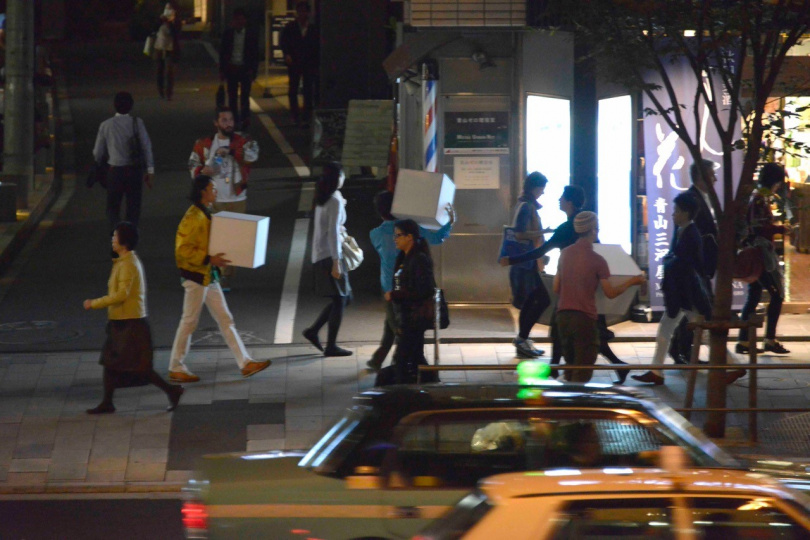
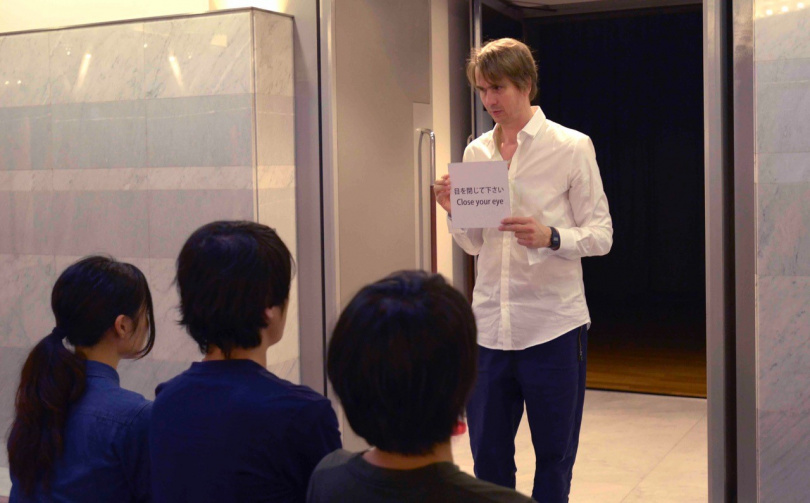
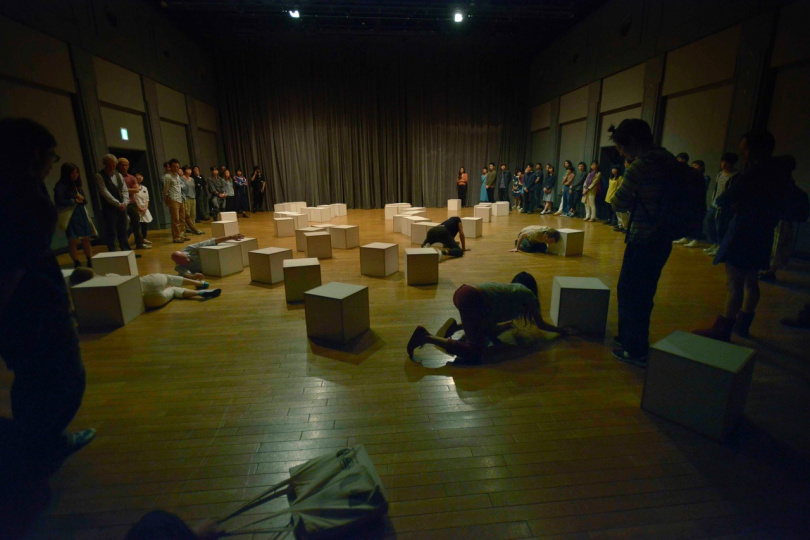
In the same year, as a preliminary performance, the site specific series vol.1 (Concept, direction and appearance: Heine Avdal, Shinozaki Yukiko) was held. The concert, held in conjunction with Spiral's 30 year anniversary, consists of 2 parts. Audiences will tour the performances in various places in Spiral, such as backstage rooms and emergency staircases, which are usually reserved only for those involved, before being led to performances in the hall. Artist Umeda Tetsuya, who deals with sound and phenomena, participated in the installation, and Japanese up-and-coming dancers and choreographers such as Yamada Un, Toda Makoto, and Shirakami Momokora also performed. The light intersection of city, architecture, sound, dance, and various borders seemed like an attempt to visualize the ideal form of “Dance New Air ” in Tokyo and Aoyama.
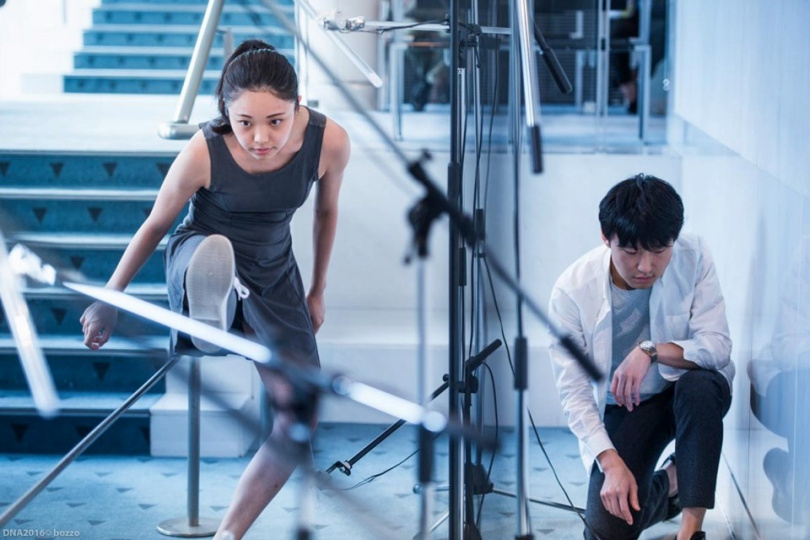
そして翌年9月、「Dance New Air 2016」は、6つのダンス作品と映像上映、展覧会、屋外パフォーマンス、ワークショップなどを擁し、幕を開ける(詳細はこちら)。
アーツカウンシル東京とは別の大型助成金が不採択になったことから、プログラム構成や規模を大きく見直さざるをえない局面もあった。だが、むしろそのことが、スタジオ アーキタンツの協力で開催したワークショップや、作曲家・蓮沼執太の展覧会とのコラボレーションや託児とワークショップを組み合わせた「ダンス保育園!!」といった提携事業、同時期に国内で開催されるダンス公演との広報協力を軸とした連携プログラムまで、フェスティバルに有機的な広がりをもたらすきっかけにもなった、と宮久保は振り返る。
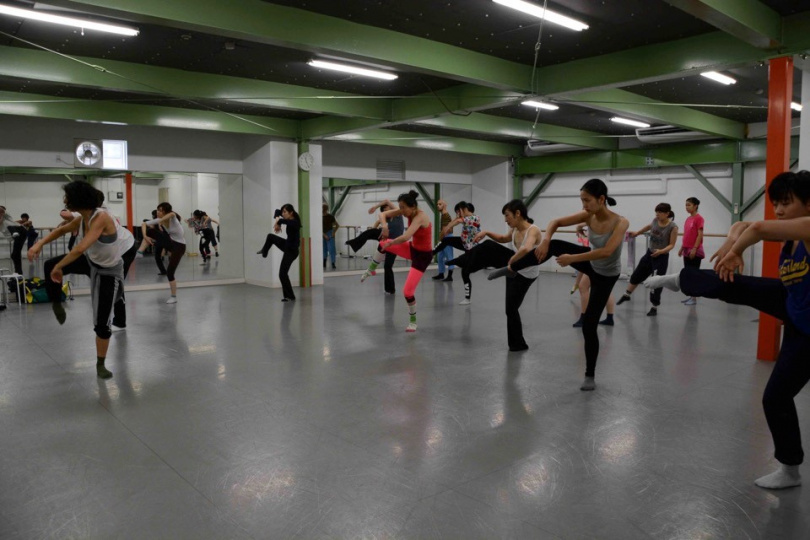
"We had to shrink the program to just under 1/3. It is said that wisdom is needed when money is scarce, and it was very important to have a lot of friends to consult with in such a situation. As a result, we have expanded our joint projects and programs, and I feel that the feeling of the festival has become stronger."
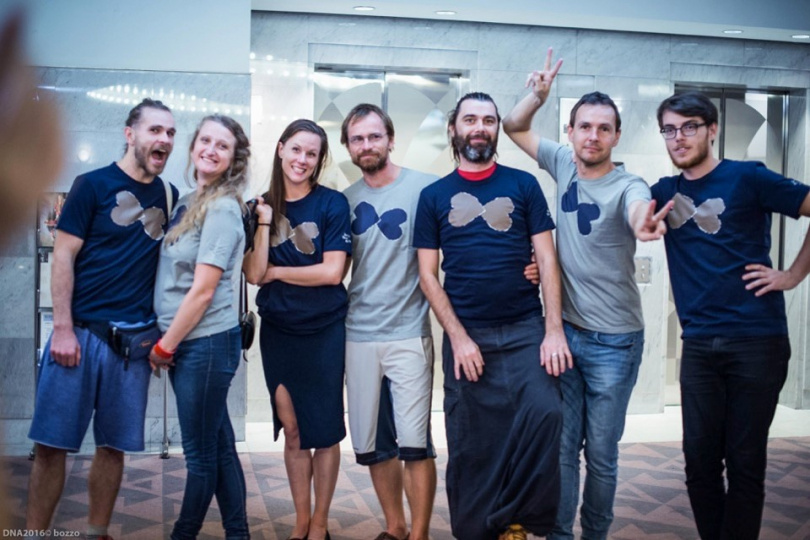
A total of 64000 people attended "Dance New Air 2016" including affiliated projects and programs. The participation of companies, such as a promotion using original T-shirts designed by fashion brand Mina Perhonen and the provision of coffee sponsored by Nespresso, added the glamour of the festival as a cultural hub in the city. In addition, volunteers called "support staff" supported the operation.
"From 2002 to 16, people from different countries participated in the festival. However, it is still biased towards Europe, and there are still some regions where exchanges have not yet been made. As we continue the festival in the future, we would like to expand the circle. In addition, DNA (Dance New Air) has continued to connect with various genres and appeal to people who do not yet know the fun of dance. I would like to continue to increase the number of people and genres that can work together, including intermediate support groups such as Arts Council Tokyo."
"Dance New Air" and its subtitle, "Dance No Ashita", share the same "DNA". The DNA of this festival, which was born and continued in Aoyama, Tokyo, seems to be expected to continue and grow further for 2018 and beyond.
* Continued in the second part (Part 2: In-depth interview)