



- Date
- Thursday, December 26, 2024 19:00~21:00
- Venue
- Arts Council Tokyo
- target business
-
- "Terra Co. Dance Research Program"
(Creation Grant [Single-year grant] Reiwa 4 (2022)) - "Nextream21 A smoky meeting to call yourself a dance more freely than ever before"
(Creation Grant [Long-term grant] from FY Reiwa 5 (2023) to FY Reiwa 7 (2025) (3 years)) - Platform Formation Project "Paper Back" Phase 2 to Disseminate Discourse on Performing Arts
(Creation Grant [Single-year grant] FY Reiwa 5 (2023), Reiwa 6 (2024))
- "Terra Co. Dance Research Program"
- Reporting Organizations and Speakers
-
Kuraneo Co., Ltd.
Shintaro Hirahara (Director)
Taeko Machida (Producer)General Incorporated Foundation Rokugyokai "Nextream 21 Smoke rises to call it dance more freely than ever before"
Yuya Tsukahara (Representative Director) * Online participation
Junko Hanamitsu (Producer)Paperbacks Editorial Department
Yamazaki Kenta (Editor-in-Chief of Paperbacks) Okawa Tomofumi (Back Office, Online, Editorial Department, "Paperbacks") - facilitator
- MORIYAMA Naoto (Theater critic, Professor, Faculty of Fine Arts, Tama Art University)
- graphic facilitator
- Junko Shimizu
- moderator
- Tatsuko MIZUNO (Senior Program Officer, Support Division, Activity Support Division)
> Click here for Part 1 "A roundtable exploring new ideas about the art creative environment"
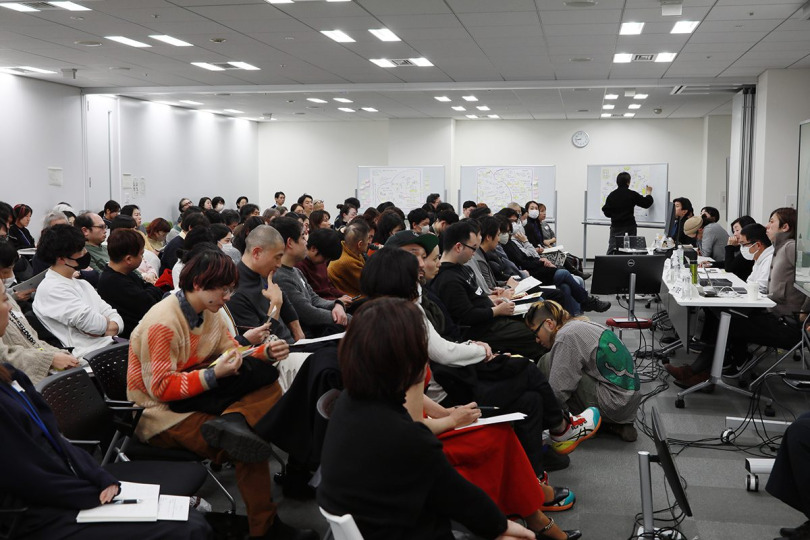
In the second part, based on the reports of the three groups in the first part, the discussion was held with the participants under the facilitation of Naoto Moriyama.
No place, no context, no possibility of the body
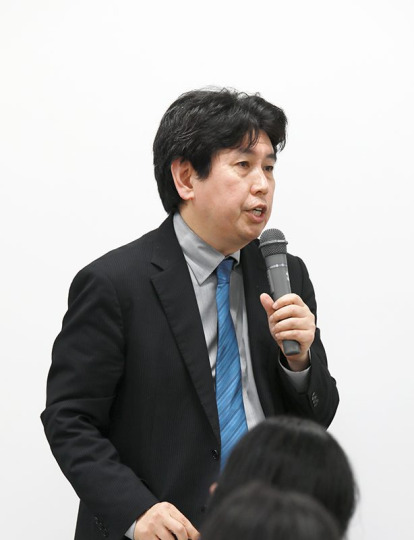
Moriyama: What is the purpose of the "creative environment", which is also the theme of this debriefing session, in the first place? While asking the question, we analyzed that the three Grant Programs responded to this question in their own way, saying, "It is there to open up the future."
How can "Terra Co. Dance Research Program" become independent artists? How do we provide a place to learn?
How does Nextreme 21, the Smoke Society to Call Dance Freer Than Ever, break the dance slump?
How can "Paperbacks" improve the current situation in which criticism has stagnated?
From each point of view, they are challenging themselves to create a creative environment in which the arts continue to communicate and connect with society.
Moriyama also pointed out that the lack of opportunities was cited as a common problem in all three businesses, suggesting that the lack of opportunities for people who were trying to think about the same thing to gather was related to the lack of opportunities for learning. Citing the example of the smoking area of the Kyoto Art Center, which also served as a meeting place for artists working in various fields such as art, music, theater, and dance, he wondered if the Sogetsu Hall of the 1960s might have been a huge smoking area.
"There was a wonderful agitation from Mr. Tsukahara, who said, "We can make it more crazy." It's nice to be able to do that, but it's very sad to have no one to dig in after you've done so much. Rokugyokai deliberately created a competitive situation to prevent people from thinking, "I'll never mess up again." And I wondered if they were creating a system that would allow people to do such messed up things and not isolate messed up people."
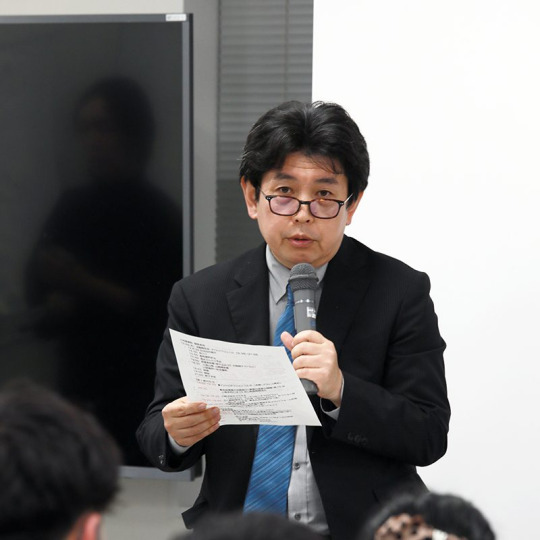
He then went on to address the issue of “not being able to see the context ”. He suggested that the situation of not being able to see the context might be causing the isolation of artists who are concerned about "Terra Co. Dance Research Program" and interpreted that the work of was a challenge to establish criticism with the function of contextualization. Moriyama asks, if the current creative environment is such that it is difficult to access or create context, what is the cause?
"For example, in the age of underground theater, literature was the strongest. In some cases, the context was created by making Yukio Mishima say "huff". Why is it difficult to create such a context now? Isn't it related to the issue of sustainability?"
Finally, we focused on the key word physicality. Tsukahara touched on the fact that artists of all genres are interested in physicality as mentioned in the introduction of “Nextream 21: A Smoke Rising Meeting to Call Yourself Dance Freer Than Ever Before ”, and pointed out the importance of cherishing this place and moving forward to the future, while finding hope in the fact that so many people gathered for this debriefing.
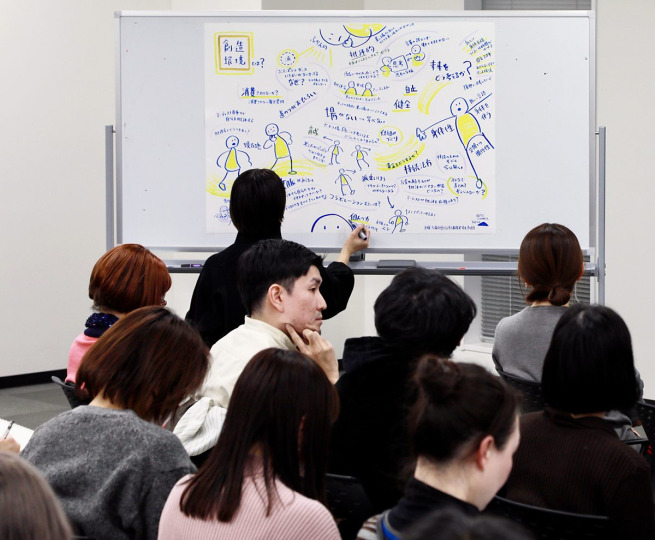
Questions and answers between the three organizations
After Moriyama, the facilitator, organized the commonalities and points of discussion that can be seen from a bird's-eye view of the three projects, and the current state and future of the creative environment, he introduced the questions that each group posed to the other groups, and each group responded.
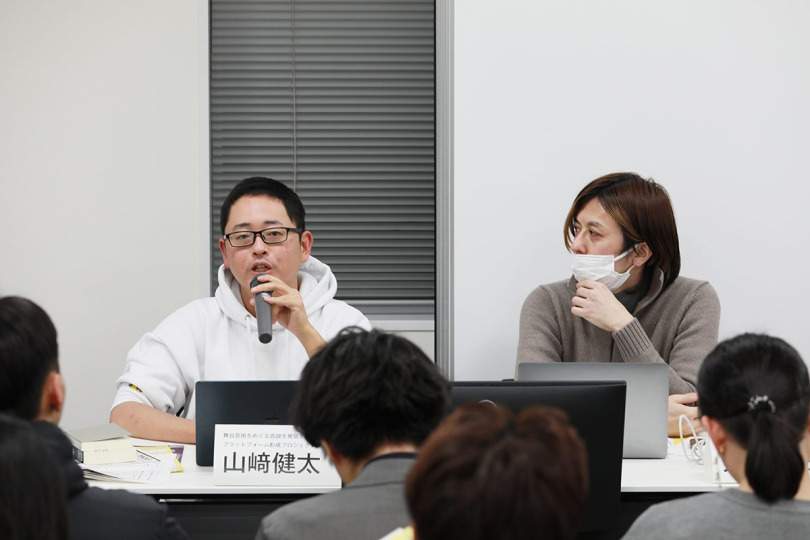
Questions to Kuraneo and Rokugyokai from "Do you think there's anything we can do with a critique platform like the back of the paper? What do you think we can do?"
- Craneo Plain
-
"I'm a choreographer, so my work and criticism are inseparable. In addition, since it is a company, it is important to know how the dancers involved in your work are evaluated. So I personally think there is a responsibility to need criticism. But on the other hand, when I was younger, I felt that the critics were in a higher position than I was as an artist, and the relationship was not good. Today, it's healthier, and there's good communication with critics and writers, so you can separate yourself and take criticism as criticism. I really agree with your introduction and was wondering what our organization could do.
It is very important to understand our creative activities through criticism. I myself feel the need to create something based on an understanding of how Japan has developed in the world."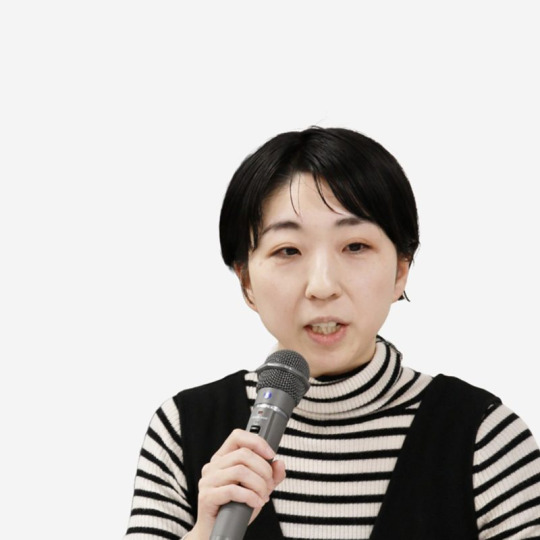
Speaker: Machida Taeko (photo: kabo) - Kuraneo Machida
- "In our project, we thought it was necessary for artists to have critical knowledge and to criticize their own works, so we invited writer Ayako Takahashi as a lecturer. I also want young artists to build good relationships with critics and writers. I think it is necessary to create opportunities for both parties to meet in the development project."
Tsukahara echoed Hirahara in describing the relationship between critics and artists.
- Rokugyokai Tsukahara
-
"I sometimes listen to Japanese hip hop from the 90s. There, the rapper criticizes the critics a lot. I wonder what the hell happened in this era, but it's a lot of fun to listen to. I can imagine that kind of relationship.
I am also involved in KYOTO EXPERIMENT as a director, where I pay for manuscripts and ask them to write reviews. I think it's unhealthy. However, if you don't do that, you won't get any criticism, and even so, critics do write things that are hard for us to hear, which helps to alleviate the unsoundness a little.
But if you can pay from your budget to write reviews, only people and organizations with money can leave reviews. For example, it costs about 30,000 yen to publish an interview article that doubles as an advertisement. As an advertisement, it is very helpful and I think it is an interesting idea, but in the end, it depends on the difference in financial power."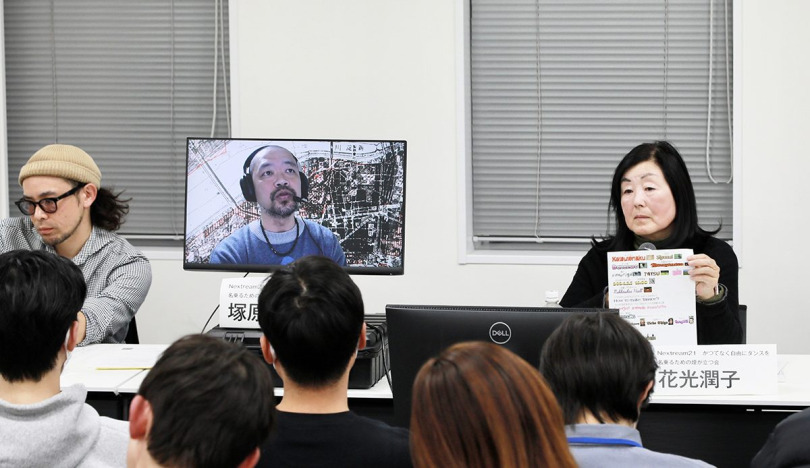
Speakers (from left): Shintaro Hirahara, Yuya Tsukahara, Junko Hanamitsu (photo: kabo)
Questions from Kuraneo to the Rokugyokai
"By creating a selection step from the first year to the third year, I got the impression that there was another screening and management department. What do you think about the aspect of development? What are the criteria for award and selection?"
- Rokugyoe Kako
- "Three directors, each with very different perspectives, backgrounds, and worldviews, judge each other, and sometimes they agree, and sometimes even the criteria are different. However, I believe that this will be a way to create new forms of dance expression. For this reason, he tries not to set standards for contemporary dance works."
- Rokugyokai Tsukahara
-
"I've been creating in the context of dance and theatre, so I realized that I had my own biases because some directors had other perspectives. Like his own group, contact Gonzo, people have said it's not dance, it's not art. So I chose people who would enjoy it and who would be able to respond. In particular, the first screening is not for finished works. I thought there would be a second year and a third year, and it was an examination of the unknowns of how to climb."
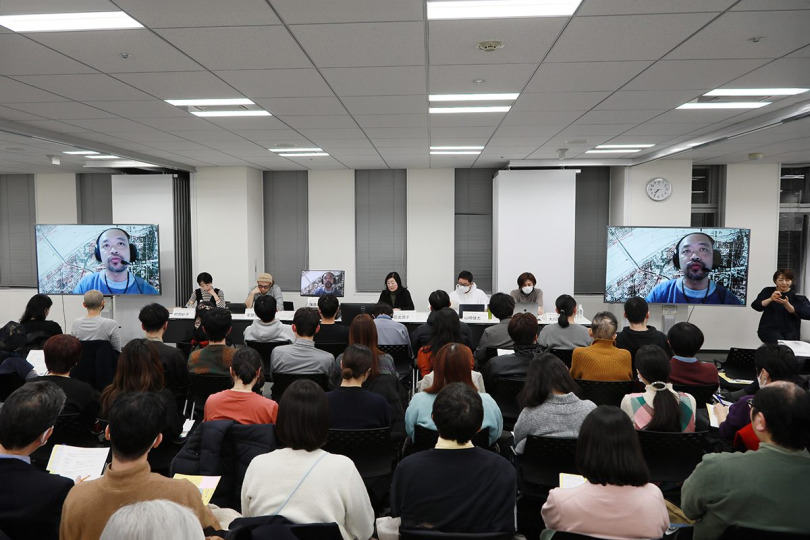
Event (photo: kabo)
Kuraneo's question to
"What do you think will happen to the stage industry without criticism?"
- "Paperback" Okawa
-
"When criticism disappears, the exchange of thoughts and dialogue disappears. Nowadays, with the development of video technology, there is a growing movement to record performances. However, we know about the performing arts scene at a time when we cannot record images as if we were there even though we did not live there. It has been passed down in words. On the other hand, when only images remain and no words are passed down, it is doubtful whether the atmosphere, the thinking and challenges of the artists, including the process of practice, and the social issues they aimed at will be properly transmitted to future generations. I think the role of criticism is as a medium to convey the atmosphere of the time and the exchange of ideas and thoughts between works and society or between people.
The supporter program doesn't offer the same kind of returns as crowdfunding, but simply asks for support if you think you need a place to critique. These days, I feel that people involved in the performing arts, not only artists but also staff, are being consumed. Through your support, I have come to think that this is an experiment to create a culture of performing arts that is not consumed."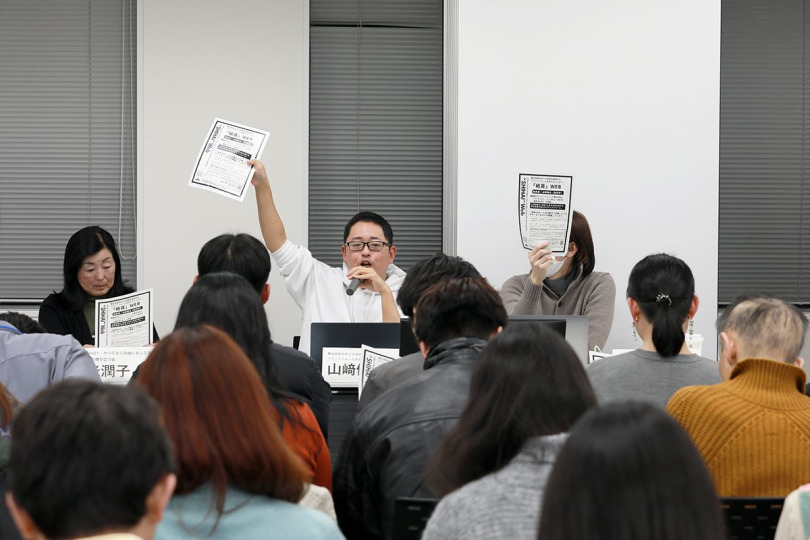
Event (photo: kabo)
Questions from the Rokugyokai on "Is there a model case for sustaining the activity?"
- "Paperback" Yamazaki
-
"As I said, there is no model for sustainability. From the beginning, I thought it would be impossible to continue in this way, so I think it is important to continue to demonstrate the significance of this subsidy period. As Mr. Tsukahara mentioned earlier, I think that it is fundamentally unhealthy to write reviews based on requests from artists on the premise of exchanging money. However, if you don't do that, there will be no criticism, so artists themselves will have to do that. Festivals are the same, but they're healthier than artists themselves. In addition, I think it would be helpful to establish a mechanism for less direct organizations, such as the Arts Council, to transmit criticism. Of course, this is also a matter of critic ethics, and depending on the relationship with the artist, it may not work."
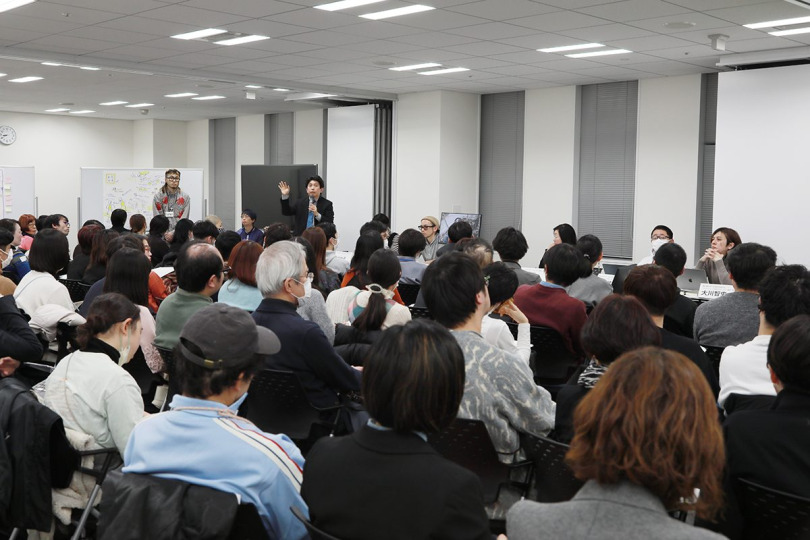
Event (photo: kabo)
From Graphic Facilitators: Opinions and Considerations from Multiple Perspectives
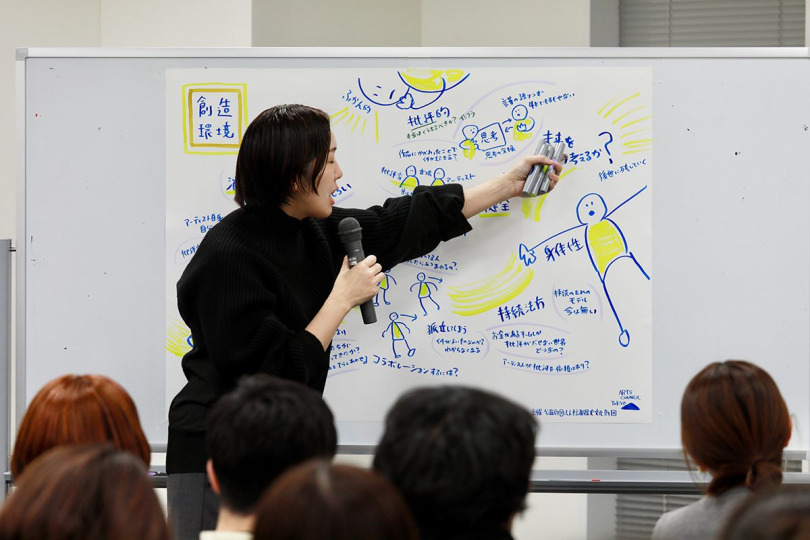
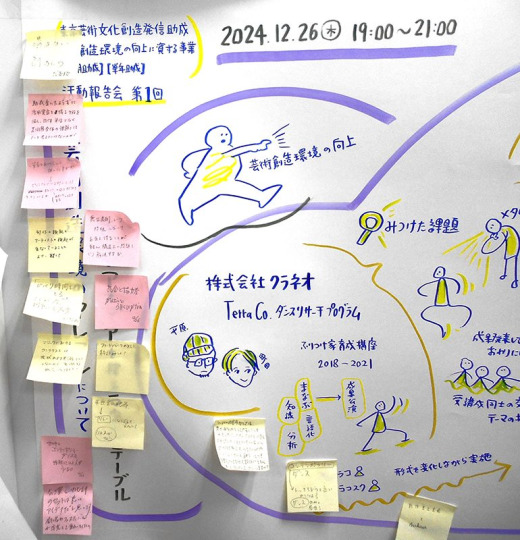
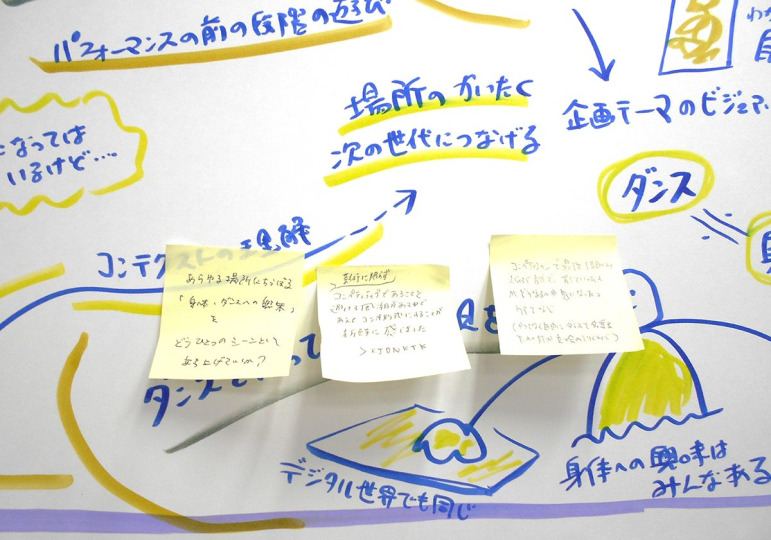
Before proceeding to the Q & A session from the audience, Shimizu, the graphic facilitator, gave a summary of the content so far. Showing a picture drawn on imitation paper, he explained that a single answer or story contains both current and future perspectives, and that opinions and considerations from multiple perspectives, from a bird's-eye view to a macro view, are made. The post-it notes posted by the participants during the break included their own ideas and opinions from the field, showing that they were not only listening to the speakers but also actively participating.
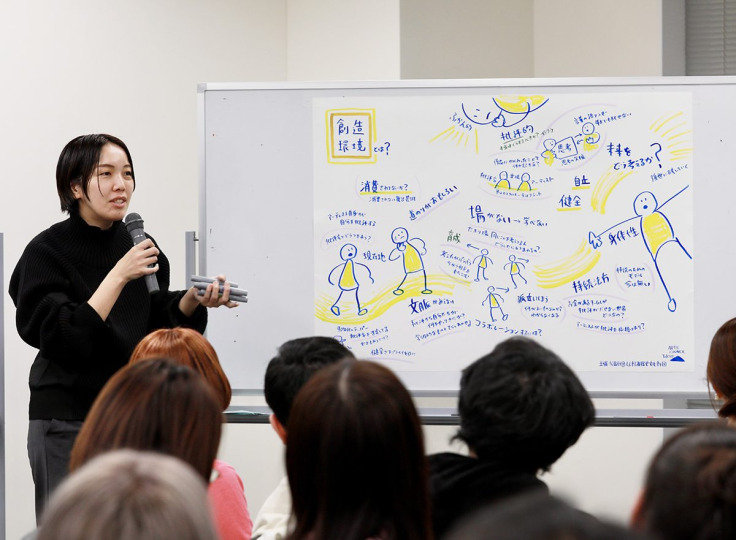
Some of the comments received include:
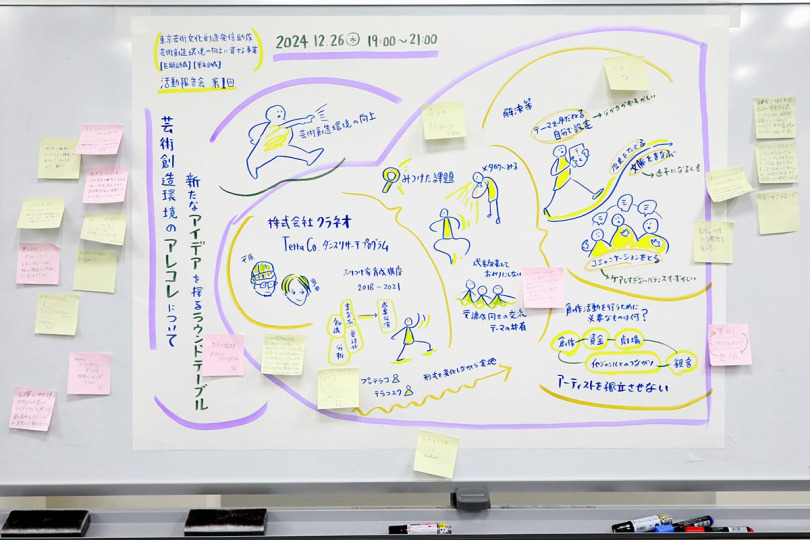
About Kuraneo's business
- I thought that when artists from different genres create a piece of art, if they don't understand each other's genre from the context, rather than from the senses, communication will not deepen and it may be difficult to create a piece together.
- Whose job is it to raise money? How can we create a function like a gallery in the visual arts field (Presentation and funding)?
Business of the Rokugaikai
- There is a tendency to avoid being competitive, not only in the arts, but it was refreshing to choose a competition format.
- How can we create a single scene for the "interest in body and dance" scattered everywhere?
About the Paperback Business
- Do creators on the ground really need critics?
- Who supports what the performing arts need?
- From the artist's perspective, criticism is like proof that you've been seen. Written comments have energy and a feeling of "thank you."
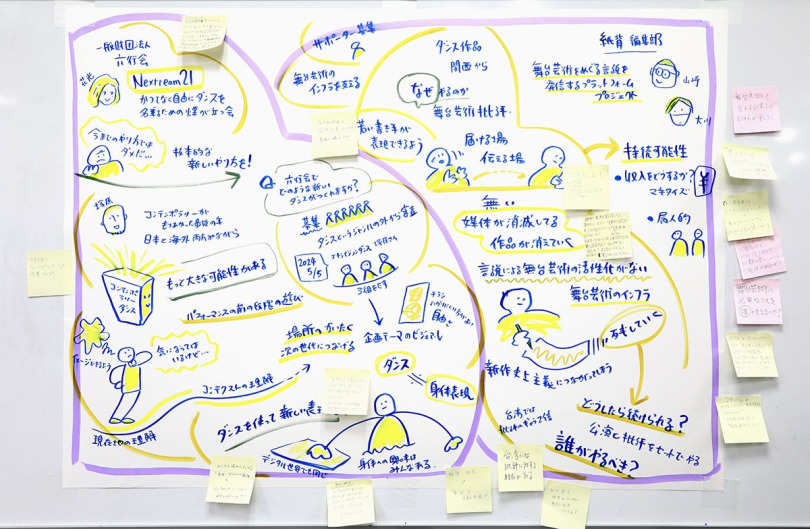
Talk between facilitators and speakers and exchange of opinions with participants
- We often hear the word "not consumed," but what if we say it positively? Does that cause creation?
- Where can we accept the failure of young critics?
- Bodily language occurs in literature, in painting, in music.
- Artist communities tend to be biased? Not expanded after all?
- A necessary hangout for artists. I hope there is a place to talk about dance.
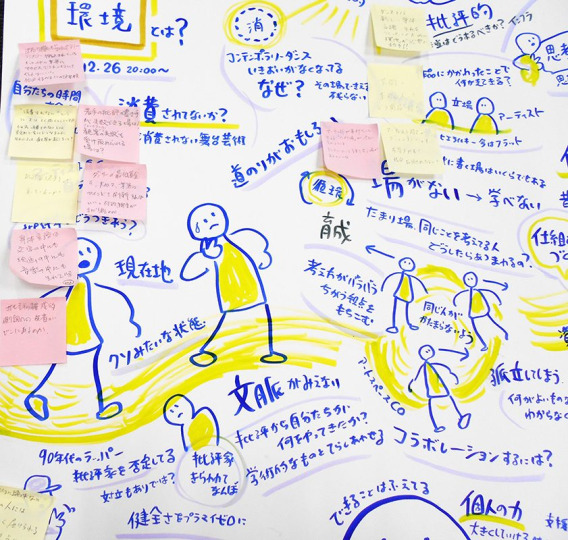
Q & A with participants
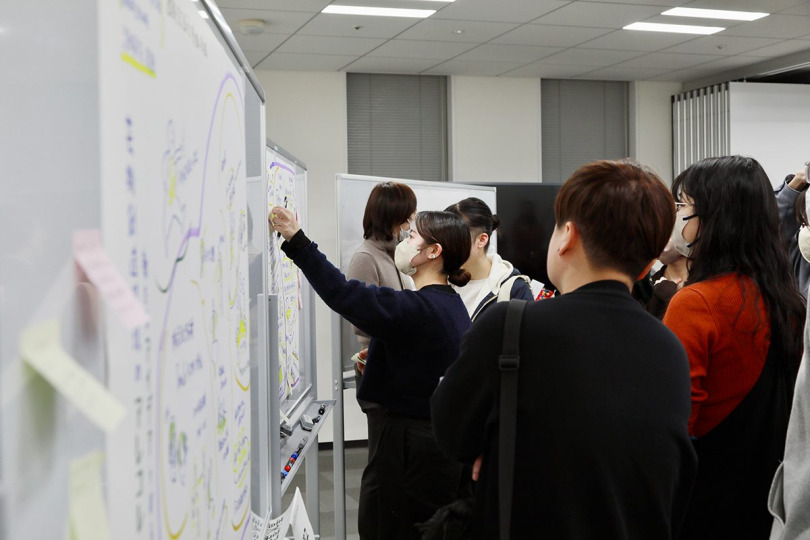
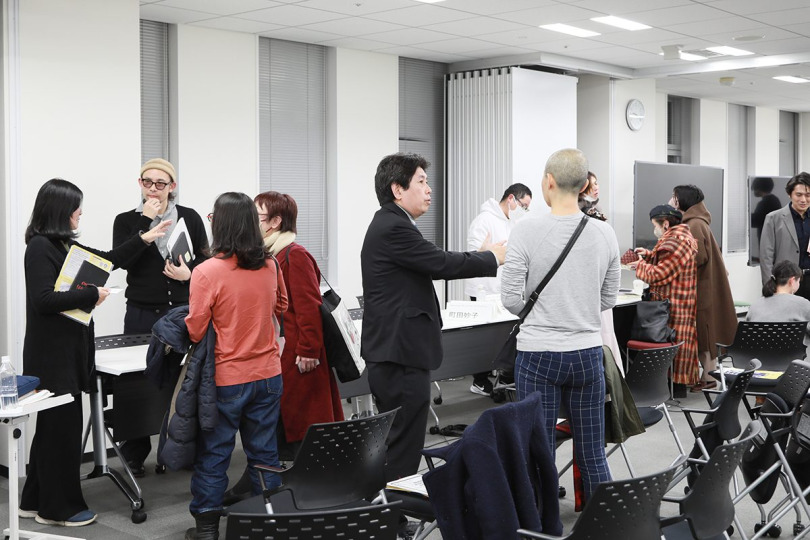
During the last Q&A session, there were impressions and questions until the last minute. Although there were no reports from Grant Programs from the fields of music and art at this debriefing session, there were also impressions from artists in these fields that they had common issues and were interesting.
In Part 1, there were comments from performers who felt that there was a gap between the target of support and the actual situation, considering that some artists manage to continue their work while feeling lonely despite the common problem of "lack of funds and places for creative activities." There were also comments from the art field that "funding" is a big problem, and that it is necessary to create a system in line with the current times, rather than facing it individually.
Dance critics have pointed out that it takes 10 years to create a new body language, so not only dancers but also a creative environment is needed to support it. In addition, the situation that there is no place for criticism in Japan has not changed for a long time. Today, with the development of the Internet, places for writing have opened up and individual power can be expanded, so it is necessary to think about ways to take advantage of this. Some suggested that support would be necessary. The operators of the free spaces introduced their efforts to prevent users from fixating on a single genre, to set low rental fees in order to provide opportunities for artists to perform, and to organize festivals that are easy for artists to participate in.
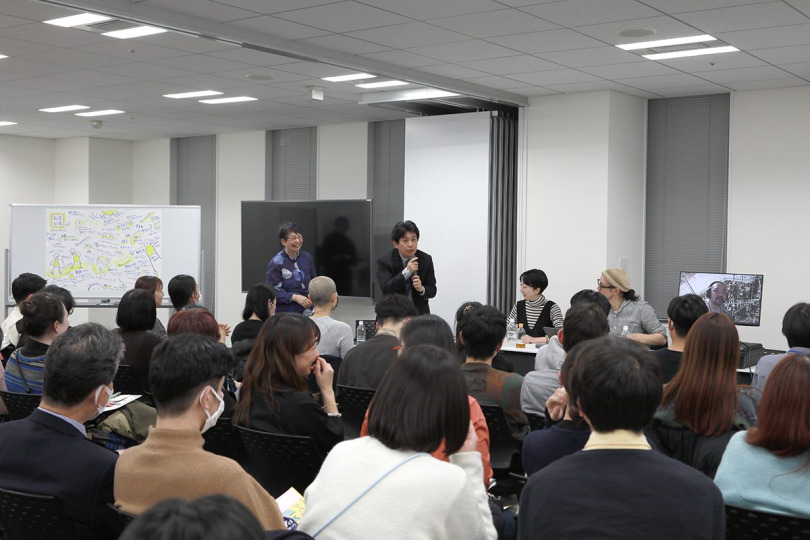
Messages from Speakers
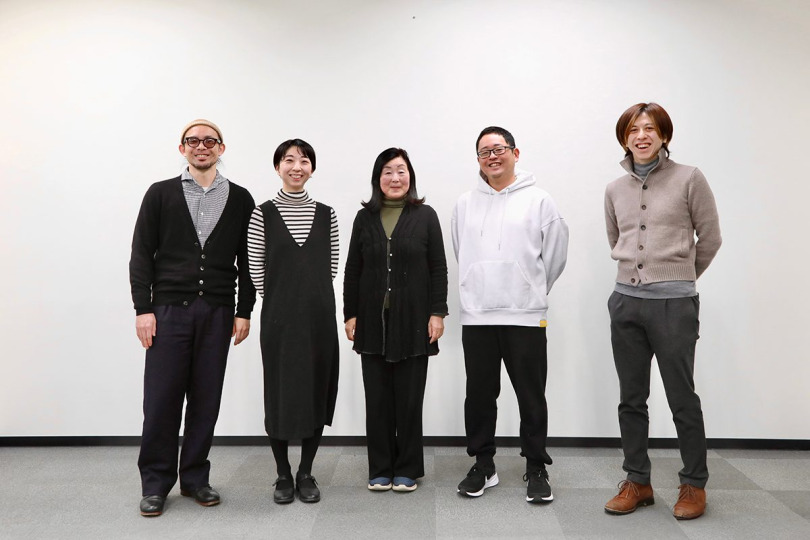
Finally, each of the three organizations gave a message, and the meeting ended.
- plain
- There is a widespread situation in which people cannot receive subsidies unless they spend their time and money to commercialize their works and have them seen. On the other hand, I envy the times when I was able to achieve what I wanted to achieve. We need to keep thinking about how we can protect and create an environment that creates dance that is not consumed, and to do that we need to rethink institutional design. Actually, this topic has been going on for a long time. The subsidy system and the amount of paperwork are actually hurdles, forcing people to consume their works. I want to change this cycle. I am not obligated to do this, but I think the environment will not change unless I do so. I want to develop people who can approach such issues in the training project. In other words, I think we are creating an environment.
- Tsukahara
- I have been working with the same problem awareness as Mr. Hirahara. But the methodology is quite different. His style of not performing at all, never performing solo, and not applying for grants was the result of thinking about how to survive. It is true that there is no money, and when there was no money, what we did was, for example, we negotiated with them to reduce the management personnel costs because we would not touch the lights in the theater, and we reduced the number of fluorescent lights by five. That actually saved 200,000. At that time, there were 4 members, so the salary increased by 50,000 yen per 1 member. An increase of 50,000 yen makes life a little easier. That's how I came. As for the place and time, they practiced in parks and in the middle of the night, and these factors eventually influenced their expression and led to their own expression. This may be a really niche approach, but we want to let people know it's possible.
- Yamazaki
- I've been watching theater for about 20 years, and I've been a critic for about 10 years, and I think this mess is the result of me and my older generation. I want to take on that responsibility and continue thinking about how to open up the future.
The three projects introduced at this debriefing session each aimed to improve the artistic creation environment, but took on different approaches to challenges. Craneo's Terra Co. Dance Research Program aims to develop independent artists and build a system that emphasizes learning and feedback. Rokugkai's "Nextream21 Smoke Rising Society for Freedom to Call Dance Like Never Before" is an innovative process that involves artists from other fields to break the stagnation of dance and explore new expressions. The "Platform Formation Project for Disseminating Discourse on the Performing Arts" by the editorial department of "Paper Back" aims to contextualize and revitalize the performing arts through criticism. By sharing the trials and errors conducted through each project in order to open up the future we want from each point, it was a debriefing session where we were able to see common issues that lie big in all fields. The Grant Programs presentations came from the fields of dance and theater, but participants from various fields gathered to present issues in their respective fields and share valuable time to think about the future creative environment. I hope that creative activities will lead to exploring the future of art that will be disseminated to society.
(Composition and text: Yuko TAKEDA)